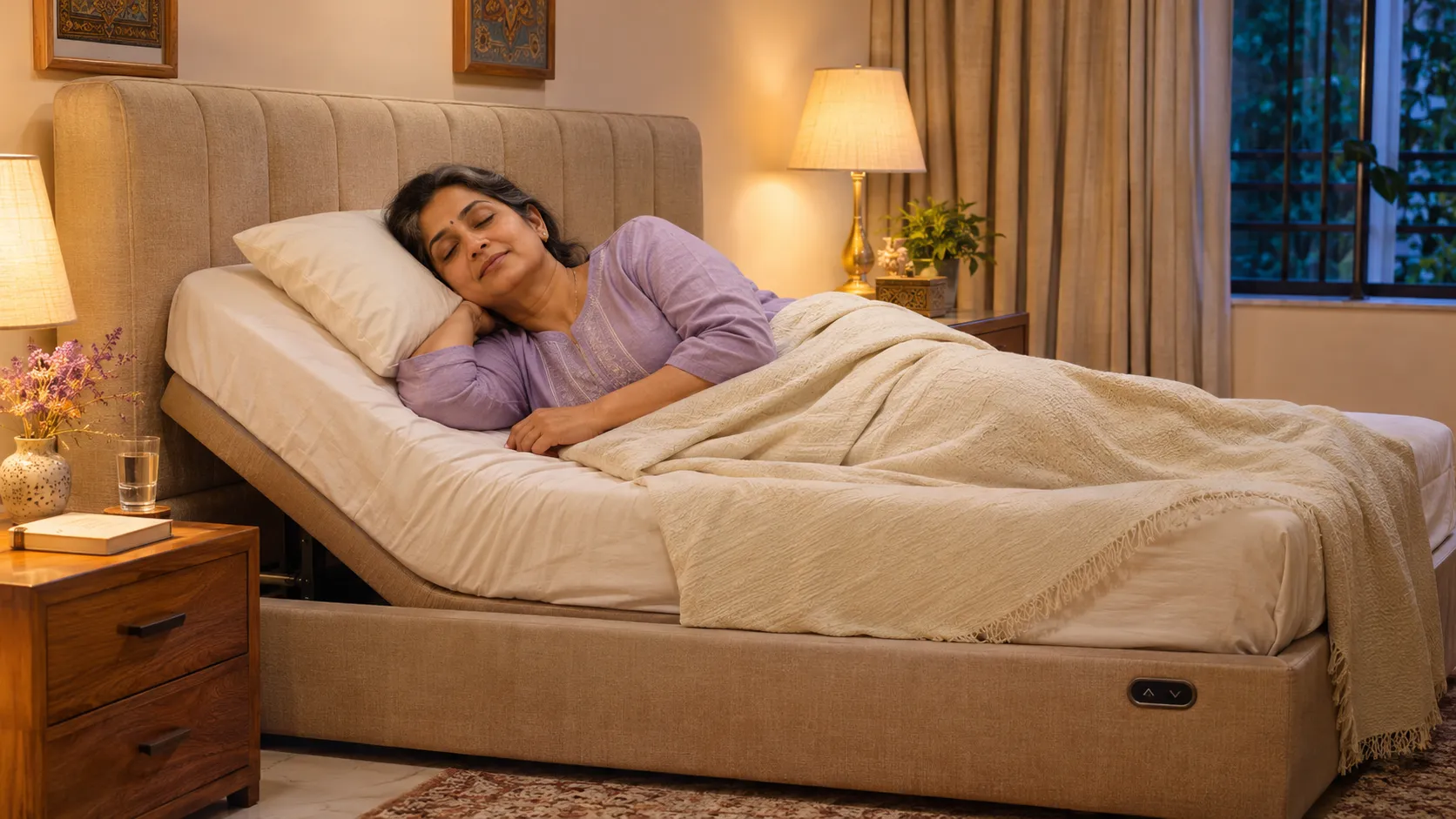
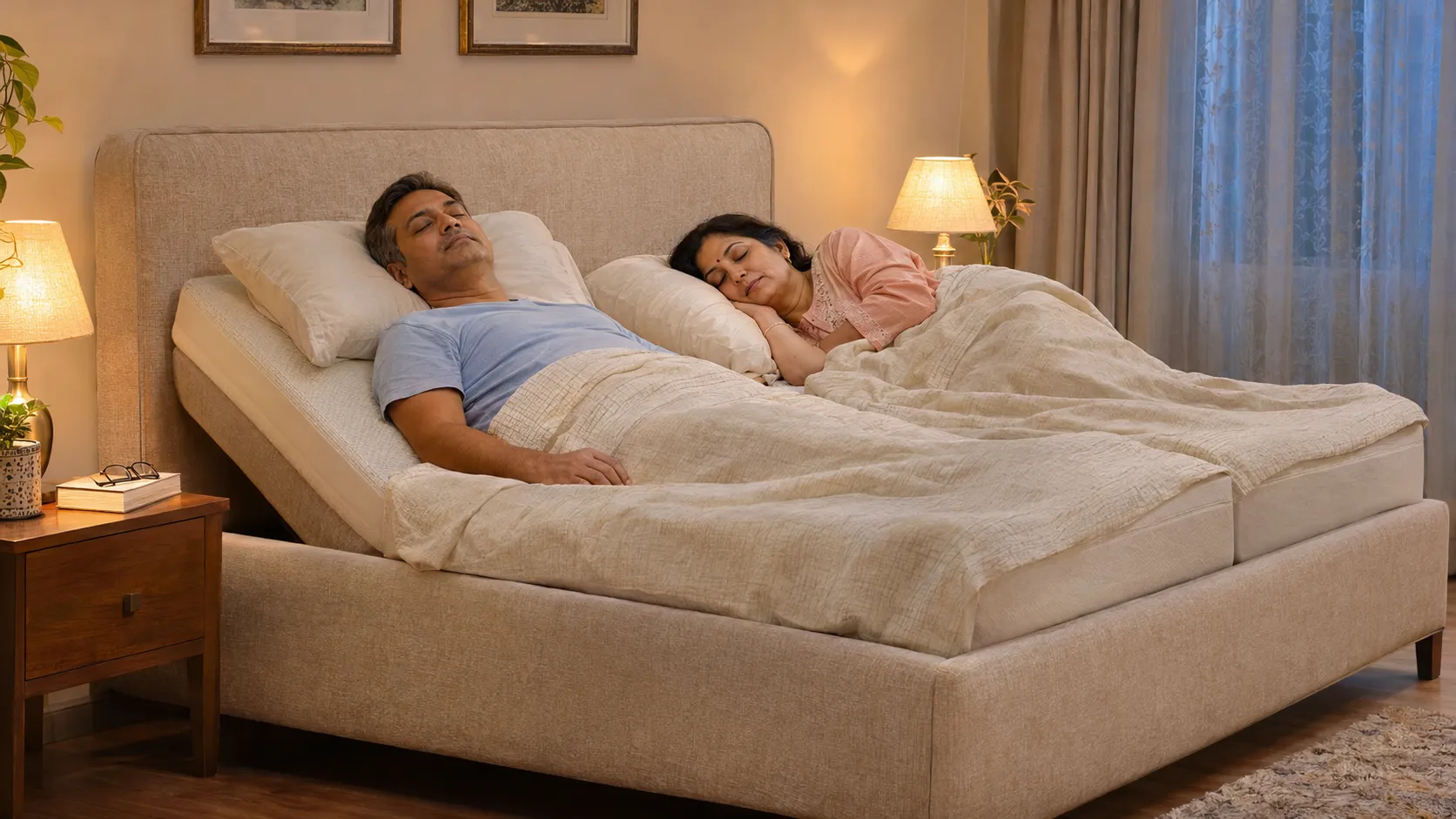
For some people, raising the head and upper body slightly on an electric bed can make snoring quieter, because it can keep the airway more open than lying flat. Try a gentle incline, support the knees so you do not slide down and keep the neck in line. It does not work for everyone, and it is not a treatment for sleep apnoea. If snoring is loud, you gasp or stop breathing in sleep, or you are very sleepy in the day, see a doctor.
Snoring affects the snorer and everyone in earshot. Partners lose sleep, and the snorer often wakes with a dry throat and a tired head. Many people ask whether an electric bed can help. The answer is that it sometimes does, especially when snoring is worse on the back, but it is not a cure, and loud snoring can sometimes signal a medical problem. This guide explains how raising the head may help, what to try, what to avoid and when to see a doctor.
Why We Snore
Snoring happens when the tissues at the back of the throat vibrate as air moves past them during sleep. Lying flat on the back lets the tongue and soft tissues fall backwards, which narrows the airway and can make snoring worse. Other common factors include a blocked nose, extra weight around the neck, alcohol in the evening and sleeping very deeply when tired. Because causes differ, no single change works for everyone.
How Raising the Head May Help
When the head and upper body are raised, gravity pulls the tongue and soft tissues forward less strongly into the airway. Some people find their snoring becomes lighter or less frequent with a gentle incline. An adjustable base is more comfortable than stacking pillows, which can bend the neck forward and may even narrow the airway. The best effect is usually seen in people whose snoring is mainly position related and who are otherwise healthy.
What to Try, Step by Step
- Start with a gentle incline. Raise the back section a little and sleep that way for several nights. Many people begin with a modest slope and change it slowly.
- Lift the knee section slightly so you do not slide down and flatten out during the night.
- Keep the neck in line. Use a slim pillow and avoid pushing the chin onto the chest.
- Try side sleeping as well. Snoring is often lighter on the side. Our guide on adjustable beds for couples helps when partners need different set-ups.
- Save the position on the remote so you can recreate it each night, as explained in the adjustable bed remote guide.
Snoring Helpers at a Glance
| Change | How It May Help | Notes |
| Raise the head on an electric bed | Keeps the airway more open than lying flat | Gentle angle, support the knees |
| Sleep on your side | Stops the tongue falling back | Pillow behind the back can help |
| Avoid alcohol close to bedtime | Alcohol relaxes throat muscles | Leave several hours before sleep |
| Keep the nose clear | Blocked nose forces mouth breathing | See a doctor if it is constant |
| Manage weight where advised | Extra neck weight narrows the airway | Gradual, doctor-guided changes |
WHEN SNORING NEEDS A DOCTOR
Loud snoring with pauses in breathing, gasping or choking at night, morning headaches, severe daytime sleepiness, high blood pressure or difficulty concentrating can point to sleep apnoea. This needs medical assessment, and a bed alone will not treat it. People using a breathing device at night should ask their doctor which positions are right. This guide gives general information only.
Choosing an Electric Bed for Snoring
- A smooth, quiet motor. You do not want noise that wakes a light sleeper. See electric bed motors explained.
- A back section that holds position. It should not creep down during the night.
- A knee section. It keeps you in place on the slope.
- A compatible mattress. The mattress must bend with the base. Read the electric bed mattress guide, and see our natural latex mattress page if you prefer a latex surface.
- Two independent sides, if you share the bed. This lets a snoring partner raise the head without disturbing the other person.
Setting Up for a Shared Bed
If your partner snores, the most practical arrangement is often a bed or base where each side can be adjusted separately. This lets one person sleep slightly raised while the other stays flat, so both are comfortable. Ask about the options and the sizes available before ordering, and measure the room using the guide to bed sizes and dimensions.
What Not to Expect
- Not a guaranteed fix. Some people see a big improvement, some a small one and some none.
- Not a treatment for sleep apnoea. Medical care is needed if apnoea is suspected.
- Not instant. Give each setting several nights before judging.
If breathing problems at night are the main issue, our article on recliner bed positions for night-time asthma and wheezing covers related positioning ideas.
Raising the head on an electric bed is a comfortable, low-risk experiment for many snorers. Try a gentle angle, support your knees, keep your neck in line and give it a few nights. If snoring is heavy or you are exhausted despite sleeping, speak to a doctor. If you would like help choosing a bed for you and your partner, our team is happy to advise.
Browse our Electric Bed range or the Recliner Bed collection, or get in touch to find a bed that suits you and your partner.
Related Reading