A mattress for an electric bed must bend with the base, so foam, memory foam and latex mattresses are generally the best choices, while rigid innerspring mattresses are usually unsuitable and some hybrid or pocket spring mattresses work only if the maker says they are adjustable-base compatible. Choose a moderate thickness, make sure the size matches the base exactly, add a way to stop slipping and ask the supplier which mattresses they recommend.
Most people think about the motors, the remote and the frame when they choose an electric bed, and treat the mattress as an afterthought. That is a mistake. The mattress decides how comfortable the bed feels, how well it bends and how long both the bed and the mattress last. A mattress that fights the base wears out the motors, slides, creases and can void warranties. Here is how to choose one that works.
Mattress Types and How They Suit an Electric Bed
| Mattress Type | Bends With the Base? | Notes |
| Foam (polyurethane) | Yes | Flexible and widely used, but quality and density vary |
| Memory foam | Yes | Contours well, can feel warm, and heavier types need a strong base |
| Natural latex | Yes | Flexible and supportive, but heavy, and unsuitable for people with latex allergy |
| Hybrid (foam with thin springs) | Sometimes | Only if the maker says it suits adjustable bases |
| Pocket spring | Sometimes | Depends on thickness and design, so check compatibility |
| Traditional innerspring | Usually no | Rigid and likely to be damaged by bending |
| Very thick or very firm orthopaedic | Often limited | May resist bending, so test before buying |
These are general descriptions, and individual products differ. Always ask the supplier or mattress maker whether the specific mattress is suitable for an adjustable base.
Why Flexibility Matters
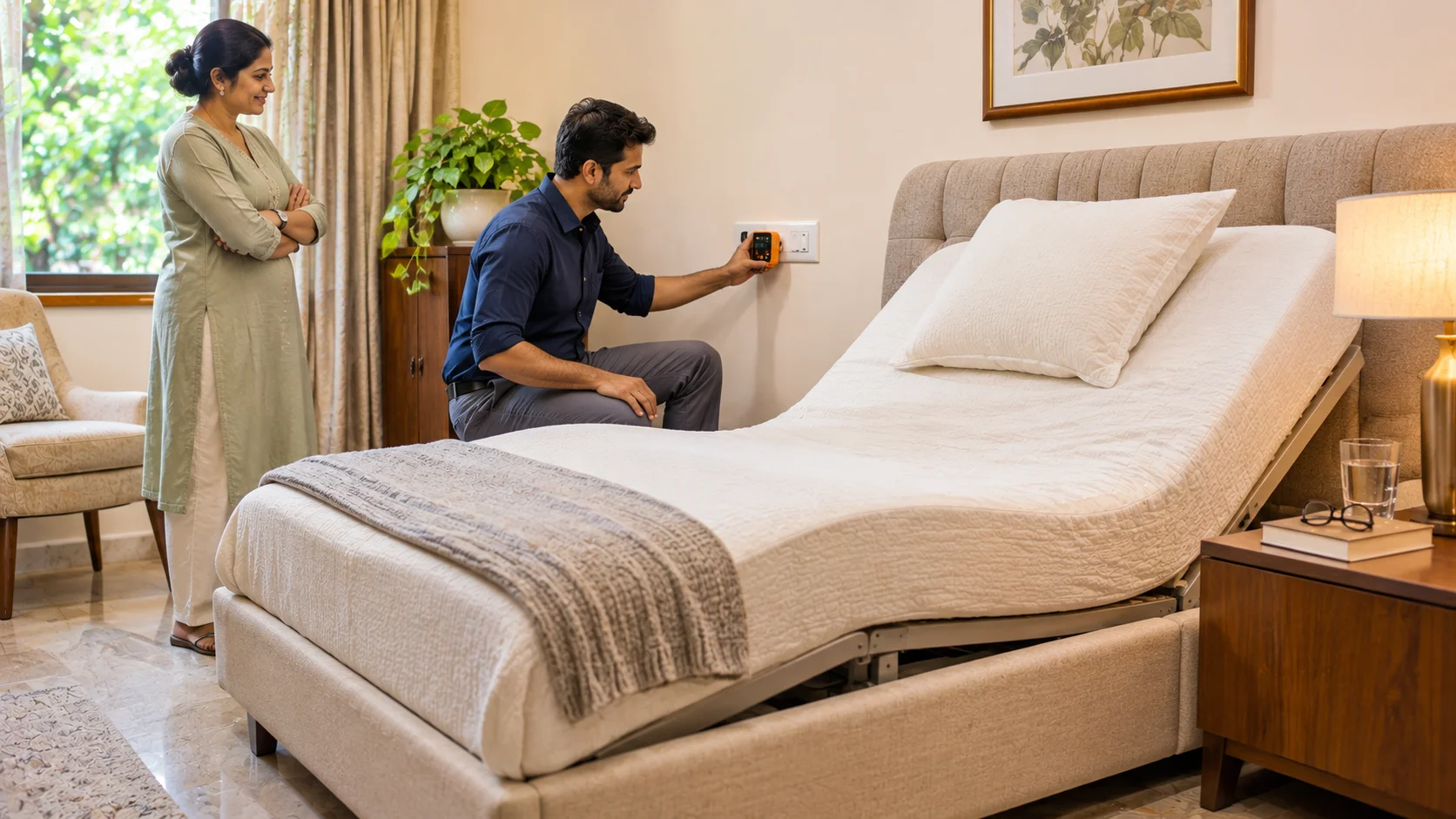
When the back and knee sections rise, the mattress has to fold and stretch at the hinge points. A mattress that is too stiff resists that movement, putting strain on the motors, creating gaps between mattress and base and wearing out at the fold. A mattress that bends easily keeps contact with the base, supports the body and lasts longer.
Thickness and Weight
- Moderate thickness bends more easily than a very thick one.
- Very thick mattresses can raise the sleeping surface, making it harder to get in and out and sit on the edge.
- Weight matters. The mattress counts toward the bed’s load, and a heavy latex mattress leaves less capacity for the person.
- Check the rated capacity of the whole bed, as covered in our guide to electric bed motors.
Match the Size Exactly
The mattress should match the base length and width precisely. A mattress that is too small leaves gaps, while one that is too large bunches at the edges. If the bed is a split bed, each side needs its own mattress, or a split mattress, so each half can move independently. Our guide on adjustable beds for couples explains split setups.
Stop the Mattress Slipping
- Choose a non-slip underside or a grip pad between mattress and base.
- Use a retainer bar at the foot end if the bed has one, so the mattress does not slide down when the back is raised.
- Raise the knee section slightly whenever the head is raised, which keeps the body and mattress from sliding.
- Use a fitted sheet that is snug, and avoid slippery fabrics.
- Check the mattress position regularly, and straighten it if it has crept.
IMPORTANT NOTE
Do not force a stiff or oversized mattress onto an adjustable base. It can damage the mattress, strain the motors and may void both warranties. If you plan to keep your existing mattress, ask the supplier to confirm that it suits the base before you order.
Firmness and Comfort
Firmness is personal, but an adjustable base changes how it feels, because the mattress takes different shapes. A medium-firm mattress with some contouring suits many people, while very soft mattresses let heavier users sink and resist movement. If you have back pain, our guide to adjustable beds vs orthopedic mattresses explains how the two work together.
Covers, Protectors and Sheets
- Use a stretchy, fitted protector that moves with the mattress.
- Avoid thick quilted toppers that make the surface too stiff or too high.
- Choose breathable fabrics, especially in humid weather.
- Pick sheets with deep pockets and some stretch, so they stay put when the bed moves.
Hospital-Style Beds and Mattresses
If the electric bed is a hospital-style bed for a patient, the mattress also needs to suit skin care and hygiene. Our guide to hospital bed mattresses compares foam, air and latex, and our page on adjustable beds for bed sores explains the role of position changes.
Questions to Ask Before You Choose
- Is this mattress made for adjustable bases?
- What is its thickness and weight?
- Does it match the exact size of the base?
- What does the warranty say about use on an adjustable base?
- Is the cover removable and washable?
A good electric bed deserves a mattress that moves with it. Choose a flexible type, match the size exactly, keep the thickness moderate and stop it slipping. Ask the supplier which mattresses suit the base, and you will protect the motors, the mattress and your sleep.
Explore our Natural Latex Mattress or the Electric Hospital Bed collection.
Related Reading