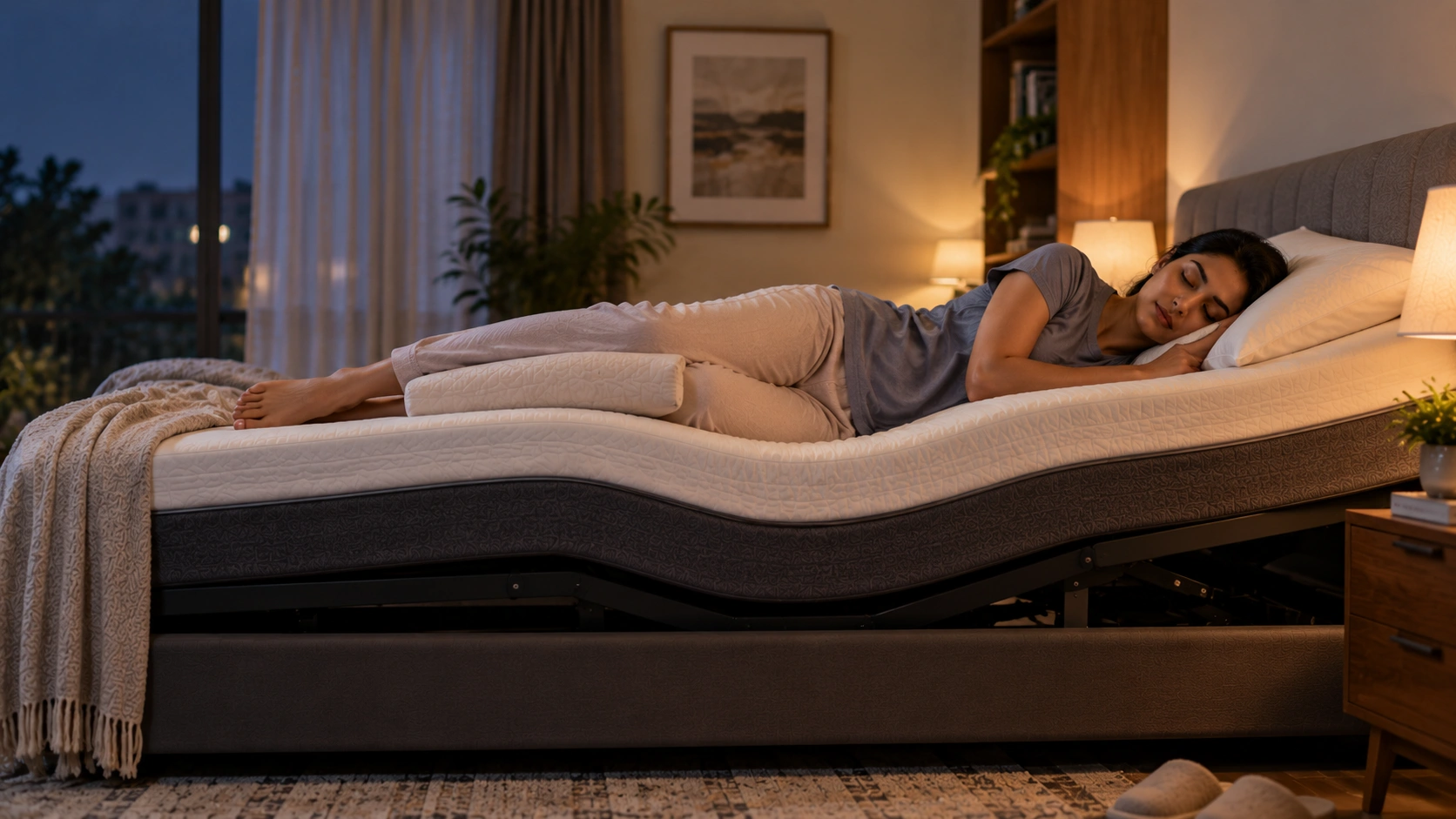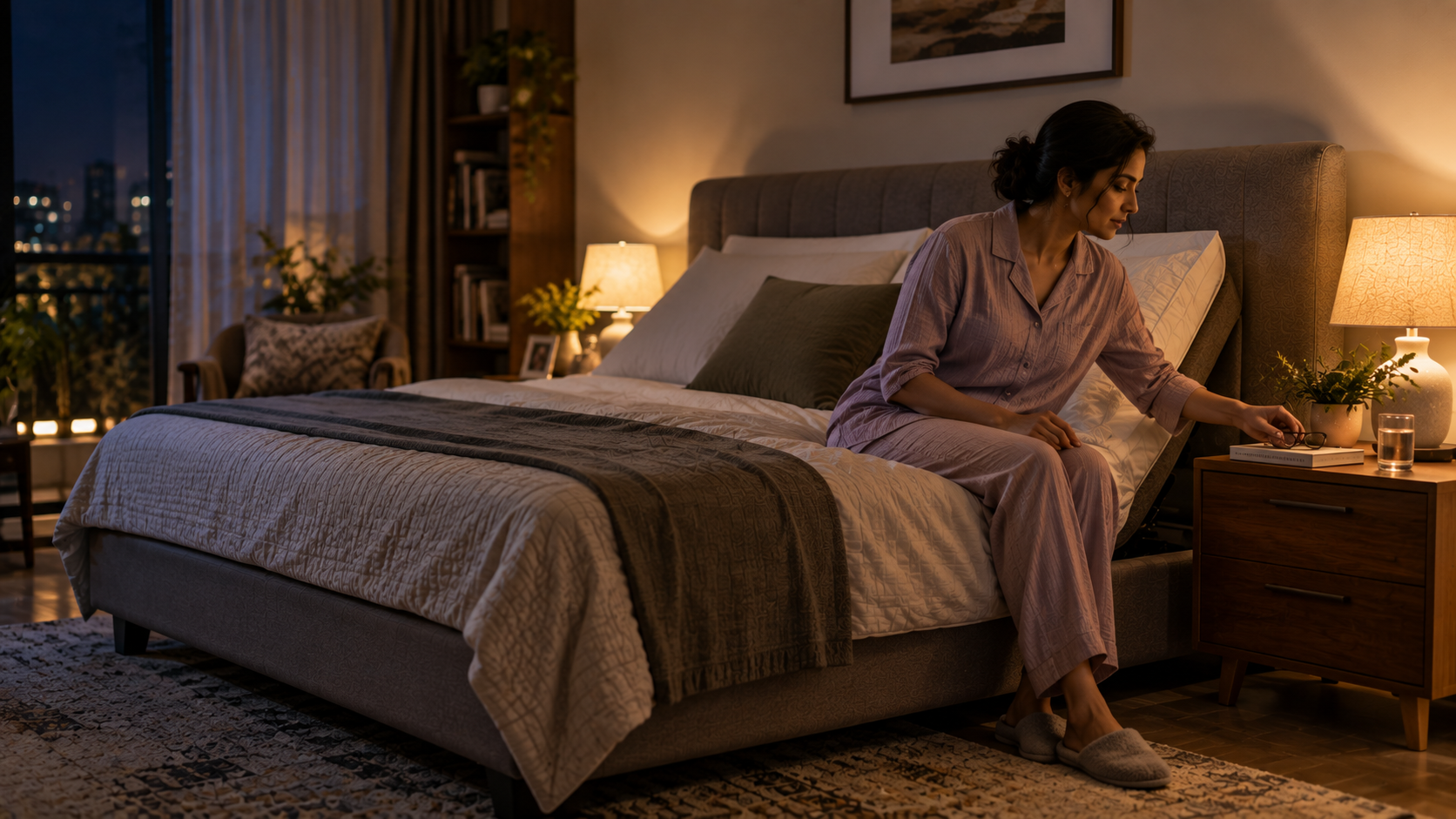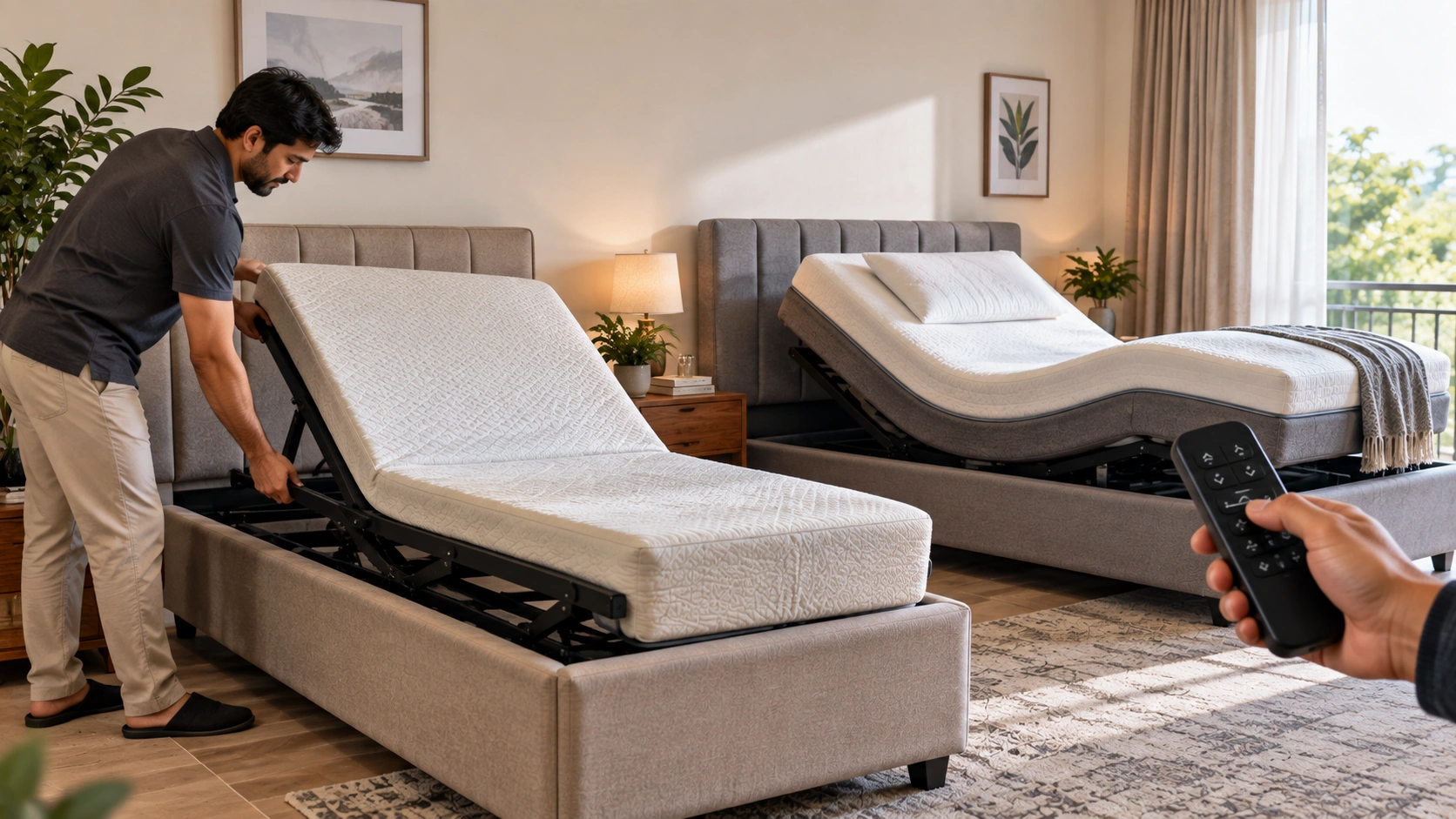

For neck pain and cervical spondylosis, a mild head elevation of roughly 10–20°, combined with a slim, contoured pillow that supports the natural curve of the neck, tends to help most. Steep inclines can actually push the chin toward the chest and worsen neck strain, so more elevation isn’t automatically better here the goal is gentle support, not a dramatic angle.
Most adjustable bed guidance focuses on the lower back, but a significant number of people search for relief from neck pain and cervical spondylosis a degenerative condition affecting the neck’s vertebrae and discs and the positioning needs here are genuinely different from general back pain relief. Get the angle wrong, and an adjustable bed can just as easily worsen neck strain as relieve it.
Why the Neck Needs a Different Approach Than the Lower Back
Lower back relief generally benefits from a fuller Zero Gravity recline, but the neck is far more sensitive to angle and pillow height together. Too steep a head elevation pushes the chin down toward the chest, straining the very vertebrae that cervical spondylosis already affects. Too flat, and the neck loses the mild support that helps reduce pressure on compressed discs. The right setup threads a narrow needle: enough elevation to ease pressure, not so much that it creates a new, worse angle at the neck itself.
Cervical Spondylosis: Why Position Matters So Much
Cervical spondylosis involves wear-and-tear changes to the discs and joints in the neck, often causing stiffness, pain, and sometimes nerve-related symptoms radiating into the shoulders or arms. Because the condition is degenerative and often flares with poor posture, sustained pressure from a poorly supported sleeping position over months and years is a meaningful contributing factor to how much discomfort a person experiences night to night which is exactly where a correctly set adjustable bed offers real, practical value.
Setting Up Your Adjustable Bed for Neck Pain
- Start with a mild head elevation, roughly 10 to 15 degrees, rather than the steeper angles often recommended for lower back relief.
- Choose a slim, contoured pillow that fills the gap under the neck’s curve without pushing the head forward a pillow that’s too thick undoes the benefit of gentle elevation.
- Avoid combining steep elevation with a thick pillow, a common mistake that pushes the chin toward the chest and increases strain rather than reducing it.
- Test small increments. Increase elevation by just a few degrees at a time over several nights rather than jumping to a fixed angle immediately.
Neck Pain vs Lower Back Pain: Positioning Compared
| Factor | Lower Back Pain Setup | Neck Pain / Cervical Spondylosis Setup |
| Typical head elevation | 15–20° (often part of Zero Gravity) | 10–15°, gentler and more conservative |
| Pillow thickness | Slimmer pillow under the knees matters more | Slim, contoured neck-supporting pillow is essential |
| Leg elevation | Important above heart level for Zero Gravity | Optional; mainly for comfort, not neck-specific benefit |
| Risk of overdoing it | Steep angle rarely worsens back pain directly | Steep angle can push chin down and worsen neck strain |
Additional Support Worth Considering
Beyond the frame and pillow setup, a few complementary habits improve outcomes for neck pain and cervical spondylosis. Gentle neck stretches during the day help maintain mobility that sleep positioning alone can’t fully address. Avoiding prolonged phone or laptop use with the neck bent forward sometimes called “tech neck” reduces the daytime strain that often compounds nighttime discomfort. And if pain radiates into the shoulder or arm, or is accompanied by numbness or tingling, that’s a signal to consult a doctor rather than relying on positioning adjustments alone, since this can indicate nerve involvement that needs proper evaluation.
For general spinal positioning principles that also apply to the upper back and neck, our guide on how to set up your adjustable bed for maximum lower back pain relief is a useful companion, even though the specific angles differ for the neck as covered above.
Does an Adjustable Bed Actually Help Cervical Spondylosis Long-Term?
An adjustable bed doesn’t reverse the degenerative changes involved in cervical spondylosis, but consistent, correctly supported positioning can meaningfully reduce the nightly strain that often worsens morning stiffness and pain flare-ups. Many people managing this condition find that the difference between a poorly supported flat pillow setup and a properly angled, well-supported one is significant enough to notice within one to two weeks of consistent use. It’s worth reading how a related, more general question is answered in our article on how can an adjustable bed reduce lower back pain, since many of the underlying pressure-relief principles carry over, even though the specific angles for the neck are gentler.
Sleeping Position Matters as Much as the Bed’s Angle
For neck pain specifically, the interaction between sleeping position and bed angle deserves extra attention. Back sleepers generally find it easiest to maintain correct neck alignment on an adjustable bed, since the head, neck, and spine can stay in a straightforward line as the frame elevates. Side sleepers need to pay closer attention to pillow height relative to shoulder width, since a pillow that’s correctly sized for flat side-sleeping may become too thin or too thick once the head section is elevated, throwing off the careful alignment that neck pain recovery depends on. Stomach sleeping is generally discouraged for neck pain regardless of bed type, since it forces the neck into a rotated position for extended periods that tends to aggravate cervical spondylosis symptoms rather than easing them.
When Neck Pain Needs More Than Positioning
While a well-set adjustable bed can meaningfully reduce nightly strain, certain symptoms warrant medical attention rather than continued self-management through positioning alone. Persistent numbness or tingling radiating into the arms or hands, weakness in the hands, or pain that doesn’t improve despite several weeks of consistent, correctly angled support are all reasons to consult a doctor or physiotherapist. Cervical spondylosis can occasionally involve nerve root compression that benefits from targeted treatment beyond what sleep positioning alone can address, and getting a proper evaluation early tends to lead to better long-term outcomes than persisting with home adjustments indefinitely.
Neck pain and cervical spondylosis call for a more careful, conservative approach to adjustable bed positioning than lower back pain does. Start gentle, prioritize the right pillow alongside the frame’s angle, and increase elevation gradually the goal is consistent, gentle support, not the steepest angle your bed can achieve.
Explore our Back Rest Beds range, built around exactly this kind of upper-body support, or browse our full Adjustable Bed for Back Pain collection.
Related Reading: