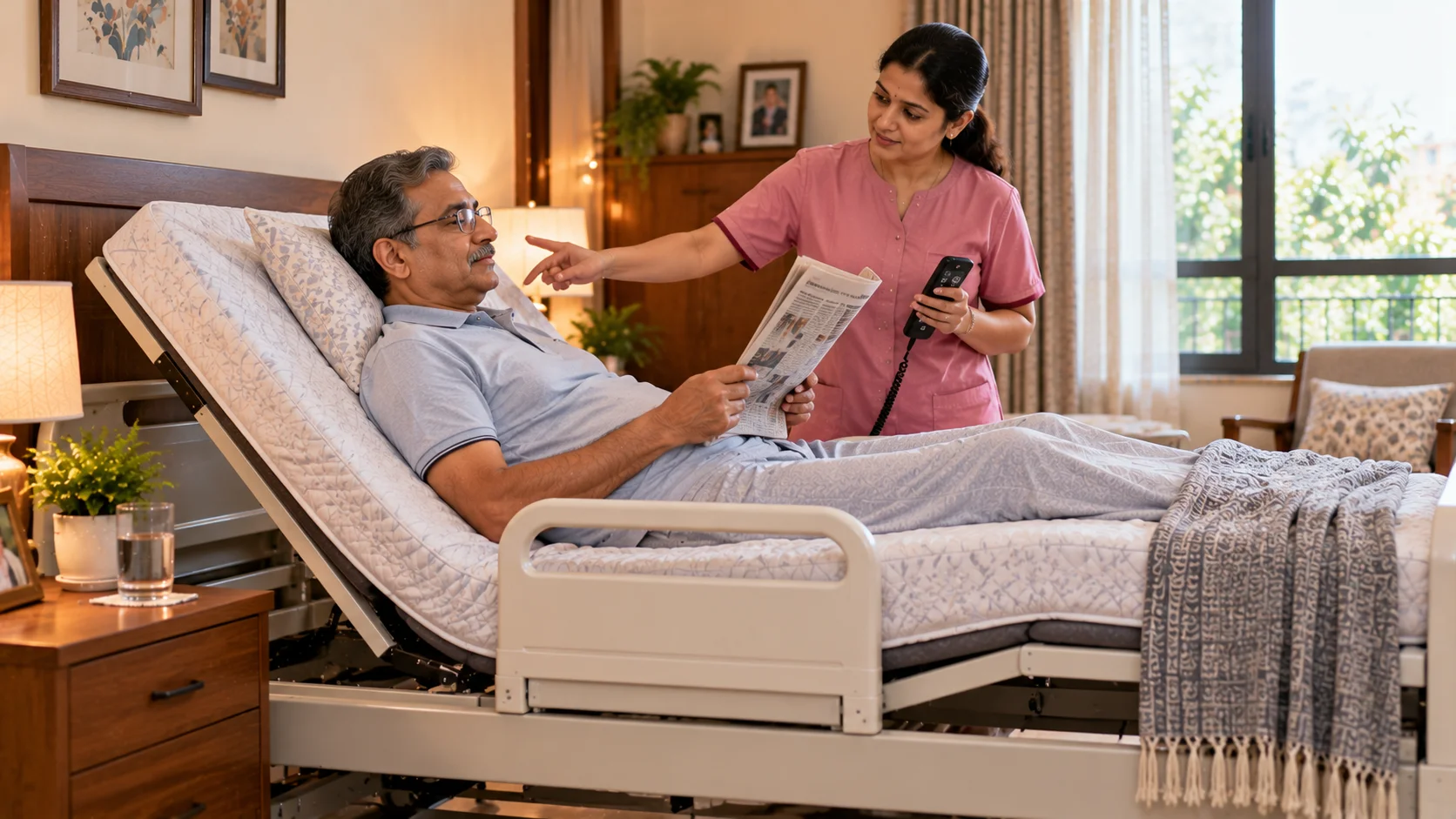
Fowler’s position means sitting in bed with the head raised. Commonly cited angles are about 15 to 30 degrees for low Fowler’s, 30 to 45 degrees for semi-Fowler’s, 45 to 60 degrees for Fowler’s and 60 to 90 degrees for high Fowler’s. The position is used for eating, breathing comfort, reflux and recovery. Raising the knees slightly helps stop sliding, and the exact angle should follow the doctor’s or nurse’s advice.
If you spend time around hospitals or caregiving, you will hear terms such as semi-Fowler’s and high Fowler’s. They sound technical, but they simply describe how upright a person is in bed. Knowing the differences helps you follow instructions from nurses and set up a bed at home correctly. This guide explains each position in plain language.
What Is Fowler’s Position?
Fowler’s position is a bed position in which the head and upper body are raised, with the person lying on their back. It is named after the American surgeon George Fowler, who described it in the early 1900s. It is among the most common positions in hospitals and home care.
The Four Fowler’s Positions at a Glance
| Position | Typical Angle | Common Uses | Watch For |
| Low Fowler’s | About 15 to 30 degrees | Rest, sleep and comfort for people who need slight elevation | Sliding down without a knee lift |
| Semi-Fowler’s | About 30 to 45 degrees | Easing breathing, reducing reflux, resting after meals | Pressure on the tailbone if held for long |
| Fowler’s | About 45 to 60 degrees | Eating, reading and talking with visitors | Neck strain without good support |
| High Fowler’s | About 60 to 90 degrees | Meals, taking medicines and severe breathlessness | Slipping and pressure on the lower back |
These angles are commonly cited, but different hospitals and textbooks give slightly different ranges, so treat them as a guide.
Why These Positions Are Used
- Breathing. Sitting more upright lets the chest expand more easily, which is why high or semi-Fowler’s is used for breathlessness.
- Eating and swallowing. An upright position helps food go down safely, and many people stay upright for a while after meals.
- Reflux. Raising the upper body can reduce acid moving up into the throat.
- Comfort and recovery. Many people find a raised position more comfortable after surgery or during illness.
Fowler’s Position on an Adjustable Bed
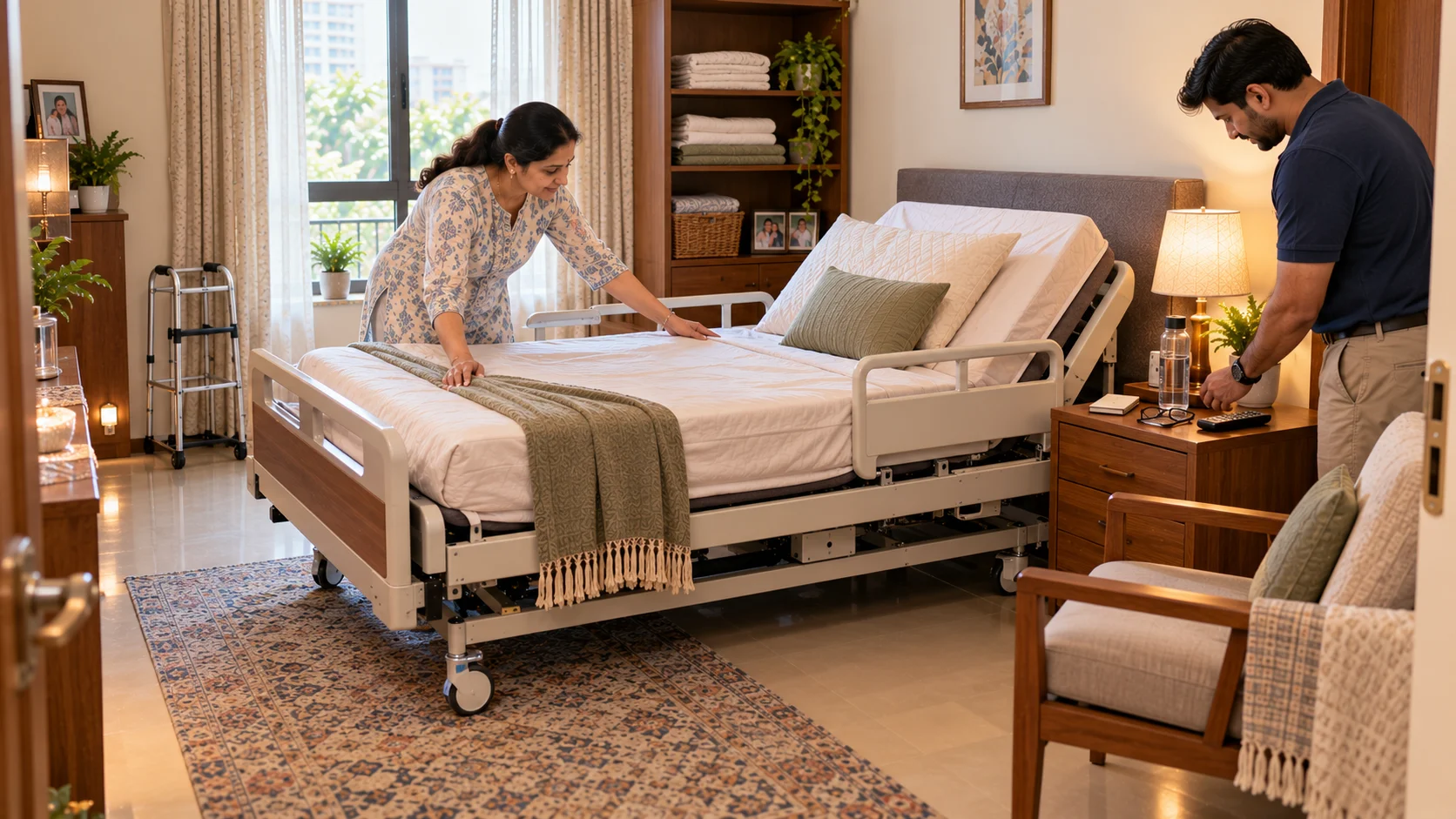
A home adjustable bed makes these positions easy to set. Zero-G beds, for example, have a back rest that moves from 0 to 90 degrees and a leg rest that moves from 0 to 45 degrees, so every Fowler’s angle is within reach. The knee section can be lifted slightly to stop the person sliding down. You can explore the range on our electric hospital bed page.
Fowler’s Position and Zero Gravity: What Is the Difference?
Fowler’s position raises the head and upper body. The Zero Gravity position raises the head slightly and lifts the knees to about or above heart level, which spreads body weight and relieves pressure on the lower back. They serve different purposes. Read more on our Zero Gravity page, and see the leg rest and back rest pages for the individual movements.
Setting a Fowler’s Position Safely
- Raise the head section gradually until the person is comfortable at the angle advised.
- Lift the knee section slightly so the body does not slide towards the foot end.
- Support the head and neck with a slim pillow rather than a stack.
- Check the lower back and tailbone and ease the angle if pressure builds.
- Change position regularly, since holding one angle for hours can strain the skin.
- Keep the remote in reach so the person can adjust without effort.
IMPORTANT NOTE
Always follow the doctor’s or nurse’s instructions on the right angle and duration. Anyone with swallowing difficulty, heart or lung disease, or pressure sores should use only the positions that their care team recommends.
Related Positions You May Hear About
- Supine: lying flat on the back.
- Trendelenburg: the head lower than the feet, used only on medical advice.
- Reverse Trendelenburg: the head higher than the feet, with the whole bed tilted rather than bent.
- Lateral: lying on the side, often used for pressure care and comfort.
Common Mistakes With Fowler’s Position
- Staying too upright for too long, which loads the tailbone.
- Skipping the knee lift, so the person slides down the bed.
- Stacking pillows on top of a raised head section.
- Never changing position, even when the angle is comfortable.
- Ignoring the skin over the tailbone and heels.
Fowler’s Position at Mealtimes
For meals, sit as upright as is comfortable and stay supported. Many care teams suggest remaining upright for a while after eating, often around half an hour, though your doctor or therapist may advise differently. Never eat lying flat, and ask a speech therapist for guidance if swallowing is difficult.
Pressure and Sliding
When the head is raised, the body tends to slide towards the foot end, which drags the skin over the tailbone. This pulling force is called shear and is a common cause of pressure sores. A slight lift of the knee section stops most of the sliding, and checking the skin daily catches problems early. Our page on adjustable beds for bed sores explains more.
A Quick Reference for Family Members
Write the angles the care team has advised on a card beside the bed, for example the head angle for meals and the angle for rest. Anyone who helps can then set the bed correctly without guessing, and the patient is more likely to stay comfortable.
Fowler’s position is simply a way of describing how upright someone is in bed. Knowing the four levels helps you follow care instructions, set up a home bed correctly and spot when an angle is too steep or too shallow. Combine the right angle with a knee lift and regular changes of position, and the bed does a lot of the work for you.
Explore our Electric Hospital Bed collection or the Zero Gravity range.
Related Reading