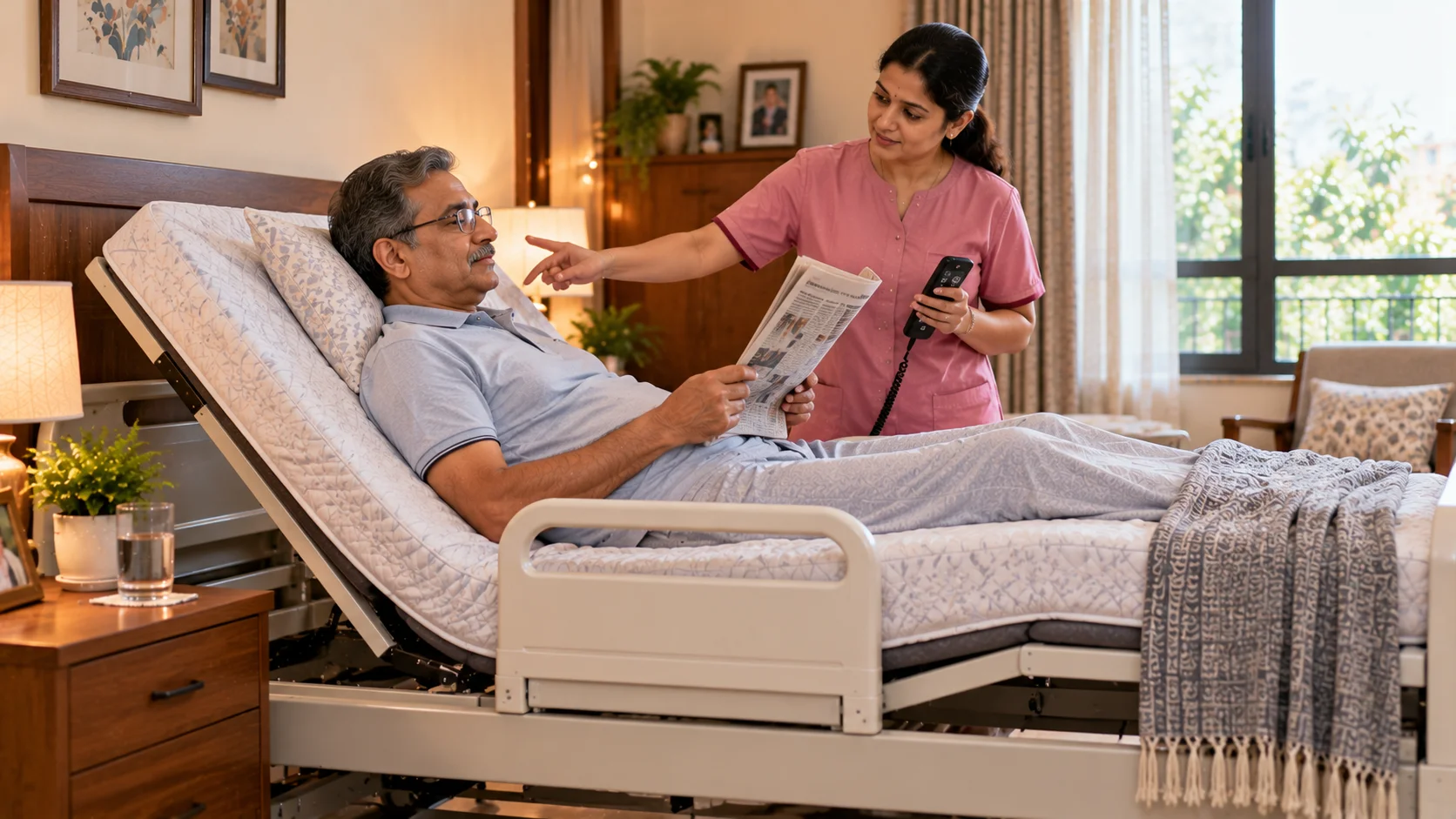
Before a patient comes home from hospital, ask the care team what the patient can and cannot do, arrange a bed that suits those needs, prepare a clear, well-lit room near the bathroom, install and test the bed before arrival, gather supplies and key phone numbers, and plan who will help and when. Set up the bed at least a day ahead so any problems are fixed before the patient is in it.
The day a patient is discharged is often a rush of paperwork, medicines and instructions. Families then arrive home and realise the bedroom is not ready. A little preparation before discharge makes the first days much calmer for the patient and for you. Use this checklist for a hospital discharge at home, whether the patient is an older parent, someone recovering from surgery or a person coming home after an ICU stay.
Ask the Hospital Team First
- What can the patient do alone, and what needs help? Walking, sitting up, using the toilet.
- What position is advised in bed, and for how long? Ask about head and leg angles.
- Is a special bed or mattress needed? For example, for pressure care or frequent repositioning.
- Which equipment is recommended and which is optional?
- What warning signs should lead to an urgent call or return to hospital?
- When is the follow-up, and who should you call with questions?
The Room and Bed Setup
| Area | What to Arrange | Check |
| Room location | A room close to the bathroom, ideally on the ground floor | Clear path, no steps |
| Bed type | Manual, electric or converted, as advised | Our guide to [types of patient beds](https://www.zerogbeds.com/blog/types-of-patient-beds-explained-manual-hydraulic-semi-electric-and-fully-electric/) explains the options |
| Bed height | So feet rest flat when sitting on the edge | Easy to get in and out |
| Mattress | Comfortable and, if advised, pressure-relieving | Fits the bed and bends with it |
| Power and cables | Earthed socket close to the bed, neat cables | No trip hazards, see our guide on [electric beds and power cuts](https://www.zerogbeds.com/blog/electric-beds-and-power-cuts-in-india-what-every-buyer-should-ask-about-backup-and-voltage/) |
| Lighting and ventilation | Soft night light and fresh air | Light to the bathroom |
Choose the Right Bed
The right bed depends on how long it is needed and how much help the patient requires. For a few weeks, renting may suit best, while longer needs point to buying or converting your existing bed, as covered in our guide on renting, buying or converting. Our guide on which hospital bed is best for home care patients helps match features to needs.
Timeline: Three Days Before to the First Week
- Three days before: speak to the hospital team, decide on the bed and order or book it. Zero-G beds are made to order, so allow time.
- Two days before: clear the room, check the socket, measure the route for the bed and arrange for installation.
- One day before: have the bed installed and tested, with the remote demonstrated to the family.
- Arrival day: make the bed with clean linen, keep water, medicines and the remote within reach and bring the patient in slowly.
- First week: watch comfort, skin and sleep, note questions for the doctor and adjust the bed settings in small steps.
Supplies to Have Ready
- Bedside table, torch and a bell or phone within the patient’s reach.
- Waterproof mattress protector and spare bedding.
- Commode, urinal or bedpan if the patient cannot walk to the bathroom.
- Medicines in a labelled box, with a written schedule.
- Copies of the discharge summary and reports, plus doctor and ambulance numbers on the wall.
IMPORTANT NOTE
Follow the hospital’s discharge instructions above any general guidance. Call the doctor or emergency services promptly for new breathlessness, chest pain, severe pain, fever, bleeding, confusion or any warning sign you were told to watch for.
Plan the Care, Not Just the Room
Decide who will help and when, especially at night. Caregiving is tiring, and sharing shifts protects everyone. Our guide on electric beds for caregivers explains how powered positioning reduces strain, and our guide on patient safety with electric adjustable beds covers safe operation.
Pressure and Positioning in the First Days
If the patient will be in bed for long periods, change position regularly, keep the skin clean and dry, and check the heels and tailbone daily. A bed that allows small changes of angle helps, as explained on our page about adjustable beds for bed sores.
The First 48 Hours at Home
- Settle the patient in the bed and check that the remote, water and medicines are within reach.
- Follow the medicine schedule exactly and keep a written log.
- Check the skin over the tailbone, heels and elbows, especially if the patient is in bed for long periods.
- Make a note of questions for the doctor, and record temperature and symptoms if advised.
- Rest between tasks, since caregivers who exhaust themselves cannot help for long.
Common Mistakes Families Make
- Leaving the bed set up until the patient arrives, which leaves no time to fix problems.
- Having only one caregiver, with no plan for nights or breaks.
- Forgetting night lighting and a clear path to the bathroom.
- Not keeping copies of discharge summaries, reports and prescriptions.
- Ignoring the skin until a sore appears.
Equipment You May Be Asked About
Depending on the condition, the hospital may recommend a wheelchair, walker, commode, nebuliser, oxygen concentrator or suction machine. Ask which are essential and whether they can be rented, since renting is an option for short needs. Zero-G supplies beds, so arrange other medical equipment through your care team.
Looking After Everyone’s Wellbeing
Coming home can be emotional for the patient and for the family. Keep routines simple, share tasks and accept help from relatives. Asking for support early is part of good care, not a sign of failure.
A calm homecoming starts before the patient leaves the hospital. Ask the right questions, set up the bed and room a day early, stock the basics and plan the care. With those steps done, you can focus on the patient instead of on problems.
Explore our Bed for Patients range or the Electric Hospital Bed collection.
Related Reading
- Types of Patient Beds Explained: Manual, Hydraulic, Semi-Electric and Fully Electric
- How Adjustable Beds Help Patients Sleep Better During Recovery