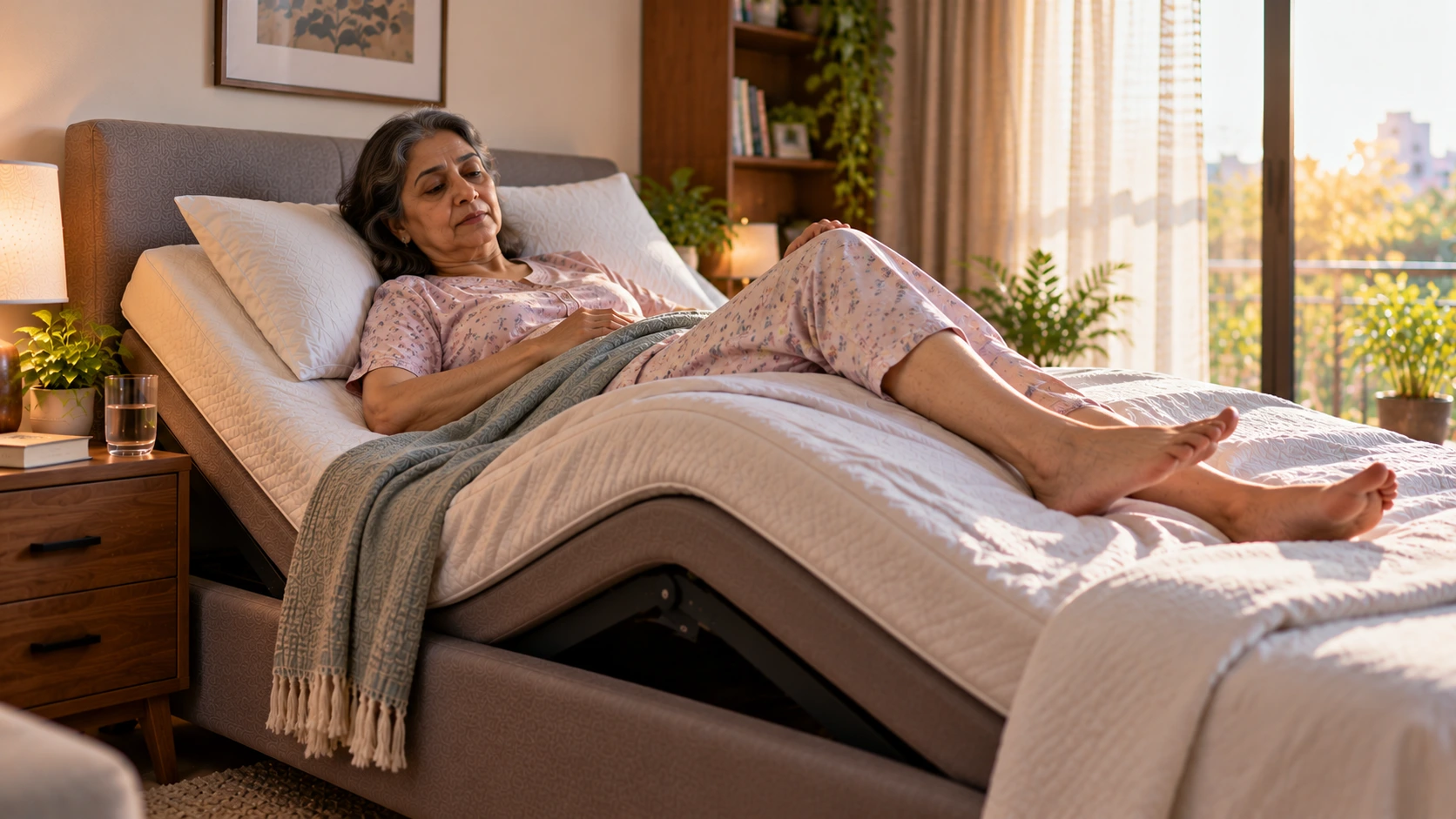
Knee osteoarthritis tends to ache at night and stiffen after rest, so the first steps in the morning hurt. A gentle bend in the knees, not a locked-straight leg, usually feels best, and an adjustable bed’s knee section holds that bend steadily. Raise the legs a little for swelling after a busy day, add a pillow between the knees for side sleeping, and expect stiffness to ease within half an hour of moving.
If your knees throb when you lie down and complain loudly when you stand up after sitting or sleeping, you are describing classic knee osteoarthritis. The cartilage cushioning the joint has thinned, and the joint reacts badly to long periods in one position. Most advice focuses on exercise and weight, but how the knees rest at night matters too. Here is how an adjustable bed can ease knee osteoarthritis pain and stiffness.
Why the Knees Hurt More at Night and After Rest
During the day, movement keeps joint fluid circulating and muscles working. Lying still, the joint can stiffen, a feeling people call gelling, and a swollen knee is more sensitive when held straight or pressed against the other knee. Side sleeping with the knees touching presses bone on bone, and sleeping with the legs fully straight can feel tight. A small, supported bend usually takes the strain off.
Knee Positions That Help and Hurt
| Position | Effect on the Knee | Verdict |
| Slight knee bend (about 10 to 20 degrees), calves supported | Relaxes the joint capsule and surrounding muscles | Usually the most comfortable |
| Legs fully straight and flat | Can feel tight and aggravate stiffness | Often less comfortable |
| Heel propped with the knee hanging back | Overstretches the back of the knee | Avoid |
| Deep, sustained bend | Loads the front of the joint | Avoid for long periods |
| Side sleeping, pillow between the knees | Stops the knees pressing together | Helpful for side sleepers |
Setting Up the Bed Step by Step
- Raise the knee section until your knees have a soft bend of roughly 10 to 20 degrees, with the lower legs resting supported.
- Keep the head section low to moderate, 10 to 20 degrees, for comfort.
- Place a small pillow under the calves, not the heel, so the knee is not left hanging.
- Side sleepers: put a firm pillow between the knees and ankles so the joints do not touch.
- Give it a week to see whether morning stiffness and night aching ease.
A hot, red, suddenly swollen knee, fever, or inability to bear weight after an injury needs prompt medical attention, since infection, gout or a fracture can mimic osteoarthritis. This article covers comfort measures for diagnosed knee osteoarthritis.
Swelling After a Busy Day
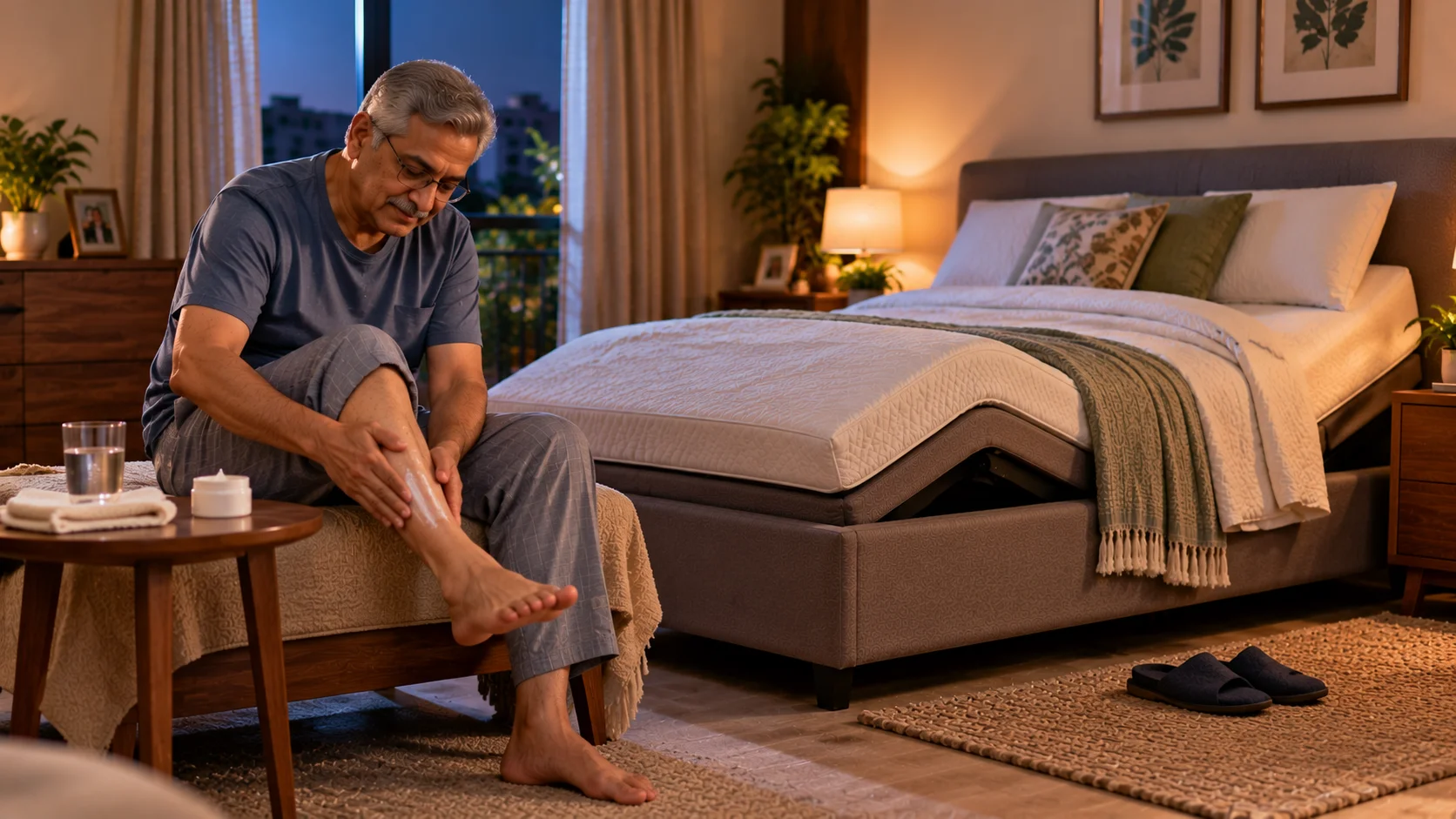
Knees with osteoarthritis often swell after long walks or standing. Raising the legs to about heart level for 20 to 30 minutes in the evening, using the leg section, helps the fluid drain, and the same mechanism is covered in how adjustable beds improve blood circulation and reduce swelling. Gentle warmth before bed also helps stiff joints loosen, but avoid heat on a hot, inflamed knee.
Getting Up Without the First-Step Pain
- Move before you stand. Gently bend and straighten the knees and circle the ankles for a minute or two.
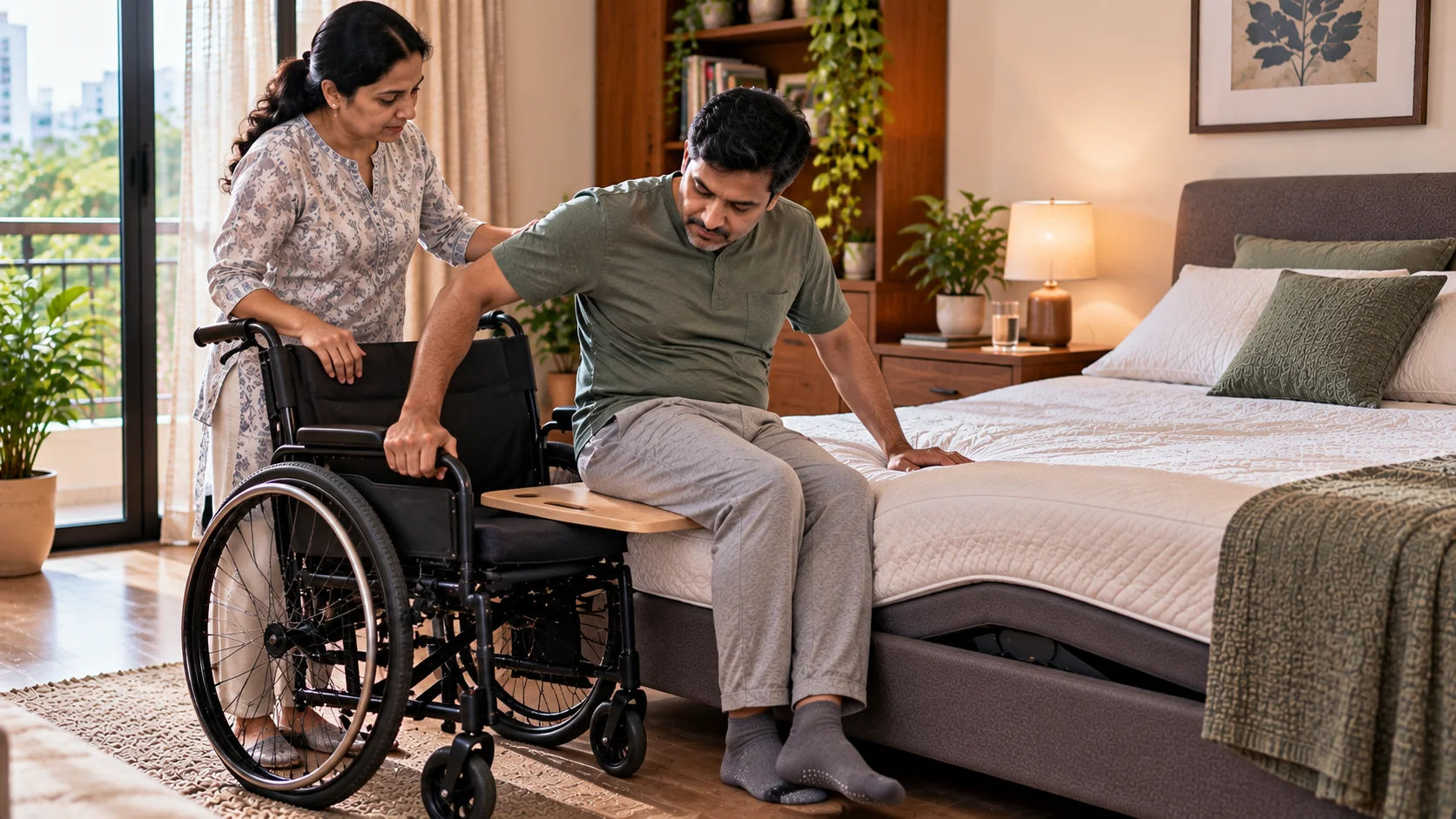
- Lower the bed height, if your frame allows, so you rise from a position that does not demand a deep knee bend.
- Sit at the edge with your feet flat for a few breaths before standing.
- Use a stable support such as the bed edge or a bedside rail rather than pushing off a wobbly surface.
- Expect stiffness to ease within about 30 minutes of moving.
What Else Helps Knee Osteoarthritis
Positioning supports comfort, but lasting improvement comes from daytime habits. Strengthening the thigh muscles with a physiotherapist’s programme, keeping to a healthy weight, choosing low-impact exercise such as swimming or cycling and using a stick on the opposite side can all reduce load on the joint. Footwear and activity pacing matter too. If pain has become severe or constant despite these measures, a doctor may discuss injections or joint replacement, and recovery after that is covered in adjustable beds for post-hip and knee replacement recovery.
Arthritis in More Than One Joint
Many people with knee osteoarthritis also have hip, spine or hand symptoms. The broader joint-friendly principles of gentle movement, supported positions and avoiding sudden position changes are covered in our real-site guide to adjustable beds for arthritis and positions that reduce joint pain. If the back is also involved, see adjustable beds for arthritis and back pain.
Tracking Your Response Over a Few Weeks
Osteoarthritis fluctuates, so a short log is more useful than memory. Note your knee bend setting, how many times you woke with knee pain and how long morning stiffness lasted, alongside any unusually busy or quiet days. After two or three weeks you can see whether the new setup is helping, and you can bring the log to a physiotherapist, who can use it to fine-tune exercises and advise on whether other treatments, such as injections or bracing, are worth discussing.
Common Mistakes With Knee Support
- Propping only the heels, which leaves the knees hanging and overextended.
- Using a very deep, sustained knee bend, which loads the front of the joint.
- Staying completely still all day because of pain, which makes stiffness worse.
- Applying heat to a hot, swollen knee, which can aggravate inflammation.
- Ignoring footwear and weight, which affect knee load more than any bed setting.
For knee osteoarthritis, small adjustments to how the knees rest overnight can make mornings easier. A soft, supported bend, a pillow between the knees for side sleepers and a little leg elevation after busy days take pressure off a tired joint, while strengthening and weight management do the long-term work.
Explore our Adjustable Bed for Arthritis page or Leg Rest Beds range.
Related Reading: