Lymphedema is long-term swelling caused by a lymphatic system that cannot drain fluid properly, often after cancer treatment, infection or injury. Gentle elevation of the swollen limb can help it drain, and an adjustable bed holds that position comfortably overnight. It is a helpful extra, not the treatment: compression, skin care, exercise and therapist-led lymph drainage do the heavy lifting. Watch for redness, heat or fever.
The lymphatic system is the body’s drainage network, and when part of it is damaged or blocked, fluid builds up in the tissues, usually in an arm or leg. Lymphedema is common after lymph node surgery or radiotherapy, and can also follow infection or occur from birth. It is not the same as ordinary swelling, and it needs specialist care. Here is how an adjustable bed can support someone with lymphedema, and where it fits.
Why Elevation Helps, and Why It Isn’t Enough
Gravity helps fluid move out of a raised limb, so elevation can ease heaviness and reduce swelling temporarily. But lymphedema is a drainage failure, not just a position problem, so swelling returns when the limb comes down. Standard management combines compression garments, gentle exercise, careful skin care and, for many, manual lymph drainage from a trained therapist. Elevation is one supportive layer within that plan.
Using the Bed for a Swollen Leg or Arm
| Affected Area | Helpful Bed Setup | What to Avoid |
| Leg or foot | Raise the leg section to about heart level or slightly above, with a soft knee bend | Sharp knee bends that squeeze behind the knee |
| Arm | Rest the arm on pillows slightly above the heart, with the hand a little higher than the elbow | Lying on the affected arm or tucking it under the body |
| Both | Combine mild head and leg elevation for comfort | Tight clothing, bands or sleeves that constrict |
| After activity | A short rest with the limb raised in the evening | Prolonged sitting with the leg hanging down |
Setting It Up Step by Step
- Raise the leg section gently until the foot is about level with or just above the heart, keeping a slight bend at the knee.
- Support the whole limb along its length, so nothing presses in one spot.
- For an arm, use a long pillow or wedge so the arm slopes upward from elbow to hand.
- Keep a mild head recline for overall comfort.
- Remove or loosen anything tight, including rings, sleeves and bands, before settling.
Redness, heat, pain, fever or a rapidly worsening swelling in a limb with lymphedema can mean cellulitis, a skin infection that needs urgent antibiotics. Sudden swelling of one leg with calf pain can be a blood clot. Both need prompt medical attention. Lymphedema should be diagnosed and managed by a clinician, ideally with a lymphoedema therapist.
Skin Care Matters More Than the Bed
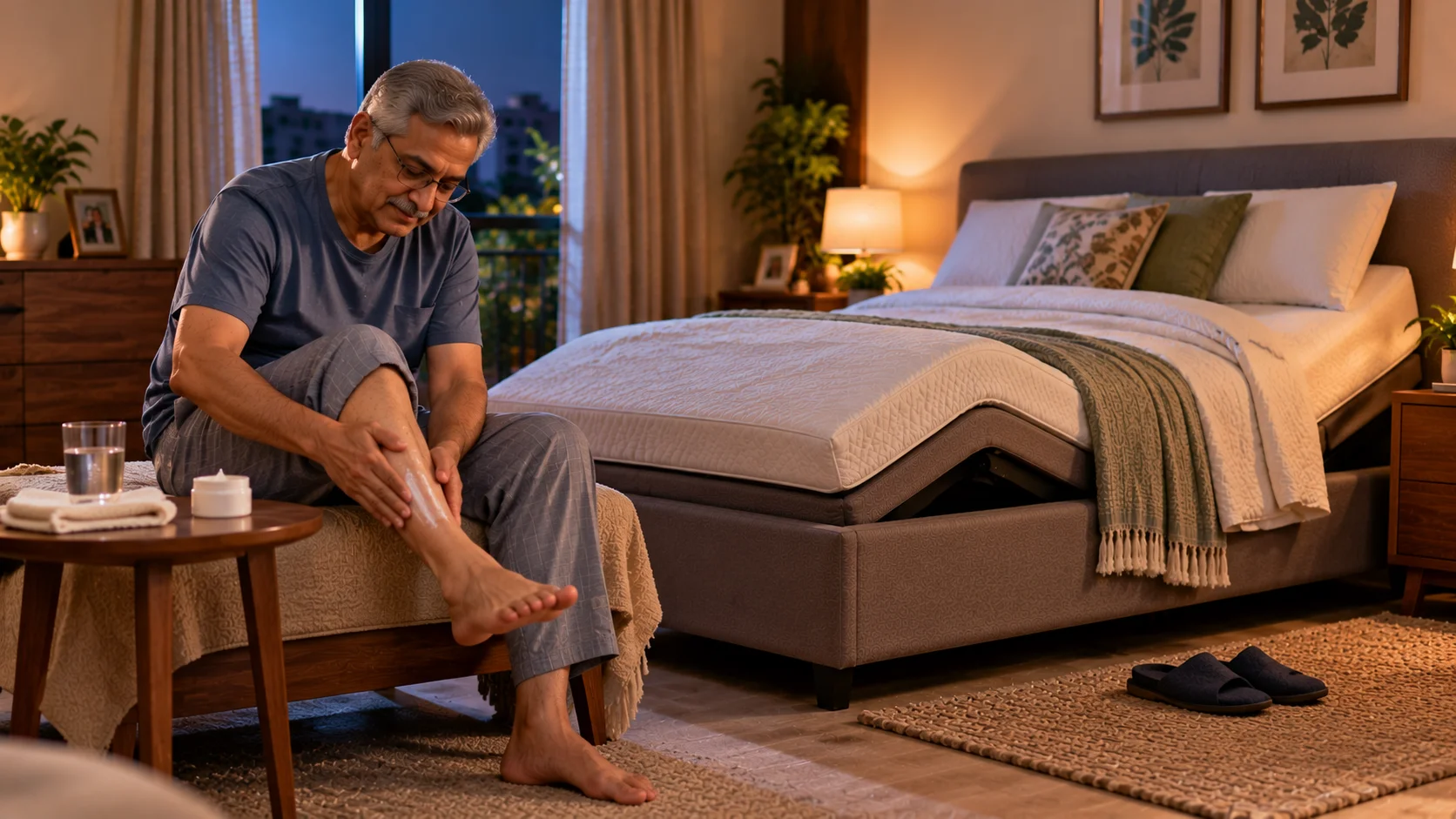
- Moisturise daily to keep skin supple and reduce cracking, which can let bacteria in.
- Treat cuts, bites and burns promptly, since infection is the main risk.
- Avoid blood pressure checks, injections and blood draws on an affected arm, where your team advises.
- Wear protective gloves for gardening and avoid very hot baths or saunas on the affected limb.
- Wear compression garments as prescribed, including any night garments your therapist recommends.
What an Adjustable Bed Cannot Do
A bed will not fix a damaged lymphatic system, and rest alone can allow swelling to increase if the limb is not moved. Regular gentle exercise, such as walking and the exercises taught by your therapist, helps move lymph fluid. Think of the bed as one supportive element alongside compression, movement and skin care, rather than the main event.
How This Relates to Other Causes of Swelling
Swelling has many causes, including veins, the heart, kidneys and medicines, and each needs different handling. If swollen legs come from varicose veins, see adjustable beds for varicose veins. For general circulation-related swelling, how adjustable beds improve circulation and reduce swelling explains the mechanism. If both legs swell with breathlessness, the heart or kidneys may be involved, which should be assessed by a doctor.
Practical Night-Time Tips
Choose loose, soft sleepwear and bedding that does not squeeze, keep the room comfortably cool because heat can increase swelling and use a pillow to avoid the limb hanging off the mattress edge. If you wear a night compression garment, check that it sits smoothly with no folds. When you wake, move the limb gently before getting up, and check your skin for new redness or breaks. If you work with a therapist, ask them about the best sleeping position for your specific pattern.
Choosing Bedding That Doesn’t Constrict
Tight bedding can squeeze a swollen foot or leg, so choose loose, lightweight covers and avoid tucking sheets tightly over the feet. Soft fabrics reduce friction on sensitive skin, and breathable materials help avoid sweating, which can irritate skin folds. If you use a mattress topper, make sure it does not make the bed so soft that you sink and get stuck, since moving easily during the night also supports lymph flow.
Exercise, Compression and Daily Routine
A typical routine combines morning compression garment application, gentle exercise through the day and evening elevation. Walking and the exercises your therapist teaches use muscle action to move lymph fluid, while compression stops it pooling again. Try to link the evening elevation session to something you enjoy, such as reading or a call, so it becomes a habit. Review your routine with your therapist regularly, because needs change over time.
Lymphedema is managed day by day, and the bed’s job is to support that routine. Gentle elevation, a loosely supported limb and a calm, cool sleeping environment help, while skin care and your therapist’s plan do the real work. Learn the warning signs, and act on them quickly.
Explore our Adjustable Bed for Blood Circulation page or Leg Rest Beds range.
Related Reading: