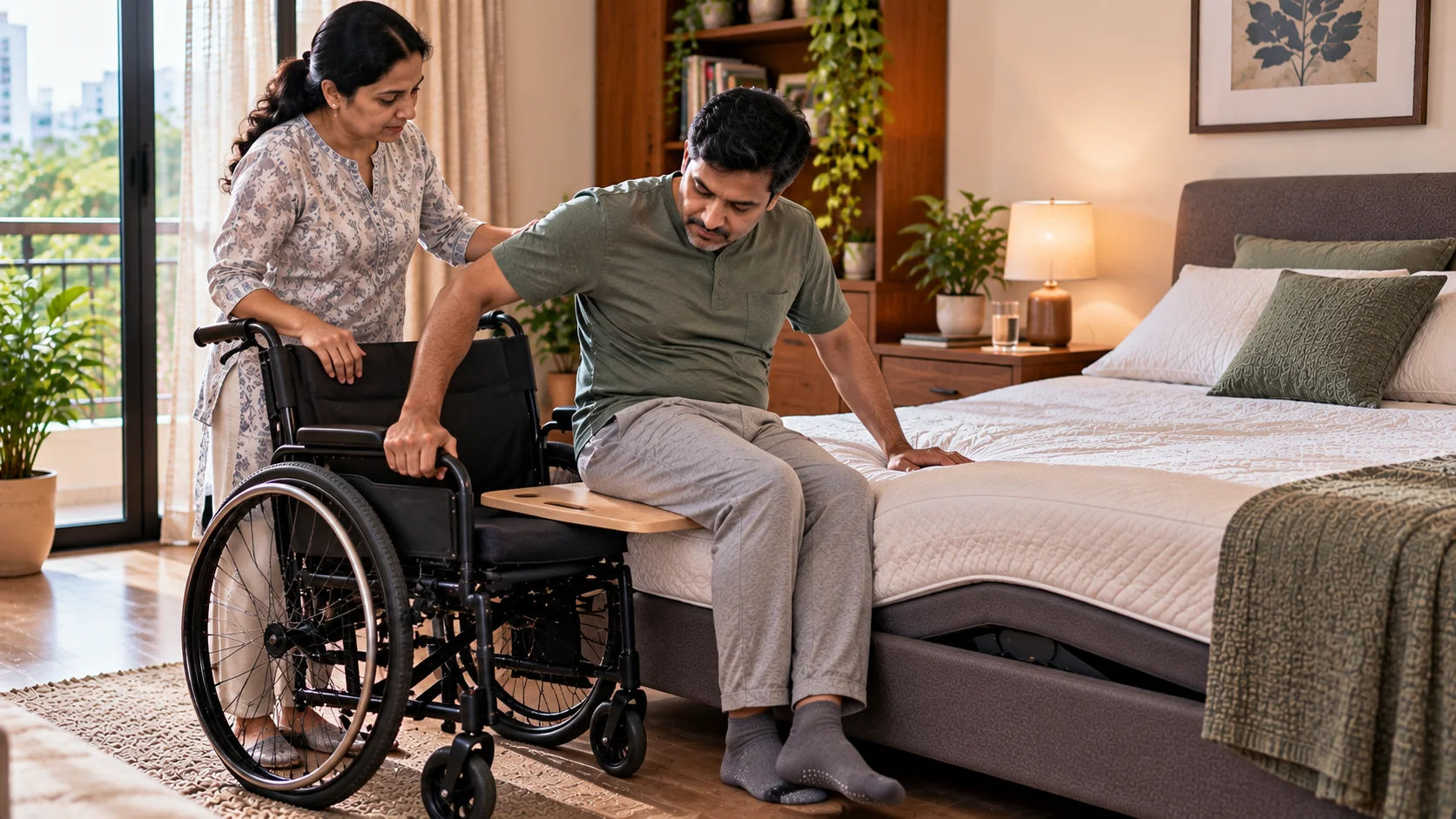
For a person with a spinal cord injury, the bed is a medical tool as much as a place to sleep. A height-adjustable frame lets transfers match the wheelchair, motorised positioning makes regular turning and repositioning possible and a pressure-relieving surface protects numb skin. Raise the knee section before the head to stop sliding, and learn the signs of autonomic dysreflexia, which is an emergency in higher injuries.
A spinal cord injury changes sensation, movement and many body functions below the level of injury. Because the person may not feel pressure or pain, skin can break down without warning, and moving from bed to wheelchair is a daily challenge. Care must be guided by the spinal injury team, but the bed itself makes a large difference. This guide explains how an adjustable bed supports people with spinal cord injury, and what to know about safety.
What the Bed Needs to Do
| Need | Why It Matters | Bed Feature |
| Protect numb skin | Pressure sores can form without pain warnings | Pressure-relieving mattress and easy repositioning |
| Safe transfers | Wheelchair-to-bed moves are high-effort and high-risk | Height adjustment to match the chair seat |
| Avoid sliding and shear | Sliding down damages skin and tissue | Raise the knee section before the head section |
| Manage blood pressure changes | Standing or sitting up can cause drops in blood pressure | Gradual, motorised raising |
| Caregiver strain | Repositioning and care involve lifting and bending | Raise to working height; use turning and lifting aids |
Care after spinal cord injury should follow the plan set by your spinal injury team, including skin checks, turning schedules, bladder and bowel routines and equipment. Autonomic dysreflexia, a dangerous rise in blood pressure in injuries at or above about T6, is a medical emergency. This article offers general information only.
Pressure Care: The Top Priority
Pressure injuries are one of the most serious and preventable complications. They arise from pressure, shear and moisture over bony areas such as the tailbone, hips, heels and elbows. A pressure-relieving mattress, regular turning as advised by your team and daily skin checks with a mirror or helper are the foundation. The adjustable frame helps by making repositioning easier and by letting a caregiver work at a comfortable height. Our guide on preventing and managing bed sores covers the repositioning framework in detail.
Avoid Sliding: Raise the Knees Before the Head
When the head section rises on its own, the body tends to slide down toward the foot, dragging the skin over the mattress, a force called shear. To limit this, raise the knee section first so the thighs are supported and the body is held in place, then raise the head. When lowering, reverse the order. Check the skin over the tailbone and hips for signs of rubbing after any sitting-up period.
Setting Up for Transfers
- Match the bed height to the wheelchair seat, so the transfer is level or slightly downhill.
- Lock the wheelchair brakes and position it close to the bed, as taught by your therapist.
- Use any recommended transfer aids, such as a sliding board or hoist, rather than relying on strength alone.
- Lower the head section and bring the bed flat before transferring, unless your team advises otherwise.
- Keep the remote reachable and practise the routine with a therapist before relying on it.
Blood Pressure and Dizziness
Many people with higher-level injuries have low blood pressure on sitting up, and symptoms can include dizziness or faintness. Raising the head section gradually, pausing at each stage, is gentler than moving fast. The staged approach described in adjustable beds for POTS and orthostatic hypotension applies here too, though the plan for each person comes from the spinal team.
Know the Signs of Autonomic Dysreflexia
In injuries at about T6 or higher, a painful or irritating stimulus below the injury, such as a full bladder, blocked catheter, constipation or tight clothing, can trigger a sudden, dangerous rise in blood pressure. Typical signs include a pounding headache, flushing and sweating above the injury, a slow heartbeat and goosebumps. If it happens, sit the person upright, loosen tight clothing or straps, check the catheter and bladder and seek emergency help as taught by the spinal team. Family and caregivers should know this routine.
Other Practical Considerations
- Spasms can be triggered by sudden movement, so keep adjustments smooth and slow.
- Temperature control may be impaired, so avoid overheating and use breathable bedding.
- Bed rails should be used only after assessment, since they can create entrapment risks.
- Equipment checks on the mattress, motors and cables help prevent surprises.
- Caregiver wellbeing matters, so use lifting and turning aids and share the work.
The wider safety points in how to ensure patient safety with electric adjustable beds and the transfer guidance in how adjustable beds help people with mobility issues are worth reading together with your care team’s plan.
Choosing the Right Mattress Surface
A pressure-relieving mattress is not optional for someone with reduced sensation. Options include high-specification foam, alternating-pressure or air mattresses, and your spinal injury team or occupational therapist can advise which is right for your level of risk. Check that the mattress works with the frame’s movement and that the cover is easy to clean. A regular inspection of the mattress for damage or hard spots, and daily skin checks, are part of a routine that protects skin year after year.
Caregiver Training and Emergency Planning
Anyone who helps with care should be trained in transfers, turning, skin checks and the emergency steps for autonomic dysreflexia, ideally by the spinal injury team. Keep contact numbers, a list of medicines and a written emergency plan where they are easy to find, and show visitors or relief carers how the bed controls work. A little preparation turns a frightening situation into a manageable one, and it protects both the person with the injury and the people supporting them.
After spinal cord injury, the right bed supports skin protection, safe transfers and easier care. Matching height to the wheelchair, raising knees before the head and keeping adjustments gentle all reduce risk. Build the setup with your spinal injury team, and make sure everyone at home knows the emergency signs.
Explore our Electric Hospital Bed range or Bed for Patients collection.
Related Reading: