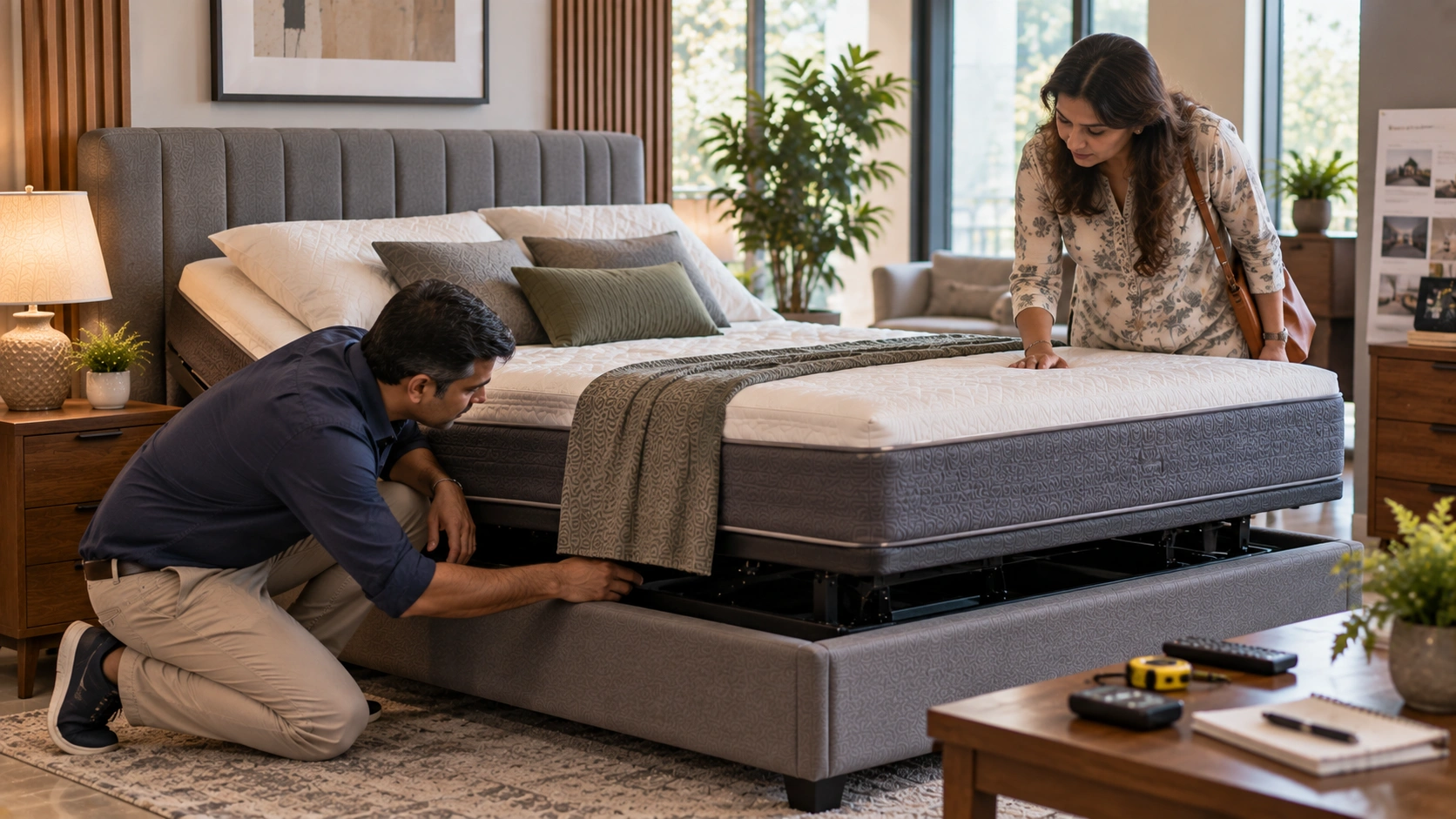

This guide explains how sleeping position, joint support and adjustable-bed positioning may affect comfort for people with arthritis. It is general information, not medical advice, and individual recommendations should come from a qualified healthcare professional.
If joint pain is severe, suddenly worsening, associated with significant swelling, or regularly preventing sleep and normal activities, speak with a healthcare professional rather than relying only on a different bed position.
Arthritis can make something as simple as finding a comfortable sleeping position surprisingly difficult.
Aching knees, stiff hips, painful shoulders, lower-back discomfort and morning stiffness can all make it harder to fall asleep or stay asleep.
There is also a frustrating cycle between pain and sleep. Arthritis pain can disturb sleep, while poor sleep may make pain feel worse the following day.
The Arthritis Foundation notes that sleep problems are common among people with arthritis and that addressing sleep is an important part of managing the condition.
So, can an adjustable bed help?
For some people, yes. The main advantage is not that the bed treats arthritis, but that it allows the sleeping surface to be adjusted to support different parts of the body and reduce uncomfortable pressure points.
This guide explains which positions are worth trying, how to adjust an electric bed for different joints, which features actually matter and what to avoid when choosing a bed.
Talk to a comfort advisor — free, no obligation. Call or WhatsApp: +91 9820138189. Tell us what positioning or home-care requirements you have and we’ll help you understand the right adjustable-bed options. Email: info@zerogbeds.com
Why Can Arthritis Make Sleeping Difficult?
Arthritis can affect different joints and body areas, so there is no single sleeping position that works for everyone.
Someone with knee arthritis may struggle when the legs remain completely straight. Someone with hip arthritis may find side sleeping uncomfortable.
A person with shoulder arthritis may have difficulty sleeping on the affected side, while someone with spinal arthritis may need additional support around the lower back.
Osteoarthritis can affect the knees, hips, hands and spine, among other areas, and symptoms can include pain and stiffness that interfere with sleep.
This is why the goal should not simply be to find a “soft” bed.
The better question is:
Can the sleeping surface support the painful areas while allowing the person to change position comfortably?
An adjustable bed can help by changing the angle of the head and leg sections rather than forcing the body to remain completely flat.
For people already researching Adjustable Beds For Seniors, this can be particularly relevant because arthritis, reduced mobility and difficulty getting in and out of bed often occur together.
What Is the Best Sleeping Position for Arthritis?
There is no universal best position for arthritis.
A useful position is one that:
- Reduces pressure on painful joints
- Keeps the spine reasonably aligned
- Supports the knees, hips or shoulders where necessary
- Allows comfortable breathing
- Does not create excessive pressure on one area
- Makes it possible to change position during the night
Two common starting points are supported back sleeping and supported side sleeping.
Stomach sleeping may be less comfortable for some people because it can place additional strain on the neck and spine, although individual comfort still matters.
The Arthritis Foundation recommends experimenting with pillow support according to the affected joint rather than forcing everyone into one position.
- Back Sleeping With Knee Support
Back sleeping can work well for people who experience knee, hip or lower-back discomfort.
Instead of keeping the legs completely flat, slightly raising the knees can reduce tension and provide additional support.
With an adjustable bed, raise the leg section gradually until the knees are comfortably supported.
The objective is not to create a dramatic bend.
You want a gentle elevation that feels stable and does not create pressure behind the knees.
If lower-back pain is also present, experimenting with a modest combination of upper-body and leg elevation may feel more comfortable.
People specifically dealing with lower-back discomfort can also read our guide on how to set up an adjustable bed for maximum lower back pain relief, which covers positioning considerations in greater detail.
- Side Sleeping With a Pillow Between the Knees
Side sleeping can be useful when lying directly on the back is uncomfortable.
However, the position can put pressure on the hip and shoulder underneath the body.
A pillow between the knees can help keep the legs from collapsing inward and may provide a more stable position.
If one hip is particularly painful, sleeping on the less painful side may be more comfortable.
The same principle applies to the shoulders: avoid putting prolonged direct pressure on a painful shoulder.
An adjustable bed does not need to force the person into a particular side position. Its purpose is to make the transition into and out of supported positions easier.
- Gentle Head and Upper-Body Elevation
Raising the upper body is not primarily an arthritis treatment, but it can make resting and reading more comfortable.
This can also be useful for someone managing several issues at once, such as arthritis combined with back discomfort or nighttime reflux.
A small amount of elevation may be enough.
There is no benefit in assuming that the highest possible angle is automatically better.
The person’s neck, shoulders and back should remain comfortably supported.
- Zero Gravity Position for Joint Comfort
The Zero Gravity position raises both the upper body and legs to create a reclined posture.
Some people find this comfortable because the body is supported across a larger area instead of placing most of the load on individual joints.
However, Zero Gravity should be viewed as a comfort position, not an arthritis treatment.
If you want to understand what the position actually does and which claims are supported versus exaggerated, our recent guide on Zero Gravity Position Benefits: Science Vs Marketing Hype provides a useful explanation.
For someone with arthritis, the practical question is simple:
Does the position reduce discomfort and make resting easier?
If yes, it may be useful. If it creates pressure or discomfort, another position should be tried.
How Can an Adjustable Bed Help With Arthritis?
The biggest benefit of an adjustable bed is position flexibility.
A traditional flat mattress gives you one basic sleeping surface. Pillows can modify that surface, but they can shift, flatten and require frequent rearrangement.
An adjustable bed changes the angle beneath the body itself.
This can make it easier to:
- Raise the knees
- Elevate the upper body
- Change between sleeping and sitting
- Reduce pressure on selected areas
- Find a comfortable position without repeatedly arranging pillows
- Get into and out of bed more easily
These are practical Health Benefits Of Adjustable Beds, rather than claims that the bed can cure arthritis.
For older adults, the ability to adjust the bed before standing can also be valuable. If mobility is already limited, moving from a flat sleeping position directly into a more upright position may feel easier than trying to sit up from completely flat.
Our guide on how adjustable beds improve sleep and quality of life for seniors also discusses comfort, mobility and everyday positioning considerations for older users.
Which Adjustable Bed Position Should You Use for Different Joint Problems?
Different joints may benefit from different support strategies.
| Arthritis Area | Position to Try | Useful Support |
| Knees | Back sleeping with knees slightly raised | Pillow or adjustable leg elevation |
| Hips | Less painful side or supported back sleeping | Pillow between knees or under knees |
| Shoulders | Back sleeping or opposite side | Arm support with pillow |
| Lower back | Supported back or side sleeping | Knee elevation or pillow between knees |
| Neck | Neutral head position | Appropriate-height pillow |
| Multiple joints | Reclined or adjustable position | Gradual head and leg elevation |
These are starting points, not prescriptions.
For example, a person with severe shoulder arthritis may dislike side sleeping even if it is otherwise comfortable. Another person may prefer side sleeping because remaining on their back causes discomfort.
The best Adjustable Bed Position For Back Pain or joint pain is therefore the one that supports the individual without creating new pressure elsewhere.
How to Adjust an Adjustable Bed for Arthritis
Avoid immediately moving the bed to a dramatic angle.
Instead:
Start Close to Flat
Begin from a comfortable neutral position.
Raise One Section at a Time
Try the upper body first or the legs first, depending on where the discomfort occurs.
Check Pressure Points
Pay attention to the knees, hips, shoulders, neck and lower back.
Make Small Adjustments
A few degrees can make a noticeable difference. Large movements are not automatically better.
Give the Position Time
Stay in the position long enough to determine whether it remains comfortable.
Save a Preferred Setting
If the bed includes programmable positions, save the configuration that works best.
This is particularly useful for people who change positions frequently or caregivers who need to help another person adjust the bed.
What Adjustable Bed Features Matter Most for Arthritis?
A long feature list does not necessarily make a bed better.
Focus on practical features first.
Independent head and leg adjustment
This provides greater control than a bed where all sections move together.
Simple remote control
If the user has painful fingers or limited hand strength, complicated controls can become frustrating.
Smooth motor movement
The bed should move steadily and predictably.
Suitable weight capacity
Always confirm the rated capacity for the exact model.
Compatible mattress
The mattress needs to flex appropriately with the adjustable mechanism.
Suitable bed height
The user should be able to get in and out of the bed safely.
Reliable after-sales service
Motorised beds need dependable support, particularly when used every day.
Memory or preset positions
These can be useful if the user has a preferred position for sleeping, reading or resting.
Adjustable Bed vs. Pillows for Arthritis
Pillows remain useful even when you own an adjustable bed.
A pillow between the knees can support side sleeping. A pillow under the knees can make back sleeping more comfortable. Additional support beneath an arm may reduce shoulder strain.
The difference is that pillows provide localised support, while an adjustable bed changes the overall sleeping surface.
For example, someone with knee discomfort might combine a gentle leg elevation with a pillow rather than relying on a large stack of cushions.
The Arthritis Foundation similarly recommends using pillows to support joints and maintain comfortable alignment during sleep.
Common Mistakes When Using an Adjustable Bed for Arthritis
Choosing the highest setting
More elevation does not automatically mean more comfort.
Staying in one position all night
Some people become stiff when they remain in one position for too long. The ability to change positions is one of the useful features of an adjustable bed.
Ignoring the mattress
A poorly matched mattress can undermine the benefits of an adjustable base.
Using a pillow that is too high
Excessive pillow height can push the neck out of a comfortable alignment.
Focusing only on the painful joint
Supporting the knee may help, but if the resulting position strains the hip or lower back, it is not a good overall position.
Buying features instead of usability
Massage, app controls and other extras may be attractive, but a simple remote, smooth movement and reliable positioning can be more important for everyday use.
Is an Adjustable Bed Good for Seniors With Arthritis?
For some older adults, an adjustable bed can provide practical advantages beyond sleeping comfort.
Adjustable Beds For Seniors can make it easier to:
- Move from lying to sitting
- Read or watch television without piling up pillows
- Change leg elevation
- Find a more comfortable resting position
- Reduce the physical effort required to reposition the body
- Allow a caregiver to adjust the bed when necessary
However, safety should remain the priority.
If someone has significant mobility problems, weakness or a history of falls, bed height, transfer technique and the surrounding room setup should also be considered.
When Should You Speak With a Doctor?
An adjustable bed should not be used as a substitute for arthritis treatment.
Speak with a healthcare professional if joint pain:
- Regularly prevents sleep
- Is getting progressively worse
- Causes significant swelling
- Limits normal activities
- Is accompanied by unusual redness or warmth
- Suddenly becomes severe
- Continues despite reasonable home-care measures
The NHS also recommends seeking medical advice when joint pain is affecting sleep or normal activities, worsening, recurring or remaining unresolved.
The bed can support comfort, but the underlying condition still needs appropriate management.
Quick Checklist for Choosing an Adjustable Bed for Arthritis
Before buying, check:
- Which joints cause the most discomfort?
- Does the user prefer back or side sleeping?
- Can the knees be raised independently?
- Is the remote easy to operate?
- Is the mattress compatible?
- Is the weight capacity appropriate?
- Is the bed height suitable?
- Can the user get in and out safely?
- Will a caregiver operate the controls?
- Can preferred positions be reproduced easily?
- Does the warranty cover the motors and electrical components?
- Is after-sales service available?
If the main concern is joint and lower-back comfort, prioritise positioning flexibility over unnecessary features.
Why Choose Zero G Beds for Adjustable Positioning?
Zero G Beds provides adjustable-bed solutions for home comfort, senior care and patient requirements.
For people considering an adjustable bed because of arthritis, the right configuration should be based on the person’s mobility, preferred sleeping position, room setup and areas of discomfort.
Zero G Beds provides:
- Adjustable positioning
- Remote-controlled operation
- Home-care and patient-focused solutions
- Mattress and configuration guidance
- Professional delivery and installation
- Product demonstration by trained technicians
- After-sales assistance
- 15-year warranty
- CE-certified adjustable bed systems
- Experience serving families in India since 2003
Need help choosing the right configuration? Call or WhatsApp +91 9820138189 or email info@zerogbeds.com.
Get Help Choosing the Right Adjustable Bed
The right bed for someone with arthritis is not necessarily the softest bed or the one with the most functions.
Look for a setup that allows the person to find a supported position, change positions easily and reduce unnecessary pressure on painful joints.
Start with the person’s actual needs: which joints hurt, which positions feel comfortable, how easily they can move and whether a caregiver will operate the bed.
Then choose the adjustable mechanism, mattress and features around those requirements.
Talk to Zero G Beds for personalised guidance. Call/WhatsApp: +91 9820138189 | Email: info@zerogbeds.com
The Bottom Line
Adjustable beds can be useful for people with arthritis because they provide more control over sleeping and resting positions.
Back sleeping with gentle knee elevation, supported side sleeping and a comfortable reclined position are all options worth considering, depending on which joints are affected.
There is no single Adjustable Bed For Back Pain or arthritis position that works for everyone. The best setup is the one that supports the body without creating new pressure points.
Use the adjustable mechanism to make small, controlled changes rather than chasing a particular angle. Combine it with appropriate pillows and a compatible mattress, and involve a healthcare professional when pain is persistent or worsening.
If you’re considering an adjustable bed for yourself or a family member, call/WhatsApp +91 9820138189 or email info@zerogbeds.com for help choosing a configuration based on your requirements.