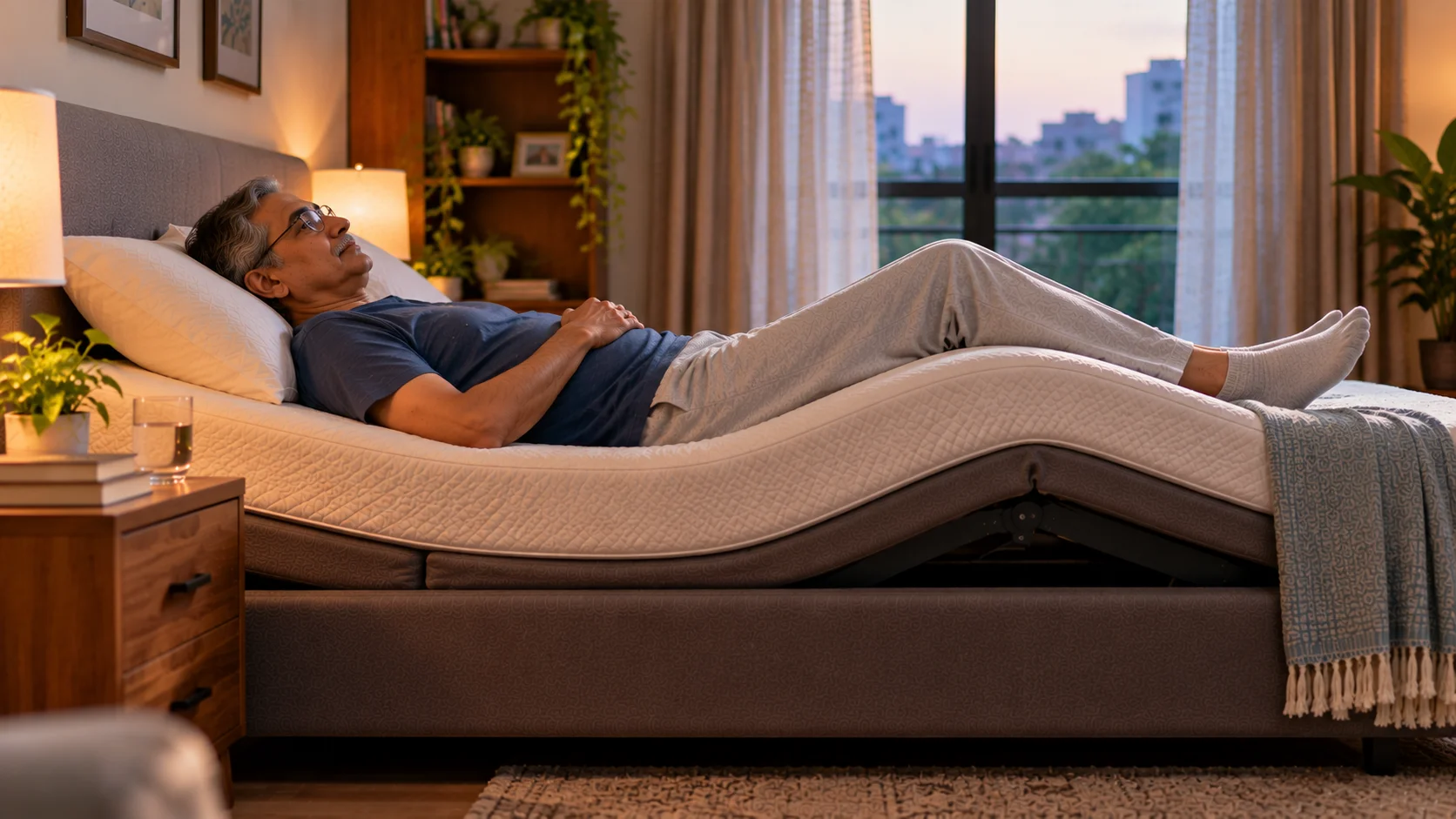
Spondylolisthesis means one vertebra has slipped forward over the one below, usually in the lower back. Arching the back tends to aggravate it, while a gentle, supported bend eases it. On an adjustable bed, that means raising the knees to flatten the lower back, keeping the recline modest and avoiding stomach sleeping. It manages symptoms and does not move the vertebra back.
A back that aches, a hamstring that always feels tight and pain that worsens when you stand or arch backward can point to spondylolisthesis. It can affect young athletes, where a stress fracture lets a vertebra slip, and older adults, where wear and tear loosens the joints. The condition ranges from harmless to disabling. Here is how an adjustable bed can ease spondylolisthesis at night, and which positions to avoid.
What Is Happening in the Spine
The spine’s bones are held in line by the discs in front and small facet joints behind. In spondylolisthesis, a defect or wear in those joints lets one vertebra slide forward. Doctors grade the slip from mild to severe. Extension, or arching the back, tends to stress the slipped segment, while flexion, a gentle forward bend, often relieves it, which is why many people feel better sitting or leaning on a trolley.
Positions at Night
| Position | Effect on the Slipped Segment | Verdict |
| Back, knees raised, head slightly raised | Flattens the lower back and eases extension | Usually the best |
| Side, knees bent, pillow between them | Keeps the spine neutral and relaxed | Good |
| Flat with legs straight | Can leave the lower back arched | Often uncomfortable |
| Stomach | Arches the lower back strongly | Avoid |
| Very steep recline | Can slump the spine and feel unstable | Keep it gentle |
Setting Up the Bed Step by Step
- Raise the knee section first, 15 to 25 degrees, until the small of your back flattens against the mattress.
- Raise the head section only a little, 10 to 20 degrees, for comfort.
- Check the gap. If your lower back still arches away, a slim rolled towel and a little more knee lift usually fix it.
- Choose a medium-firm mattress that supports without letting the hips sag.
- Review after one to two weeks, changing one angle at a time.
Leg weakness, numbness in the groin or saddle area, loss of bladder or bowel control, or severe worsening pain need urgent medical attention. Young people with persistent back pain, particularly athletes, should be assessed rather than assuming it is muscular. Treatment decisions should be guided by a spine specialist.
How It Differs From Spinal Stenosis and Disc Problems
Spondylolisthesis and spinal stenosis both like gentle flexion, but the reasons differ: here the aim is to reduce stress on a mobile, slipped segment, while in stenosis it is to open space for nerves. Disc-related pain follows its own pattern, covered in best adjustable bed positions for sciatica and herniated disc pain relief and non-surgical herniated disc recovery. The same gentle setup often helps all three, but the diagnosis matters.
Daytime Habits That Protect the Spine
- Avoid repeated or loaded back arching, such as heavy overhead lifts or deep backbends.
- Strengthen the deep core with a physiotherapist, since muscle support reduces the load on the slipped segment.
- Stretch tight hamstrings gently, which are often part of the picture.
- Lift with the hips and knees, keeping loads close to the body.
- Limit high-impact sport until your specialist says it is safe, especially in young athletes.
Mattress and Pillow Details
A mattress that sags in the middle lets the hips drop and the lower back arch, which is the opposite of what you want. A medium-firm surface with some contouring spreads the load, as explained in best mattress firmness for back pain on an adjustable bed. The pillow tricks in the DIY pillow and bolster setup guide give extra support at the knees and lower back.
When Is Treatment More Than Positioning?
Most low-grade slips are managed without surgery, using physiotherapy, activity changes and sometimes a brace. Surgery is considered for high-grade slips, progressive neurological symptoms or pain that does not respond to a good trial of conservative care. Positioning helps you sleep and recover, but it should not delay assessment when symptoms are changing.
Young Athletes and Spondylolisthesis
In teenagers and young adults, spondylolisthesis often follows a stress fracture in the vertebra caused by repeated arching and twisting, as in gymnastics, cricket fast bowling or weightlifting. Rest from aggravating activity, a brace in some cases and guided rehabilitation are the usual approach, and early diagnosis matters. A comfortable, flexed sleeping position helps the back settle, but a young person with ongoing back pain should be assessed by a doctor rather than treated at home.
Tracking Progress and Knowing When to Escalate
Keep a short note of pain levels, the positions that help and any leg symptoms. Steady improvement over several weeks is reassuring, while new leg weakness, numbness or pain that wakes you repeatedly despite a good setup is a reason to seek review promptly. Take your notes to the appointment, since they help the specialist decide whether imaging, physiotherapy changes or other treatment is the next step.
Spondylolisthesis is about not letting the lower back arch and strain a slipped segment. A raised knee section, a modest head angle and a medium-firm mattress give the spine a calmer night, and core strengthening with a physiotherapist works on the cause.
Explore our Adjustable Bed for Back Pain range or Leg Rest Beds collection.
Related Reading: