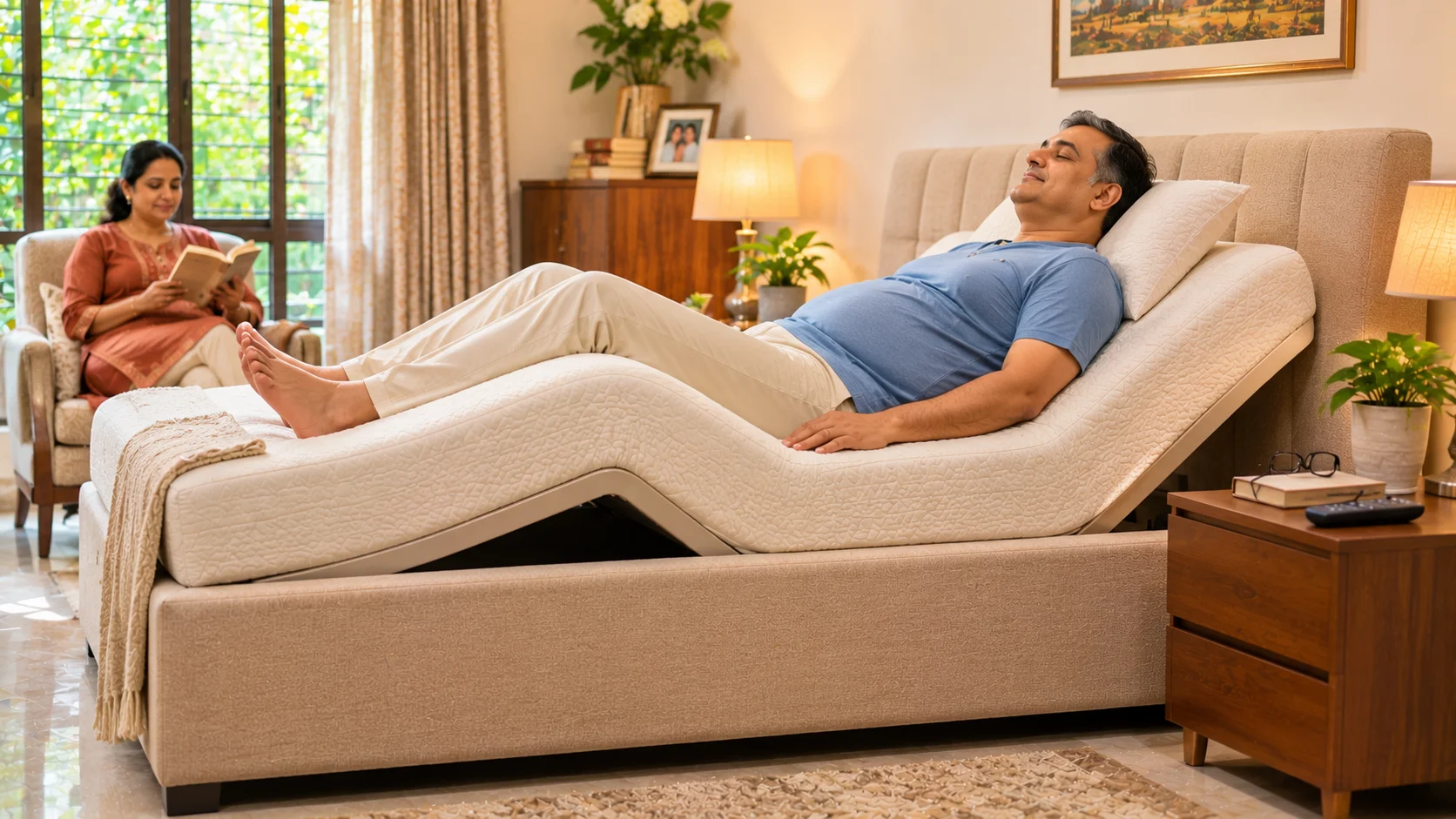

An orthopedic bed is usually a firm, supportive bed or mattress designed to keep the spine well aligned, while an electric bed has a motorised base that changes the shape of the bed. They are not opposites. An orthopedic-style mattress can sit on an electric base if it bends with it. For back pain, supportive firmness helps many people, and adjustable positions help others by taking pressure off the lower back. See a doctor for persistent or severe pain.
Shoppers with back pain often get two pieces of advice: buy an orthopedic bed, or try an electric bed. The terms sound similar but describe different things, and the wrong choice can mean spending a lot on something that does not help. This guide explains what each term really means, how they differ, when each is useful and how they can work together. It gives general information, and a doctor or physiotherapist should assess any back pain that is severe, lasting or spreading to the legs.
What an Orthopedic Bed Usually Means
In practice, orthopedic is a label used by many mattress and bed makers for products meant to support the spine. Most such mattresses are firmer than a very soft mattress and aim to keep the body in a neutral line. The term is used loosely, and it does not by itself guarantee a particular firmness, material or medical benefit. A mattress sold as orthopedic can be foam, latex or spring, so check the actual construction, thickness and density rather than the label.
What an Electric Bed Does
An electric bed has a base that bends in sections, moved by motors and controlled with a remote. It can raise the head, lift the knees and often holds a preset position. It does not decide the firmness of the surface, which comes from the mattress. Our guide on how an electric bed works explains the motors and control box.
Electric Bed vs Orthopedic Bed at a Glance
| Point | Orthopedic Bed | Electric Bed |
| Main idea | Firm, supportive surface | Adjustable shape of the bed |
| Changes position | No, stays flat | Yes, back and knee sections move |
| Helps with | Spinal alignment through firmness | Pressure relief through positioning |
| Mattress matters | Yes, the mattress is the product | Yes, it must bend with the base |
| Needs power | No | Yes, with backup advised |
| Typical cost | Varies widely | Usually higher |
How Each One May Help Back Pain
Back pain has many causes, so what helps one person may not help another. A firm, supportive mattress helps some people by stopping the hips from sinking. Others find relief when the knees are lifted slightly, which can reduce tension in the lower back, or when the upper body is raised a little. An electric bed lets you try these positions and save the one that feels best. Our article on setting up an adjustable bed for lower back pain shows a step-by-step way to do this.
IMPORTANT NOTE
See a doctor promptly if back pain follows a fall or injury, is severe or getting worse, comes with fever, weakness or numbness in the legs, or affects bladder or bowel control. These can be signs of a serious problem. Neither a bed nor a mattress treats these conditions. This guide gives general information and is not a diagnosis.
Can You Combine Them?
Yes, and for many people this is the best answer. A supportive mattress placed on an electric base gives both firmness and adjustability, provided the mattress can bend with the base. Very stiff mattresses and some spring types do not flex well and can buckle or lift. Read the electric bed mattress guide to see which types work. Natural latex, such as our natural latex mattress, is often chosen for its resilience and ability to flex.
How to Choose
- Start with the pain pattern. Note what makes your back hurt: lying flat, standing up, getting out of bed or long sitting.
- Test the surface. Lie in your usual position and check that the hips and shoulders feel supported, not sinking or pushed.
- Try the positions. If you can, test knee lift and slight head raise to see whether they ease the pain.
- Check the mattress compatibility. Ask whether the mattress bends with the base.
- Look at long-term needs. If you may need a raised position for recovery, breathing or ageing, an electric base gives more flexibility.
- Check service. Ask who services the motors in your city, and read the warranty guide.
Mistakes to Avoid
- Buying on the label alone. Orthopedic written on a box is not a guarantee of suitability.
- Choosing the hardest mattress. Too firm can be as uncomfortable as too soft.
- Ignoring the base. A sagging base or slats can undo a good mattress.
- Using an unsuitable mattress on an electric base. It can reduce support and shorten the life of both.
If a setting does not feel right after purchase, see how to troubleshoot common adjustable bed problems before assuming the bed is faulty.
A Practical Way to Test Before Buying
Whatever you choose, spend at least ten to fifteen minutes lying on the bed in your usual sleeping position before buying. Try lying on your back, your side and slightly raised. Notice whether your lower back feels supported, whether your shoulders sink too far and whether you can get up easily. If a shop or showroom will not let you test, ask about a trial or return policy in writing. A few minutes of testing is worth far more than a label.
The real question is not electric or orthopedic, but what combination of support and positioning suits your back. Try the surface, test the positions and make sure the mattress and base work together. If you would like to see how an electric bed can be set up for your back, our team will gladly guide you.
Browse our Electric Bed range or the Natural Latex Mattress, or speak to our team to find the right combination for you.
Related Reading