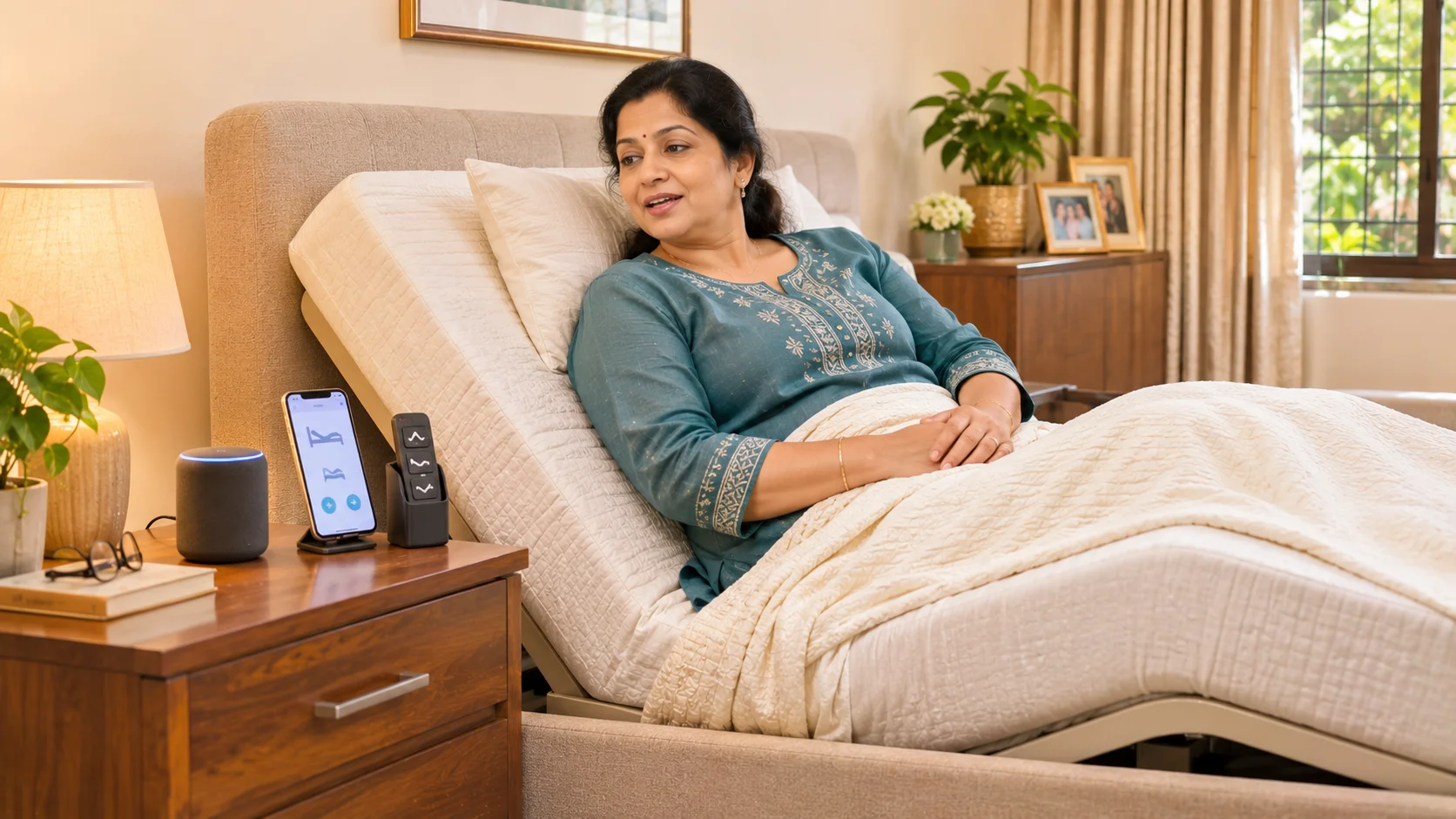
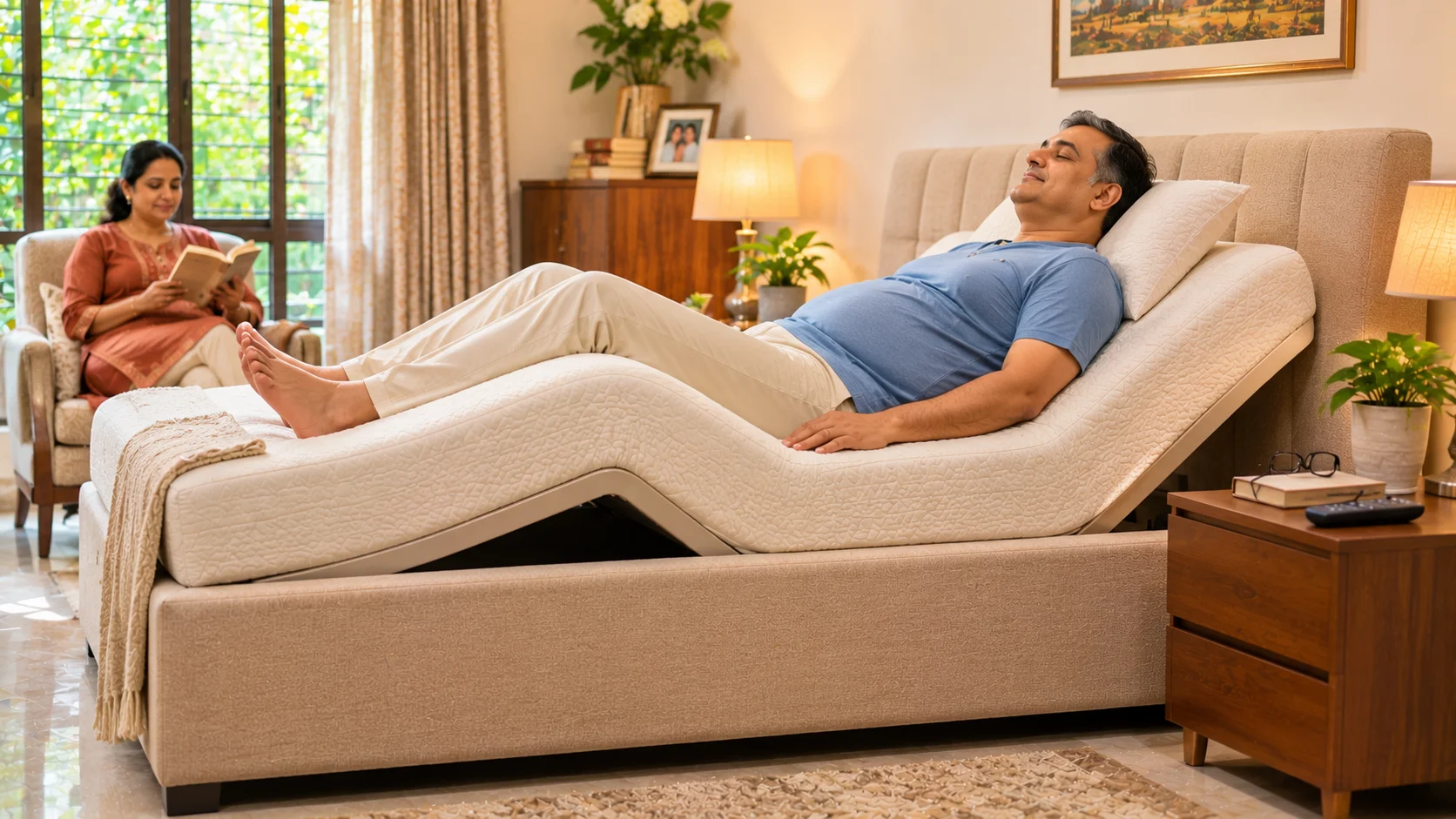
On a zero gravity electric bed, you use the remote to raise the upper half, the lower half or both at the same time. Raising both together gives the zero gravity position, in which the back is reclined and the legs are raised so that body weight is spread more evenly. Zero-G beds move the back rest from 0 to 90 degrees and the leg rest from 0 to 45 degrees. People with heart, circulation or blood pressure conditions, and women in later pregnancy, should check with a doctor first.
The phrase zero gravity gets used a lot in bed marketing, and it is rarely explained. Zero-G’s own description is simple: lie down on one of its beds, and with a remote control, raise the upper half, the lower half or both at the same time to experience the zero gravity sleeping position. This guide explains what that means on a real electric bed, how to set it up and how to decide whether it suits you.
What the Zero Gravity Position Is
Zero Gravity is a reclined position in which the back and legs are both raised, so that the body is supported in a gentle curve and weight is spread across the whole surface. Zero-G’s website describes it as adjusting the legs and back into an elevated position for maximum comfort, which helps blood circulation, and notes that the posture was inspired by the position used by astronauts. In a bed, the idea is to reduce pressure on the spine and take strain off the lower back.
Three Basic Movements
| Movement | What You Raise | Typical Use |
| Upper half only | The back rest | Sitting up to read, eat or watch television |
| Lower half only | The leg rest | Resting tired legs and feet |
| Both together | Back and legs at once | The zero gravity position for relaxation and sleep |
Zero-G beds have a back rest that moves from 0 to 90 degrees and a leg rest that moves from 0 to 45 degrees, so each of these movements is within reach. You can see the single movements on our back rest and leg rest pages.
How to Set Up the Zero Gravity Position
- Start flat and make sure you are comfortable on your back.
- Raise the back rest gently to a slight recline, not fully upright.
- Raise the leg rest until your knees are roughly level with your heart, with a slight bend.
- Adjust both in small steps until your lower back feels supported and your legs feel light.
- Save the position as a preset if your remote allows it. Our guide to your adjustable bed remote explains how.
- Hold it for a few minutes first, then longer as you get used to it.
Angles that suit one person may not suit another, so treat any figure as a starting point and fine-tune it. Our guide to recliner bed angles for reading, TV, meals and sleep shows how the settings differ by activity.
Who May Find It Helpful
- People with back discomfort, who may find that raised knees ease pressure on the lower back. See our page on adjustable beds for back pain.
- People with tired or heavy legs, for whom a gentle leg lift may bring comfort. See our pages on blood circulation and varicose veins.
- People who read or watch television in bed and want a supported position.
- Older family members who find a flat bed uncomfortable.
Who Should Ask a Doctor First
- People with heart conditions, since raising the legs high can change how the heart handles fluid. Our guide on recliner beds for heart failure explains why.
- People with circulation or blood pressure problems, including those who feel dizzy on standing.
- Women in later pregnancy, who are often advised about lying on the back.
- Anyone recovering from surgery, who may have rules about positions.
- People with swallowing, breathing or reflux problems, who may need a different angle.
IMPORTANT NOTE
The zero gravity position is a comfort setting and not a treatment. Statements about benefits on any website describe general comfort and are not medical advice. If you have a health condition, ask your doctor before you use the position regularly, and stop and seek advice if you feel breathless, dizzy, chest pain or unusual discomfort.
Getting Out of the Position Safely
Do not jump straight up from a raised position. Lower the legs, bring the back to a seated position, rest your feet on the floor and pause for a minute before you stand. This avoids dizziness, as explained in our guide on slower transitions for dizziness.
Zero Gravity for Sleep
Many people use a gentle version of the position for sleep, with a slight recline and the knees raised. If you tend to slide down, add a small knee lift. If your breathing, reflux or snoring is the reason for the bed, a steeper back angle may suit you better, so look at our guide to finding the best sleeping position on an adjustable bed and our page on adjustable beds for sleep disorders.
Using the Position in Indian Conditions
- After a long day. After a long commute by train, metro or bus, or hours on your feet, a short rest with the legs raised may feel comforting.
- Heat and humidity. Use breathable cotton bedding in summer and the monsoon, and make sure room cooling does not blow directly on the body.
- Firm sleeping habits. Many Indians prefer a firm surface, so introduce the position gradually, with short sessions at first.
- Power cuts. The bed stays at its angle in a power cut, so know how to lower it safely, as explained in our guide to electric beds and power cuts.
The zero gravity position is simply the back and legs raised together, in a comfortable curve you can fine-tune with a remote. It suits many people for rest and sleep, but it is not for everyone. Start gently, find your own angles, get out slowly and ask your doctor if you have a health condition.
Explore our Zero Gravity range or the Recliner Beds collection.
Related Reading