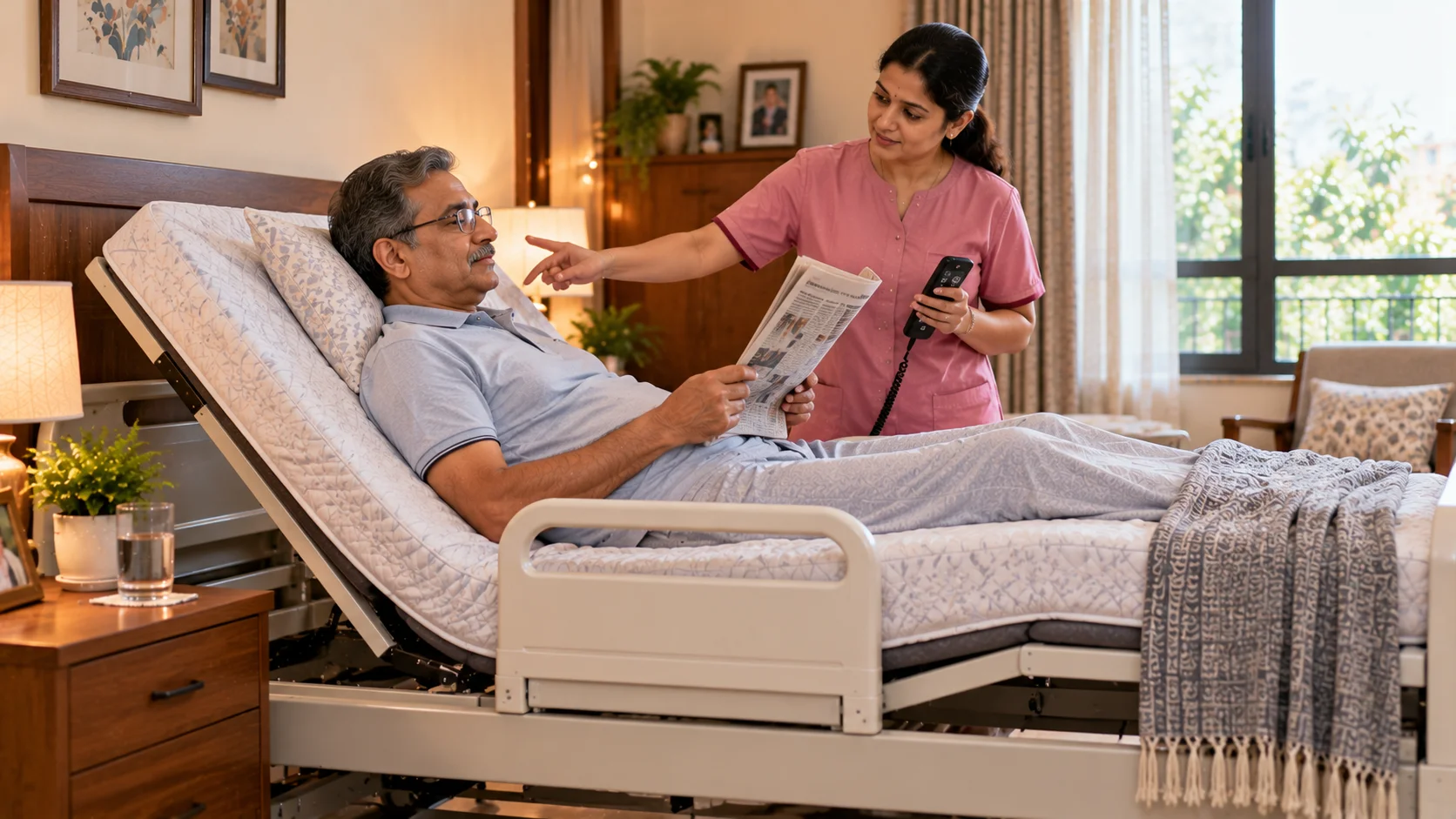
An electric bed supports independent living when the senior can operate it, get out of it and call for help from it without anyone else. That means a remote that stays within reach, a bed height that lets both feet rest flat, night lighting to the bathroom, a phone or alert button at the bedside, a power-cut plan and a daily check-in routine with family. An electric bed is not a monitoring device, so people with dementia or a high fall risk need supervision as well.
More Indian seniors now live alone or with a single helper while their children work in another city or country. For them, an electric bed can be a real gift of independence: they can sit up for tea, raise their legs, and get out of bed without waiting for help. It only works safely if the setup is thought through, because the person using it may be on their own when something goes wrong.
The Six Things to Get Right
| Setup Area | Risk If Ignored | What to Do |
| Remote and controls | A dropped remote leaves the senior stuck at an awkward angle | Fit a holder or lanyard, choose large buttons and keep a spare remote |
| Bed height and exit | Falls when standing up | Set the height so both feet rest flat, and sit at the edge for a minute before standing |
| Night lighting | Trips on the way to the bathroom | Use soft motion-sensor lights from the bed to the bathroom |
| Phone and alert | No way to call for help after a fall | Keep a phone, key numbers and, if possible, an alert button within reach |
| Power and cables | Tripping, loose plugs, or being stuck during a power cut | Route cables neatly and plan for outages |
| Bedroom path | Clutter and loose rugs cause falls | Keep a clear path, remove loose rugs and fix cables |
Choose Controls the Senior Can Actually Use
A remote with a few large, clearly marked buttons works better than a feature-heavy one. One-touch presets for sitting up and lying flat are especially useful, and our guide to your adjustable bed remote explains how they work. Practise the controls together at installation until the senior can use them without hesitation.
Set the Bed Height and Practise the Exit
Most falls happen when getting in or out of bed. Set the height so the senior’s feet rest flat on the floor with the knees at about hip level, bring the bed to a seated position before standing and pause for a minute to avoid a dizzy spell. Non-slip footwear by the bed makes a real difference. Our guide on patient safety with electric adjustable beds covers the safe-operation basics.
Light the Way at Night
Night trips to the bathroom are a common time for accidents. A motion-sensor night light that switches on as the senior sits up, with another along the path, removes the need to look for a switch in the dark.
Keep a Way to Call for Help
Place a phone with large-print emergency numbers on the bedside table, and consider a wearable alert button if the senior can use one. Agree a daily check-in time with a family member, such as a phone call or video call every morning, so that a missed call triggers a visit from a neighbour or relative. It is a simple routine, but it is often the most effective part of the plan.
Prepare for Power Cuts
If the power goes, the bed stays at its current angle. Before bedtime, set it to a comfortable, safe position, keep a torch within reach and learn whether your model has a manual or battery backup. We cover what to ask in our guide on electric beds and power cuts in India.
IMPORTANT NOTE
An electric bed is not a monitoring device and does not detect falls. Seniors with dementia, severe balance problems or a history of falls should have supervision, and bed rails must only be fitted on professional advice, as gaps in rails can cause entrapment.
Involve the Family and a Local Contact
Share the supplier’s service contact with at least one nearby person, and make sure someone local knows where the spare remote and the power switch are. If a child or relative lives abroad, our NRI checklist for buying an electric bed for parents covers delivery, installation and service in one place.
A Weekly Safety Routine
- Test the remote and replace the batteries before they run low.
- Check the cables for fraying, loose plugs or anything trapped beneath the base.
- Test the night lights and replace weak bulbs or batteries.
- Check the bed movement for smooth, quiet operation, and report any new noise.
- Charge the phone and alert button and make sure the emergency numbers are current.
A family member can run through this routine on a weekly video call, which keeps small problems from becoming safety issues. Our guide on troubleshooting common adjustable bed problems covers what to check if the bed misbehaves.
When to Consider More Support
An electric bed helps with independence, but it has limits. If your parent has repeated falls, memory problems, difficulty using the remote or needs help with transfers, consider part-time help at home or a care setup with trained support. A professional assessment by a physiotherapist or occupational therapist can identify the right level of help and whether features such as height adjustment or rails are appropriate.
Low-Cost Add-Ons That Improve Safety
- A non-slip mat or rug-free floor beside the bed, so feet never meet a sliding surface.
- A sturdy bedside chair with arms, for sitting down to dress or put on footwear.
- A small basket or tray on the bedside table for glasses, keys and the phone, so nothing is dropped and searched for in the dark.
- A bedside torch that works even when the power fails.
Independence at home depends on small details done well: a reachable remote, the right height, a lit path, a phone within arm’s length and a daily call from family. Get those right and an electric bed lets a senior stay in their own home with confidence.
Explore our Electric Hospital Bed collection or the Bed for Patients range.
Related Reading