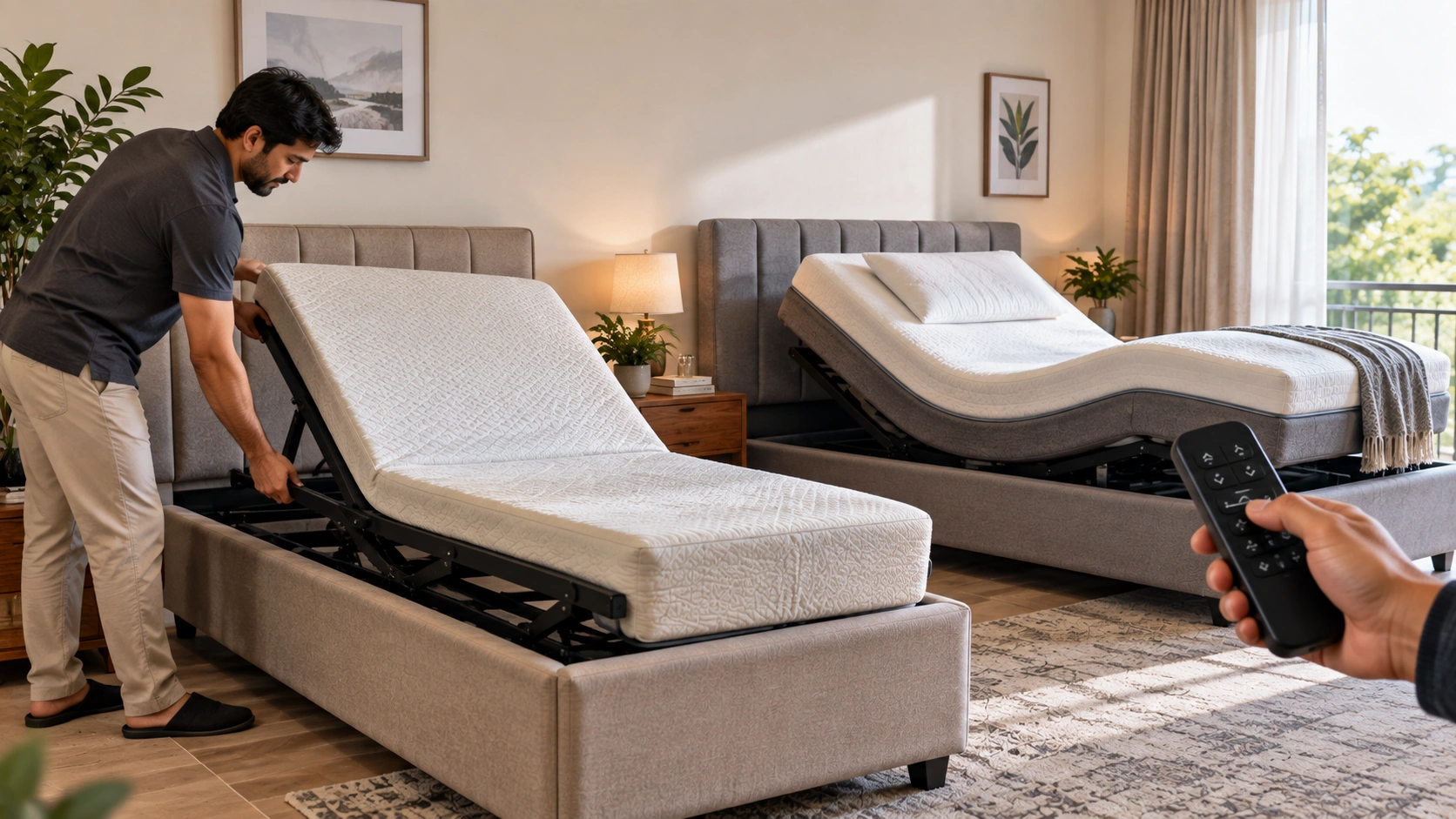

Most electric adjustable beds cannot move without power unless they specifically include a battery backup system or a manual hand-crank override features not every model includes by default. Given how common power interruptions still are in many parts of India, this is one of the most practical questions to ask before buying, especially for patients or elderly users who may need to change position urgently.
It’s a fair and genuinely practical question, especially in India where power interruptions remain common in many areas, even in metro cities during peak load periods: what happens to an electric adjustable bed when the power goes out? For most buyers this is a minor inconvenience, but for patients, elderly users, or anyone who relies on repositioning for comfort or medical reasons, it’s a question worth answering before you buy, not after a power cut leaves someone stuck in an uncomfortable or unsafe position.
What Happens by Default When Power Goes Out
A standard electric adjustable bed, without any backup system, will simply stop functioning when power is lost it stays exactly in whatever position it was in when the outage began. This isn’t necessarily dangerous on its own, but it can be a real problem if the bed happens to be in a steep, uncomfortable, or unsafe position at the moment of the outage, or if someone needs the bed returned to flat urgently, such as for a medical reason.
The Two Main Backup Solutions
| Solution | How It Works | Best For |
| Built-in battery backup | An internal battery automatically powers the motor for a limited number of adjustments during an outage | Frequent or unpredictable power cuts; patients needing reliable access to repositioning |
| Manual hand-crank override | A manual mechanism lets you physically crank the bed back to flat without any power at all | A simple, low-cost safety net for occasional outages |
| No backup (standard models) | Bed stays fixed in its last position until power returns | Areas with very reliable power supply only |
Questions to Ask Before Buying, If Power Reliability Is a Concern
- Does this specific model include a battery backup, or is it a paid add-on? Not every adjustable bed includes this by default, even within the same brand’s range.
- How many adjustment cycles does the battery support before needing to be recharged or replaced, and how is it recharged?
- Is there a manual override option as a lower-cost alternative or backup to a battery system?
- How is the bed’s default “last position” handled does it stay exactly where it was, or is there a safety default it moves toward before fully losing power?
Who Should Prioritize Battery Backup Most
- Patients recovering from surgery or managing a medical condition where a specific position needs to be reliably maintained or restored regardless of power status.
- Elderly users living alone, particularly if a height-adjustable base is relied on for safe transfers in and out of bed.
- Households in areas with genuinely frequent or unpredictable outages, where relying on power returning “soon” isn’t a dependable assumption.
- Anyone using the bed’s flat position for sleep by default, where getting stuck in an elevated position overnight would be a meaningful discomfort, not just an inconvenience.
Practical Workarounds If Your Bed Doesn’t Have Backup
If you already own an adjustable bed without a battery backup or manual override, a few practical steps reduce risk. Keep the bed in a reasonably comfortable, safe position overnight by default, rather than an extreme incline, so an unexpected outage doesn’t leave anyone stuck somewhere uncomfortable. If your home has a general power backup system, such as an inverter, check whether the adjustable bed’s motor can be run off it many standard adjustable bed motors draw relatively modest power and may be compatible with a home inverter setup, though this is worth confirming with an electrician given the specific motor’s power draw.
For a broader look at safety considerations with electric adjustable beds beyond just power backup, our article on how to ensure patient safety with electric adjustable beds is a useful companion read.
Is This a Reason to Avoid Electric Adjustable Beds?
Not at all it’s simply a specification worth checking upfront, the same way you’d check weight capacity or motor noise before buying. Many adjustable bed manufacturers, including options built specifically for the Indian market, now offer battery backup as either a standard feature or an available upgrade precisely because power reliability is a known, practical concern for many households. The key is asking the question directly before purchase rather than discovering the answer during your first power cut.
Regional Power Reliability: What to Realistically Expect
Power reliability in India varies considerably by region, and it’s worth being realistic about your specific area rather than assuming a national average applies to your household. Major metro areas generally see far fewer and shorter outages than they did a decade ago, though load-shedding during peak summer demand or monsoon-related disruptions still occur in many places. Smaller towns and rural areas, by contrast, often experience more frequent and longer outages, making battery backup or manual override meaningfully more valuable there than in a well-served urban apartment. If you’re unsure how relevant this consideration is for your specific location, a simple, practical check is reviewing how often your household has needed to rely on an inverter or generator over the past year a useful proxy for how much this feature is likely to matter for your adjustable bed as well.
Inverter Compatibility: What Households Should Confirm
For households that already run a home inverter system, running an adjustable bed’s motor off it during an outage is often a practical and cost-effective alternative to a bed-specific battery backup. However, this isn’t automatic confirm the motor’s power draw against your inverter’s capacity, since running an adjustable bed alongside other essential appliances on a modest inverter could exceed its load capacity during an extended outage. Most sellers can provide the motor’s power specifications on request, which an electrician can then check against your specific inverter setup before you rely on this as your primary backup plan.
Power reliability is a genuinely practical, India-relevant question that deserves a direct answer before you buy an adjustable bed, not an assumption. If backup power matters for your situation particularly for patient care or elderly users ask specifically about battery backup and manual override options rather than assuming every model includes them.
Explore our Electric Hospital Bed range or speak with our team about backup power options suited to your household’s needs.
Related Reading: