For stroke recovery at home, an adjustable bed helps primarily through easier, safer positioning changes for patients with reduced mobility on one side of the body, supported transfers via a height-adjustable base, and upright positioning that supports safer eating and swallowing. Always follow the specific guidance of the patient’s doctor, physiotherapist, or occupational therapist, since positioning needs vary significantly based on the stroke’s severity and the specific mobility affected.
Caring for a family member recovering from a stroke at home involves a steep learning curve, and how the person is positioned in bed affects far more than comfort it touches on safety, swallowing, skin health, and how effectively rehabilitation progresses day to day. An adjustable bed for stroke recovery is one of the more practical tools available to caregivers managing this at home, provided it’s used correctly and alongside professional medical guidance.
Why Positioning Matters So Much After a Stroke
Stroke often affects mobility and strength unevenly, frequently impacting one side of the body more than the other (hemiplegia or hemiparesis). This asymmetry changes how a person needs to be positioned and repositioned compared to general patient care, since pressure distribution, transfer technique, and even swallowing safety during meals in bed all need to account for the specific side and severity of impairment.
This article offers general informational guidance only. Stroke recovery positioning needs vary significantly by individual and severity, and should always be directed by the patient’s doctor, physiotherapist, or occupational therapist rather than general online guidance.
Key Ways an Adjustable Bed Supports Stroke Recovery
- Safer upright positioning for eating and swallowing. Many stroke survivors experience swallowing difficulties (dysphagia), and an upright, well-supported position during meals significantly reduces choking risk compared to eating while lying flat or propped on unstable pillows.
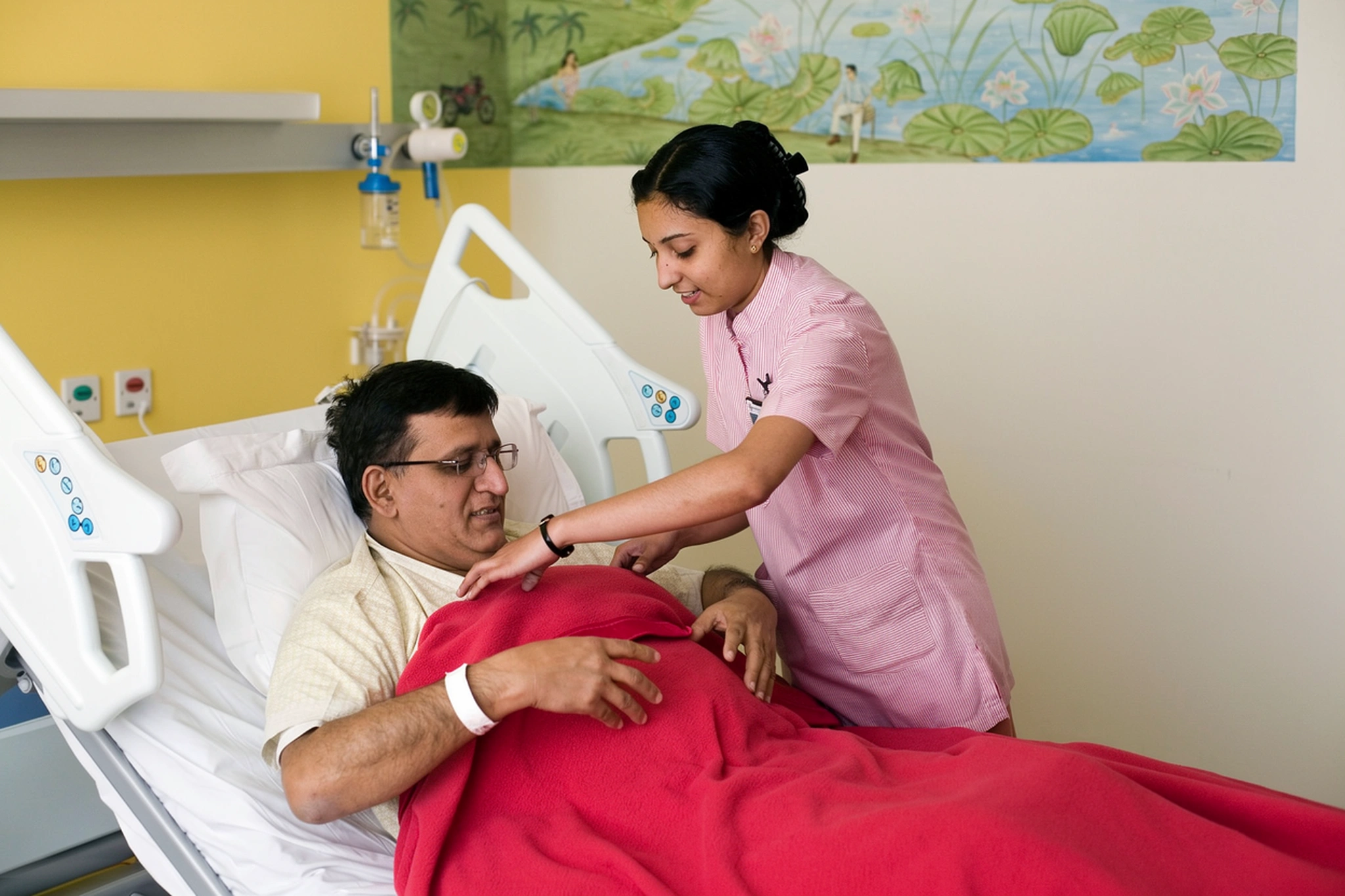
- Easier, more controlled repositioning. For a patient with limited mobility on one side, a caregiver adjusting the bed’s angle is often far safer and less physically demanding than attempting a full manual repositioning alone.
- Reduced pressure ulcer risk. Similar to other limited-mobility situations, regular position changes support skin health see our detailed guide on how adjustable beds help prevent and manage bed sores for more on this specific overlap.
- Supported transfers via height adjustment. Lowering the bed to a safer height for transfers, particularly when a patient has one-sided weakness, reduces fall risk during the getting in and out of bed process.
Positioning Considerations by Common Stroke-Related Need
| Need | How an Adjustable Bed Helps | Caregiver Consideration |
| Swallowing safety during meals | Stable upright positioning without slipping pillows | Always position fully upright for meals per medical guidance, not partially reclined |
| One-sided weakness (hemiplegia) | Gentle, controlled repositioning reduces strain on the caregiver | Support the weaker side specifically with additional pillows as advised by the care team |
| Pressure ulcer risk from reduced mobility | Easier, more frequent repositioning via remote control | Follow the specific repositioning schedule set by the care team |
| Transfers in and out of bed | Height-adjustable base reduces fall risk during transfers | Always assist transfers per the physiotherapist’s specific technique guidance |
Working With the Rehabilitation Team
An adjustable bed is a tool that supports a rehabilitation plan it doesn’t replace one. Physiotherapists and occupational therapists involved in stroke recovery often have specific recommendations about positioning, how long to spend upright versus reclined, and techniques for supporting the affected side that should take priority over general guidance. Sharing the bed’s capabilities with the care team angle range, height adjustability, position memory helps them incorporate it effectively into the broader recovery plan rather than treating it as a separate, disconnected piece of equipment.
Comparing Home Care Options
Families often weigh whether stroke recovery at home calls for a general adjustable bed or a more clinically equipped electric hospital bed, particularly in the earlier, higher-dependency stages of recovery. Our comparison in adjustable bed vs hospital bed: which is better for home recovery walks through this decision in more depth, and the same considerations largely apply here mobility level and specific care needs should drive the choice more than the general category of the stroke itself.
Emotional and Practical Support for Caregivers
It’s worth acknowledging that caring for a stroke survivor at home is demanding, both physically and emotionally, and tools that reduce the physical burden of repositioning and transfers genuinely matter for caregiver wellbeing, not just patient comfort. An adjustable bed that makes daily care tasks less physically taxing can meaningfully reduce caregiver fatigue over the weeks and months of a recovery process, which is a real, if less discussed, benefit alongside the patient-focused ones covered above.
Building a Daily Routine Around the Bed’s Capabilities
Many caregivers find it helpful to establish a consistent daily rhythm built around the adjustable bed’s positions, rather than adjusting reactively throughout the day. This might mean a designated upright position for morning and evening meals, a specific gentler recline for rest periods between therapy sessions, and a flatter, comfortable position established as the default for overnight sleep. Consistency in this routine helps the patient anticipate and adjust to position changes more easily over time, and it also simplifies handoffs between different caregivers family members, hired help, or visiting nurses since everyone can follow the same established pattern rather than reinventing the approach each shift.
Signs of Progress Worth Tracking
As recovery progresses, it’s worth periodically reassessing whether the bed’s positioning setup still matches the patient’s current needs, since stroke recovery often involves gradual but meaningful improvement over weeks and months. Reduced need for maximal upright support during meals, improved ability to assist with their own repositioning, or increased comfort with longer periods in a more reclined position can all signal that it’s time to revisit the setup with the rehabilitation team, adjusting the routine to match the patient’s improving abilities rather than keeping it static throughout the entire recovery period.
For families managing stroke recovery at home, an adjustable bed offers genuine, practical support across several real needs at once safer eating, easier repositioning, reduced pressure ulcer risk, and less physically demanding transfers. Used alongside the guidance of the patient’s rehabilitation team, it’s one of the more valuable pieces of home care equipment available.
Explore our Bed for Patients range or Electric Hospital Bed options for stroke recovery and other higher-support home care needs.
Related Reading: