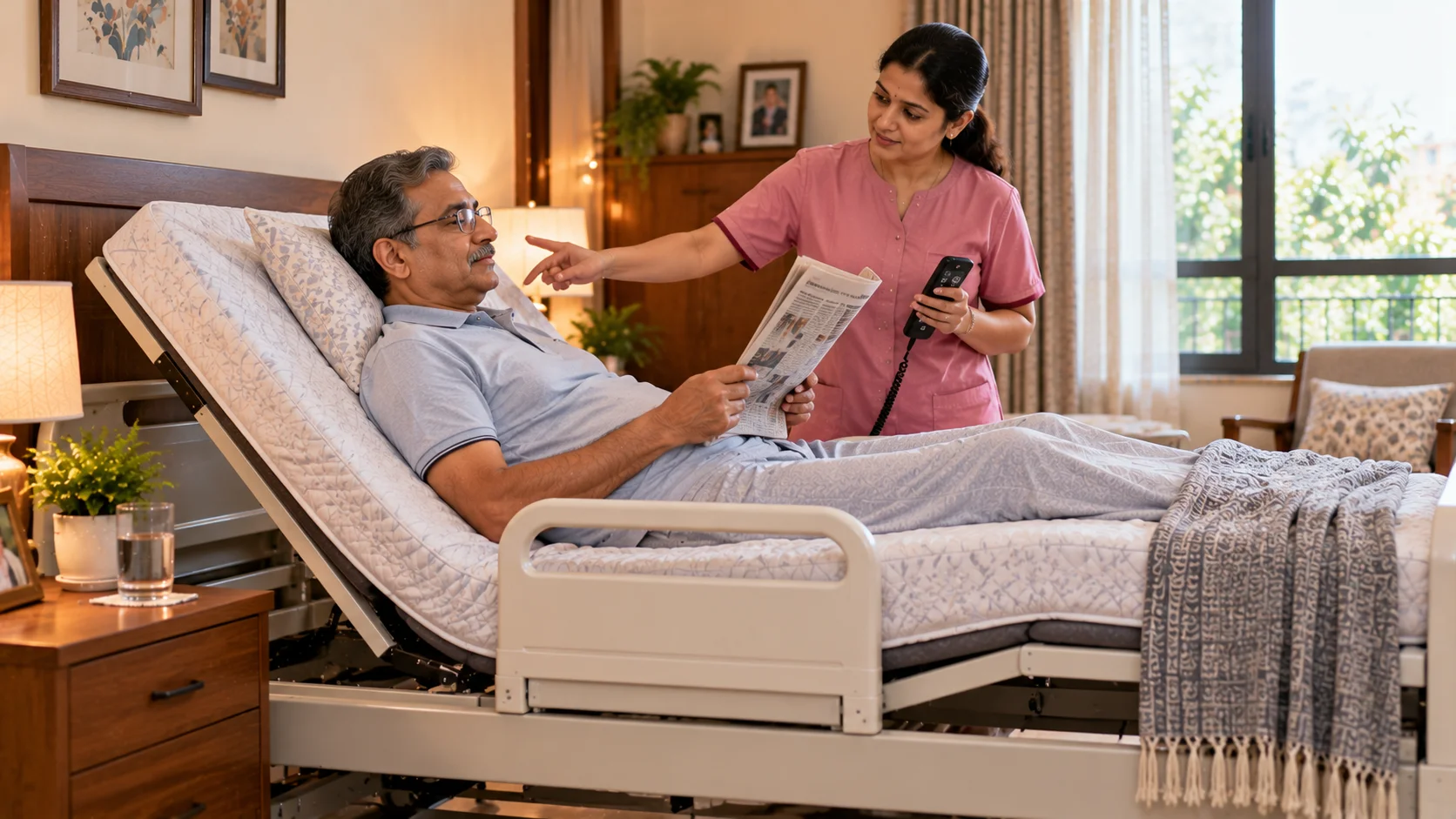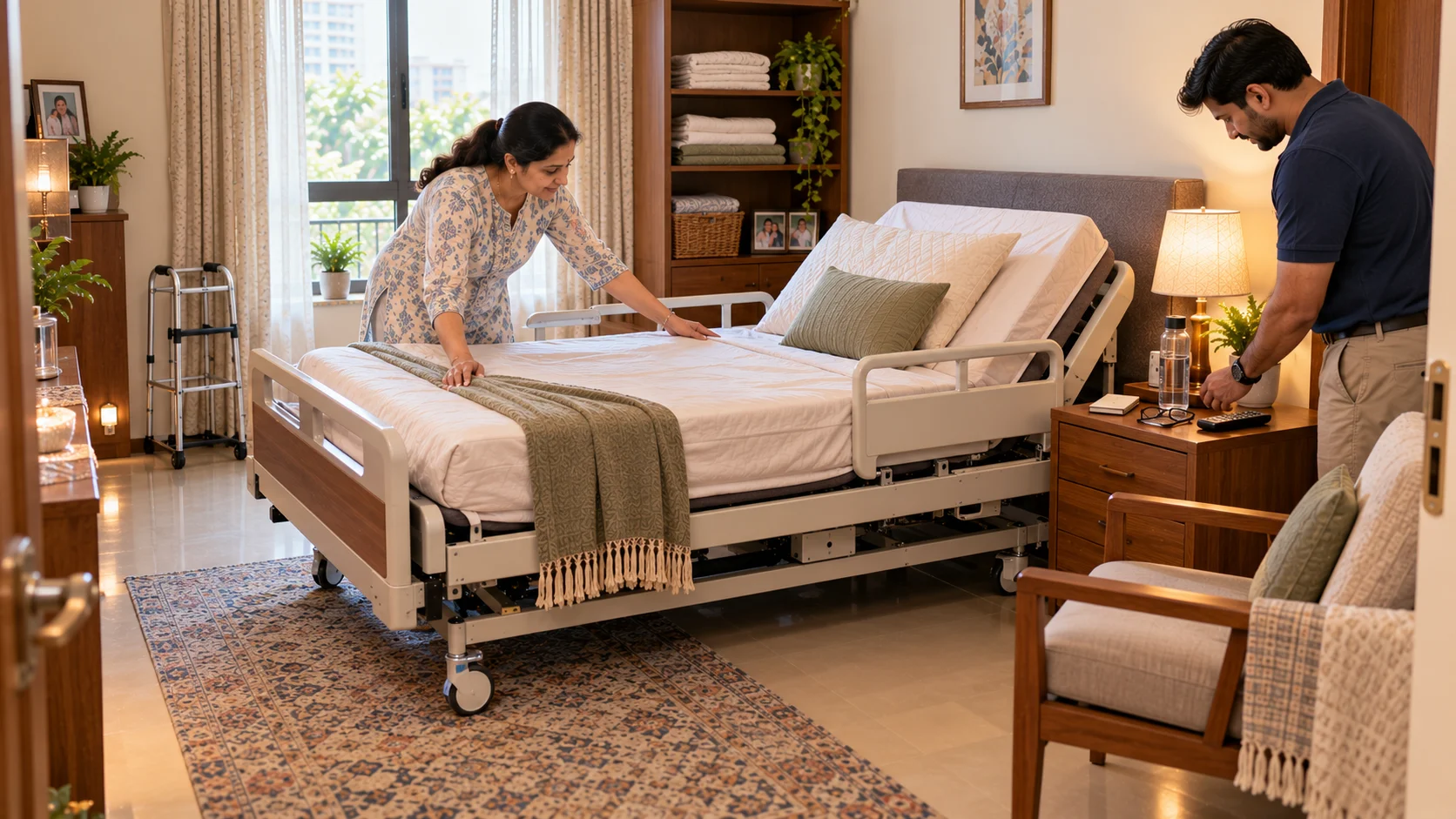
Many people with heart failure feel breathless when they lie flat, a symptom doctors call orthopnea. Raising the head and upper body lets breathing settle, and a recliner bed holds that raised angle steadily without a tower of pillows. Leg position needs more care, because raising the legs high can add to the load on the heart in some people, so confirm it with your cardiologist. A bed improves comfort, does not treat heart failure, and needing more pillows than before is a reason to call your doctor.
Ask a family living with heart failure about night-time and the answer is often a pillow count. Two pillows became three, then four, and now the person sleeps half sitting in a chair because lying flat feels like drowning. A recliner bed for heart failure is not a treatment, but it can replace that pile of pillows with something steadier and kinder to the neck and back.
Why Lying Flat Feels Harder With Heart Failure
During the day, gravity keeps some fluid in the legs and lower body. When a person lies flat, that fluid shifts back toward the chest. A weakened heart may struggle to handle the extra volume, and the lungs feel congested, which brings breathlessness, coughing or a sense of tightness. Sitting upright reduces that shift, which is why many people instinctively prop themselves up.
Pillows, Wedges, Chairs and Recliner Beds Compared
| Setup | What Happens | Drawback |
| Stack of pillows | Raises the head and shoulders | Bends the neck, slips during the night and strains the upper back |
| Wedge pillow | Raises the whole torso on a smooth slope | Fixed angle, can shift, hard to adjust as needs change |
| Recliner chair | Holds an upright posture | Concentrated pressure, poor turning and limited leg support |
| Recliner bed | Adjustable angle supporting the full torso and legs | Higher cost, needs bedroom space |
Choosing a Comfortable Angle
- Start with a moderate raise, since many people find an angle somewhere between 30 and 45 degrees comfortable, though the right figure is individual.
- Add a slight knee lift, which stops the body sliding down the bed and keeps the hips from taking all the strain.
- Increase the angle in small steps and note which setting lets you sleep without waking short of breath.
- Keep the remote within reach, so adjustments at night do not require getting up and exerting yourself.
Why Leg Position Needs Extra Care
Raising the legs sends fluid from the lower body toward the heart. For people whose ankles swell, doctors sometimes recommend leg elevation, and for others it can aggravate breathlessness by increasing the volume the heart must handle. Because of this, the full Zero Gravity setting, where the legs sit near or above heart level, should only be used if your cardiologist agrees. The general circulation principles are explained in how adjustable beds improve blood circulation during sleep, but heart failure is a case where individual medical advice matters more than a general rule.
IMPORTANT NOTE
Needing to sleep more upright than before, waking up gasping, rapid weight gain, fast-increasing swelling, chest pain or fainting need prompt medical attention. A bed supports comfort and never replaces medication, fluid and salt guidance or regular monitoring.
Daily Habits That Work Alongside the Bed
- Take medicines exactly as prescribed, and do not change doses based on how you slept.
- Weigh yourself at the same time each day if your doctor has asked you to, and report sudden gains.
- Follow salt and fluid guidance from your care team.
- Avoid heavy late meals, which can add to night-time discomfort.
- Keep gentle activity going within the limits your doctor has cleared.
Safety and Comfort Details That Matter
Because getting out of bed can be tiring, a remote-controlled setup means position changes happen without effort, which is one of the practical advantages of electric beds. Lower the head gradually rather than dropping flat in one go, and sit on the edge of the bed for a minute before standing, since some heart medicines can cause dizziness on rising. Our article on blood pressure fluctuation and adjustable hospital beds explains why staged position changes help. Anyone who also has lung disease may find our guide on adjustable beds for COPD useful.
A Note for Caregivers
Keeping a simple log of how many pillows or what bed angle was needed each night is surprisingly valuable. If the angle needed keeps creeping upward over days, that pattern is exactly the kind of change a doctor will want to hear about.
For someone with heart failure, the bedroom should make breathing easier, not harder. A recliner bed that holds a steady, adjustable raised angle replaces pillow towers with comfortable support, and a remote keeps small changes effortless. Used with medical care and attention to leg position, it makes nights calmer for both the patient and the family.
Explore our Recliner Beds range or the Electric Hospital Bed collection.
Related Reading