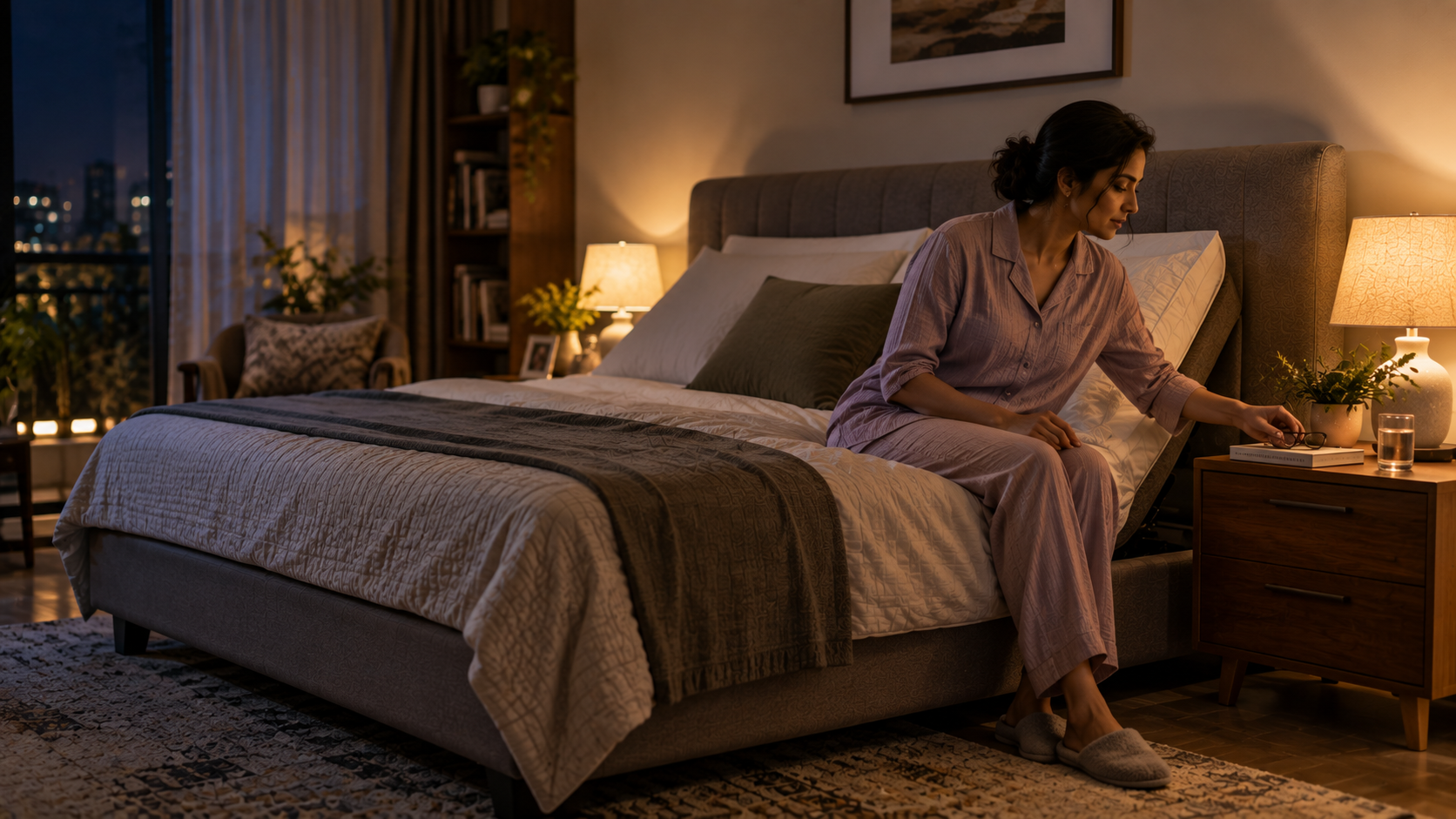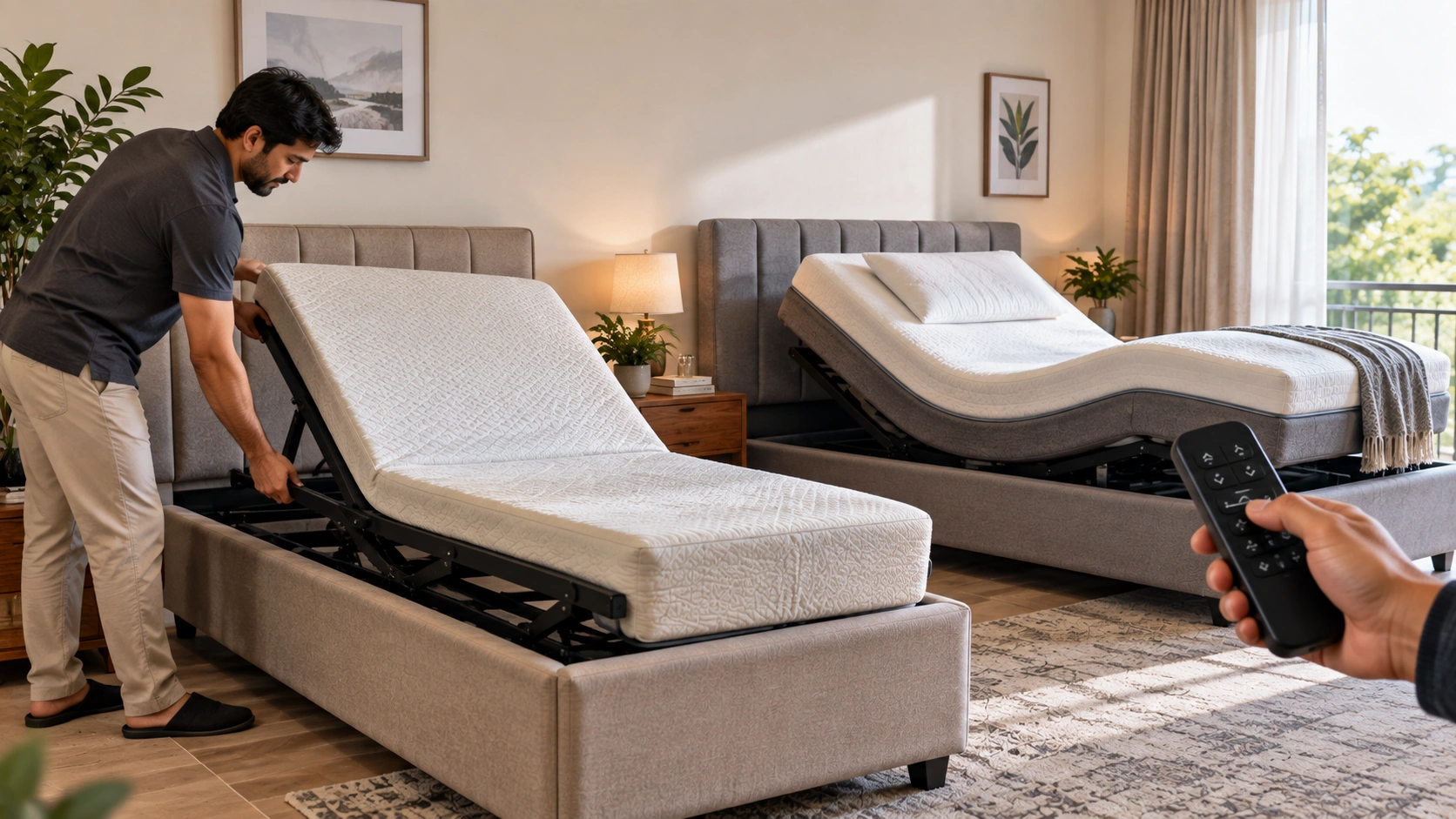
Adjustable beds support better sleep posture by keeping the spine in a more neutral, supported alignment throughout the night something a flat mattress can only partially achieve regardless of its firmness. By elevating the knees and adjusting the head angle, an adjustable bed fills the unsupported gaps that form under the lower back and neck when lying flat, which is where poor sleep posture most often develops.
Posture isn’t just a daytime, sitting-at-a-desk concern how your spine is positioned during the seven or eight hours you spend in bed each night matters just as much, and arguably more, given how much cumulative time it represents. Understanding how adjustable beds support better posture during sleep explains why positioning, not just mattress firmness, plays such a significant role in how your back and neck feel each morning.
Why Flat Sleeping Often Fails at Supporting Posture
Even a well-made, supportive mattress has a structural limitation: it can only support the parts of your body already in contact with it. When you lie flat, your lower back naturally curves slightly away from the mattress surface, and your neck does something similar depending on pillow height creating small unsupported gaps that force nearby muscles to work throughout the night just to hold your spine in place. Over time, this uncompensated muscular effort contributes to the stiffness and postural strain many people wake up with, regardless of how good their mattress is.
How Adjustable Positioning Closes These Gaps
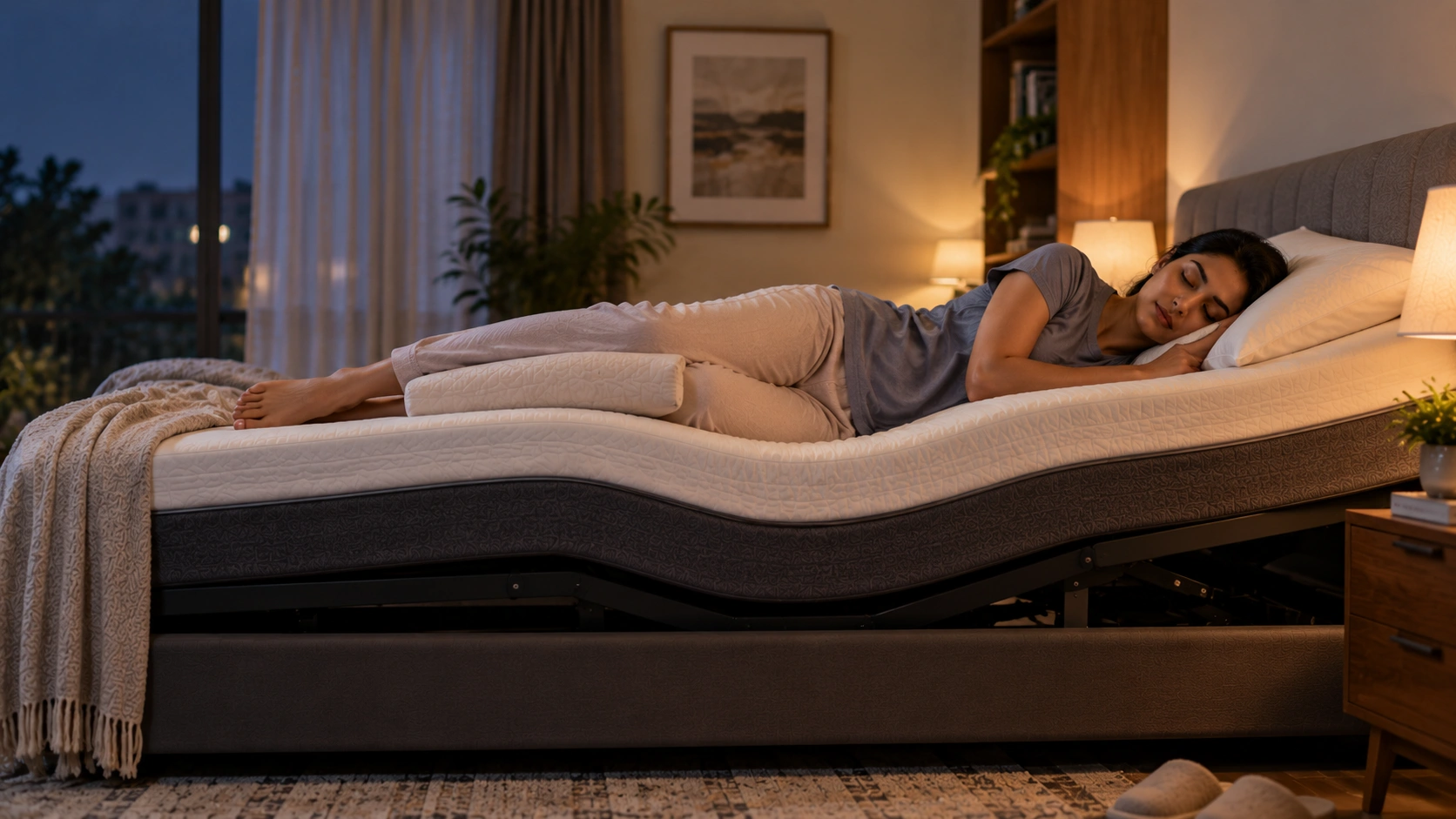
An adjustable bed addresses this structural limitation directly. Raising the knee section slightly shortens the distance the spine has to bridge unsupported, effectively closing the gap under the lower back that flat lying creates. Combined with a mild head elevation, the overall effect is a spine that’s supported along more of its length, rather than bridging several unsupported points independently throughout the night.
Posture Support by Body Region
| Body Region | Common Flat-Sleeping Posture Issue | How Adjustable Positioning Helps |
| Lower back (lumbar spine) | Unsupported gap causes muscles to compensate all night | Knee elevation closes the gap, reducing muscular strain |
| Neck and cervical spine | Pillow height often mismatches natural curve | Gentle head elevation combined with the right pillow supports alignment |
| Hips | Pressure concentration, especially for side sleepers | Weight redistribution across a larger supported surface area |
| Shoulders | Pressure points in side-sleeping position | Elevated positioning combined with proper pillow support reduces concentrated pressure |
Posture Support Differs by Sleep Position
Posture benefits aren’t identical across every sleeping style. Back sleepers generally see the most direct benefit from knee and head elevation together, since the gap-closing effect works most predictably in this position. Side sleepers need a slightly different approach a gentler recline combined with a pillow between the knees to keep the hips level and prevent spinal rotation, which we cover in detail in adjustable beds for side sleepers with back pain. Stomach sleeping, regardless of bed type, is generally the hardest position to support well posturally, since it inherently twists the neck and can arch the lower back, and it’s typically not recommended for anyone focused on improving sleep posture.
The Connection Between Posture and Pain
Poor sleep posture doesn’t just cause morning stiffness in isolation sustained over months and years, it’s a meaningful contributing factor to chronic back and neck pain for many people. This is why positioning-based posture support is central to the pain-relief benefits discussed throughout this site, including our detailed guide on how can an adjustable bed reduce lower back pain and our more specific article on adjustable beds for neck pain and cervical spondylosis both of which build on the same underlying posture-support mechanism explained here.
Pillow and Mattress Choices That Support the Effect
Posture support from an adjustable frame works best when paired with the right pillow and mattress choices, since these complete the alignment picture rather than working against it. A pillow that’s mismatched to your elevated angle too thick or too thin can undo much of the postural benefit the frame provides by pulling the neck out of the alignment the rest of the setup is trying to achieve. Similarly, a mattress that doesn’t flex smoothly with the frame’s angle can create its own new pressure points, working against the posture support rather than complementing it.
Daytime Posture Habits That Complement Nighttime Support
While nighttime positioning plays a significant role, it works best as part of a broader posture awareness that extends into daytime habits as well. Prolonged sitting with poor desk ergonomics can undo much of the benefit gained from a well-supported night’s sleep, since the spine spends comparable or greater hours in a compromised daytime position for many people with desk-based work. Simple daytime habits taking regular movement breaks, maintaining a supportive chair setup, and being mindful of phone or screen posture that rounds the shoulders and neck forward complement the nighttime support an adjustable bed provides, addressing posture as a full 24-hour consideration rather than treating sleep and waking hours as entirely separate concerns.
Tracking Whether Posture Support Is Actually Working
A simple way to gauge whether your adjustable bed’s posture support is genuinely helping is paying attention to specific morning indicators rather than a vague overall impression. Reduced stiffness in the first few minutes after waking, less need to stretch or “crack” your back before feeling normal, and fewer instances of needing to consciously correct your posture within the first hour of the day are all reasonable signals that the nightly support is translating into a real difference. If these indicators aren’t improving after a few weeks of consistent use, it may be worth revisiting your specific angle setup or pillow choice rather than assuming the concept isn’t working for you.
Sleep posture matters just as much as daytime posture, and an adjustable bed addresses it in a way a flat mattress structurally cannot by closing the unsupported gaps that form under the spine’s natural curves. Paired with the right pillow and mattress, this positioning support is a meaningful, often underappreciated piece of overall spinal health.
Explore our Adjustable Bed for Back Pain range or Back Rest Beds collection to find the right posture-supporting setup.
Related Reading: