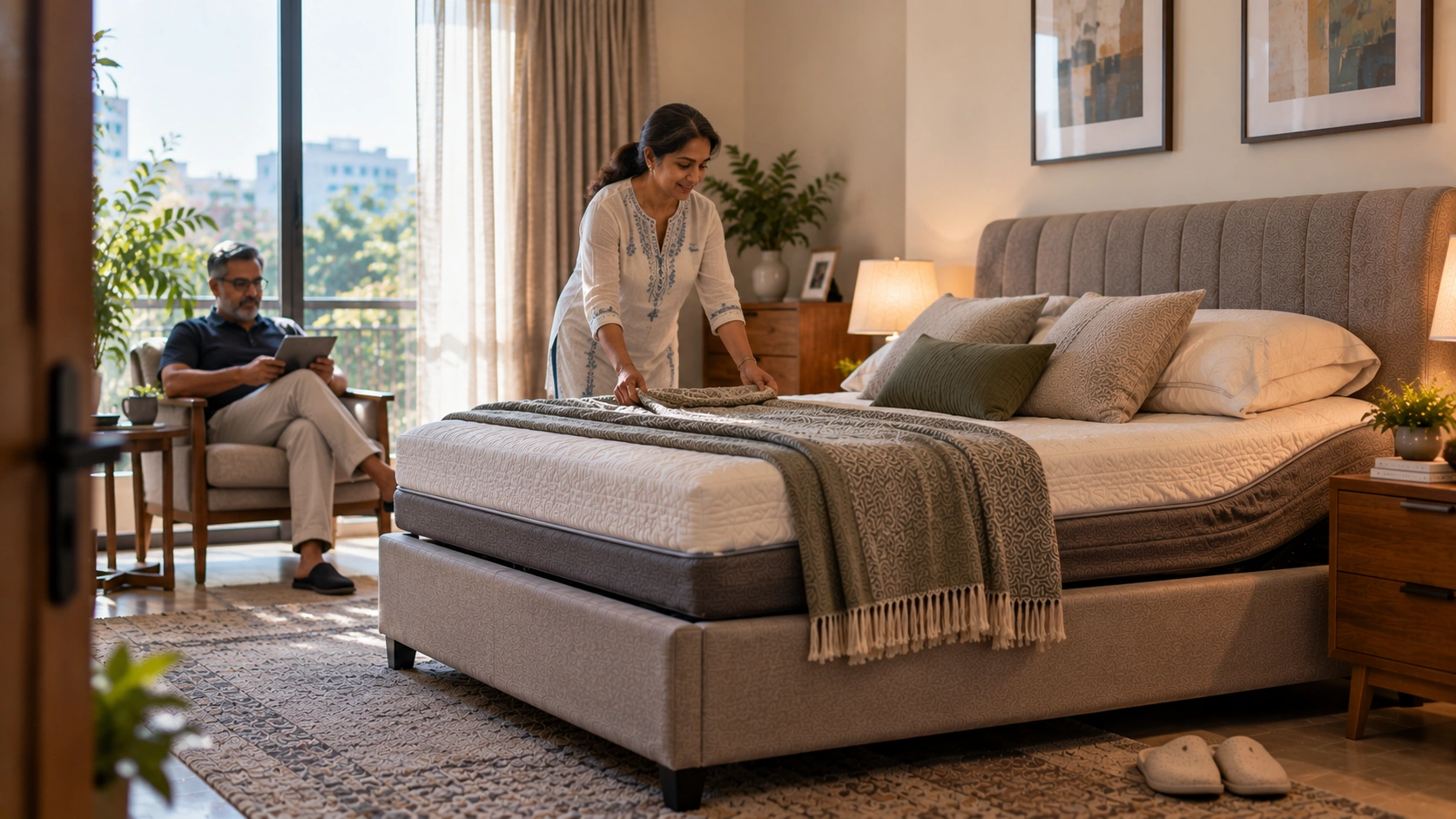

Adjustable beds help people with mobility issues primarily through height adjustability, which makes transfers in and out of bed safer and less physically demanding, and through positioning presets that reduce the need for physical strength to sit up, reposition, or get comfortable. For many people managing reduced mobility, this translates into meaningfully greater independence in daily routines that would otherwise require caregiver assistance.
Mobility issues can stem from many different causes age-related decline, arthritis, injury, neurological conditions, or recovery from surgery but the practical challenges they create around getting in and out of bed, sitting up comfortably, and general daily independence tend to overlap significantly regardless of the underlying cause. This is exactly where adjustable beds for mobility issues offer some of their most practical, day-to-day value.
The Core Ways Adjustable Beds Support Reduced Mobility
| Mobility Challenge | How an Adjustable Bed Helps | Key Feature to Look For |
| Difficulty standing up from bed | Height-adjustable base lowers the bed to a safer standing height | Height adjustability, not just head/leg incline |
| Trouble sitting upright independently | Motorized elevation removes the need for arm and core strength to sit up | Smooth, gentle motor with a stable upright preset |
| Needing caregiver help to reposition | One-touch remote control allows self-directed repositioning | Simple, large-button remote suited to limited dexterity |
| Fatigue from frequent repositioning | Reduces physical effort compared to manual repositioning | Position memory to avoid repeated manual adjustment |
Height Adjustability: The Most Underrated Feature for Mobility
While positioning presets like Zero Gravity get most of the attention, height adjustability is arguably the single most practically important feature for people managing mobility issues specifically. A bed that can be lowered brings the standing transfer height down, reducing the distance and effort involved in getting up and for a caregiver assisting the transfer, a bed that can be raised to a comfortable working height reduces the physical strain of bending over repeatedly throughout the day.
Supporting Independence, Not Just Comfort
For many people with mobility issues, the value of an adjustable bed goes beyond physical comfort it’s about preserving independence in daily routines that might otherwise require asking for help. Being able to sit up, adjust position, or lower the bed for a transfer without needing to call a family member or caregiver each time can meaningfully affect a person’s sense of autonomy and dignity, which matters just as much as the physical benefits themselves for many people navigating a change in their mobility.
Common Causes of Mobility Issues and Bed-Related Needs
- Age-related mobility decline, where general strength and balance changes make bed transfers increasingly effortful over time see our related guide on adjustable beds for seniors with chronic back pain.
- Arthritis and joint conditions, where pain and stiffness make both sitting up and standing from bed more difficult, particularly first thing in the morning.
- Post-surgical or injury recovery, where temporary mobility restrictions require safer, less strenuous transfers during the healing period.
- Neurological conditions affecting movement, such as stroke-related mobility changes our adjustable beds for stroke recovery at home guide covers this specific situation in more depth.
Features Worth Prioritizing for Mobility-Focused Buying
- Height adjustability, ideally with a meaningful range down to an easy standing-transfer height.
- Gentle, smooth motor movement, avoiding sudden or jerky repositioning that could unsettle balance during a transition.
- A simple remote with large, well-labeled buttons, suited to users who may have limited hand dexterity or vision.
- Position memory presets, reducing the need to manually fine-tune the same position repeatedly.
- Sturdy edge support, providing a stable point to push off from during transfers.
- When Additional Support Beyond an Adjustable Bed Is Needed
An adjustable bed significantly improves the bed-related portion of daily mobility challenges, but it’s often one part of a broader home safety and independence plan. Grab rails near the bed, a bedside commode if needed, adequate lighting for nighttime transfers, and clear, unobstructed pathways all work alongside the bed itself to reduce fall risk and support independence more comprehensively. For higher-dependency mobility needs, our Bed for Patients range and comparison in adjustable beds for patients at home: features, benefits and how to choose cover the fuller picture of home care equipment worth considering.
Involving Occupational Therapy in the Setup
For more significant mobility challenges, an occupational therapist can offer genuinely valuable, personalized guidance beyond general product recommendations assessing the specific transfer techniques, bed height, and surrounding room layout that work best for an individual’s particular mobility pattern and any equipment they use, such as a walker or wheelchair. Many families find that a single occupational therapy consultation, even after the bed has already been purchased, helps fine-tune the setup in ways that make a meaningful practical difference to daily ease of use adjusting exact height settings, positioning the remote optimally, or identifying additional grab points worth adding nearby.
Balancing Independence With Safety
It’s worth acknowledging that supporting independence and ensuring safety sometimes involve genuine trade-offs that families need to navigate thoughtfully together. A person managing mobility issues may understandably want to handle transfers independently as much as possible, even when a caregiver feels more comfortable assisting every time. An adjustable bed’s height adjustability and gentle positioning can often expand what’s safely achievable independently, narrowing this tension somewhat, but ongoing, honest conversation between the person and their caregivers about current ability and comfort levels remains important, since mobility needs can change gradually over time in ways that are easy to underestimate from either side.
For people managing mobility issues, an adjustable bed’s value often comes down to independence as much as comfort the ability to sit up, reposition, and transfer safely without always needing assistance. Prioritizing height adjustability and simple, accessible controls tends to deliver the most meaningful day-to-day difference.
Explore our Bed for Patients range or Electric Hospital Bed collection for mobility-focused options.
Related Reading: