
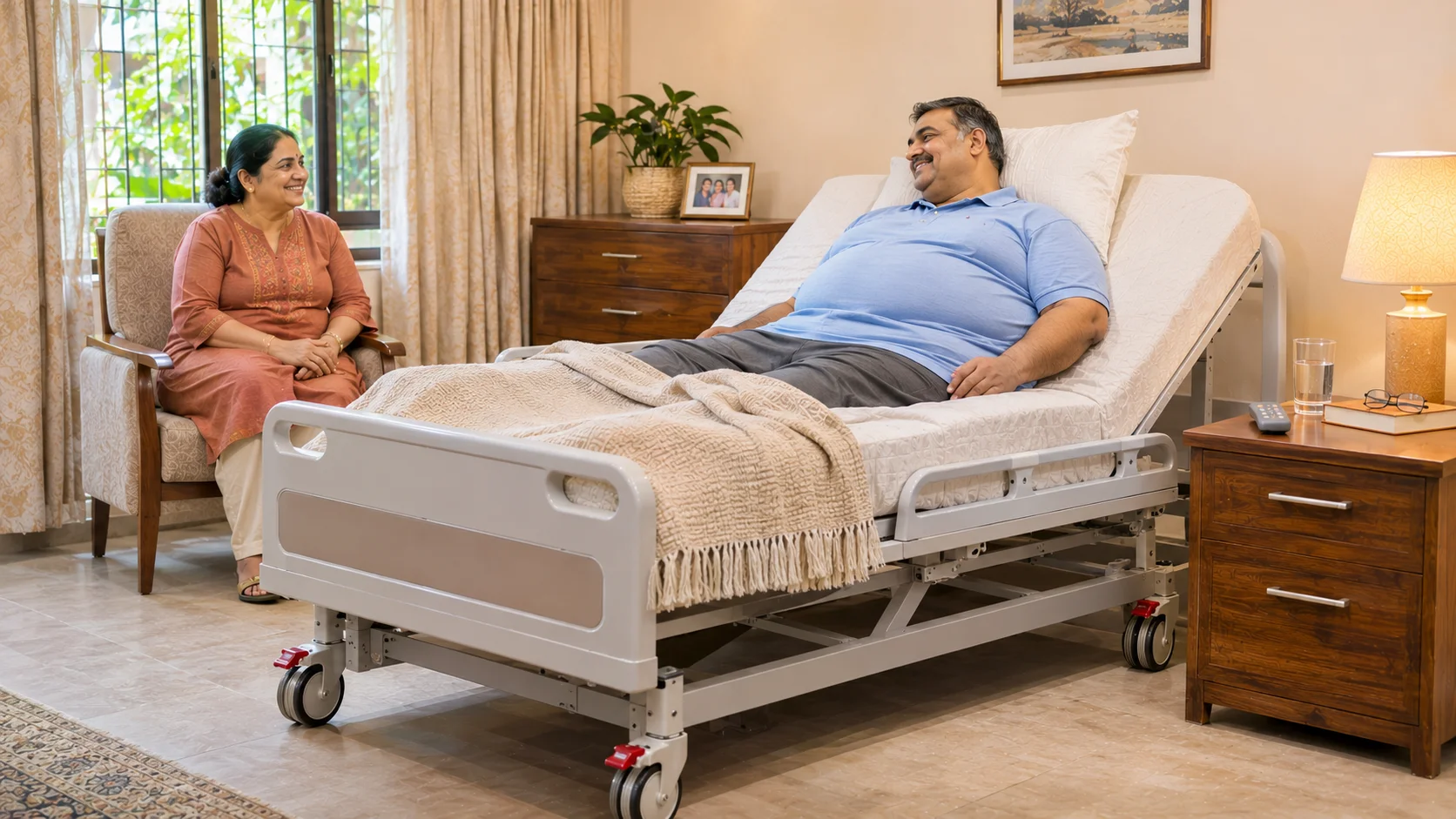
For a heavier patient, check the bed’s rated safe working load in kg, the strength of the frame and motors, the width of the bed and the weight rating of the mattress and accessories. The rating must cover the patient plus bedding and anything else on the bed, with a margin. Do not guess from appearance. Ask the supplier for the specification in writing, and ask the doctor or physiotherapist about safe transfers and turning for a heavier patient.
When the patient is heavier than average, an ordinary hospital bed may not be enough. A bed that is too light for the load can flex, strain its motors and become unsafe, and a narrow bed can make turning and transfers harder and less dignified. This guide explains how to check the weight capacity of a hospital bed, what else affects strength and comfort and how to use the bed safely at home in India. It is general information, and the patient’s doctor or physiotherapist should guide safe handling.
What “Weight Capacity” Really Means
The safe working load of a bed is the maximum weight it is designed to carry in normal use, including the patient, the mattress, bedding and anything else on the bed. It is not the same as the weight at which the bed breaks. A bed should be used well within its rating, so that motors are not constantly working at their limit. Different parts of the bed, such as the frame, motors, mattress and rails, may have different limits, so ask which part sets the overall figure.
What to Check Before Buying
| Item | Why It Matters | What to Ask |
| Rated safe working load | Sets how much weight the bed can carry | Figure in kg, in writing |
| Frame material and build | A stronger frame resists flexing | Material, thickness and finish |
| Motor strength | Weak motors strain and wear quickly | Lifting capacity of each motor |
| Bed width | Gives room to turn and rest comfortably | Width of the sleeping surface |
| Mattress rating | A mattress can flatten under heavy load | Density and weight rating |
| Castors | Must carry the weight and lock firmly | Load rating and lock design |
Specifications vary widely between models, so use the table as a list of questions, not as a set of answers.
Why the Mattress Needs Attention
A mattress that is too soft or too thin may bottom out under a heavier patient, leaving the body pressing on the frame and increasing the risk of pressure sores. Look for a dense, supportive mattress with a stated weight rating, and make sure it bends with the base. Our guide to which mattresses bend with the base helps, and our natural latex mattress page explains why firm, resilient materials are often chosen for heavier users. If the patient is at risk of sores, see adjustable beds for bed sores.
SAFETY FIRST
Never exceed the rated load, and do not allow several people to sit or lie on the bed at once. A bed that creaks, tilts, sags or has motors that labour or stall is a warning. Stop using it and call the supplier. For safe lifting, turning and transfers, ask a physiotherapist to show the family and attendants the right methods. This guide gives general information and is not medical advice.
Space, Width and Access
- Wider beds need more room. Measure the room, door and lift before ordering. See hospital bed size and dimensions in India.
- Leave clearance on both sides. Caregivers need space to turn and assist the patient.
- Check delivery access. A heavy bed may need to be brought in in parts. Ask how it will be assembled. See hospital bed installation at home.
- Plan the floor. Make sure the floor can bear the load and is not slippery or uneven.
Transfers and Turning
- Get professional training. Ask a physiotherapist to show a safe method for turning and transfers.
- Use aids if advised. A transfer board, sling or hoist may reduce risk for both patient and caregiver.
- Use enough people. Do not attempt a lift alone if it feels unsafe.
- Lower the bed. Adjust the height so the patient can sit with feet flat before standing.
- Lock the castors. Always lock them before a transfer.
Powered height and positioning take a lot of strain off caregivers, as explained in electric beds for caregivers.
Power, Service and Warranty
- Backup. A heavy patient stuck in one position during an outage is a problem. Read electric beds and power cuts in India.
- Servicing. Heavier use means more wear, so ask about regular checks and see the maintenance checklist.
- Warranty. Check what is covered for motors and frame. See understanding your adjustable bed warranty.
Planning for Hygiene and Skin Care
A heavier patient may sweat more and may have skin folds that stay damp, so regular washing, careful drying and breathable bedding are important. Use a waterproof protector and change it promptly when wet. Check the skin every day, particularly where the body presses on the mattress or the rails. Ask the nurse to show how to look after skin folds and pressure points. Clean, dry and well-supported skin is much less likely to break down, and the bed should make this routine easier, not harder.
The right bed for a heavier patient is one that is clearly rated for the load, built strongly, wide enough for comfort and supported by good service. Ask for the numbers in writing, check the mattress and plan the room and transfers carefully. If you tell us the patient’s needs and the room measurements, our team can suggest suitable options.
See our Electric Hospital Bed collection or the Bed for Patients range, or ask our team about a bed for higher loads.
Related Reading