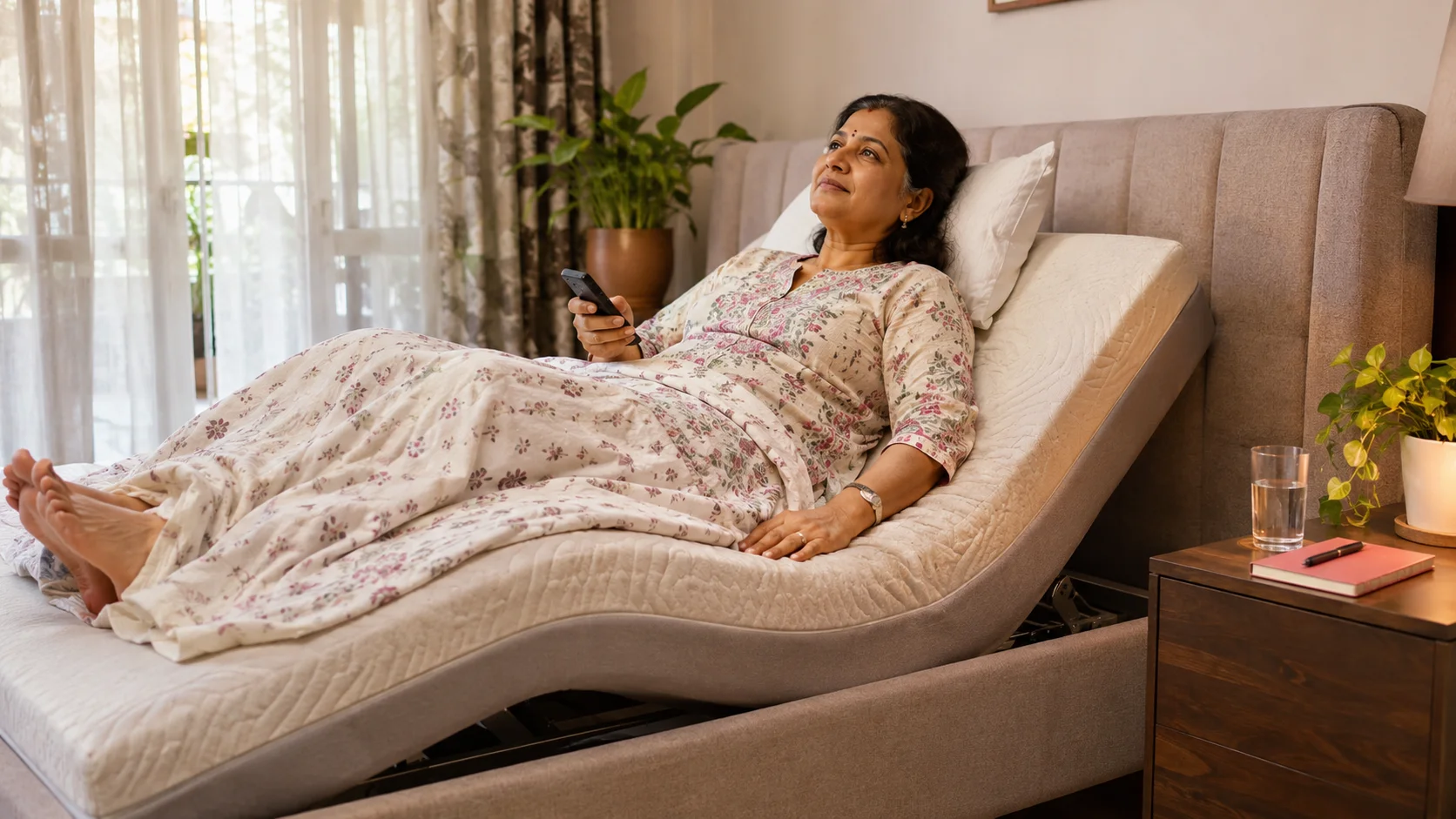
Electric adjustable beds can make sleep more comfortable for some people, particularly those with reflux, night-time breathing discomfort, back pain, swollen legs or trouble sitting up, but they are not a cure for poor sleep. Research on the effects is limited and results vary from person to person. Whether a bed helps depends on the reason you sleep badly, how well it is set up and the other habits around sleep. Give it a proper trial before judging.Â
Marketing for electric adjustable beds often promises better sleep, less pain and more energy. Some of that is true for some people, and some is wishful thinking. Families deserve a straight answer before they choose a bed for a parent or for themselves. Here is an honest look at who tends to benefit, who may not and how to find out whether a bed will help you.
Who May Benefit and Who May NotÂ
| Sleep Problem | May an Adjustable Bed Help? | How | Caveat |
| Acid reflux at night | Often | A raised upper body helps keep stomach acid down | Meal timing and medical advice still matter |
| Mild breathing discomfort or snoring | Sometimes | A raised head can ease breathing | Loud snoring with pauses needs a doctor’s review |
| Lower back pain | Often for comfort | Raising knees or Zero Gravity can reduce pressure | Persistent pain needs a medical check |
| Swollen legs or tired feet | Sometimes | A gentle leg lift can bring comfort | Not suitable for some heart or circulation conditions |
| Trouble getting in and out of bed | Often | Raising the head makes sitting up easier | Height and transfers need attention |
| Insomnia from stress, caffeine or irregular hours | Rarely on its own | Comfort helps, but habits are the main cause | Look at routines first |
| Restless legs | Unclear | Some people find positions comforting | Needs a medical assessment |
 What the Evidence SaysÂ
Large, high-quality studies on adjustable beds and sleep are limited, and findings tend to be modest and individual. Raising the upper body is a well-established way to ease reflux symptoms and some breathing discomfort, and supportive positions can reduce pressure on the back and legs. Beyond that, claims of dramatic improvements are not well proven. An honest supplier will say that a bed supports comfort and does not treat illness.Â
Why Some People Notice No ChangeÂ
- The cause of poor sleep is elsewhere. Stress, caffeine, screens, noise, heat and irregular timing are common culprits.Â
- The angle is wrong. Too steep or too flat a setting can feel worse than a standard bed.Â
- The mattress does not suit the base, or is too firm or too soft.Â
- They did not give it time. Bodies take a few weeks to adjust to a new position.Â
- A medical issue has not been diagnosed, such as sleep apnoea or restless legs.Â
A Two-Week Trial PlanÂ
- Keep a simple sleep diary for a week before the bed arrives, noting when you slept, woke and how you felt.Â
- Start with small changes: a gentle head raise and a slight knee lift.Â
- Change one setting at a time, and keep it for a few nights before changing again.Â
- Keep your routine steady, with the same bedtime, no late caffeine and a dark, cool room.Â
- Compare your diary after two weeks, and talk to your doctor if symptoms persist.Â
Our guides on finding the best sleeping position on an adjustable bed and setting up your bed for lower back pain relief explain how to fine-tune the angles, and our list of recliner bed mistakes shows what to avoid.Â
What Else Matters for SleepÂ
- Mattress: it should support your spine and bend with the base.Â
- Room: cool, dark and quiet.Â
- Routine: regular sleep and wake times.Â
- Food and drink: limit caffeine and heavy late meals.Â
- Screens: switch off devices before bed, or use a reading position with care.Â
IMPORTANT NOTEÂ
Persistent difficulty sleeping, loud snoring with breathing pauses, daytime sleepiness, chest pain or breathlessness at night need medical advice. An adjustable bed supports comfort and does not replace diagnosis or treatment. If you have heart failure or circulation problems, check leg positions with your doctor, as explained in our guide to recliner beds for heart failure.Â
Electric Beds and CaregiversÂ
Sleep is not just about the person in the bed. A remote that lets a patient adjust without calling for help reduces night-time interruptions for the whole household. Our guide to electric beds for caregivers explains this benefit in more detail.Â
How to Decide Whether to BuyÂ
If you are unsure, see the bed in person and spend several minutes in different positions, ask about trial or return terms and talk to a user. Zero-G has a showroom in Malad West, Mumbai, and you can also contact the team to discuss your sleep problem. Ask for a candid view on whether an adjustable bed suits your situation, since some people are better served by other changes first. You can explore the recliner beds and electric hospital beds before you visit.Â
An electric adjustable bed is a useful tool, not a magic one. It helps most when there is a clear physical reason for poor sleep, when it is set up gently and when other sleep habits are in order. Test it honestly, keep a diary and ask your doctor when symptoms are serious.Â
Explore our Recliner Beds range or the Electric Hospital Bed collection.Â
Related ReadingÂ