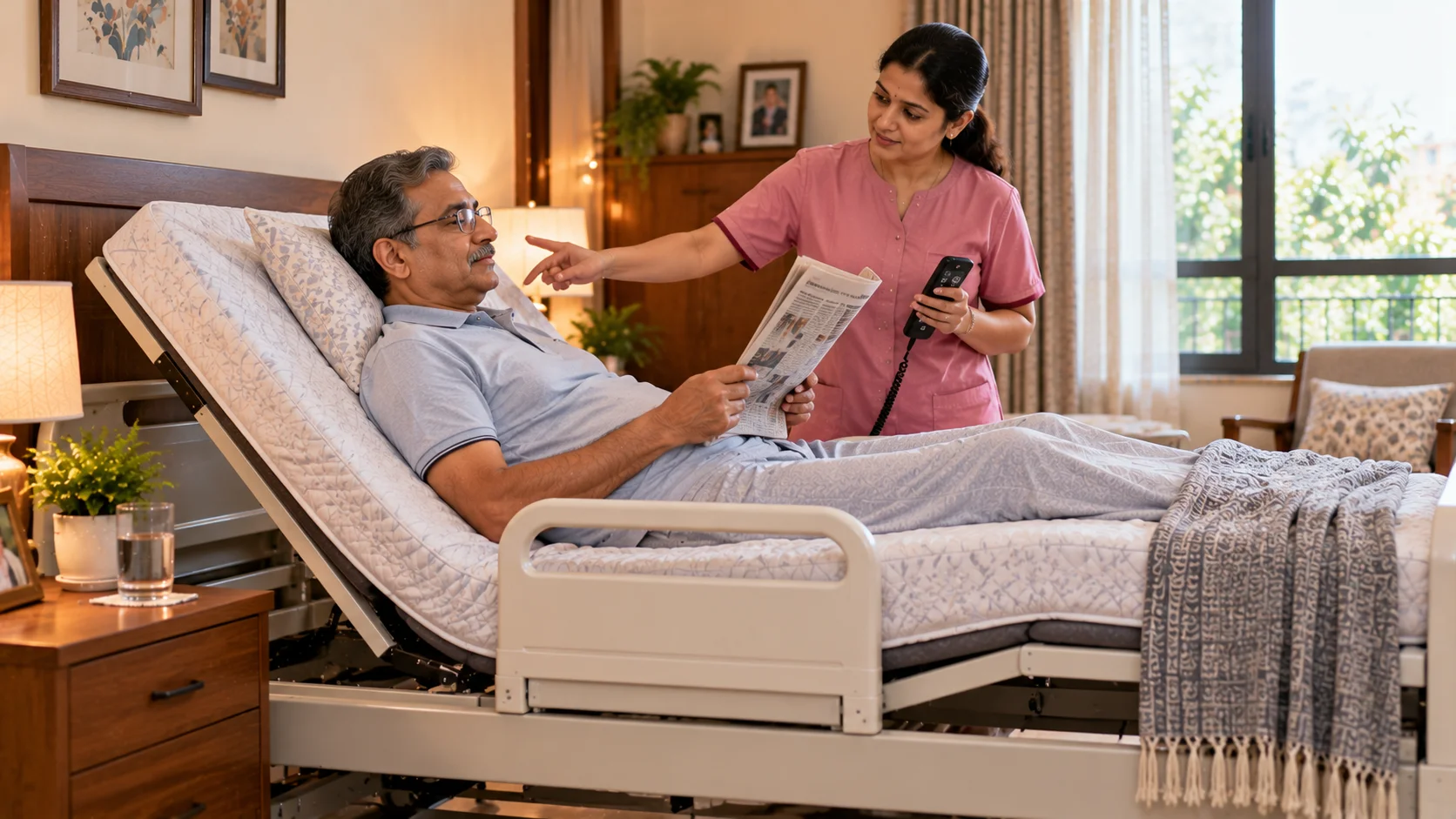
The most common recliner bed mistakes are staying too upright for too long, skipping the knee lift so the body slides down, stacking pillows on a raised head section, holding one angle all day, ignoring heel pressure, standing up straight from a reclined position, and letting comfort replace movement during recovery. Every one of them is fixed by how you use the bed, not by buying anything new.
A recliner bed is only as good as the way it is set up and used. Plenty of families get the right bed and still wake up sore, slumped at the foot end or more tired than before, and the cause almost always traces back to a handful of habits. Here are the seven we would check first, in the order they tend to matter.
The 7 Most Common Mistakes
| Mistake | Why It Backfires | The Fix |
| Staying fully upright for hours | Body weight settles on the tailbone and the skin is dragged downward | Use the high angle only for meals or activity, then ease back to a gentler recline |
| Skipping the knee lift | The body slides toward the foot end and the lower back loses support | Raise the knee section slightly whenever the head section goes up |
| Stacking pillows on the raised head section | The neck is pushed forward while the torso slumps | Use one slim pillow and let the head section do the lifting |
| Holding one angle all day | The same skin and muscles stay loaded for hours | Change the angle every hour or two while awake |
| Ignoring heel pressure | Heels carry the leg weight on a small area | Support the calves so the heels float, and check the skin daily |
| Standing straight up from a recline | Blood pressure can dip on standing and cause dizziness | Come up to sitting, pause for a minute, then stand |
| Letting comfort replace movement | Long hours of rest stiffen joints and weaken muscles | Use the bed for rest and keep short walks or exercises going |
Mistake 1: Staying Fully Upright for Hours
An upright setting is useful for meals, talking to visitors or taking medicines. Held for hours, it puts body weight on a small patch around the tailbone and drags the skin down the mattress. Pressure-care guidance generally suggests raising the head only as far as comfort and the person’s condition require, with higher angles kept for short periods such as eating.
Mistake 2: Skipping the Knee Lift
Raising only the head section lets the body slide toward the foot end, which bunches the skin and leaves the lower back unsupported. A gentle lift under the knees acts as a brake and keeps the hips from sliding. It is the single quickest fix on this list.
Mistake 3: Piling Pillows on a Raised Head Section
When the head section is already lifted, extra pillows push the chin toward the chest and strain the neck. One slim pillow, or a small neck roll, is usually enough, and the bed does the rest of the work.
Mistake 4: Holding One Angle All Day
Even a well-chosen angle becomes uncomfortable when it never changes. Shifting the head or knee section by a few degrees every hour or two spreads the load. People who cannot adjust themselves should have the remote handed to them or a caregiver to make small changes, a point also covered in our guide on bed sore prevention with adjustable beds.
Mistake 5: Ignoring Heel Pressure
With the legs raised, heels often press against the mattress surface and take weight on a very small area. A soft support under the calves that lets the heels float, plus a quick daily look at the skin, prevents most heel problems before they begin.
Mistake 6: Standing Up Too Fast
Rising straight from a reclined position can make blood pressure drop for a moment, causing dizziness and falls, especially in older adults or after surgery. Come up to sitting, rest your feet on the floor, breathe for a minute and then stand. Our article on slower transitions for dizziness explains the routine in detail.
Mistake 7: Letting Comfort Replace Movement
A recliner bed makes resting so comfortable that activity can quietly shrink, which is the opposite of what most recovery plans need. Use the bed to rest well, then keep up the short walks and exercises your physiotherapist has suggested.
How to Work Out Which Mistake Is Yours
Match the symptom to the habit. Waking with the body slumped toward the foot end points to mistake two. A sore neck points to mistake three, tailbone or heel soreness points to one, four or five, and dizziness on standing points to six. Fix one thing at a time for a few days so you can see what actually helps.
IMPORTANT NOTE
Skin that stays red after pressure is removed, open areas, new swelling in one leg, or breathlessness when reclining need a medical review. Angles in this guide are general starting points and never replace your doctor’s or physiotherapist’s advice.
A 60-Second Daily Check
Most of these mistakes creep back in quietly, which is why a short daily check works better than a one-time setup. Once a day, usually in the evening, run through the same few questions before settling for the night.
- Is the knee section slightly raised, so the body cannot slide toward the foot end?
- Is the pillow slim enough for the angle you have chosen?
- Are the heels free of pressure, with the calves gently supported?
- Has the angle changed in the last couple of hours while awake?
- Is the remote within reach, so any adjustment is effortless?
When a Caregiver Is Involved
If someone else is helping, share the checklist with them and ask them to make small adjustments a few times a day. People who cannot reposition themselves depend entirely on these changes, and a short written note on the bedside table works better than relying on memory. Our guide on electric beds for caregivers explains how powered positioning reduces the effort involved.
If you are still deciding between a chair and a bed for regular sleeping, read recliner beds vs recliner chairs for sleeping for the pressure and turning differences.
None of these seven mistakes needs new equipment. A small knee lift, a slimmer pillow, regular changes of angle and a slow stand-up fix most of them in a day or two. Treat the first week as a setup period and revisit the settings whenever your comfort or health changes.
Explore our Recliner Beds range, or read our guide on how to find the best sleeping position on an adjustable bed.
Related Reading