
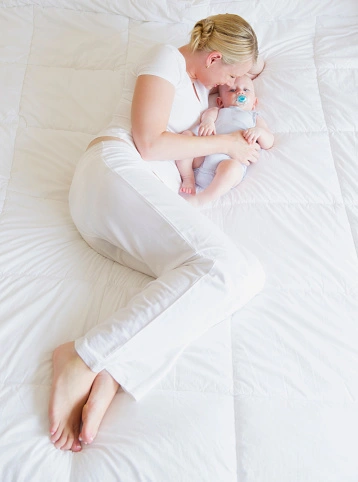
For nursing mothers, a moderate upperbody elevation makes nighttime feeding far more comfortable by supporting the back and arms without needing a stack of pillows. For postpartum recovery especially after a Csection a gentle Zero Gravity or kneeelevated position reduces strain on healing abdominal muscles and improves circulation during a period when mobility is often limited.
The weeks after childbirth bring a combination of frequent nighttime feeding, physical recovery, and general exhaustion and how you’re positioned in bed genuinely affects all three. An adjustable bed for nursing mothers addresses a set of needs that’s quite different from general back pain relief, and getting the setup right can make a meaningful difference during an already demanding stretch of early motherhood.
Why Postpartum Needs Are Different
Postpartum recovery involves healing tissue, often reduced core strength, and particularly after a Csection an incision that needs to avoid unnecessary strain. On top of this, most new mothers are getting in and out of bed multiple times a night for feeding, which means ease of movement matters just as much as the sleeping position itself. General backpainfocused advice doesn’t fully account for these specific, temporary needs.
The Right Setup for Nighttime Feeding
A moderate upperbody elevation enough to sit comfortably upright without straining the neck or shoulders makes latenight and earlymorning feeding sessions considerably more manageable. Instead of stacking pillows that shift and flatten through the night, a stable, motorized incline holds its position consistently, supporting the back and arms throughout what can be a long feeding session, especially in the early weeks when feeds take longer.
Positioning for CSection Recovery
For mothers recovering from a Csection, avoiding pressure and strain on the abdominal incision is the priority for the first several weeks. A gentle kneeelevated position, with the head section only mildly raised, reduces the pull on abdominal muscles that a fully flat position can create, while a heightadjustable base if available significantly eases the strain of getting in and out of bed, which is one of the more physically demanding parts of early Csection recovery.
Positioning by Recovery Stage
| Recovery Stage | Suggested Positioning Focus | Key Consideration |
| First 12 weeks (vaginal delivery) | Gentle elevation for comfort and feeding support | Move slowly; avoid sudden or steep angle changes |
| First 24 weeks (Csection) | Minimal, gentle knee elevation; follow surgeon’s guidance | Avoid pressure directly on the incision area |
| Weeks 26, general recovery | Gradual introduction of fuller Zero Gravity position | Confirm comfort levels; stop if any pain increases |
| Ongoing nighttime feeding needs | Stable upperbody elevation for feeding sessions | Consistent, motorized support beats stacked pillows |
Circulation and Swelling After Delivery
Swelling in the legs and feet is common in the days following delivery, as the body adjusts and excess fluid gradually resolves. A brief period with the legs elevated above heart level the same principle behind the Zero Gravity position can support this process, similarly to how it helps with swelling during late pregnancy. Our article on how adjustable beds improve blood circulation and reduce swelling covers this mechanism in more detail, and much of it applies directly to postpartum recovery as well.
Continuing Benefits from Pregnancy
If you used an adjustable bed during pregnancy for back support and circulation, many of the same benefits carry over directly into the postpartum period the positioning that eased latepregnancy discomfort is often very similar to what supports early recovery afterward. Our detailed guide on health benefits of zero gravity position during pregnancy is a useful companion read if you’re navigating both pregnancy and the postpartum period.
Practical Features That Matter Most for New Mothers
- Height adjustability, to reduce the physical strain of getting up multiple times a night for feeding
- Position memory, so you’re not readjusting from scratch during a groggy 3 a.m. feed
- Gentle, quiet motor movement, to avoid disturbing a partner or a baby who has just settled
- A simple, easytofind remote, since fumbling for controls in the dark adds unnecessary friction to an already tiring routine
Involving Your Partner in the Setup
Nighttime feeding and recovery are rarely a solo effort, and it’s worth involving your partner directly in understanding the bed’s setup, not just relying on you to operate it each time. A partner who knows how to adjust the incline, engage the flatreturn button quickly, or help with a smooth transfer out of bed can meaningfully reduce the physical burden during a period when energy is already stretched thin. Some couples find it helpful to agree on a default “feeding position” preset together in the first week, so neither partner has to refigure out the right angle during a groggy middleofthenight session.
Returning to a Standard Sleep Routine
As recovery progresses and nighttime feeding frequency naturally decreases, most mothers gradually shift back toward whatever general sleep position worked well for them before pregnancy, whether that’s a flatter setting or continued use of a gentler Zero Gravity position for ongoing comfort. There’s no fixed timeline for this transition let your own comfort and healing progress guide the pace, rather than assuming you need to return to prepregnancy positioning by any particular week. Many mothers who found genuine benefit from elevated positioning during pregnancy and postpartum recovery choose to continue using it as part of their regular routine well beyond the immediate recovery period, simply because it continues to feel more comfortable.
The postpartum period asks a lot of a new mother’s body, and small comforts a stable feeding position, easier transfers in and out of bed, gentle support for a healing incision genuinely add up during an exhausting stretch. An adjustable bed for nursing mothers, set up thoughtfully around your specific recovery stage, is one practical way to make those first weeks a little easier.
Explore our Adjustable Bed for Nursing Mothers page or Adjustable Bed for Pregnant Women range for more.
Related Reading: