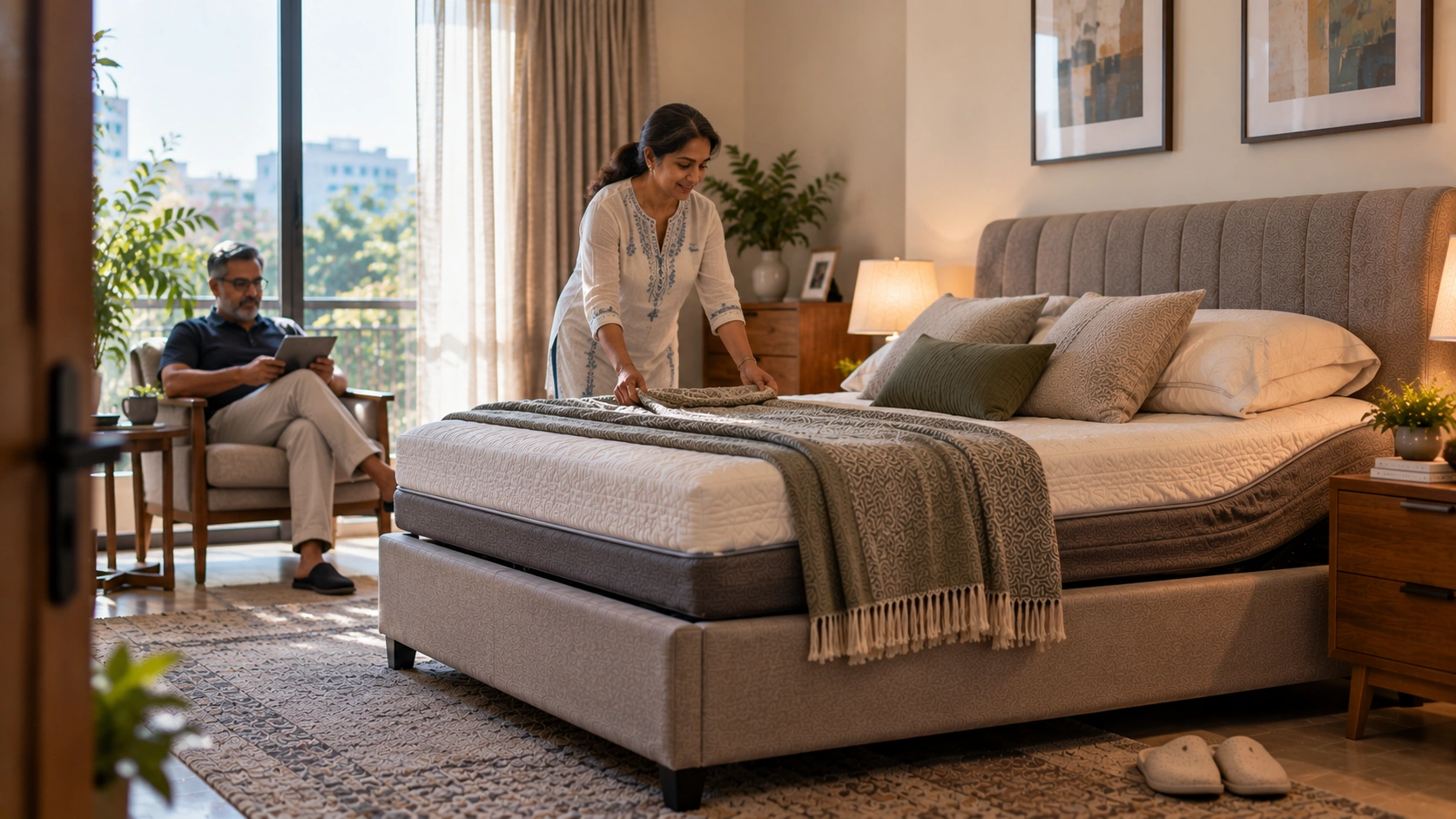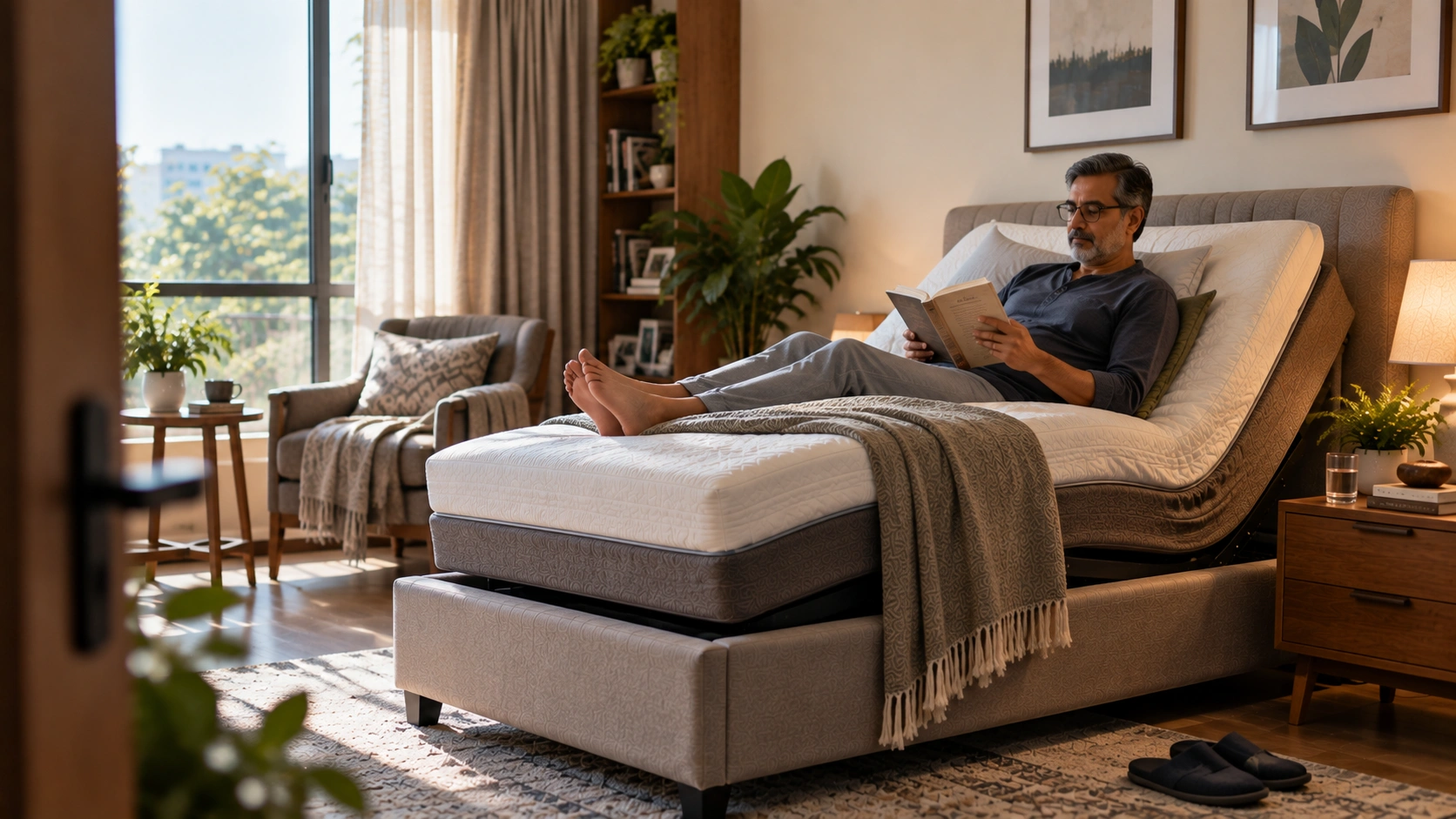
Adjustable beds help prevent bed sores by making regular position changes far easier and more frequent than a flat bed allows, redistributing pressure away from vulnerable areas like the tailbone, heels, and hips before skin damage can develop. For someone with limited mobility, an adjustable bed is one of the most practical tools for reducing pressure ulcer risk at home, alongside a proper repositioning schedule and skin care routine.
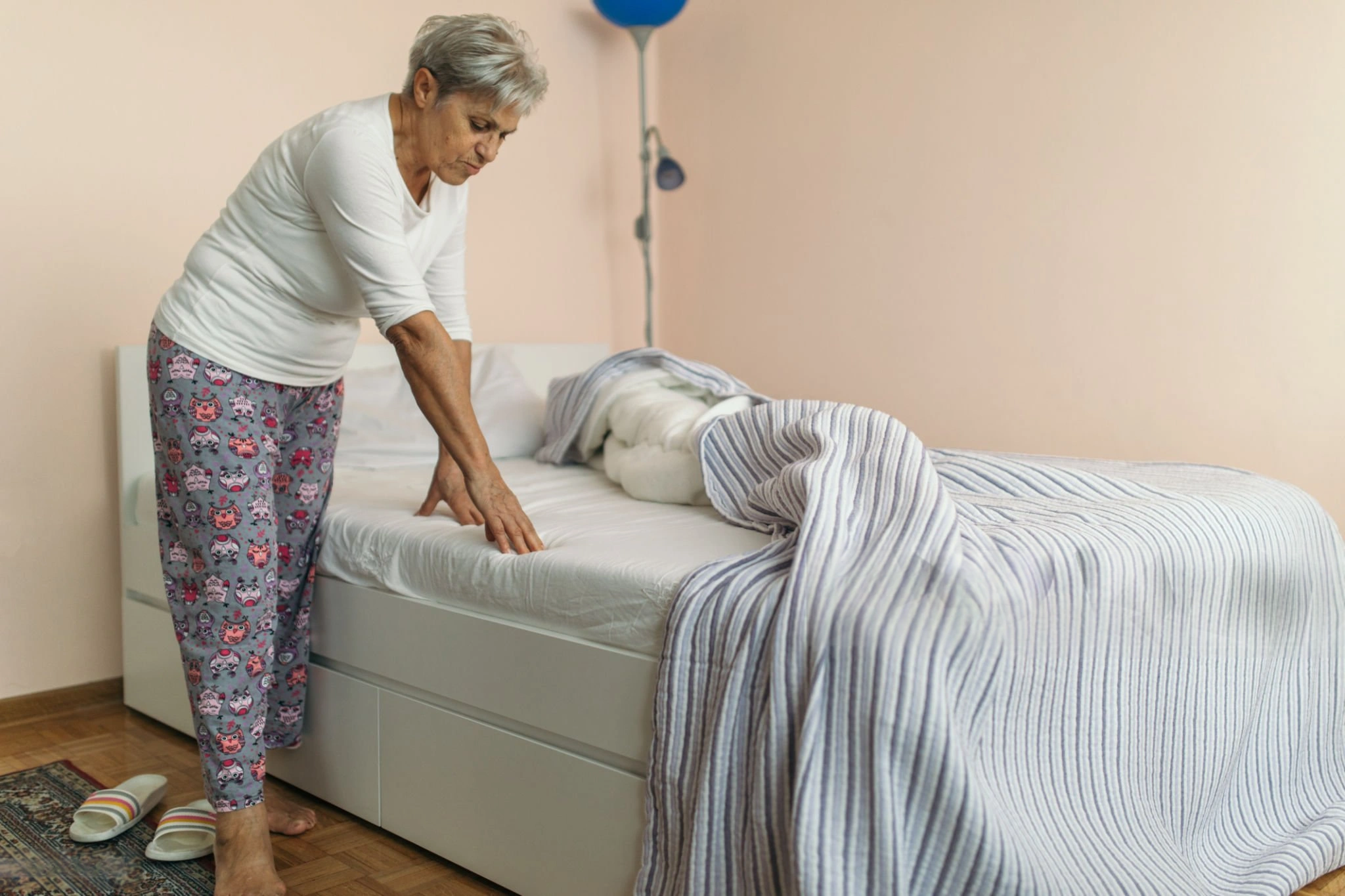
Bed sores, medically known as pressure ulcers, develop when sustained pressure on one area of skin cuts off adequate blood flow usually over bony areas like the tailbone, hips, heels, and elbows. They’re a serious concern for anyone with limited mobility, whether due to age, illness, injury, or recovery from surgery, and they can develop faster than most families expect, sometimes within just a few hours of unchanged pressure in a vulnerable position.
Why Flat, Static Bedrest Increases Bed Sore Risk
A person lying flat in the same position for extended periods places continuous, concentrated pressure on the same few points of contact with the mattress. Without regular repositioning, blood flow to that compressed skin and underlying tissue is reduced, and if this continues long enough, the tissue begins to break down starting as reddened, unbroken skin and potentially progressing to open wounds if not addressed. Manually repositioning someone with limited mobility every two hours, as is often recommended, is physically demanding for caregivers and easy to fall behind on, especially overnight.
How an Adjustable Bed for Bedsores Helps
- Easier, more frequent position changes: A motorized frame lets a caregiver shift pressure distribution with the push of a button, rather than physically repositioning a person’s full body weight manually.
- Reduced pressure at highrisk points: Elevating the head or legs even slightly redistributes weight away from the tailbone and heels, two of the most common bed sore locations.
- Better circulation overall: Positions like Zero Gravity, which elevate the legs above heart level, support healthier blood flow throughout extended periods in bed directly relevant to pressure ulcer prevention.
- Easier care and skin checks: An elevated position often makes it easier for caregivers to check and clean skin at vulnerable points without a full manual repositioning effort each time.
A General Repositioning Framework
| Risk Level | Suggested Repositioning Frequency | Adjustable Bed Role |
| Fully mobile, temporary bedrest | Every 34 hours while awake | Gentle position variation to avoid stiffness |
| Reduced mobility, some assistance needed | Every 2 hours | Frame adjustment reduces physical strain of repositioning |
| Limited or no mobility, high risk | Every 12 hours, including overnight | Frame adjustment is often the only practical option at this frequency |
Features to Look for in an Adjustable Bed for Bed Sore Prevention
- Smooth, gentle motor movement, since jerky repositioning can itself irritate alreadyvulnerable skin
- Independent head and leg control for varied pressure redistribution rather than one fixed position
- A pressurerelieving or specialized mattress, ideally designed to work alongside the frame’s movement to further reduce point pressure
- Height adjustability, which makes caregiver access for skin checks and cleaning significantly easier
- Easyclean, breathable surfaces, since moisture management is a meaningful factor in bed sore prevention alongside pressure relief
Our Bed for Patients range and dedicated Adjustable Bed for Bedsores page are built around exactly this combination of features.
Beyond the Bed: A Complete Prevention Approach
An adjustable bed is a genuinely powerful tool, but bed sore prevention works best as part of a complete care routine. Good nutrition and hydration support skin resilience and healing capacity. Keeping skin clean and dry, particularly at pressure points, reduces the additional risk moisture adds to alreadycompromised areas. And regular skin checks looking specifically for early redness that doesn’t fade quickly after pressure is relieved allow intervention before a minor issue becomes a more serious wound.
When to Involve a Healthcare Professional
Any sign of skin breakdown, persistent redness, or a wound that doesn’t begin improving with repositioning and care should be assessed by a doctor or wound care specialist promptly bed sores can progress quickly and are far easier to manage in earlier stages. An adjustable bed supports a good prevention routine, but it isn’t a substitute for professional wound care once skin damage has already begun.
Understanding the Stages of Bed Sores
It helps caregivers to recognize how bed sores typically progress, since early intervention makes a significant difference in outcomes. The earliest stage presents as reddened skin that doesn’t fade within about 15 to 20 minutes after pressure is relieved this is the critical window where increased repositioning and pressure relief can often fully reverse the damage. If pressure continues unaddressed, the skin can progress to a shallow open wound, and further neglect can lead to deeper tissue damage extending into muscle or bone in the most severe cases. An adjustable bed’s value is greatest at this earliest stage, where consistent, easy repositioning can prevent progression entirely which is exactly why preventionfocused use matters more than waiting until a problem has already developed.
Caregiver Considerations for LongTerm Use
For families providing longterm care at home, building an adjustable bed into a sustainable daily routine matters as much as the equipment itself. Setting reminders for repositioning intervals, keeping a simple log of skin checks, and involving multiple caregivers in understanding how to operate the bed all reduce the risk of gaps in care, particularly overnight when fatigue makes consistency harder to maintain. Many families find that the ease of an adjustable bed’s motorized repositioning makes it significantly more likely that the recommended schedule is actually followed consistently, compared to manual repositioning alone, which naturally tends to slip when caregivers are exhausted or stretched across multiple responsibilities.
For families caring for someone with limited mobility at home, an adjustable bed for bed sores is one of the most practical investments available it turns a physically demanding, easytomiss repositioning routine into something that can be done consistently, even overnight, with the push of a button.
Explore our Adjustable Bed for Bedsores page or Bed for Patients range for carefocused options.
Related Reading: