Snoring and sleep apnea are two of the most common reasons people search for an adjustable bed to stop snoring, and the underlying logic makes sense: elevation opens the airway, and an open airway means less snoring. But how much does this actually help in practice, and where are the real limits? This guide gives an honest, medically grounded answer.
Why Flat Sleeping Makes Snoring Worse
When you lie completely flat on your back, gravity pulls the tongue and soft tissues at the back of the throat downward, partially narrowing the airway. As air moves through this narrowed space, it causes the surrounding tissue to vibrate which is the sound we recognize as snoring. This effect is often significantly worse in the fully flat position than in any elevated position, which is exactly why elevating the head is one of the most consistently recommended nonmedical interventions for positional snoring.
How Adjustable Bed Elevation Helps
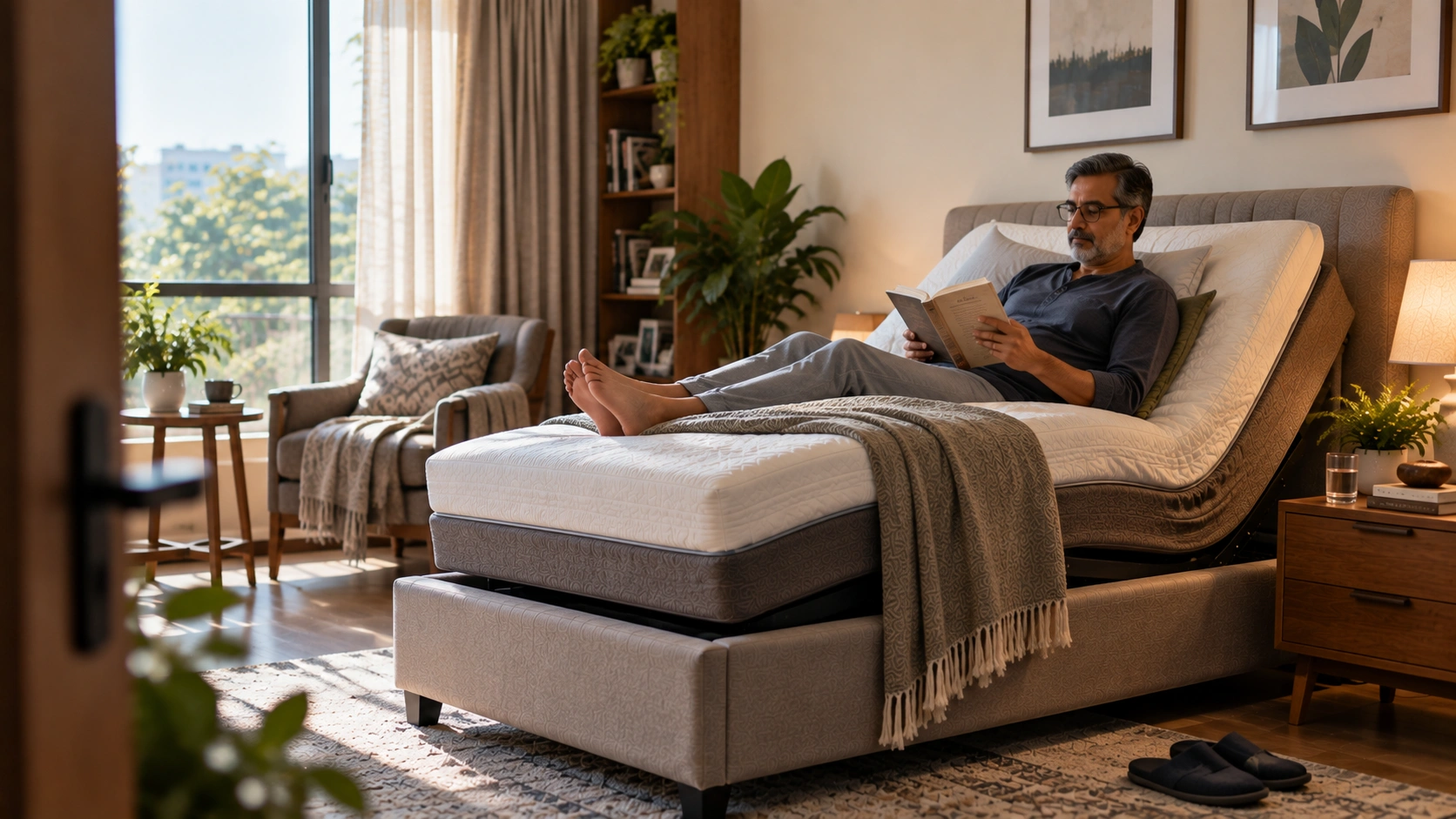
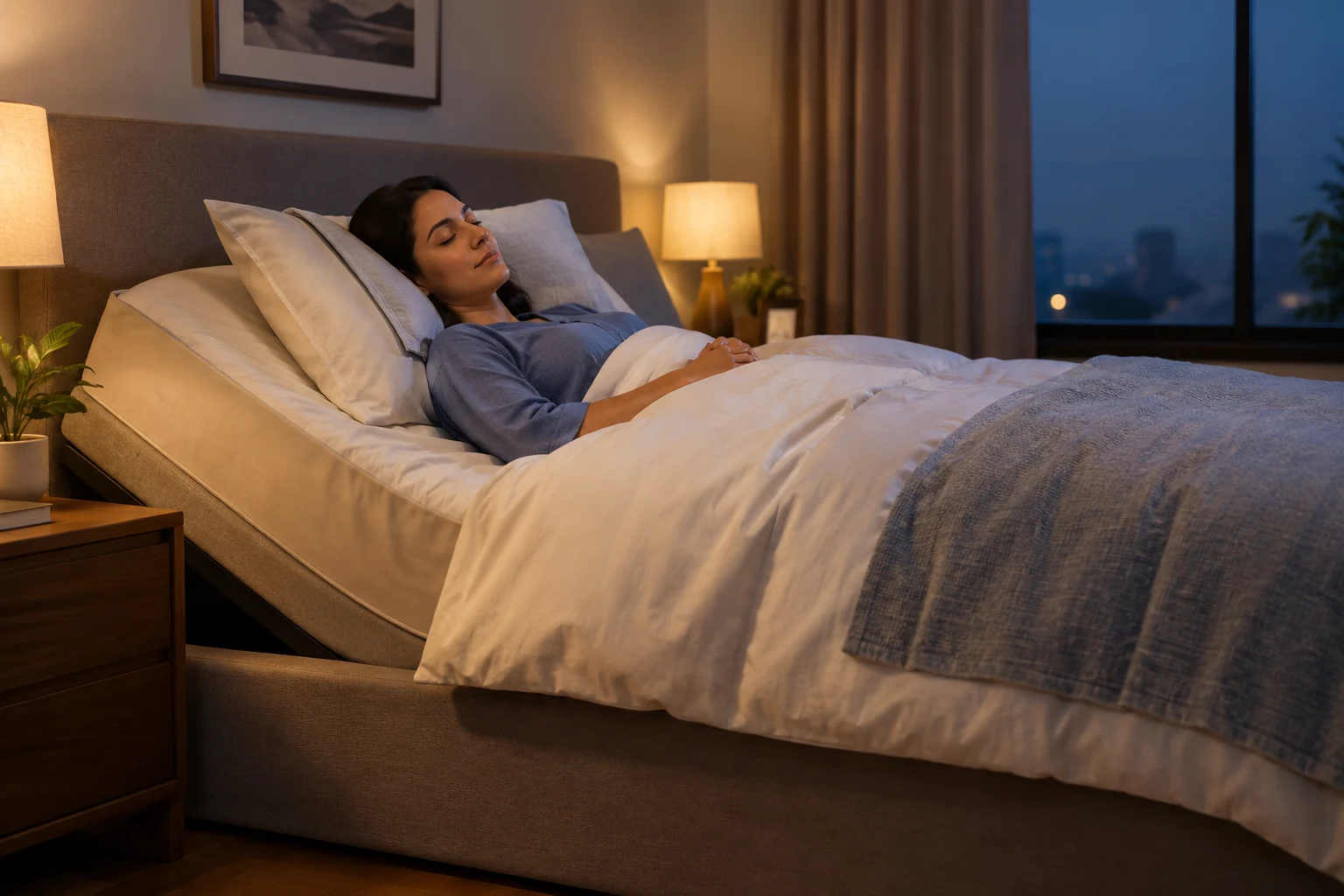
Raising the head and upper body section of an adjustable bed counteracts this gravitational pull on the throat’s soft tissue, keeping the airway more open and reducing the vibration that causes snoring sound. For many people whose snoring is primarily positional meaning it’s worse specifically when lying flat on the back this single change can produce a noticeable reduction in both the frequency and volume of snoring.
Snoring vs Sleep Apnea: An Important Distinction
| Condition | What It Is | Can an Adjustable Bed Help? |
| Simple snoring | Airway vibration from narrowed passage during sleep, generally not a health risk on its own | Often yes head elevation frequently reduces this significantly |
| Positional sleep apnea | Breathing pauses that worsen specifically when lying flat on the back | Often helps meaningfully alongside other treatment; discuss with a doctor |
| Moderate to severe sleep apnea | Diagnosed condition with repeated breathing interruptions, often requiring CPAP or other medical treatment | May help somewhat, but is not a substitute for prescribed treatment |
The Right Elevation Setup for Reducing Snoring
- Start with a moderate head elevation, roughly 30 to 45 degrees, rather than a completely flat position.
- Keep the neck naturally aligned with a supportive but not overly thick pillow, since a pillow that’s too tall can bend the neck forward and actually narrow the airway further.
- Avoid sleeping directly on your back if snoring persists even with elevation sidesleeping combined with a mild head elevation often produces the best combined result.
- Reassess after two weeks of consistent use; if snoring hasn’t improved meaningfully, it may point toward apnea rather than simple positional snoring, which warrants a medical evaluation.
For a broader look at other adjustable bed health benefits beyond snoring, our article on how adjustable beds improve blood circulation and reduce swelling covers related positioning benefits that often overlap with better breathing at night.
Other Contributing Factors Worth Addressing
- Weight and lifestyle factors: Excess weight around the neck can contribute to airway narrowing regardless of sleeping position.
- Alcohol before bed: Relaxes throat muscles further, often worsening snoring even with good head elevation.
- Nasal congestion: Allergies or colds can add an additional obstruction that elevation alone won’t fully resolve.
- Sleep position beyond elevation: Back sleeping tends to worsen snoring compared to side sleeping, independent of how elevated the head section is.
What an Adjustable Bed Cannot Do
It’s important to be clear about the limits here: an adjustable bed does not diagnose, treat, or cure sleep apnea, and it should never replace a CPAP machine or other treatment prescribed by a sleep specialist for someone diagnosed with moderate to severe sleep apnea. Where it genuinely helps is with positional, gravityrelated airway narrowing which covers a meaningful share of common snoring cases, but not every case, and not diagnosed apnea requiring medical management.
Combining an Adjustable Bed with CPAP Therapy
For people already using a CPAP machine for diagnosed sleep apnea, an adjustable bed can still add genuine value rather than becoming redundant. A moderate head elevation alongside CPAP therapy can improve mask seal and comfort for some users, and it may reduce the pressure settings needed in certain cases, though any changes to CPAP settings should always go through the prescribing sleep specialist rather than being adjusted independently. The two tools address the problem from different angles CPAP maintains airway pressure directly, while bed elevation reduces the gravitational component of airway narrowing and using both together is a reasonable combination many patients and sleep specialists support.
When Snoring Signals Something Worth Testing
Certain patterns are worth flagging to a doctor rather than simply managing at home. Loud, disruptive snoring accompanied by choking or gasping sounds, long pauses in breathing noticed by a partner, excessive daytime sleepiness despite adequate hours in bed, and morning headaches are all signs that point toward possible sleep apnea rather than simple positional snoring. A home sleep study or an inlab sleep test can provide a proper diagnosis, and getting this evaluation is a far more reliable path forward than continuing to adjust bed angles indefinitely in hopes of selfresolving what may be an underlying medical condition.
Frequently Asked Questions
Can an adjustable bed cure sleep apnea?
No. An adjustable bed can help reduce symptoms related to positional airway narrowing, but sleep apnea is a medical condition that requires proper diagnosis and, in most cases, treatment such as CPAP therapy prescribed by a doctor.
What angle should I use on an adjustable bed to reduce snoring?
A moderate head elevation of roughly 30 to 45 degrees is commonly recommended as a starting point, adjusted based on comfort and how effectively it reduces snoring for your specific situation.
Does elevating the legs also help with snoring, or just the head?
Head and upper body elevation is what directly affects the airway; leg elevation mainly supports circulation and overall comfort rather than snoring specifically, though many people use both together in a Zero Gravity position.
For snoring caused by flatsleeping airway narrowing, an adjustable bed offers a genuinely effective, nonmedical first step worth trying. But if snoring is loud, accompanied by gasping or witnessed breathing pauses, or persists despite consistent elevation, that’s a signal to see a doctor some things bed positioning simply can’t fix on its own.
Explore our Adjustable Bed to Stop Snoring page or Adjustable Bed for Sleeping Disorder range for more.
Related Reading: