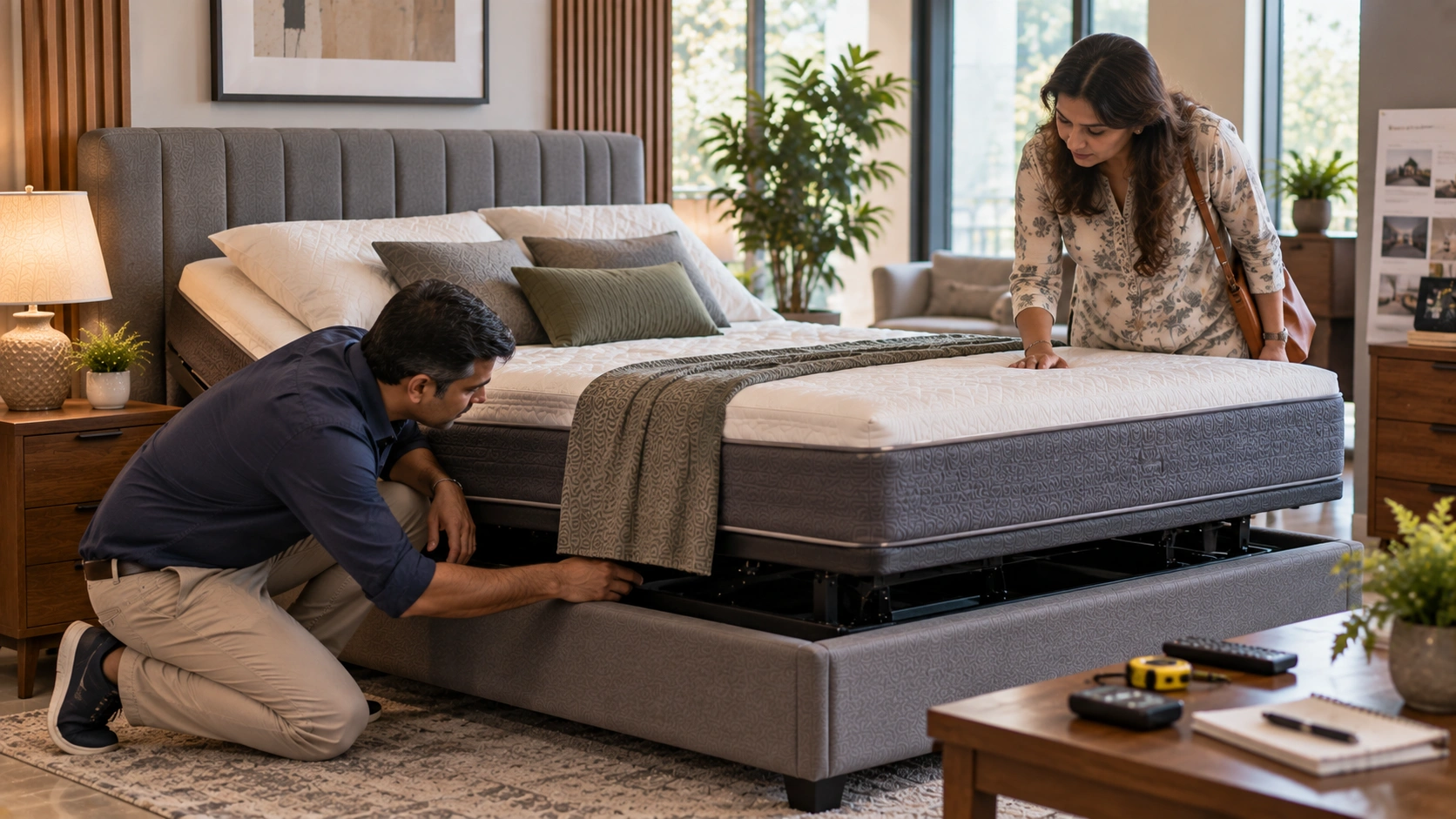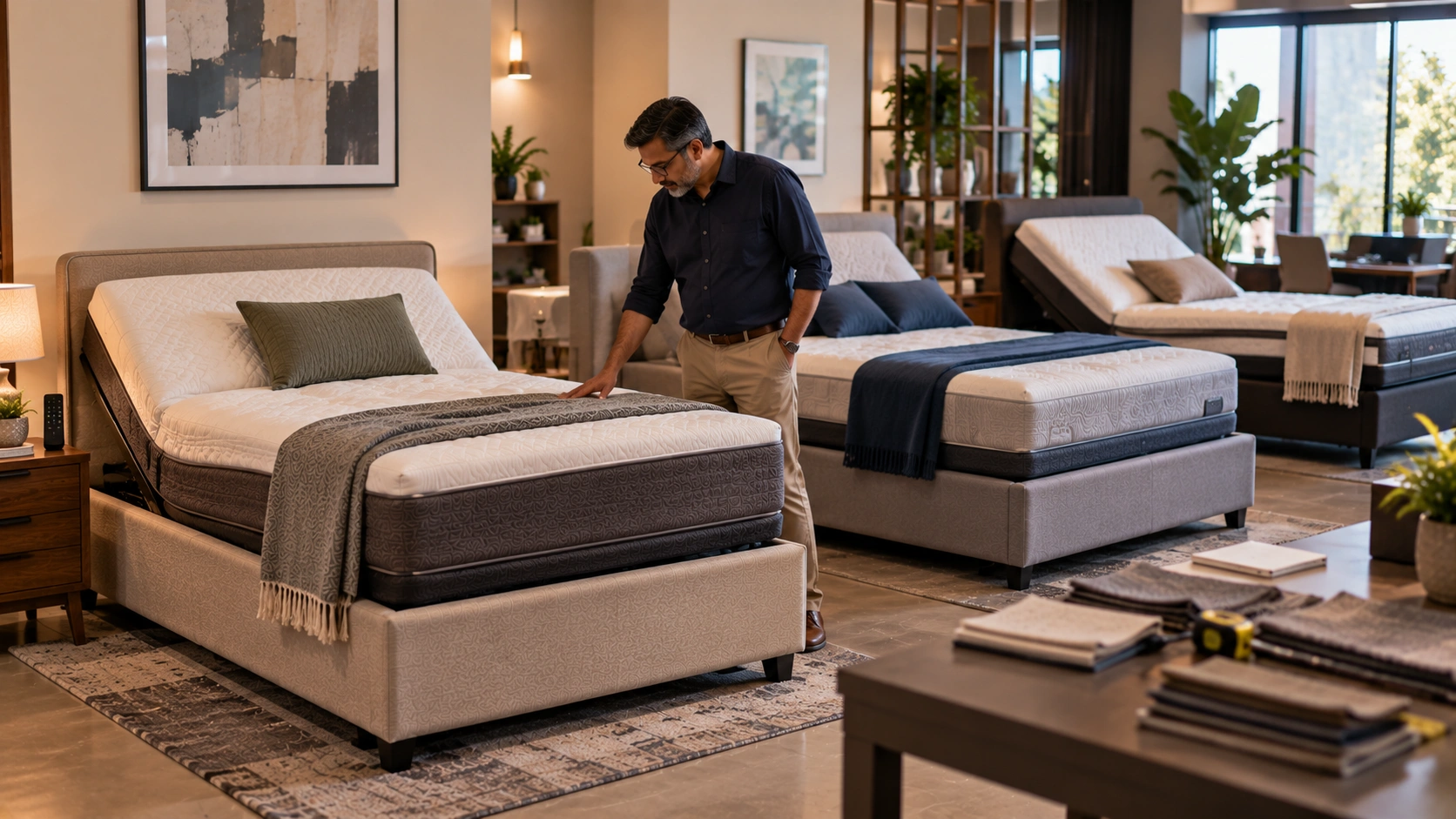

For back pain recovery at home, a modern adjustable bed usually wins on comfort, design, and everyday usability, while a hospital bed is built for higher-dependency medical care with features like side rails and IV pole mounts. Many families dealing purely with back pain not full immobility find a well-built adjustable bed gives them 90% of the medical benefit with none of the clinical look or feel.
When a loved one is recovering from a back injury, surgery, or a chronic flare-up, one of the first decisions families face is: do we need a hospital bed, or will an adjustable bed do the job? It’s a fair question the two look similar on the surface but serve slightly different purposes.
What a Hospital Bed Is Actually Built For
Hospital beds are engineered around medical dependency. They typically include:
- Side safety rails for patients at fall risk
- Higher weight capacities for bariatric or fully immobile patients
- Attachment points for IV stands, monitors, or catheter bags
- Trendelenburg (tilt) positioning for specific clinical needs
These features matter enormously for post-surgical, ICU-level, or long-term bedridden care. But for someone managing back pain who is otherwise mobile, a lot of this is more than what’s needed and it can make the bedroom feel like a hospital ward rather than home.
Where an Adjustable Bed Wins for Back Pain
An adjustable bed for patients at home focuses on comfort-driven positioning rather than clinical dependency features. For back pain specifically, that’s exactly what matters most:
- Zero Gravity and lumbar-support presets designed around spinal alignment, not just tilt
- Quieter, smoother motors for undisturbed sleep
- Better mattress compatibility — memory foam and latex options that flex with the frame
- A design that blends into a normal bedroom, which matters for long-term recovery and mental well-being
We’ve written in detail about getting the angles right in how to set up your adjustable bed for maximum lower back pain relief — the same setup logic applies whether you’re recovering from injury or managing chronic pain.
Side-by-Side: Back Pain Recovery Needs
| Need | Adjustable Bed | Hospital Bed |
| Spinal alignment / Zero Gravity position | Excellent | Basic tilt only |
| Fall-risk / immobile patients | Limited | Purpose-built (rails) |
| Bedroom aesthetics | Home-friendly | Clinical look |
| Mattress comfort options | Wide range | Limited |
| Medical-grade dependency care | Not ideal | Best suited |
When You Genuinely Need a Hospital Bed
If the person recovering has limited mobility, needs assistance transferring in and out of bed, or requires medical equipment attached to the bed frame, a proper Electric Hospital Bed remains the safer, more appropriate choice back pain or not. Our range is built to combine that medical functionality with far more comfort than a typical clinical unit.
A Word of Caution: Adjustable Beds Aren’t Risk-Free Either
It’s worth being realistic here no bed is a magic fix, and even adjustable beds come with things to watch for, from motor reliability to mattress compatibility. We cover the honest trade-offs in zero gravity bed: significant health implications that cannot be avoided, which is worth a read before you commit either way.
Making the Right Call for Recovery
If back pain is the primary concern and the person recovering can move independently, an adjustable bed usually offers better day-to-day comfort without sacrificing support. If mobility is more limited, a hospital-grade bed remains the safer choice. Either way, getting this decision right early on can make recovery smoother and more comfortable for everyone involved.
To explore comfortable, home-friendly solutions for recovery, visit ZeroG Beds to browse our range of beds for patients and adjustable beds, compare both options side by side, or reach out for a free home consultation.