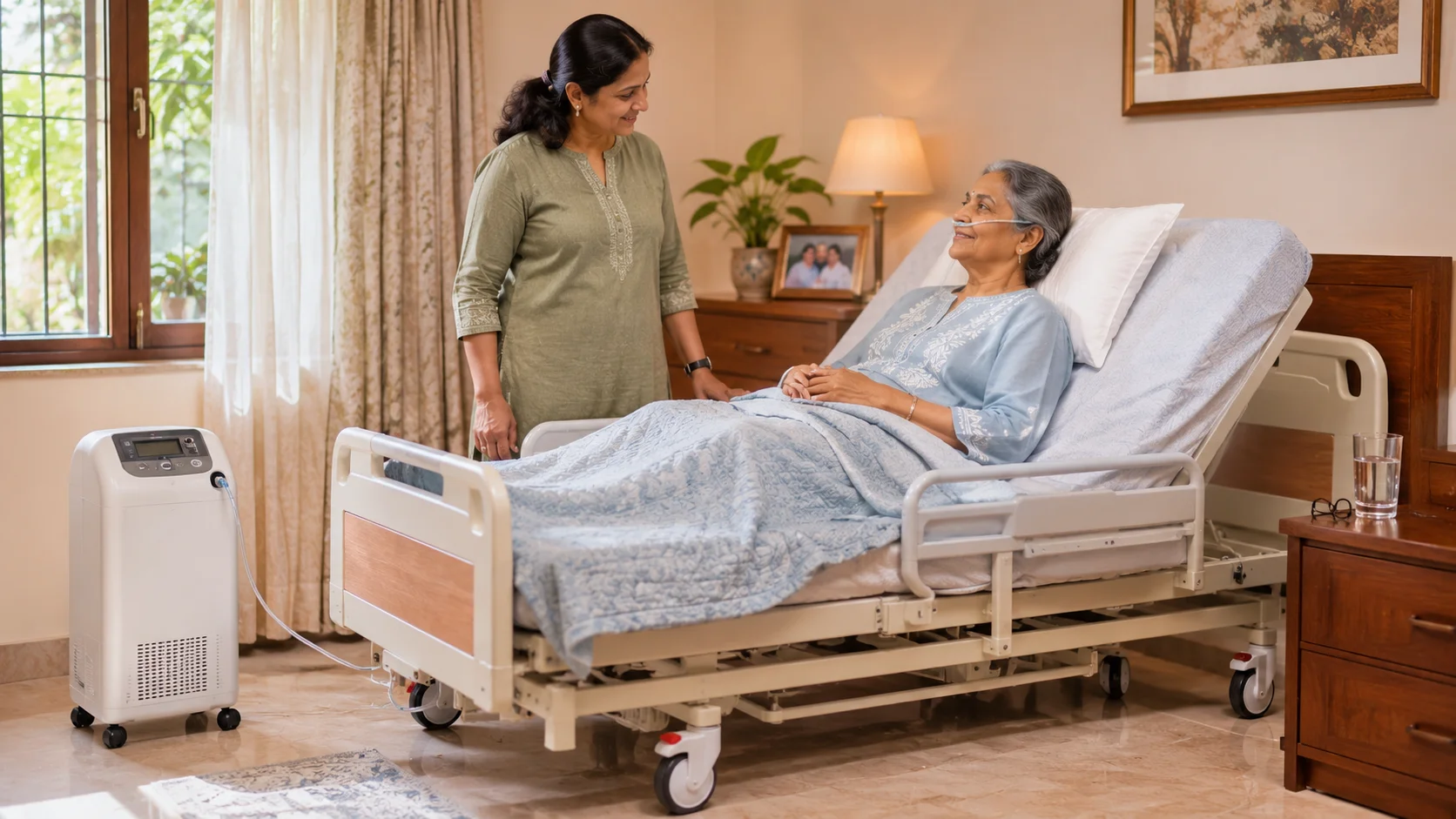
When a patient uses oxygen at home, place the concentrator in a ventilated spot away from heat and walls, keep tubing a manageable length and clear of the bed’s moving parts, keep open flames, smoking, diyas, incense and mosquito coils well away, avoid oily creams and petroleum jelly, and have a power cut plan with a backup cylinder. Never change the prescribed oxygen flow, and raise the bed head only as comfortable.
Many patients now come home from hospital needing oxygen, and the first question families ask is how to set up the room safely. A hospital bed makes breathing easier by raising the head, but oxygen brings its own rules, especially about fire and tubing. A few simple habits make the setup much safer. This guide covers the essentials, and your doctor and oxygen supplier will give instructions for your specific equipment.
Safe Setup at a Glance
| Item | Safe Practice | Why It Matters |
| Oxygen concentrator | Place in a ventilated spot, a little away from walls and curtains | The machine needs airflow and should not overheat |
| Tubing | Use only the length you need and route it neatly | Long loose tubing is a trip hazard and can be trapped |
| Bed movement | Leave slack in the tubing when the head or legs move | Prevents the tubing being pulled or pinched |
| Open flames and smoking | Keep well away, including diyas, incense, mosquito coils and stoves | Oxygen makes fires burn faster |
| Heat sources | Keep heaters and hot appliances away from the equipment | Fire and overheating risk |
| Creams and lotions | Avoid oily products and petroleum jelly near the face | They can ignite more easily in oxygen-rich air |
| Cylinders | Store upright and secured, away from heat | Prevents falls and leaks |
| Power supply | Use a proper socket and plan for power cuts | The concentrator needs power |
Placing the Equipment Around the Bed
Keep the concentrator within reach of the tubing but not touching the bed, so that moving the bed does not knock it. Allow clear space around the machine for ventilation, and keep it off damp floors. Make sure the tubing does not run under the bed’s wheels or between moving sections, and check the route each day.
Handling the Tubing
- Choose the shortest practical length of tubing and avoid loops on the floor.
- Run it along the wall or side of the bed, away from walkways.
- Leave slack so that raising the head or legs does not pull on it.
- Check before every bed movement that the tubing is clear of the moving parts.
- Check the skin around the nose and behind the ears for soreness, and tell the care team if it appears.
Fire Safety in an Indian Home
- No smoking by anyone in the room, and no open flames such as diyas, candles, camphor or incense.
- Keep mosquito coils and gas stoves well away from the oxygen equipment.
- Keep the machine and tubing away from heaters and hot appliances, especially in winter.
- Use water-based moisturisers if the care team advises, and avoid oily or petroleum-based products near the face.
- Know how to switch off the equipment and the room’s electricity, and keep a suitable extinguisher at home.
Your oxygen supplier will tell you the distance to keep from flames, which is often about two metres, and will advise on your specific equipment.
IMPORTANT NOTE
Never change the prescribed oxygen flow rate, and never use oxygen near flames or while anyone smokes. Call the doctor or emergency services immediately if the patient becomes more breathless, confused, bluish around the lips, or if the equipment alarms and you cannot resolve it. This guide gives general safety information and does not replace your care team’s instructions.
Positioning for Breathing Comfort
Raising the head of the bed often makes breathing more comfortable, and the angle that works varies between patients. Ask the doctor for guidance on the right position, and keep the knees slightly raised so that the patient does not slide down and pull on the tubing. Our guides on recliner beds for heart failure and breathlessness and recliner bed positions for night-time asthma explain positions that help.
Plan for Power Cuts
- Keep a backup cylinder or battery as the doctor or supplier advises, and know how to switch over.
- Test the backup before you need it.
- Keep emergency numbers next to the bed.
- Check the bed’s own power plan. Electric beds stay where they are in a power cut, and our guide to electric beds and power cuts explains backup options.
Everyday Checks
- Clean or replace filters as the manual instructs.
- Check the humidifier bottle and fill it with the water type recommended.
- Look at the tubing for kinks, cracks or dirt.
- Keep a log of oxygen use, symptoms and equipment problems for the doctor.
Oxygen at home is manageable when the basics are respected: a ventilated concentrator, neat tubing that the bed cannot pull, no flames near the equipment, a backup for power cuts and clear contact numbers. Set the room up with the supplier, practise the routine and keep the care team informed.
Explore our Electric Hospital Bed collection or the Bed for Patients range.
Related Reading