After heart bypass surgery, a recliner bed can help by raising the upper body so you do not have to pull or push with your arms, keeping the chest supported and making breathing exercises easier. Follow your surgeon’s sternal precautions, hug a pillow against the chest when coughing or moving, avoid pushing up with your arms, and call the care team for fever, wound changes, a clicking breastbone, chest pain, breathlessness or leg swelling in one leg.
Coming home after open heart surgery is a relief, but the first nights are often the hardest. The breastbone is healing, the chest and leg wounds are sore, and even rolling over or sitting up can hurt. A recliner bed can make those first weeks easier, because it lets the bed do the lifting while the chest rests. Here is how to use it, always within your surgeon’s instructions.
Why a Recliner Bed Helps
Surgeons usually give sternal precautions, a set of rules that protect the breastbone while it heals. They commonly include not pushing or pulling with the arms, not lifting heavy items and supporting the chest when coughing. Getting out of a flat bed normally uses exactly those movements. A bed that raises the head and upper body by remote reduces the need to pull yourself up, and a raised position makes deep breathing easier.
What the Bed Can Do in the First Weeks
| Task | Recliner Bed Setup | Why It Helps |
| Resting and sleeping | Upper body raised to a gentle angle, slight knee lift | Takes strain off the chest and keeps you from sliding |
| Sitting up for meals | Raise the back section to a seated position | Avoids pulling with the arms |
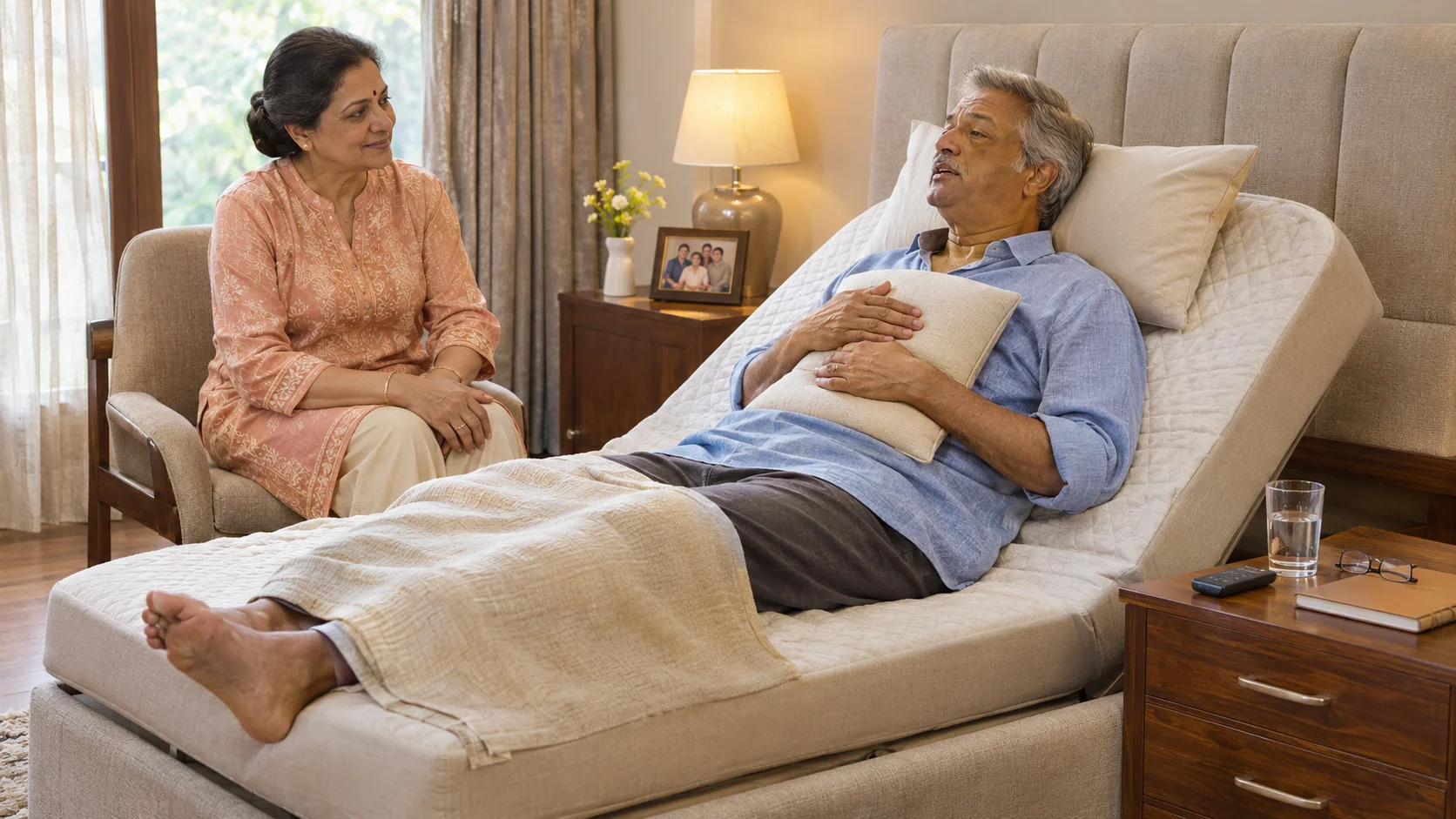
| Deep breathing and coughing | Raised position, pillow held against the chest | Eases breathing and supports the wound |
| Getting out of bed | Raise the back, then swing the legs over the side | Lowers the effort of standing |
| Leg comfort | Gentle leg lift if your team advises | May ease swelling from the leg wound |
Sleeping Positions
- On your back with the upper body raised is the position most often recommended in the early weeks.
- Use pillows to support the arms and the sides so that you do not roll onto the chest.
- Side-lying may be allowed with support. Ask your surgeon before you try it.
- Avoid sleeping on your stomach until you are told it is safe.
Getting Out of Bed Without Straining the Chest
- Raise the back section so that you are sitting with little effort.
- Hold a pillow against your chest and keep it there as you move.
- Turn towards the edge and bring your legs over the side, one at a time.
- Pause with both feet flat on the floor. Dizziness is common after surgery, as explained in our guide on slower transitions for dizziness.
- Stand slowly, without pushing up on your arms, and use a stable support or a helper for the first days.
IMPORTANT NOTE
Sternal precautions vary between hospitals, so follow your own surgeon’s and physiotherapist’s instructions above anything in this guide. Call your care team promptly for fever, redness or discharge from the wounds, a clicking or moving breastbone, chest pain, new breathlessness, rapid weight gain, or pain and swelling in one leg. Call emergency services for severe symptoms.
Coughing, Breathing and Splinting
Hug a firm pillow or rolled towel against your chest before you cough, sneeze or laugh, and press gently. This is called splinting, and it reduces the pull on the breastbone. Your team may also give you breathing exercises or a device to use each day. A raised bed position makes these exercises easier. The same splinting idea is used after other operations, as covered in our guide on recliner beds after a C-section or abdominal surgery.
Looking After the Leg Wound
If a vein was taken from the leg, the leg may swell. Your team may suggest elevating the leg for short periods, and the leg section of the bed can help. Do not raise the legs for long periods or higher than advised without checking with your cardiac team, since the right advice depends on your heart and circulation. Our guide to recliner beds for heart failure explains why leg position matters.
Setting Up the Room Before You Come Home
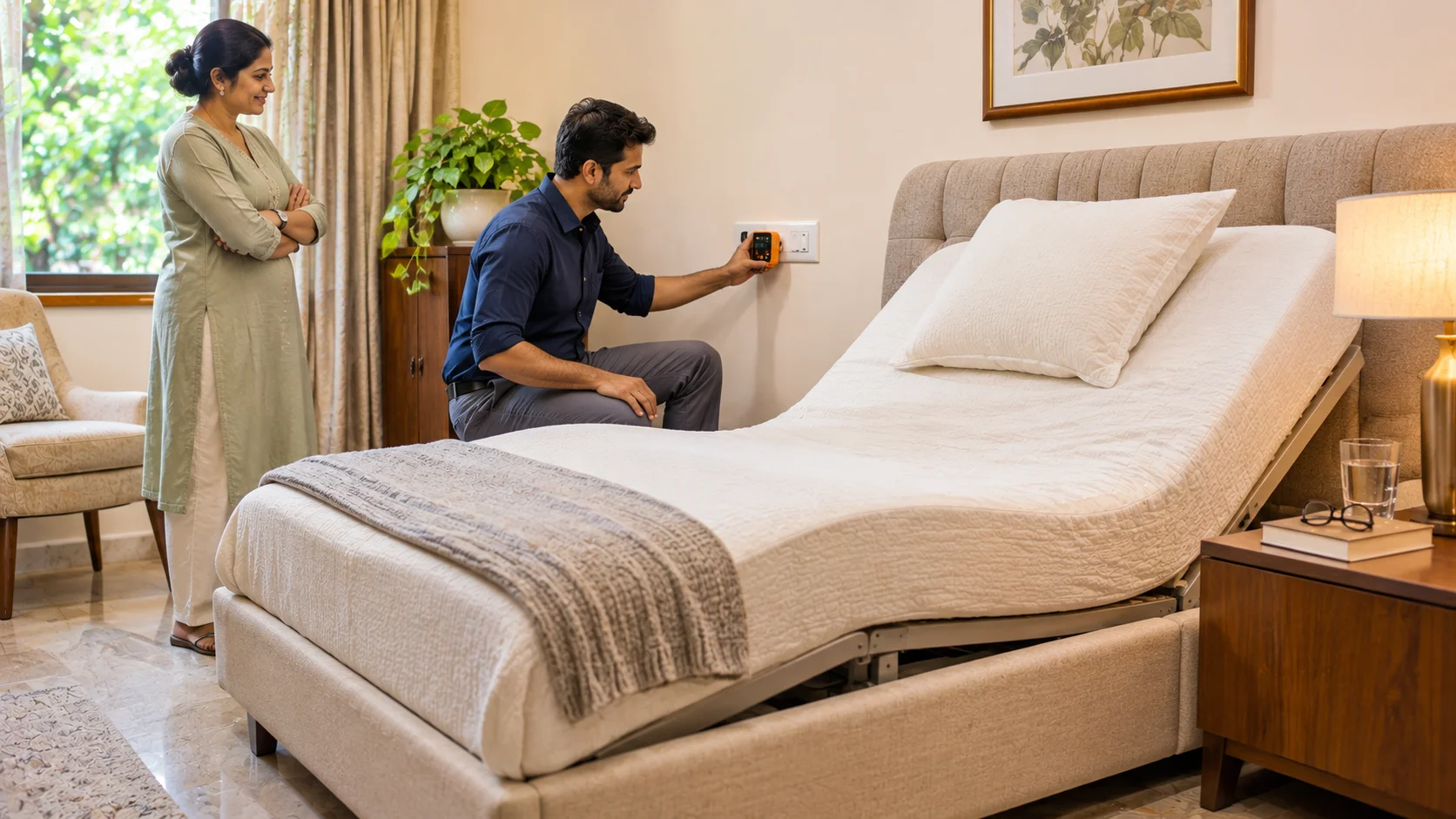
- Place the remote, phone, water and medicines within easy reach of the bed.
- Keep two or three firm pillows for splinting and support.
- Set the bed height so that both feet rest flat when you sit on the edge.
- Clear the path to the bathroom and add a night light.
- Arrange help for the first week so that you are not lifting or reaching.
Rest, Walking and Recovery
Recovery involves rest and regular short walks, as your team advises. A recliner bed makes resting more comfortable, but it does not replace the walking, breathing exercises and rehabilitation programme. Rest between activities, and do not push through pain to prove that you are fine. Our guide on how adjustable beds help patients sleep better during recovery covers general comfort principles.
The weeks after heart surgery ask a lot of the body. A recliner bed does not heal the breastbone, but it takes away many of the movements that strain it and supports the rest and breathing that recovery needs. Use it within your surgeon’s rules, and keep your care team in the loop.
Explore our Recliner Beds range or the Electric Hospital Bed collection.
Related Reading