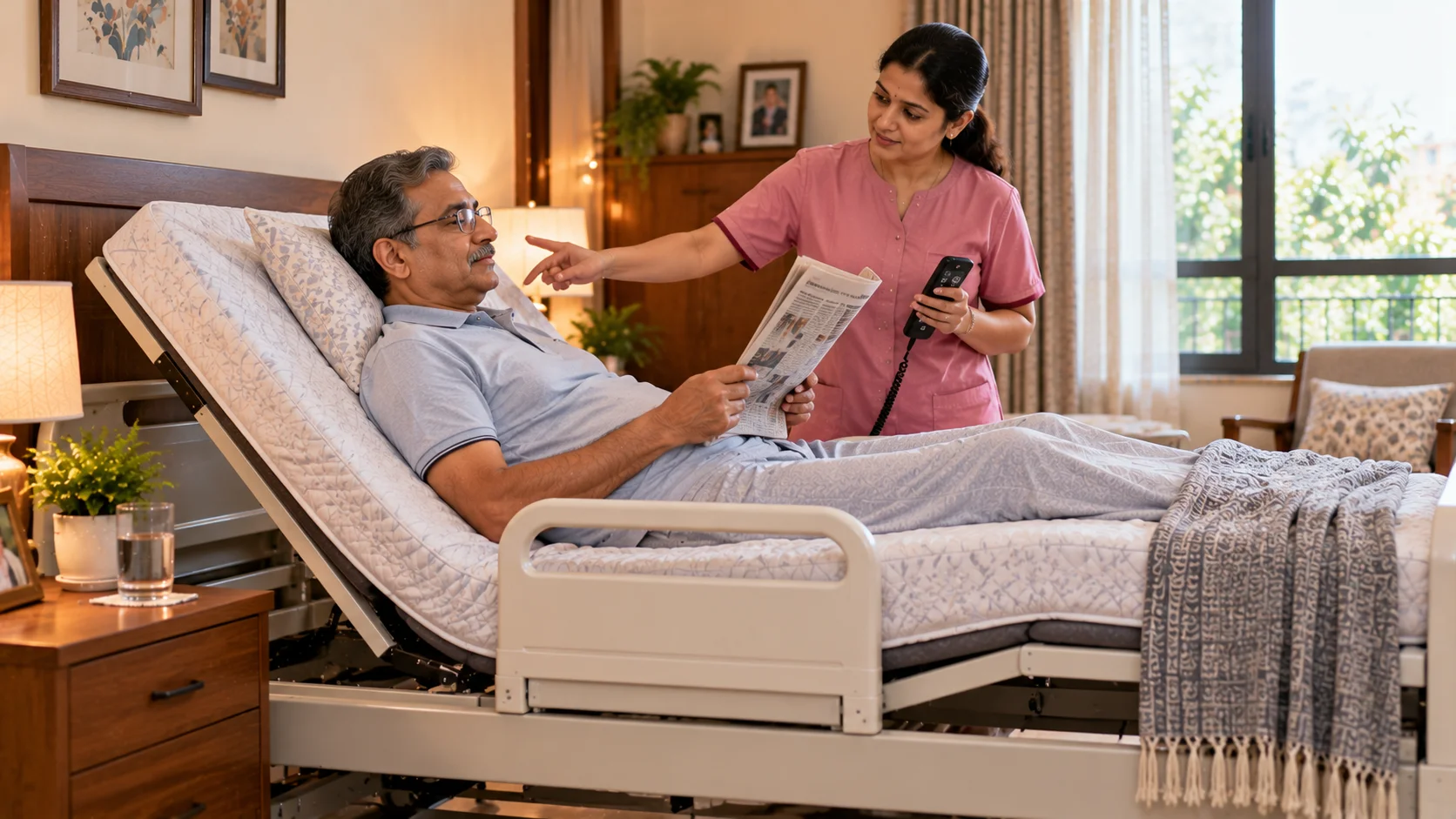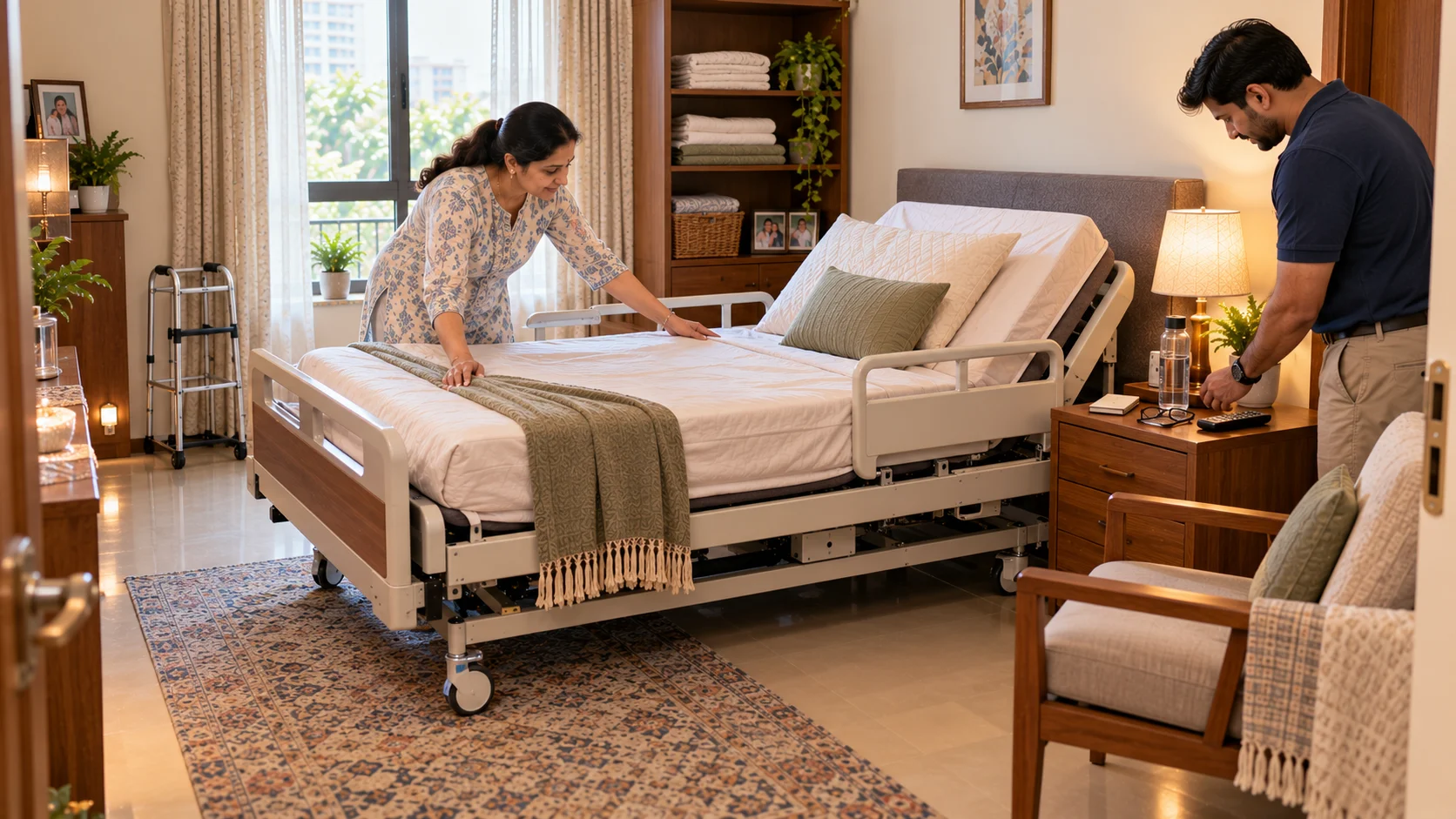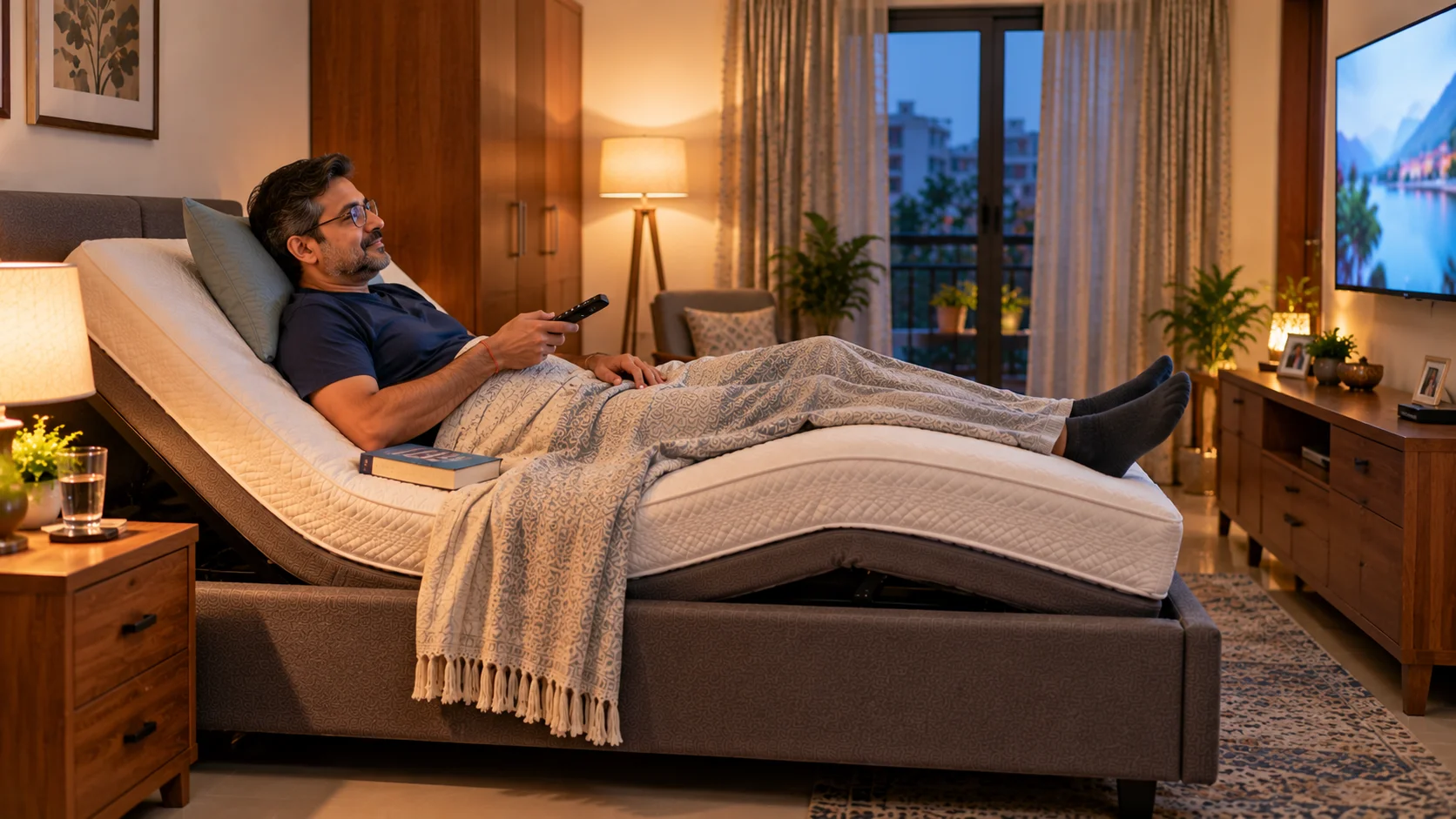
A recliner bed works best when the angle changes with the activity. As starting points, many people use about 45 to 60 degrees for reading and TV, as upright as is comfortable for meals and medicines, 30 to 45 degrees with a knee lift for daytime rests, and a gentle recline of about 15 to 30 degrees, or a mild Zero Gravity setting, for sleep. Adjust in small steps and follow your doctor’s advice if you have a swallowing, heart or lung condition.
Most people set a recliner bed once, find a position that feels fine and leave it there all day. That is where discomfort creeps in. Reading, watching TV, eating and sleeping each ask something different of the body, and a few degrees of difference can change how your neck, back and digestion feel. Here is a simple daily guide.
Quick Angle Guide by Activity
| Activity | Head Section | Knee Section | Why It Works |
| Reading or using a tablet | About 45 to 60 degrees | Slight lift | Keeps the screen near eye level without craning the neck |
| Watching TV | About 45 to 60 degrees | Slight lift | Supports the back so you do not slump toward the foot end |
| Meals and medicines | As upright as is comfortable | Slight lift | Helps swallowing and keeps food moving the right way |
| Daytime rest or nap | About 30 to 45 degrees | Gentle lift | Relaxes the body without putting full weight on the tailbone |
| Night sleep | About 15 to 30 degrees, or mild Zero Gravity | Knees at or slightly above hip level | Eases pressure on the lower back and hips |
Treat these figures as starting points rather than prescriptions. Bodies, conditions and mattresses differ, so move in small steps and note what feels best.
Reading and Screen Time
Reading flat or half-propped strains the neck within minutes. Raise the head section until the book or tablet sits at a comfortable distance without tipping the chin down, and use a slim pillow behind the head rather than a tall stack. Add a slight knee lift so your back stays supported, and look away from the screen every half hour or so.
Watching TV
The same principles apply, with one extra point: the screen should be at eye level. If you find yourself looking up or turning your head, adjust the angle rather than the pillows. Long TV sessions are also a good time to change position every hour.
Eating and Taking Medicines
Eating is the one time to sit as upright as is comfortable. An upright position helps swallowing and keeps food and stomach contents moving the right way, and many people stay upright for a while after a meal, especially with reflux. Never eat lying flat. Anyone with swallowing difficulty should follow the position advised by their doctor or speech therapist.
Daytime Rests and Naps
For a daytime rest, a moderate recline with a gentle knee lift spreads body weight more evenly than a fully upright seat. It is also easier to stand up from. If you tend to doze for hours, set a reminder to shift position and have a drink of water.
Night-Time Sleep
For sleep, most people do well with a gentle recline and the knees at or just above hip level, which is the idea behind the Zero Gravity setting. Anyone with acid reflux, breathlessness or heart or lung conditions may need a steeper angle and should check the details with their doctor. Our guide to finding the best sleeping position on an adjustable bed covers fine-tuning.
Getting Out of Bed
End each session by bringing the bed up to a seated position, planting both feet on the floor and pausing before you stand. The slow-rise habit prevents dizziness, as explained in our article on slower transitions for dizziness and vertigo.
Save Your Favourite Positions
If your remote has memory or preset buttons, store a reading setting, a TV setting and a sleep setting so changing activity takes one press. Our complete guide to your adjustable bed remote shows how presets work. And if sliding down is a problem, see our list of recliner bed mistakes and their fixes.
IMPORTANT NOTE
These angles are general comfort guidance. People with swallowing problems, heart failure, lung disease, recent surgery or pressure sores should use the positions recommended by their doctor or therapist.
A Sample Day on a Recliner Bed
- Morning: raise the head section to a seated position for tea and medicines, then stand slowly once your feet are on the floor.
- Late morning: settle at about 45 to 60 degrees for reading, with a slight knee lift.
- Lunch: return to an upright position for the meal and stay there for a short while afterwards.
- Afternoon: lower to 30 to 45 degrees for a rest, and set a reminder to change position.
- Evening: use a TV or reading angle, changing position every hour or so.
- Bedtime: ease down to a gentle recline or mild Zero Gravity setting with the knees at or slightly above hip level.
Small Extras That Make the Angles Work Better
- A small lumbar roll behind the lower back keeps the spine supported at reading angles.
- A tablet stand or lap desk keeps the screen at eye level without holding it up.
- A bedside reading light reduces eye strain and the temptation to lean forward.
- A firm cushion under the knees if the bed’s knee lift is too gentle for you.
Adjusting for Health Conditions
Some conditions change the advice. People with acid reflux often prefer a steeper angle after meals, people with lower back pain may find a mild Zero Gravity setting best for rest, and those with swollen ankles may benefit from a gentle leg lift. For back pain in particular, our guide on setting up your adjustable bed for lower back pain relief goes into detail. If you have heart or lung disease, check the leg and head angles with your doctor, since the right setting depends on the condition.
A recliner bed rewards small, regular adjustments. Match the angle to the activity, add a knee lift, save your favourite settings and finish every session with a slow rise. After a week of this routine, most people find their neck, back and sleep noticeably easier.
Explore our Recliner Beds range or the Zero Gravity collection.
Related Reading