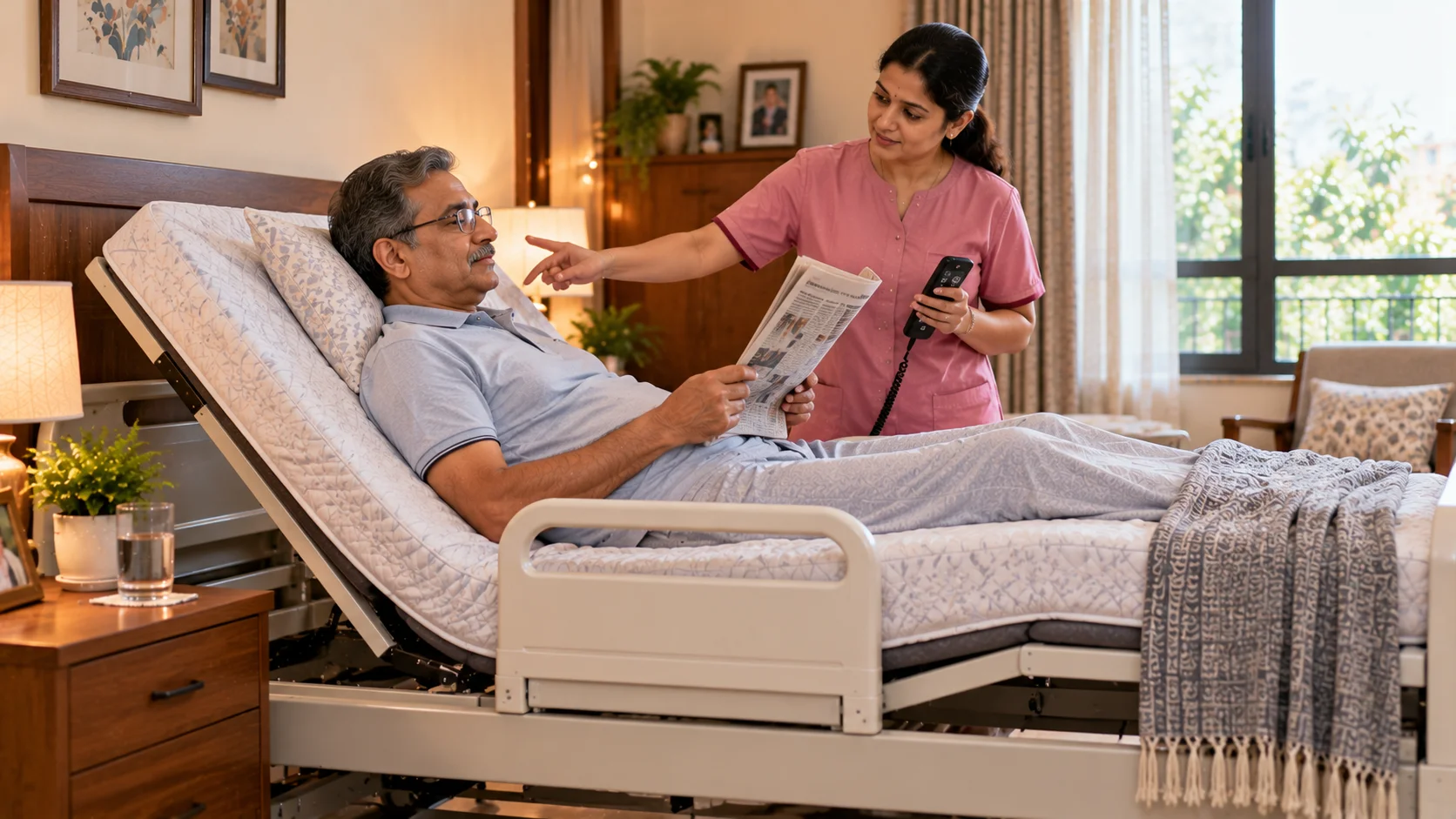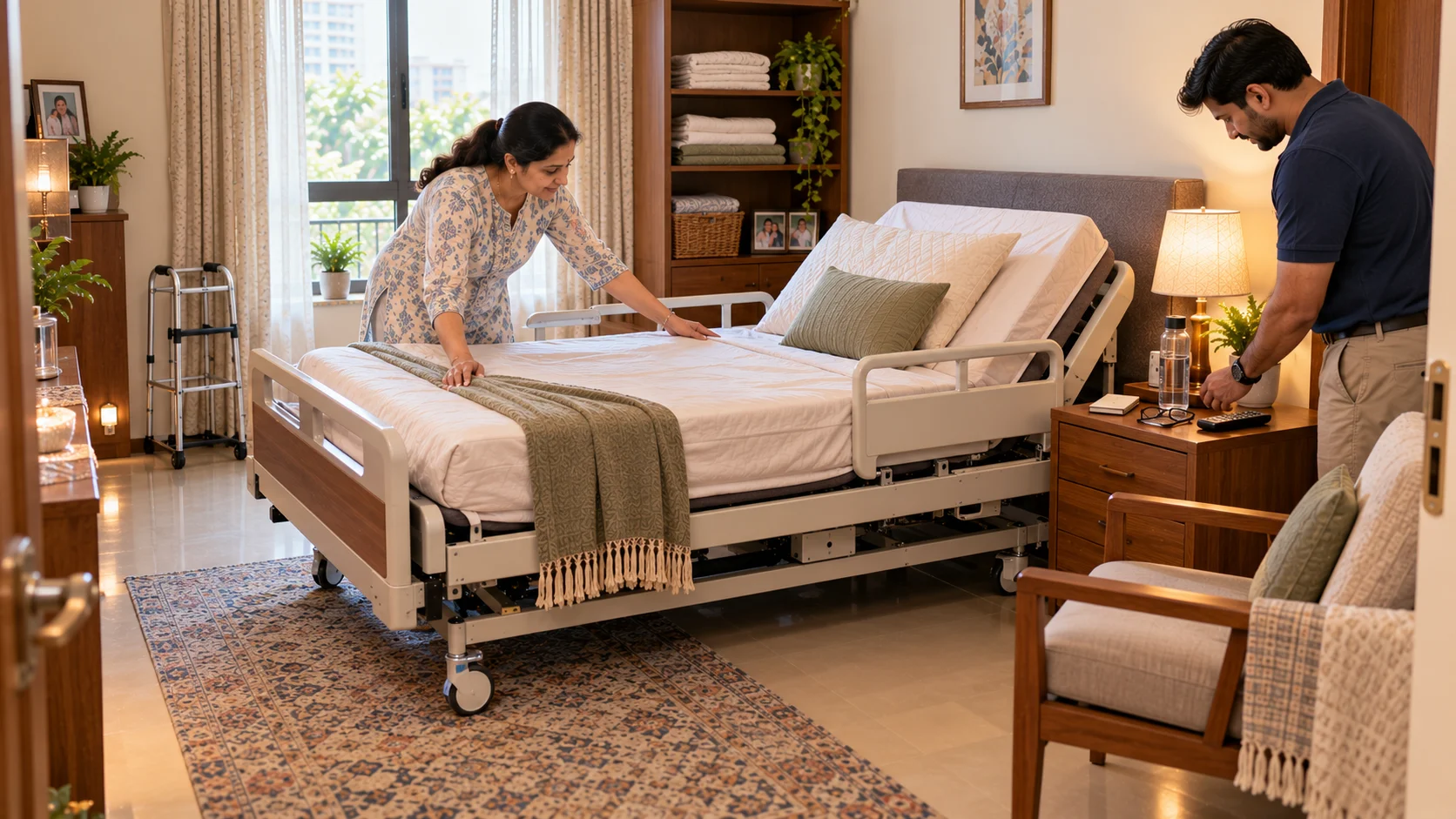
After a knee or hip replacement, a recliner bed helps by raising the operated leg to reduce swelling, making it easier to sit up and stand, and removing the need to twist or push off a flat mattress. The right angles differ by joint: knee patients are usually advised to keep the knee straight while elevating, and hip patients often have a limit on how far the hip may bend. Your surgeon’s and physiotherapist’s instructions come first, and the bed is simply the tool that makes them easier to follow.
Coming home after a joint replacement is a relief, and then the first night arrives. The leg is swollen, the joint is stiff, and the bed, which was never a problem before, suddenly feels like an obstacle course. Understanding how a recliner bed after knee or hip replacement can help starts with knowing what the body needs in those early weeks.
What Your Body Needs in the First Weeks
Most people face the same cluster of problems: swelling that builds when the leg hangs down, stiffness after lying still, pain that peaks at night, and a real risk of falls during the first trips to the bathroom. Early, regular movement is encouraged by surgical teams, and rest periods are meant to support that movement rather than replace it. A bed that helps with both resting positions and transfers fits that plan well.
Knee and Hip: Different Rules, Different Setups
| Surgery | Usual Positioning Goal | What to Watch on a Recliner Bed |
| Knee replacement | Elevate the whole leg with the knee kept as straight as comfort allows, usually to about heart level for short periods | Avoid resting with a pillow or a sharp bend under the knee for long stretches, since this can encourage stiffness in a bent position |
| Hip replacement | Keep the hip within the bending limit your surgeon has set and avoid twisting or crossing the legs | Do not over-recline into a deep seated angle, and keep the head and knee sections moderate |
| Both | Safe, low-effort transfers | Set the bed height so feet rest flat on the floor when seated at the edge |
Setting Up the Bed After Knee Replacement
- Raise the whole leg section gently, so the ankle and calf are supported and the knee stays comfortably extended rather than sharply bent.
- Use short elevation periods through the day, as advised by your physiotherapist, rather than keeping the leg raised for hours.
- Keep the head slightly raised for comfort and easier sitting up.
- Do not place a pillow directly under the knee, which is a common instruction to prevent the joint from settling into a bent position.
Setting Up the Bed After Hip Replacement
- Ask your surgeon about hip precautions before using any reclined position, because the limits depend on the surgical approach.
- Choose a moderate head angle so the hip is not bent past the allowed range while resting.
- Keep the legs slightly apart and straight ahead, avoiding crossing or turning the operated leg inward, as your team has instructed.
- Use the remote instead of twisting to change position, so you are not tempted to reach and rotate.
IMPORTANT NOTE
Calf pain or swelling, warmth or redness in the leg, sudden breathlessness or chest pain after surgery need urgent medical attention, as they can signal a blood clot. So do fever, or wound redness and discharge. Positioning aids comfort only and never replaces your surgeon’s guidance.
Getting In and Out of Bed Safely
Transfers are where most early falls happen, so this is where an adjustable bed earns its place. Raise the head section to sit up gradually, shuffle to the edge and let both feet settle flat before you stand. A bed set at a height that lets your knees stay at or just below hip level makes standing far easier than pushing up from a low surface. Keep a walker or support within reach, avoid pivoting sharply on the operated leg, and have someone nearby for the first week. The same principles appear in our guide on how adjustable beds help people with mobility issues.
Sleeping Comfortably and Managing Night-Time Pain
Take pain relief at the times your doctor advises rather than waiting for the pain to peak at midnight, and use cold therapy only as your physiotherapist has shown you. A mild head recline with the leg gently supported helps many people settle, and a firm, supportive mattress makes shifting position easier than a soft, sinking one. For general comfort principles during healing, see how adjustable beds help patients sleep better during recovery.
How Long Will You Need This Setup?
Most people lean heavily on positioning support for the first several weeks and gradually need it less as strength and range of movement return. Many continue to enjoy a gently raised head or knee position later for back comfort and reading in bed. Your physiotherapist will indicate when you can lie flat and use a normal routine.
Recovery from joint replacement is a matter of steady progress, and the bed plays a bigger role than most people expect, because so many hours are spent in it. A recliner bed that supports the leg, eases sitting up and keeps the transfers safe takes some of the strain out of those early weeks, as long as it is set up around your surgeon’s instructions.
Explore our Recliner Beds range or the Electric Hospital Bed collection.
Related Reading