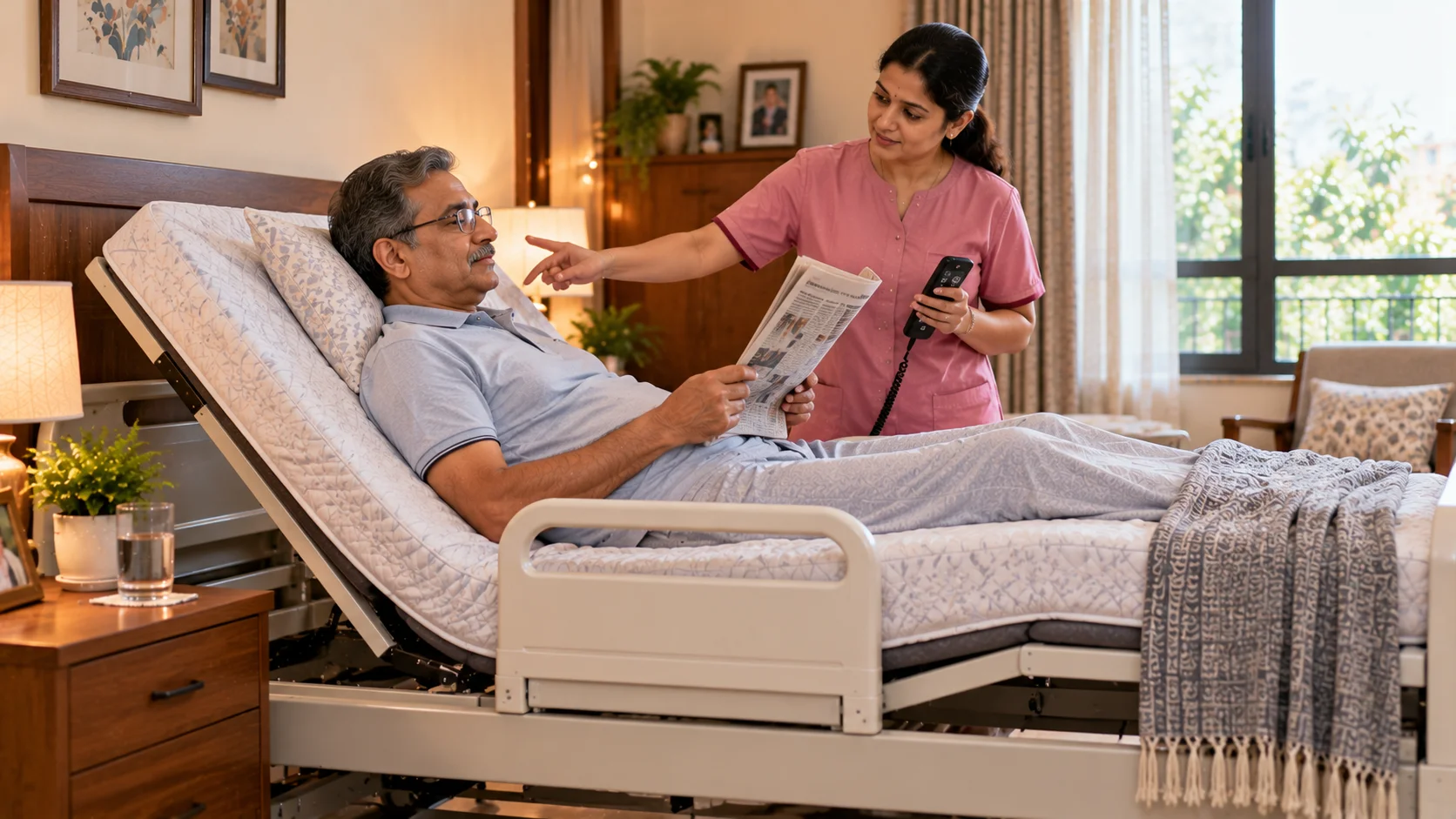
A recliner chair can work for a few nights after surgery or during a bad breathing spell, but sleeping in one every night concentrates pressure on the tailbone and heels, limits turning and often leaves the legs poorly supported. A recliner bed gives the same raised, Zero Gravity-style angles on a full-length mattress, so the body stays supported and can still change position. For frail or long-term users, the bed is usually the safer choice.
In many Indian homes, a parent ends up sleeping in a recliner chair in the living room because lying flat leaves them breathless, uncomfortable or unable to get up easily. It usually starts as a temporary fix and quietly becomes permanent. The natural question is whether a recliner bed is really any better than a recliner chair, or whether the chair is simply a cheaper way to get the same result.
Why People Choose a Recliner Chair in the First Place
The reasons are practical and fair. Sitting upright eases breathlessness and heartburn, a chair seat is easier to stand up from than a flat mattress, the price is lower, and a chair fits into a living room without rearranging the bedroom. For a short stretch, such as the first few nights after an operation, these advantages are real.
The trouble starts when the arrangement runs for weeks or months, because a chair is built for sitting and resting, not for lying still for eight hours or more.
Where Recliner Chairs Fall Short for Nightly Sleep
- Concentrated pressure. Body weight settles on the tailbone and heels, and a narrow seat gives little chance to shift. For frail or immobile people, this is how pressure sores begin.
- Almost no turning. Chair arms and a narrow back make side-sleeping and rolling very difficult, so the same skin stays loaded for hours.
- Poor leg support. Many footrests are short, so knees lock or the lower legs hang, which can add to ankle swelling by morning.
- Sliding down. Without a firm, flat surface under the thighs, people slip forward during the night and wake up crumpled.
- Tiring transfers. Pushing up from a low, soft seat on the chair arms is hard for weak shoulders and wrists.
Side-by-Side Comparison
| Feature | Recliner Chair | Recliner Bed |
| Sleeping surface | Narrow seat, back and footrest with joins between them | Continuous, full-length mattress |
| Turning and side-sleeping | Very limited by arms and width | Possible, with room to roll and use pillows |
| Pressure on tailbone and heels | Concentrated, hard to offload | Spread across the mattress, can be paired with a pressure-relieving surface |
| Leg support | Footrest can be short, knees may lock | Leg section lifts the whole leg comfortably |
| Getting in and out | Low seat, pushing off the arms | Head section lifts to sit up, bed set to a convenient height |
| Cost and space | Lower cost, small footprint | Higher cost, more floor space unless an existing bed is converted |
The Pressure Sore and Swelling Concern
For people who cannot easily reposition themselves, skin breakdown can start surprisingly quickly in a fixed position. A bed that allows small, frequent changes of angle and a mattress that spreads load make a real difference, which is covered in detail in our guide on how adjustable beds help prevent and manage bed sores. The same applies to swollen ankles, where a supported, elevated leg section does more than a dangling footrest, as explained in how adjustable beds improve blood circulation during sleep.
IMPORTANT NOTE
Needing to sleep sitting up in order to breathe, especially if this is new or getting worse, deserves a medical check rather than just a better chair. Anyone who cannot reposition themselves should have a pressure-care plan agreed with a doctor or nurse, whichever bed or chair is used.
When a Recliner Chair Is Still Reasonable
A chair is a sensible short-term option after surgery, for daytime naps, or during a temporary breathing problem while a proper bed is being arranged. Keep it time-limited, check the skin over the tailbone and heels daily, and move to a bed once nights in the chair become routine.
How a Recliner Bed Gives You the Same Angles Without the Compromises
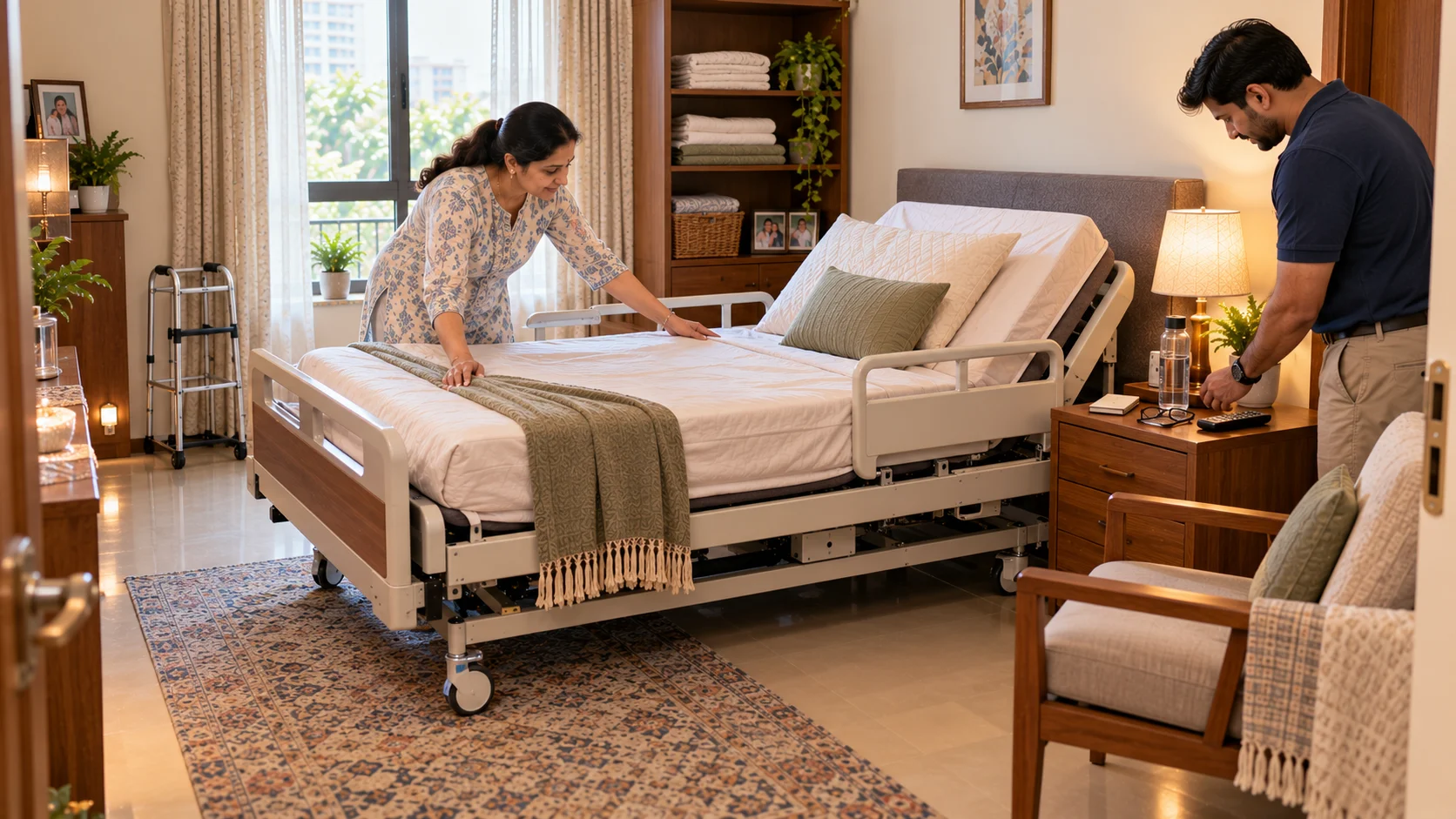
A recliner bed lets the head and legs rise independently, so the user can sit upright for meals, settle into a mild Zero Gravity position for sleep, or lie flat when comfortable, all on the same mattress. Our recliner beds are designed around exactly this idea, and the setup can often be fitted to an existing bed frame, so a parent can stay in their own bedroom instead of being moved to the living room.
A Practical Checklist If Someone Is Already Sleeping in a Chair
- Check the skin daily, especially the tailbone, heels and the back of the head.
- Support the legs fully, using a footrest that reaches the calves or a firm cushion, rather than leaving the feet dangling.
- Change position often, shifting weight or standing for a short walk if the person is able.
- Ask a physiotherapist or nurse to review the setup and the risk of pressure sores.
- Plan the move to a bed before the arrangement becomes the default.
A recliner chair solves tonight’s problem, while a recliner bed solves the next six months. For anyone who will be sleeping at an angle regularly, the full-length surface, leg support and ability to change position make the bed the safer, more comfortable choice.
Explore our Recliner Beds range or the Bed for Patients collection.
Related Reading