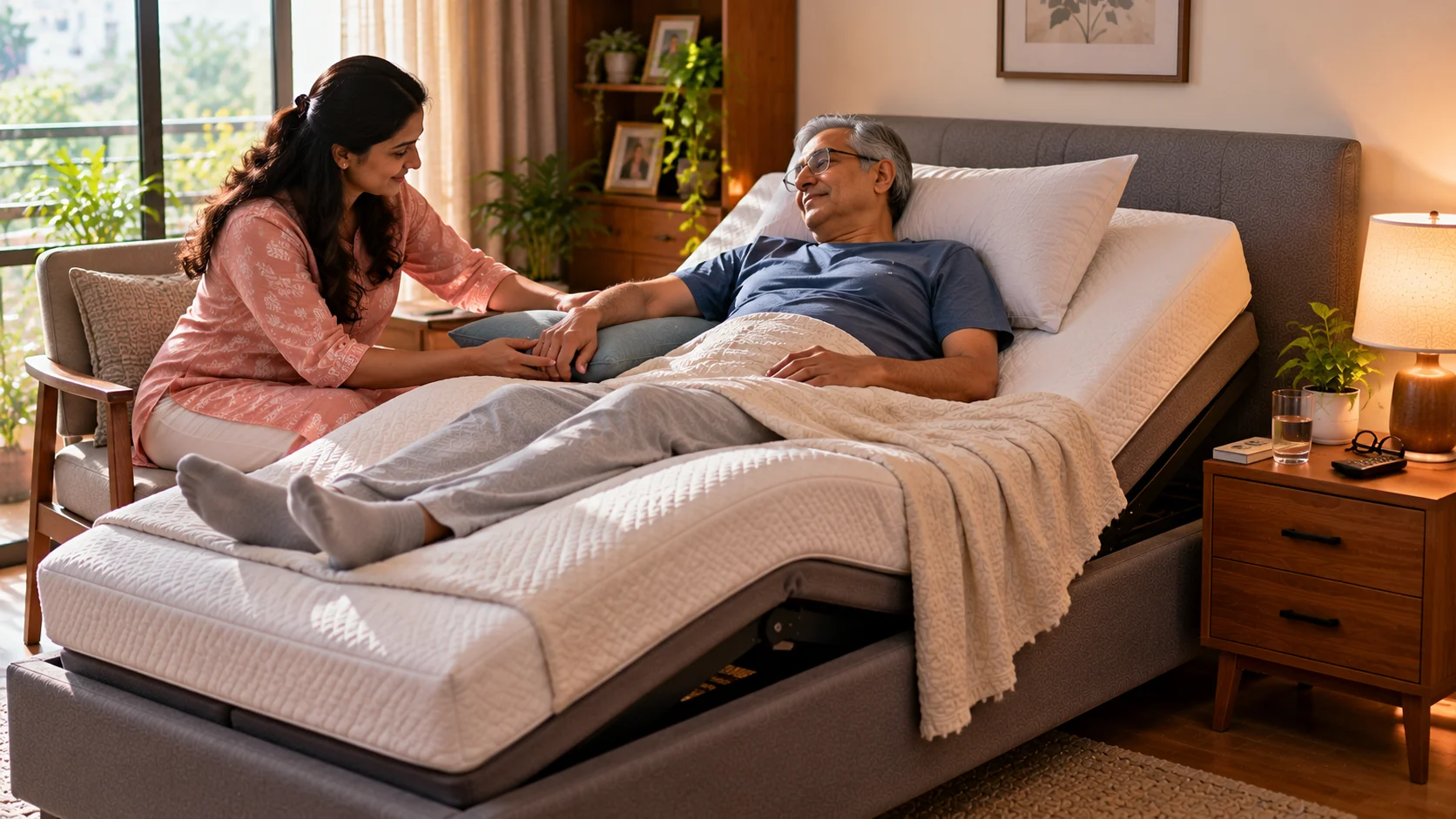
After rotator cuff or other shoulder surgery, most surgeons advise sleeping semi-upright, around 30 to 45 degrees, with the arm in its sling and a pillow supporting the forearm. Lying flat lets the arm drop backward and pulls on the repair. An adjustable bed holds that angle steadily all night and lets you sit up with the motor rather than pushing on the operated arm.
Ask anyone who has had shoulder surgery what the worst part was and many will say sleep. The arm is in a sling, the shoulder aches, you cannot lie on that side and flat on your back feels wrong. Many people end up in a recliner for weeks. A frame that raises the upper body can give the same support in a proper bed. Here is how an adjustable bed helps after shoulder surgery, with a reminder that your surgeon’s protocol always comes first.
Why a Semi-Upright Position Is Usually Advised
After a rotator cuff repair or similar procedure, the repaired tendon needs protection while it heals. Lying flat on the back lets the weight of the arm pull the shoulder backward, stressing the repair. A semi-reclined position lets the arm rest forward and slightly supported, which is gentler. It also eases swelling and is easier to move out of, since you are already partway up.
Position Options After Shoulder Surgery
| Position | Effect on the Operated Shoulder | Typical Advice |
| Semi-upright (30 to 45 degrees) on the back | Arm rests forward, less strain on the repair | The usual first choice |
| Lying flat on the back | Arm can drop backward and pull on the repair | Often discouraged in the early weeks |
| On the operated side | Direct pressure and strain | Avoid |
| On the non-operated side, arm supported | No pressure on the repair if the arm is propped | Sometimes allowed later, if your surgeon agrees |
| On the stomach | Awkward arm position | Best avoided |
Setting Up the Bed Step by Step
- Raise the head and torso section to about 30 to 45 degrees, as comfortable.
- Add a small knee lift, 10 to 15 degrees, so you do not slide down and pull on the shoulder.
- Place a pillow under the forearm and elbow so the arm is supported and the shoulder is not pulled backward.
- Keep the sling on as instructed, including overnight, unless your surgeon has said otherwise.
- Keep the remote on your non-operated side so you can adjust without reaching across.
Surgical protocols vary widely between surgeons and procedures. Follow your own written instructions on sling use, positioning and exercises. Fever, increasing redness, discharge from the wound, severe uncontrolled pain, or numbness and colour changes in the hand need prompt medical attention.
The First Night and Pain Control
Nerve blocks used in shoulder surgery can wear off in the first night, and pain can suddenly return. Take pain relief as advised before the block fades, rather than waiting for the pain, and use ice if your surgeon has recommended it. A well-supported, semi-upright position reduces how much the shoulder is jostled, which helps. Set your alarm if you have been told to take medication at set times.
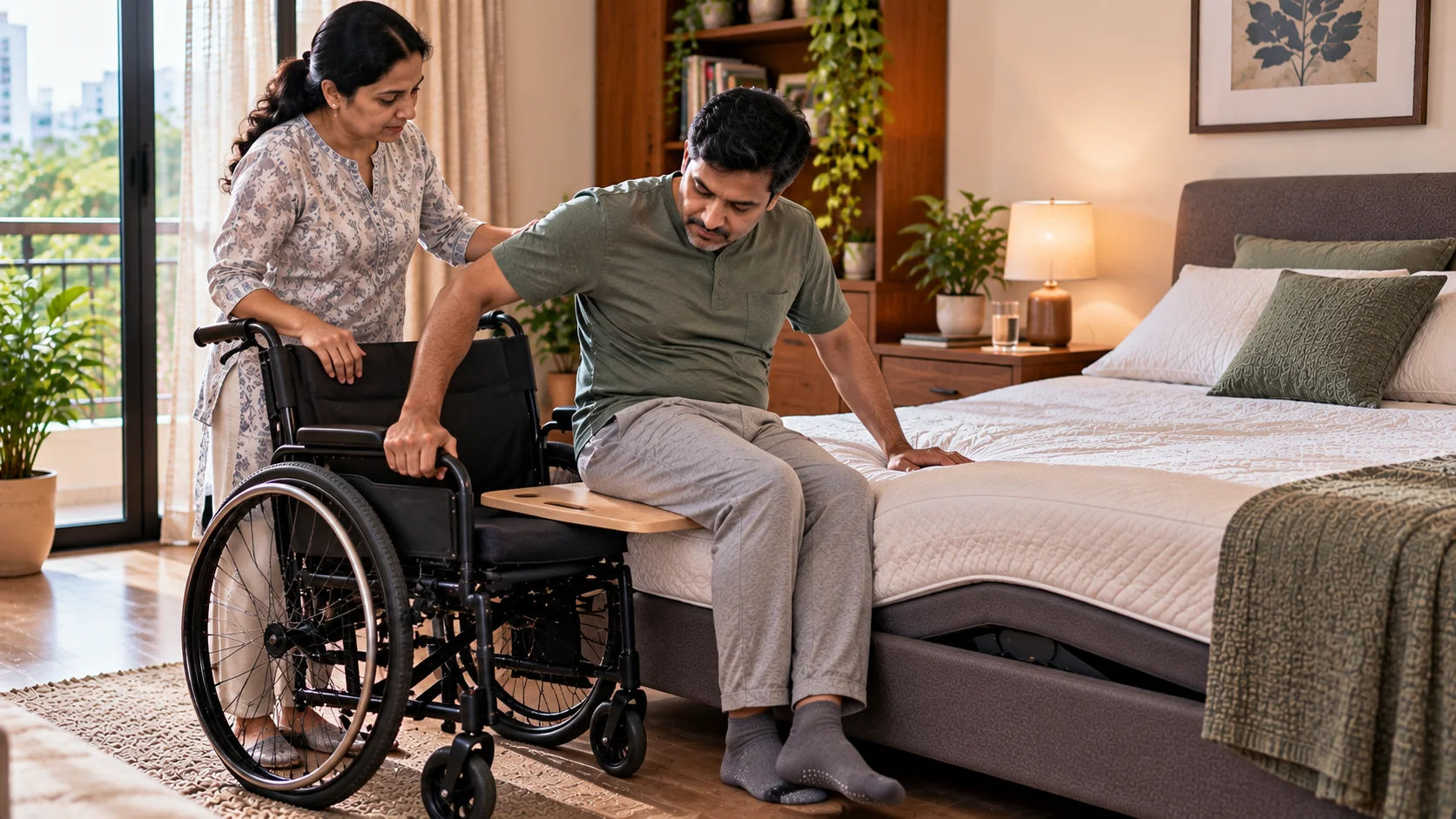
Getting In and Out of Bed With One Arm
- Use the motor to sit up, so you do not push with the operated arm.
- Lower the bed to a comfortable height before you stand.
- Roll toward the non-operated side and push up with that arm if you must turn.
- Avoid pulling or pushing with the operated arm on rails, sheets or a bedside table.
- Keep essentials within reach on the non-operated side.
Why This Differs From Frozen Shoulder and Everyday Shoulder Pain
Post-surgical positioning has strict rules about the repair, while everyday shoulder pain is about comfort and pressure relief. If your shoulder pain has not involved surgery, see our guide on adjustable beds for frozen shoulder and rotator cuff pain at night. Neck stiffness from sleeping propped up is also common, and the pillow tips in adjustable beds for neck pain and cervical spondylosis can help.
Practical Tips for the Weeks of Recovery
Recovery usually spans several weeks in a sling followed by months of physiotherapy. Choose loose, front-opening clothing, keep a drink and phone within reach and ask for help with heavy tasks. Maintain gentle movement in the hand, wrist and elbow as your therapist directs, since a stiff elbow is a common side effect. As the surgeon progresses your restrictions, you can gradually flatten the bed and eventually return to your usual position.
A Rough Recovery Timeline
Every surgeon’s protocol differs, but a common pattern is several weeks in a sling with gentle passive movement, followed by gradual active exercises and then strengthening over three to six months. Sleep tends to improve once the sling comes off and the shoulder tolerates lying at a lower angle, though many people keep a slight recline for comfort a little longer. Treat the timeline as a guide only, and check with your surgeon or physiotherapist before flattening the bed or sleeping on your side.
After shoulder surgery, protecting the repair and getting some sleep are one and the same job. A stable semi-upright angle, a supported forearm and a motor that does the sitting up give you a calmer first few weeks. Follow your surgeon’s instructions throughout, and ask before changing any position.
Explore our Back Rest Beds range or Bed for Patients collection.
Related Reading: