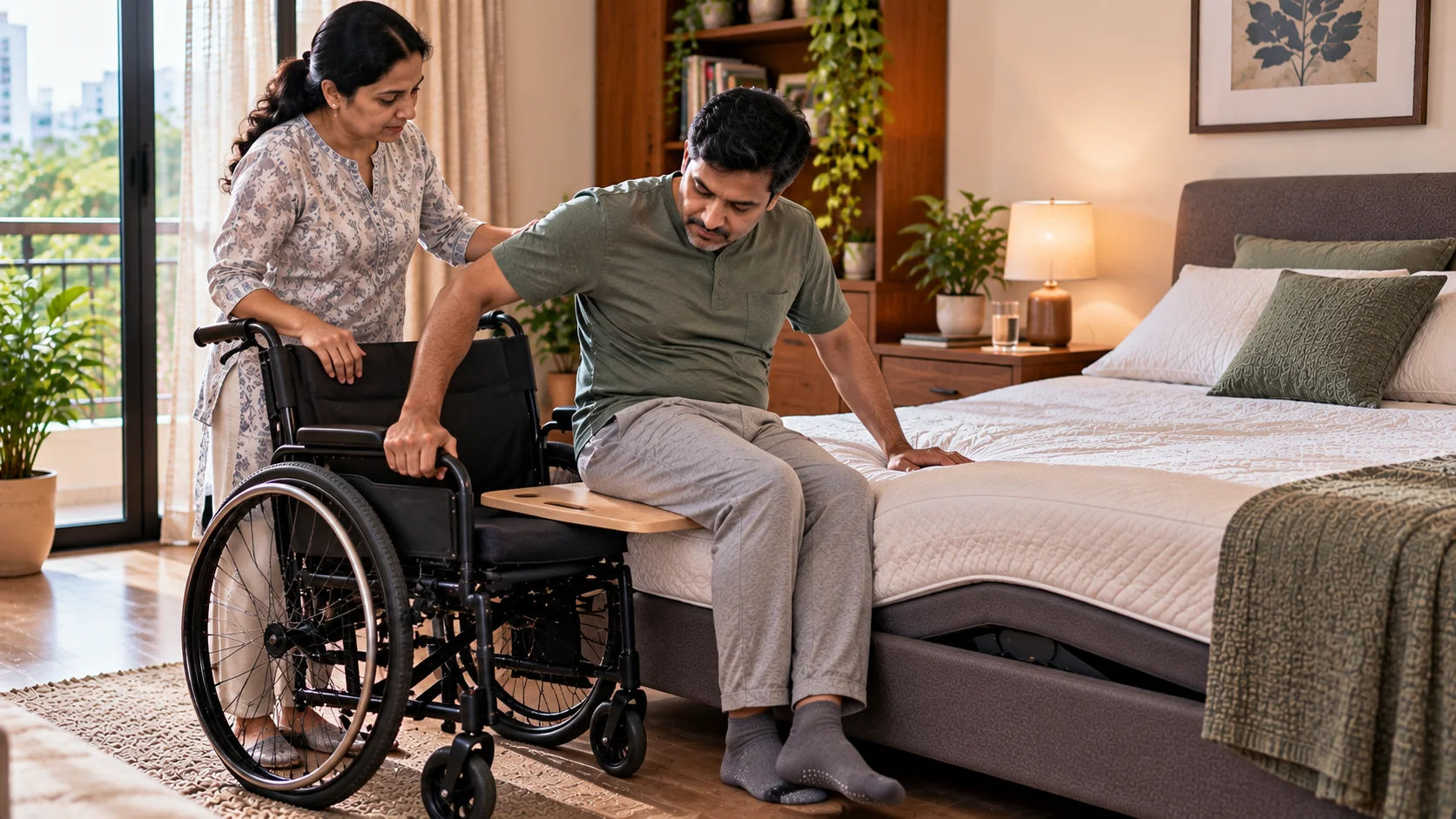
After breast surgery, including mastectomy, lumpectomy, reconstruction or augmentation, surgeons commonly advise sleeping on the back with the upper body raised around 30 to 45 degrees for the first weeks. It reduces swelling, keeps weight off the chest and means you do not need your arms to push up. An adjustable bed holds that angle all night. Follow your surgeon’s own instructions on positioning and arm movement.
Recovering from breast surgery asks a lot, physically and emotionally. The chest is tender, the arms feel restricted, drains may be in place and everyday movements such as pushing up in bed suddenly hurt. Most people are told to sleep on their back and avoid lying on the side or stomach, which is hard if that is how you normally sleep. This guide covers how an adjustable bed can make sleeping after breast surgery easier, with a gentle note that your surgical team’s advice always takes priority.
Why the Back, Semi-Upright Position Is Usually Advised
Lying on the back keeps pressure off the incisions, implants or reconstructed tissue. Raising the upper body reduces swelling by helping fluid drain, and it relieves tension on the chest wall. Side and stomach sleeping can press on the surgical site, shift implants or tissue expanders, or stress healing stitches, which is why they are usually restricted for several weeks.
What the Bed Changes
| Recovery Challenge | On a Flat Bed | On an Adjustable Bed |
| Sleeping on the back all night | Flat can feel strained and encourage swelling | A gentle incline is more comfortable and reduces swelling |
| Sitting up without using the arms | Hard and painful | The motor raises you without arm effort |
| Preventing rolling onto the side | Easy to roll in sleep | A raised torso and a knee lift make rolling less likely |
| Getting out of bed | Needs arms and core | Lower the bed; roll and use the legs |
| Finding a comfortable angle | Piles of pillows that shift | A stable angle that you can fine-tune by remote |
Setting It Up Step by Step
- Raise the head and torso section to about 30 to 45 degrees, or as your surgeon advises.
- Add a modest knee lift, 10 to 15 degrees, to keep you from sliding down.
- Place a pillow on each side of the body so the arms rest comfortably away from the chest.
- Position drains as taught by your team, usually pinned to clothing so they do not pull.
- Wear the support garment as instructed, and avoid anything that digs in overnight.
Rapid swelling of one breast, increasing redness or warmth, fever, a foul-smelling discharge, a drain that stops working or suddenly fills with blood, or severe worsening pain need prompt medical attention. Positioning and arm exercises vary with the type of surgery and reconstruction, so follow your own written instructions.
Getting Up Without Using Your Chest Muscles
- Let the bed do the lifting. Raise the head section to sit up rather than pulling with your arms.
- Roll gently as one unit if you must turn, keeping your elbows close.
- Lower the bed so your feet touch the floor easily when you sit on the edge.
- Avoid pushing off with your hands on the mattress, which tightens the chest muscles.
- Ask someone to help with heavy bedding in the first days.
If Lymph Nodes Were Removed
If lymph nodes were taken from the armpit, the arm can swell, a condition called lymphoedema, and many teams give precautions. These often include avoiding blood pressure checks and needles in that arm, protecting it from cuts and burns, and resting it comfortably supported. Raising the arm slightly on a pillow when resting can ease swelling. Follow your own team’s guidance, which varies by procedure.
Mattress and Comfort
A medium-firm, supportive mattress with a little give is usually comfortable for back sleeping, while very soft surfaces make you sink and twist. Use a soft cotton or breathable top layer to avoid heat and sweating, which can be uncomfortable with dressings. The cooling tips in adjustable beds and menopause apply to anyone who runs warm at night, including those on hormone therapy after treatment.
Looking After Yourself Through Recovery
Healing takes weeks, and rest is not laziness. Keep essentials such as water, medication and the phone within easy reach, accept help and keep gentle movement going as your team advises. Sharing the load with family, and using tools that reduce strain, such as a remote-controlled bed, preserves energy for the harder parts of treatment. For general recovery principles that also apply here, see adjustable beds after hernia and abdominal surgery.
Practical Tips for the Early Weeks
- Choose loose, front-opening tops that you can put on without lifting your arms.
- Keep drain-emptying supplies and a record sheet close to the bed, if you have drains.
- Use a small pillow for the seatbelt or chest when travelling, as advised by your team.
- Pace your day, alternating short walks with rest periods.
- Talk about how you feel, since emotional recovery matters as much as physical healing.
After breast surgery, the practical goal is protecting the surgical site and getting enough rest. A steady semi-upright back position, supported arms and a bed that lifts you without effort make the weeks easier. Keep to your surgeon’s instructions, and tell your team promptly about anything that feels wrong.
Explore our Back Rest Beds range or Bed for Patients collection.
Related Reading: