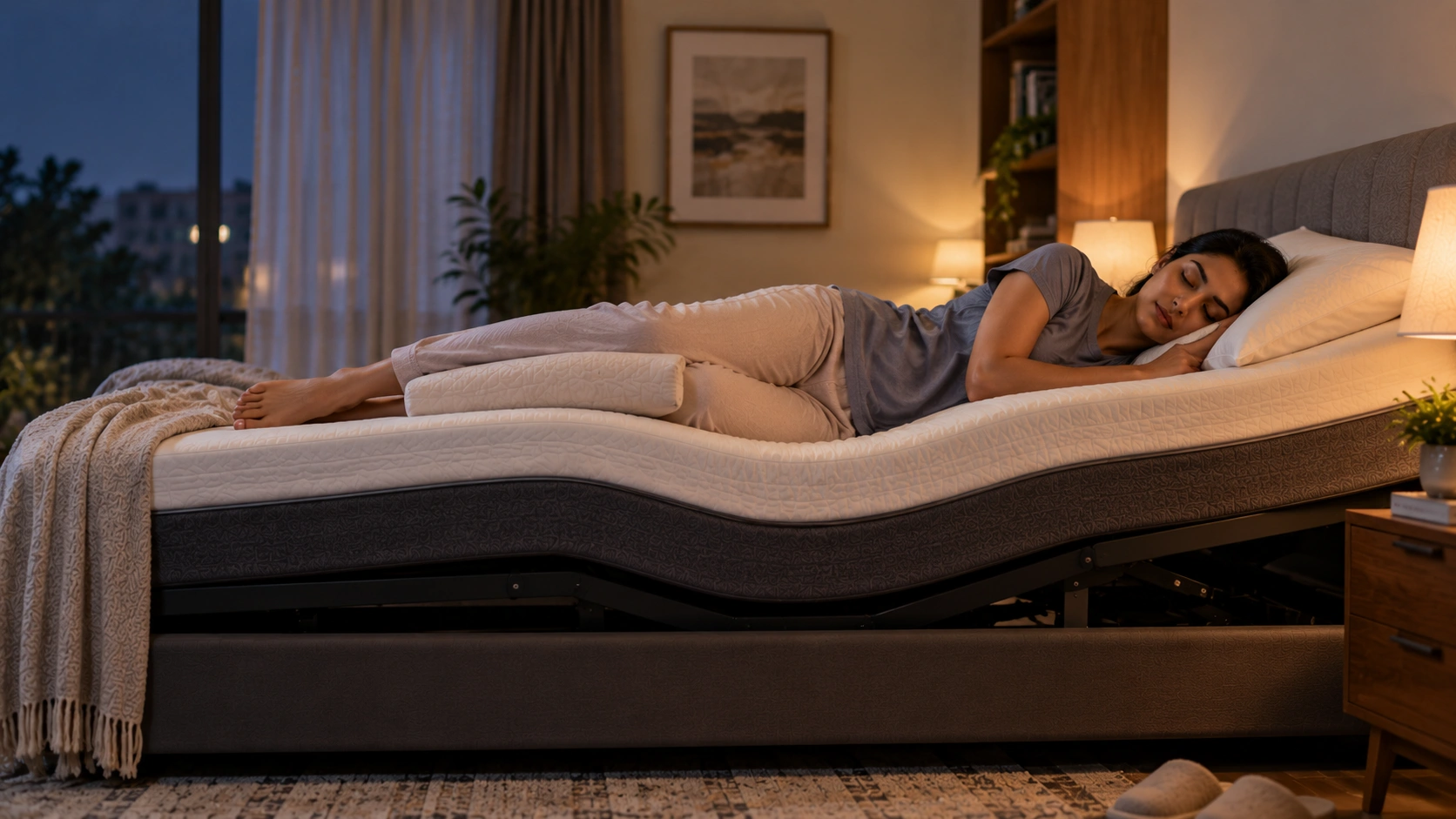
The Zero Gravity position elevates your legs slightly above heart level while gently reclining your head and upper body a posture originally studied for astronauts to reduce spinal stress during the intense forces of launch. On an adjustable bed, this combination of angles redistributes body weight, taking pressure off the lower spine and supporting better circulation, which is why it’s the most commonly recommended setting for back pain and overall relaxation.
“Zero Gravity” sounds like marketing language, but the position behind the name has genuine, well-documented origins and a clear mechanical explanation for why it feels and functions differently from simply lying flat or sitting up. Understanding how the zero-gravity feature in adjustable beds actually works helps explain why it’s so consistently recommended across so many different health contexts on this site, from back pain to circulation to pregnancy.
Where the Zero Gravity Position Comes From
The term originates from NASA research into the neutral body posture astronauts naturally settle into during the intense G-forces of a rocket launch a position where the spine experiences the least mechanical stress possible under that pressure. Bed manufacturers adapted this same general posture legs elevated, torso gently reclined for use on Earth, where the goal shifts from surviving launch forces to simply reducing everyday spinal pressure during rest.
The Mechanics: What’s Actually Happening to Your Body
In the Zero Gravity position, your legs are raised to roughly the same level as or slightly above your heart, while your head and upper body are reclined at a gentle angle together forming a shallow “V” shape rather than a flat line or an upright seated position. This specific combination does two things simultaneously: it redistributes your body weight more evenly across a larger surface area instead of concentrating it on the lower back and hips, and it uses gravity to assist blood flow back toward the heart from the legs, rather than working against it as flat lying or standing does.
What Each Component of the Position Contributes
| Element of the Position | What It Does | Primary Benefit |
| Legs elevated above heart level | Assists venous blood flow back toward the heart | Reduced swelling, improved circulation |
| Gentle head and upper-body recline | Reduces pressure on the airway and digestive tract | Eased breathing, reduced acid reflux and snoring |
| Slight knee bend | Reduces tension pulling on the lower back | Relaxed lumbar muscles, reduced lower back strain |
| Weight distributed across a larger surface | Removes concentrated pressure points | Less pressure on the spine, hips, and shoulders |
Why This Beats Simply Propping Up Pillows
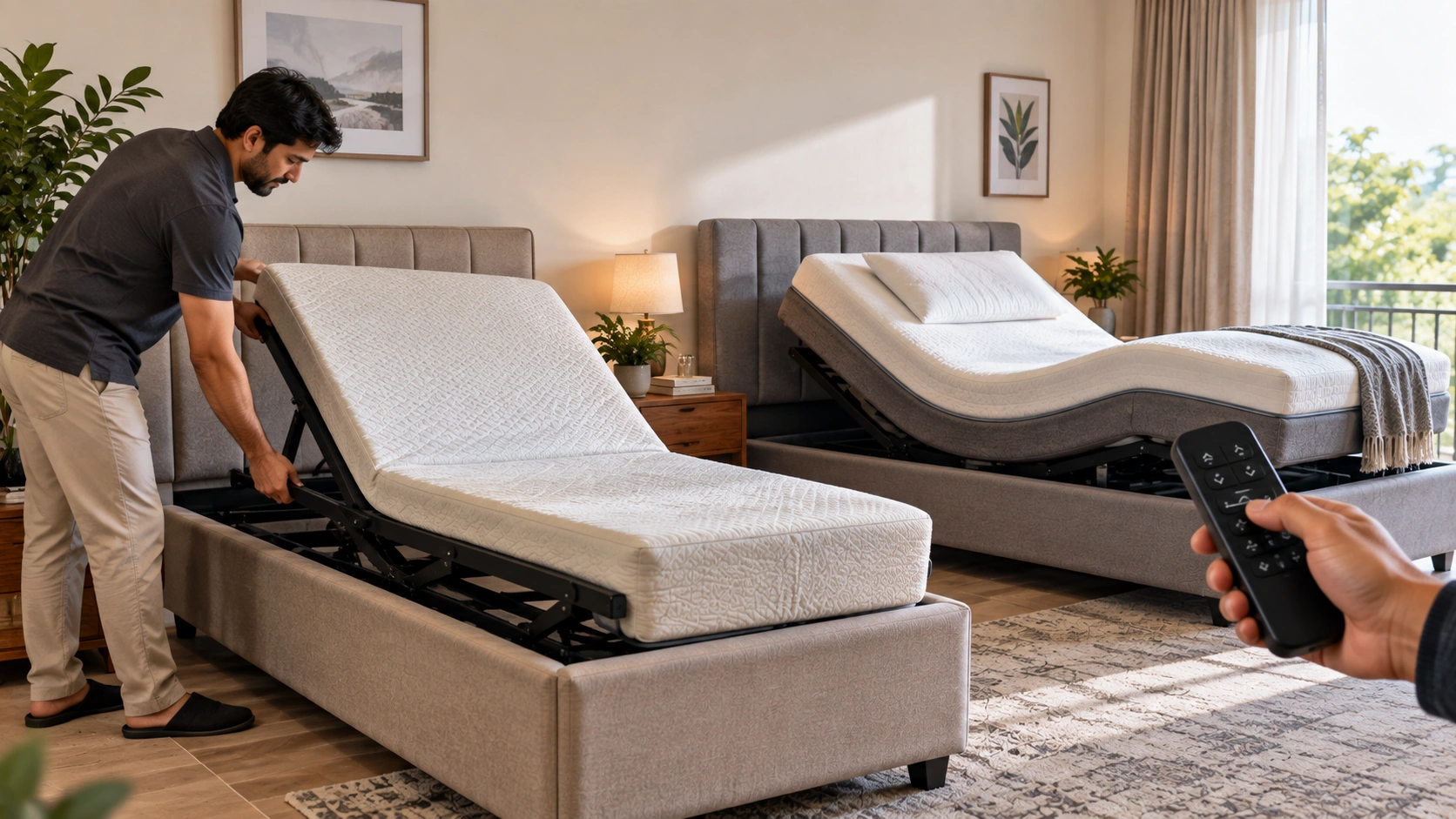
You might wonder why a pile of pillows arranged to mimic this shape doesn’t deliver the same benefit and in practice, it rarely does, for two main reasons. First, pillows shift and compress through the night, gradually losing the precise angle combination that makes the position effective in the first place, while a motorized frame holds a stable, consistent angle for the full duration of sleep. Second, achieving the correct combined leg-and-head elevation with pillows alone is physically awkward and difficult to sustain comfortably for a full night, whereas a frame built specifically for this purpose supports the position properly across its entire range.
How This Connects to Specific Health Benefits Across This Site
The Zero Gravity mechanism explained above is the underlying reason behind several benefits discussed throughout our other articles. It’s the core mechanism behind the circulation and swelling relief covered in how adjustable beds improve blood circulation and reduce back pain-related swelling, and it’s directly related to the broader positioning comparison in leg rest vs back rest vs zero gravity beds, which explains when a full Zero Gravity setup is preferable to a leg-only or back-only configuration. Understanding the mechanics here should make those more specific applications easier to reason about.
Finding Your Own Ideal Zero Gravity Angle
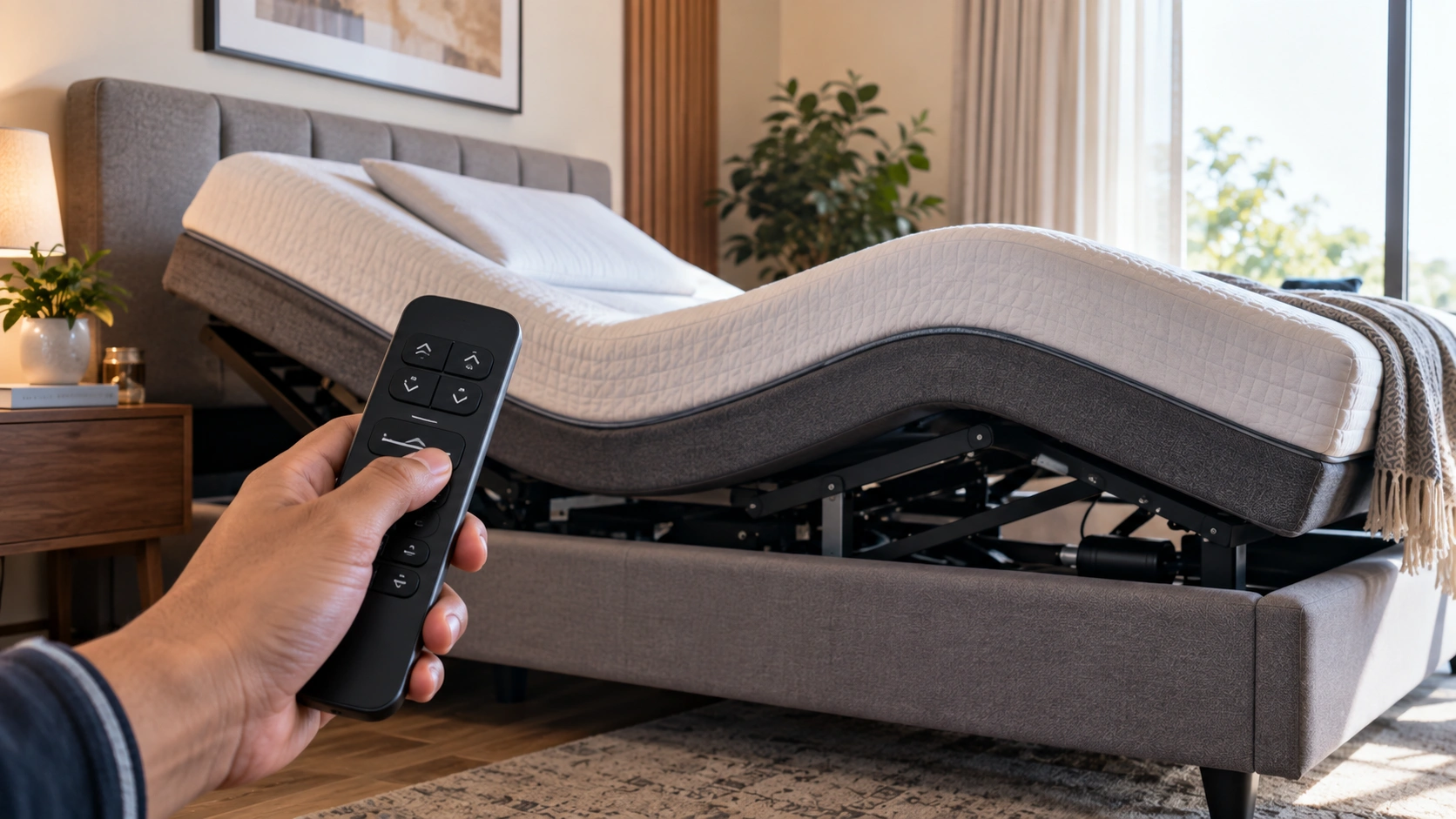
While the general principle is consistent, the exact degree of recline that feels and functions best varies from person to person based on body shape, specific health conditions, and personal comfort preference. Most adjustable beds offer a one-touch Zero Gravity preset as a starting point, which can then be fine-tuned slightly using independent head and leg controls. Our detailed guide on expert way to find the best sleeping position on an adjustable bed walks through this fine-tuning process step by step.
Is the Health Benefit Backed by More Than Just the NASA Origin Story?
Beyond the historical origin, the underlying mechanical principles reduced spinal pressure through weight redistribution, and gravity-assisted venous return through leg elevation are well-established concepts in physiotherapy and vascular health more broadly, independent of the specific “Zero Gravity” branding. This is why physiotherapists commonly recommend elevated-leg rest for swelling and circulation concerns, and why reduced flat-lying pressure is a recognized principle in managing certain types of back pain, regardless of whether the specific device used to achieve it is marketed under this particular name.
Common Questions About Trying the Position for the First Time
First-time users often describe the Zero Gravity position as feeling unusual for the first night or two, simply because it’s an unfamiliar posture compared to a lifetime of flat sleeping. This adjustment period is normal and typically resolves within a few nights as your body becomes accustomed to the new distribution of weight and support. It’s worth starting at a gentler angle than the frame’s maximum setting on the first attempt, then gradually working toward a fuller recline over the following week, rather than judging the position based on a single night at its most dramatic angle.
How Zero Gravity Compares to Simply Sitting Up in Bed
It’s worth distinguishing Zero Gravity from simply sitting upright in bed, since the two can be confused despite being mechanically quite different. Sitting upright concentrates weight at the hips and lower back in a seated posture, which over extended periods can itself become uncomfortable, similar to sitting in a chair for too long. Zero Gravity, by contrast, distributes weight across a larger reclined surface area with the legs elevated rather than bent at a seated angle, which is precisely why it’s recommended for extended rest and sleep, while a fully upright seated position is generally better suited to shorter periods, such as reading or eating.
The Zero Gravity position isn’t just a marketing name it’s a specific, mechanically grounded posture that redistributes weight and supports circulation in ways a flat mattress or a pile of pillows genuinely can’t replicate. Understanding the mechanics behind it makes it much easier to use the feature effectively, rather than just accepting it as a preset button to press.
Explore our Zero Gravity Electric Beds range to experience the position directly, or browse our Adjustable Bed for Back Pain collection.
Related Reading: