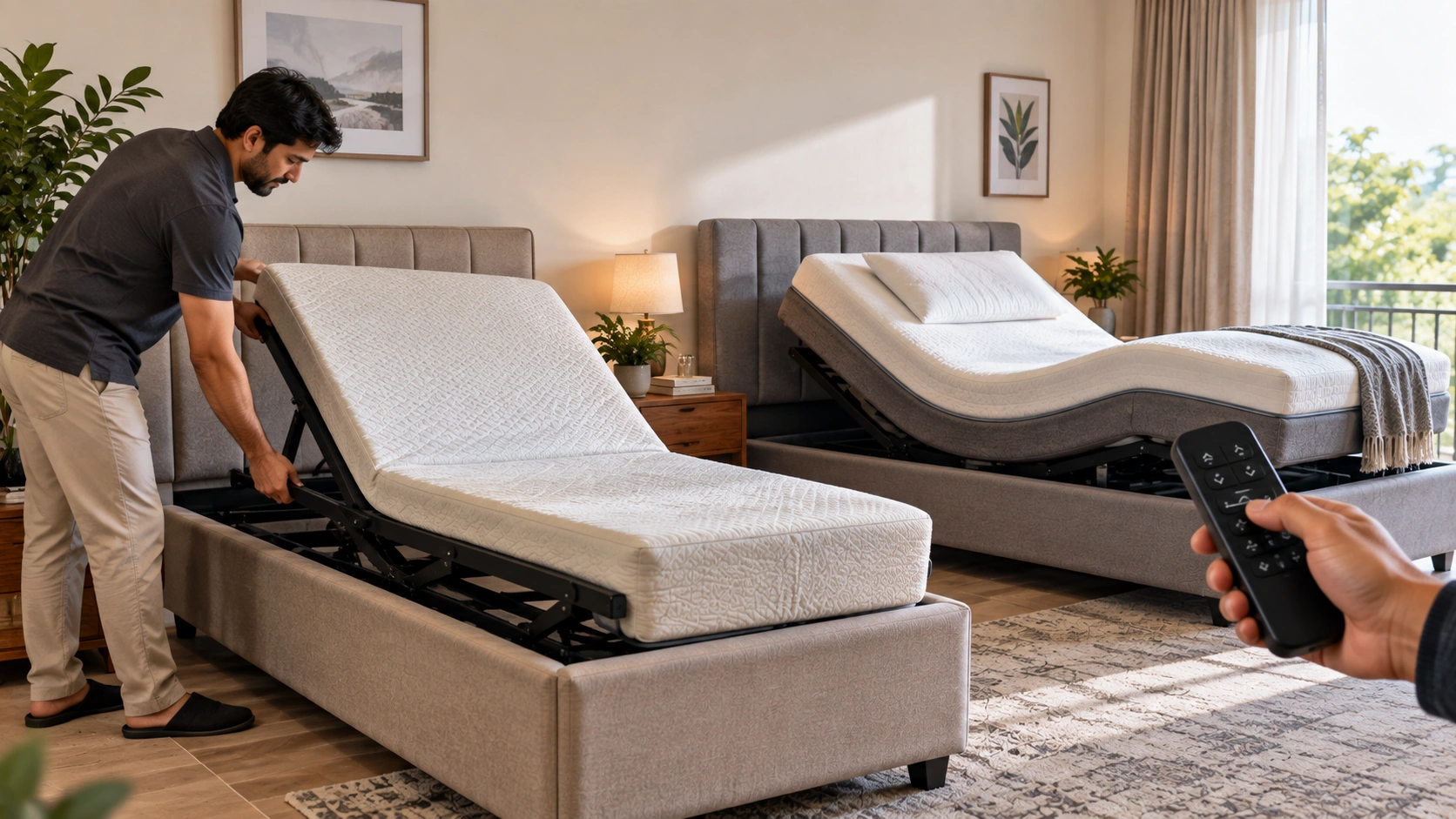

A normal bed is a fixed, flat sleeping surface with no moving parts. An adjustable bed uses a motorized (or manually cranked) frame to raise and lower the head and leg sections independently, allowing positions like Zero Gravity that a flat bed simply cannot replicate. The core difference isn’t the mattress it’s the frame’s ability to actively change your body’s position, which is what unlocks the health and comfort benefits associated with adjustable beds.
It’s a simple-sounding question, but a genuinely useful one to answer clearly: what is the difference between an adjustable bed and a normal bed? Once you understand the actual mechanical and functional differences not just the marketing language it becomes much easier to decide whether upgrading is worth it for your specific situation.
The Core Difference: A Fixed Surface vs an Active Posture Tool
A normal bed frame is static whatever angle your body is at when you lie down is the angle you stay at all night, with the only variable being how you arrange pillows. An adjustable bed frame changes this fundamentally by using a motor (or manual crank) to physically raise and lower the head and leg sections, either independently or together. This means your sleeping position becomes something you actively control, rather than something fixed by the furniture itself.
Side-by-Side Comparison
| Feature | Normal Bed | Adjustable Bed |
| Sleeping surface angle | Fixed and flat | Adjustable head, legs, or both |
| Zero Gravity position available | No | Yes, on most models |
| Typical price range (India) | ₹8,000 ₹40,000 (frame only) | ₹35,000 ₹1,50,000+ |
| Health-related benefits | None specific to the frame itself | Back pain relief, circulation, reflux, snoring support |
| Power requirement | None | Electricity (or manual crank for non-electric models) |
| Mattress compatibility | Works with almost any mattress | Needs a flexible mattress (memory foam or latex) |
| Typical lifespan | 10–20+ years (frame) | 10–15 years (frame); mattress separate |
What You Actually Gain With an Adjustable Bed
- Position control, most notably the Zero Gravity position, which reduces pressure on the lower spine by elevating the legs above heart level with a gentle head recline.
- Targeted health support for back pain, circulation, snoring, and acid reflux all of which respond to positioning in ways a flat surface can’t address.
- Convenience features like sitting upright for reading or TV without stacking pillows, and easier transfers in and out of bed on height-adjustable models.
- Customization for two sleepers, on dual-adjustable frames, where each partner can set their own independent position.
What You Give Up or Need to Consider
- Higher upfront cost compared to a standard bed frame, both for the frame itself and for a compatible mattress.
- Mattress limitations not every mattress works well on an adjustable frame; rigid coil-spring mattresses generally aren’t compatible.
- Power dependency for electric models, unless the specific bed includes a manual override or battery backup a real consideration in areas with frequent power interruptions.
- More moving parts to maintain over the bed’s lifespan, compared to a simple, mechanically static normal bed frame.
Who Actually Needs the Difference an Adjustable Bed Offers
Not everyone needs to make this upgrade a normal bed remains a perfectly reasonable choice for people without specific health concerns or comfort needs that positioning would address. An adjustable bed becomes genuinely worthwhile for people managing back pain, arthritis, circulation issues, acid reflux, or snoring, for patients and elderly individuals who benefit from easier positioning and transfers, and for anyone who simply values the comfort of sitting upright in bed regularly without a stack of pillows. Our ultimate guide for buying an adjustable bed goes deeper into matching specific needs to specific features if you’re deciding whether the upgrade makes sense for you.
Common Misconceptions Worth Clearing Up
A few misunderstandings come up often enough to address directly. An adjustable bed is not the same thing as a hospital bed while they share some mechanical similarities, adjustable beds for home use are generally designed around comfort and health benefits rather than the higher-dependency medical features hospital beds include, like side rails and IV attachment points. It’s also not true that any mattress works equally well on any adjustable frame; mattress compatibility genuinely matters and affects both comfort and how well the frame’s motion translates into actual benefit. Finally, adjustable beds aren’t exclusively for elderly or unwell people a meaningful share of buyers choose them purely for the everyday comfort of reading, working, or relaxing upright in bed.
How to Decide If the Upgrade Is Worth It for You
A useful way to think through this decision is listing out the specific situations where you currently reach for extra pillows, feel discomfort lying flat, or wish you could sit up more comfortably in bed whether that’s for reading, working from bed occasionally, managing reflux, or easing back stiffness. If several of these situations come up regularly in your week, the functional gap between a normal bed and an adjustable one is likely to translate into real, felt benefit. If none of them apply, a normal bed continues to serve its purpose perfectly well, and the added cost and complexity of an adjustable frame may not be worth it for your specific situation right now.
What Buying an Adjustable Bed Actually Involves
Beyond the frame itself, moving from a normal bed to an adjustable one typically involves a few additional considerations worth planning for: confirming mattress compatibility (and potentially budgeting for a new mattress alongside the frame), checking room dimensions and doorway clearance for delivery, and deciding between single, double, or dual-adjustable configurations depending on whether you sleep alone or share the bed. None of these are complicated, but they’re worth thinking through upfront rather than discovering mid-purchase, since they can affect both the total cost and the practical logistics of the upgrade.
The difference between an adjustable bed and a normal bed comes down to one core capability: active position control versus a fixed, flat surface. Whether that difference is worth the investment depends entirely on your specific needs health-related, comfort-related, or simply a preference for more flexibility in how you use your bed day to day.
Explore our Adjustable Bed Frame range to see the positioning options available, or browse our Recliner Beds collection for comfort-focused options.
Related Reading: