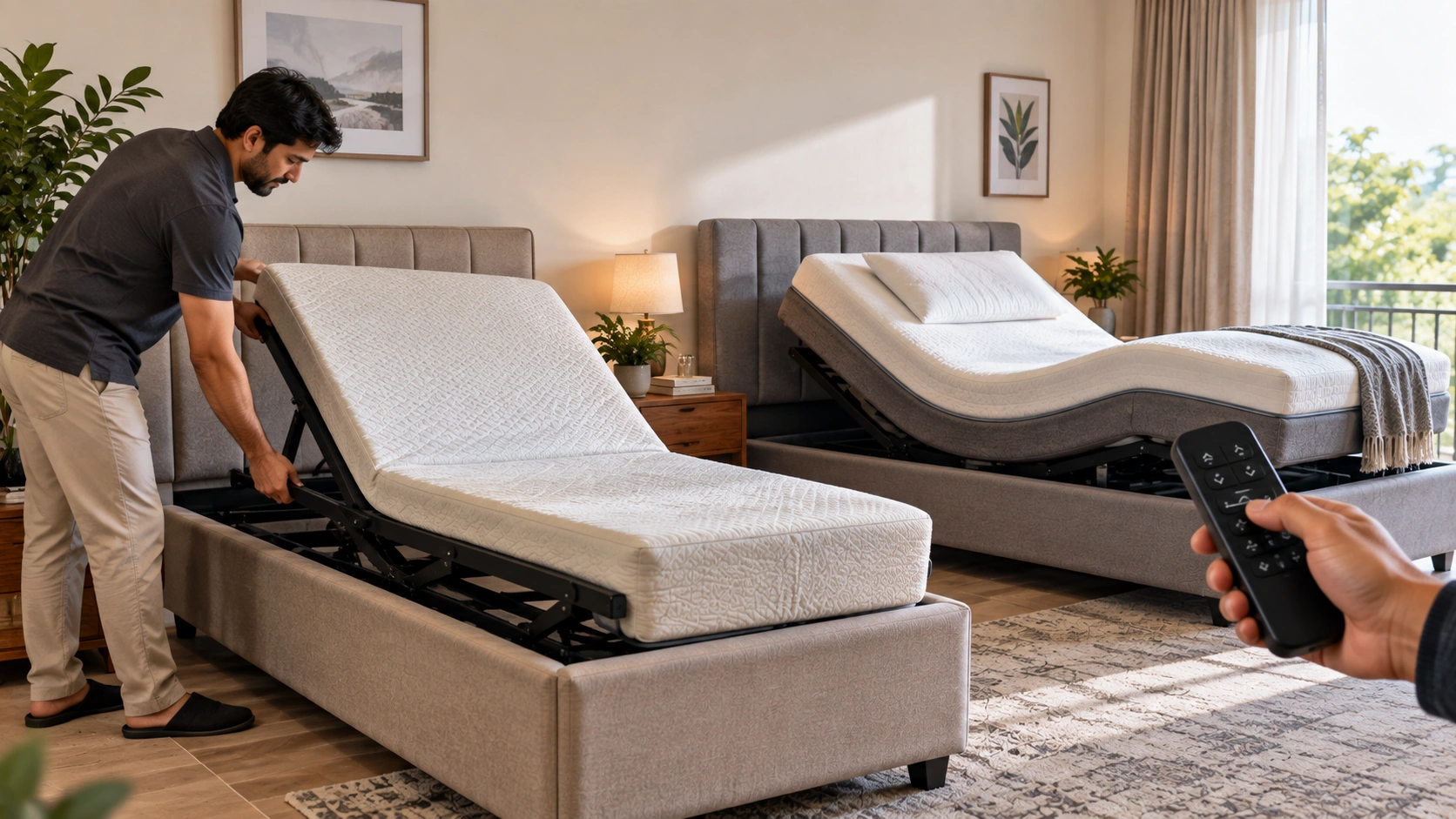

For acid reflux and GERD, elevating the head and upper body by roughly 6 to 8 inches around 30 to 45 degrees on most adjustable beds uses gravity to help keep stomach acid where it belongs. This is one of the most consistently recommended non-medication interventions for nighttime reflux, though it works best alongside other habits like avoiding late meals, not as a standalone fix.
Nighttime heartburn is one of the most disruptive symptoms people search for relief from, and for good reason lying completely flat removes gravity’s natural help in keeping stomach acid down, which is exactly why reflux symptoms so often feel worse at night than during the day. An adjustable bed for acid reflux addresses this directly, and it’s backed by genuinely solid, widely cited medical guidance, not just marketing.
Why Flat Sleeping Makes GERD Worse
When you lie flat, gravity no longer helps keep stomach contents where they belong, making it easier for acid to travel back up into the esophagus the reflux that causes the burning sensation associated with heartburn. This is particularly pronounced during the first few hours after eating, when the stomach still has significant food and acid content, which is exactly why late meals combined with immediately lying flat is such a common trigger pattern for nighttime GERD symptoms.
The Elevation That Actually Helps
Gastroenterologists commonly recommend elevating the head of the bed by 6 to 8 inches for reflux relief a specific, evidence-based figure rather than a vague “prop yourself up a bit” suggestion. On most adjustable beds, this corresponds to roughly a 30 to 45 degree incline, well within the standard range most frames offer as a preset or easily achievable manual setting. Importantly, this needs to be a genuine incline of the whole upper body, not just extra pillows under the head alone, since propping only the head and neck without elevating the torso can actually bend the body in a way that increases abdominal pressure and worsens reflux rather than helping it.
Why an Adjustable Bed Beats Stacked Pillows for This
| Factor | Stacked Pillows | Adjustable Bed |
| Consistency through the night | Often shifts or flattens as you move | Holds a stable angle throughout sleep |
| Correct elevation type | Risk of neck-only elevation, which can worsen reflux | Elevates the full upper body and torso correctly |
| Comfort over a full night | Can feel awkward or unstable for extended use | Designed for full-night use without repositioning |
| Long-term consistency | Easy to abandon after a few uncomfortable nights | Simple remote-controlled repeatability night after night |
Other Habits That Work Alongside Elevation
- Avoid eating within 2–3 hours of bedtime, giving the stomach time to empty before you lie down, even at an incline.
- Limit common trigger foods in the evening, such as spicy, fatty, or highly acidic foods, and caffeine or alcohol close to bedtime.
- Sleep on your left side when possible, which research suggests may reduce reflux more than right-side sleeping, due to stomach anatomy combining this with head elevation on an adjustable bed is a reasonable combined approach.
- Avoid tight clothing or waistbands at night, since added abdominal pressure can contribute to reflux regardless of sleep position.
Reflux and Snoring Often Overlap Here’s Why
It’s worth knowing that acid reflux and snoring frequently occur together, partly because both are worsened by the same flat, unsupported sleeping position, and partly because reflux reaching the throat can itself irritate airway tissue. If you’re managing both symptoms, the same upper-body elevation setup tends to help each one, and our article on can an adjustable bed stop snoring and help sleep apnea covers the airway side of this overlap in more detail.
Frequent or severe heartburn, difficulty swallowing, or symptoms that don’t improve with elevation and lifestyle changes should be evaluated by a doctor, since these can sometimes indicate a condition requiring medical treatment beyond positioning alone.
Setting Up Your Adjustable Bed for Reflux Relief
- Start with a moderate incline, around 30 degrees, rather than the steepest angle available.
- Confirm the elevation lifts the torso, not just the head and neck check that your stomach, not just your face, is genuinely higher than flat.
- Pair with a slim, supportive pillow that doesn’t push the neck forward independently of the frame’s angle.
- Adjust gradually over several nights if 30 degrees doesn’t fully resolve symptoms, working up toward 45 degrees as comfort allows.
- Track symptom patterns against evening meal timing to identify whether diet, position, or both need adjustment.
Who Benefits Most From This Setup
Elevation-based relief tends to help most people whose reflux is clearly worse specifically at night or after lying down, which describes a large share of GERD sufferers. It’s also commonly recommended for pregnant women experiencing reflux, a symptom that becomes more common in later pregnancy as the growing uterus puts additional pressure on the stomach our related article on health benefits of zero gravity position during pregnancy touches on some of the overlapping positioning benefits relevant during this life stage.
Common Mistakes That Undermine Reflux-Focused Elevation
A few avoidable setup mistakes account for most of the disappointing results we hear about from people trying elevation for reflux. The most common is relying on a stack of ordinary pillows rather than a genuine, stable frame incline pillows compress and shift through the night, gradually losing the elevation that was correct at bedtime. Another frequent issue is elevating only the head and neck rather than the full torso, which can actually increase abdominal pressure and worsen symptoms rather than helping, since it creates an unnatural bend at the waist instead of a smooth incline from the hips upward. Finally, some people abandon the approach after just one or two nights without giving their body time to adjust to a new sleeping angle, when many people report needing a week or more of consistent use before symptoms noticeably improve.
How This Complements Medical Treatment
For people already using medication for GERD, such as antacids or prescription acid reducers, elevation-based positioning is a reasonable complementary approach rather than an alternative to treatment. Some people find that combining consistent nighttime elevation with their prescribed treatment allows for better overall symptom control than medication alone, and a few even find they can reduce their reliance on as-needed antacids once a consistent elevated sleep position becomes part of their routine though any changes to prescribed medication should always be discussed with the prescribing doctor rather than adjusted independently based on improved symptoms alone.
Nighttime acid reflux responds well to a specific, evidence-backed intervention: elevating the upper body by roughly 6 to 8 inches, consistently, every night. An adjustable bed makes this far easier to maintain reliably than stacked pillows, and combined with a few sensible evening habits, it’s often enough to meaningfully reduce or resolve mild to moderate nighttime symptoms.
Explore our Back Rest Beds range, built around stable upper-body elevation, or browse our Adjustable Bed for Sleeping Disorder collection for more.
Related Reading: