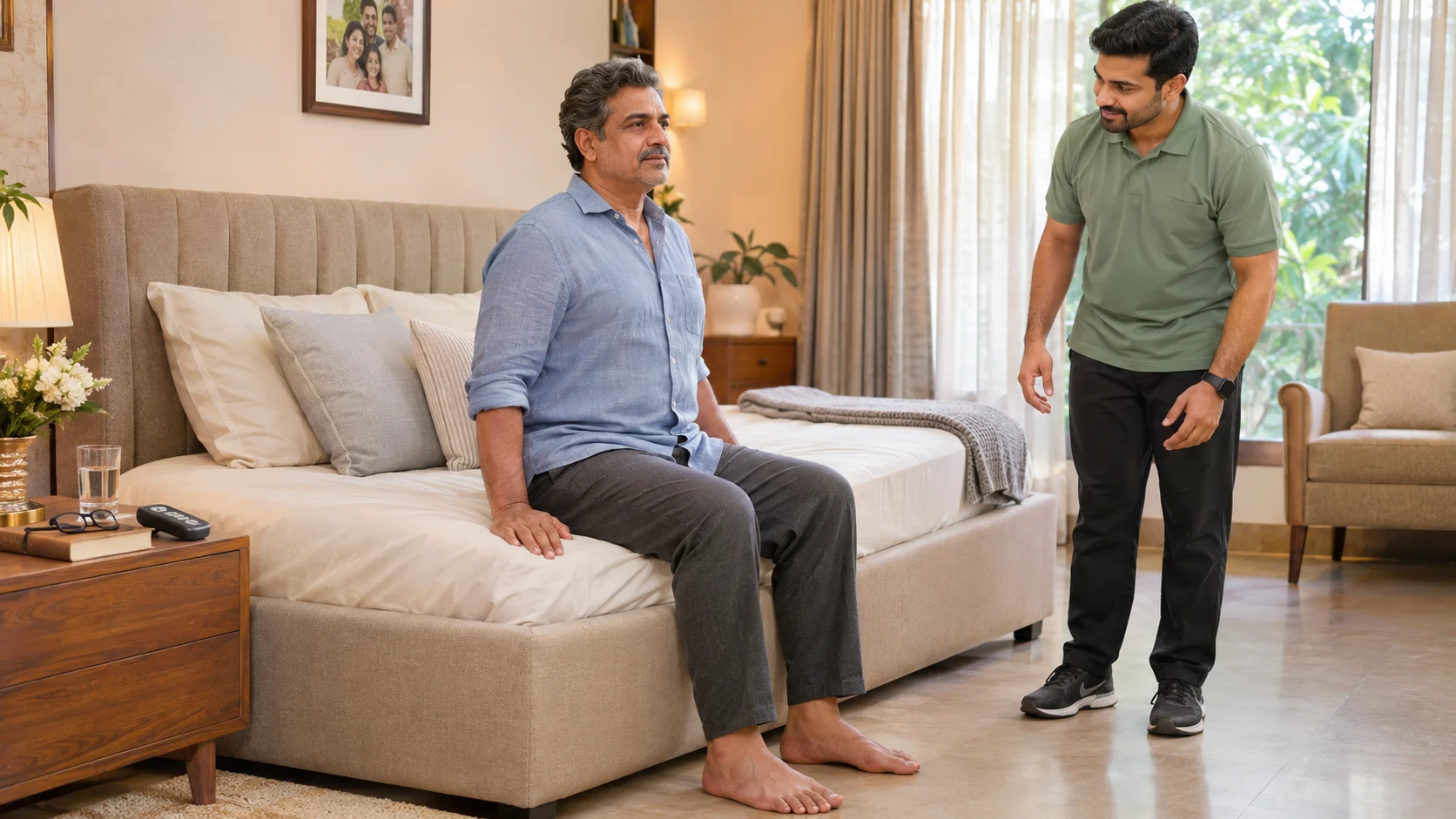
After spine surgery, most patients are told to avoid bending, lifting and twisting. A recliner bed helps because the back and legs can be raised by remote, so you can sit up without pulling on your back. To get out, raise the bed to a comfortable height, roll as one unit onto your side, drop your legs over the edge and push up with your arms. Follow your surgeon’s specific rules, and report new weakness, numbness or loss of bladder or bowel control at once.
Spine surgery recovery is built around a few simple rules: do not bend, do not lift and do not twist. Unfortunately, getting out of a flat bed breaks all three. A recliner bed can make the first weeks much easier, because it raises the upper body for you and gives the back steady support. Here is how to use it safely, always within your surgeon’s instructions.
Why the Rules Matter
After many back operations, the spine needs time to heal, and bending, lifting and twisting can strain the surgical site. Surgeons often summarise this as no bending, lifting or twisting, sometimes with a weight limit and a time period. The exact rules depend on the type of surgery and the surgeon, so ask for them in writing and follow them closely.
What the Bed Can Do
| Task | Recliner Bed Setup | Why It Helps |
| Resting | Upper body raised slightly and knees lifted | Takes pressure off the lower back |
| Sitting up for meals | Raise the back section by remote | Avoids pulling up with the back muscles |
| Getting out of bed | Use the log-roll method, with the bed at a good height | Avoids twisting the spine |
| Getting into bed | Sit on the edge and lie down as one unit | Avoids bending forward |
| Sleeping | Gentle incline with pillows as your surgeon allows | Supports the spine and eases stiffness |
The Log-Roll Method: Getting Out of Bed
- Lower or raise the bed to the height that suits you, so your feet will rest flat on the floor when you sit at the edge.
- Lie on your back near the edge of the bed and bend your knees without twisting.
- Roll onto your side as one unit, keeping your shoulders and hips moving together, like a log.
- Let your legs drop over the edge while you push up with your arms, using the weight of your legs to help you sit up.
- Pause with both feet flat on the floor and wait for any dizziness to pass, as explained in our guide on slower transitions for dizziness.
- Stand slowly with a stable support nearby, keeping your back straight.
Getting Into Bed
- Sit on the edge of the bed with your back straight.
- Lower yourself onto your side, supporting yourself with your arms.
- Lift your legs onto the bed as you lean back, keeping your hips and shoulders in line.
- Roll onto your back as one unit, and raise the back of the bed with the remote if you need to sit up.
IMPORTANT NOTE
Surgeon’s instructions differ by type of operation, and the rules for neck, upper back and lower back surgery are not the same. Follow your own written instructions above this guide. Call your surgeon or emergency services promptly for new weakness or numbness in the legs, loss of bladder or bowel control, severe pain that is not controlled, fever, or redness or discharge from the wound.
Sleeping Positions
Most people are advised to sleep on their back with a pillow under the knees, or on their side with a pillow between the knees to keep the hips and spine in line. Check with your surgeon which positions are allowed. A recliner bed makes it easy to raise the knees slightly or to find a position that eases pressure, as covered in our guide on setting up your adjustable bed for lower back pain relief.
Setting Up the Room Before Surgery
- Set the bed height so that both feet rest flat on the floor when sitting on the edge.
- Keep the remote, phone and water within easy reach of the bed.
- Move everyday items to waist height so that you do not bend or stretch.
- Clear the path to the bathroom, and add a night light.
- Arrange help for the first weeks, so that you are not lifting or reaching.
Using the Remote Wisely
Use presets to move between positions with one press, rather than leaning to adjust the bed. Our guide to your adjustable bed remote explains how to save positions, and our list of recliner bed mistakes and fixes shows what to avoid, such as holding one angle for too long.
Walking, Rest and Recovery
Recovery involves short, regular walks, as your care team advises, and rest in between. A recliner bed makes rest more comfortable but does not replace walking or physiotherapy. Follow your rehabilitation plan, and do not push through pain to prove that you are fine. Our guide on recliner beds after knee or hip replacement describes a similar approach to transfers.
The weeks after spine surgery depend on protecting the repair while staying gently active. A recliner bed does not replace your surgeon’s rules, but it removes many of the bending, lifting and twisting movements from the day. Use the log-roll method, set up the room before surgery and keep your team informed.
Explore our Recliner Beds range or the Electric Hospital Bed collection.
Related Reading