An orthopedic bed mattress is a mattress sold for back and joint support, but “orthopedic” has no fixed standard in India. Two mattresses with the same label can feel completely different. Judge by material, firmness and your body weight, not the word on the box. For most adults, a medium-firm latex or high-density foam core is a safe starting point.
Is “orthopedic” a real mattress category?
Not in the way most buyers assume. As far as we know, there is no single test a mattress must pass before a brand can print “orthopedic” on it. Doctors do not certify mattresses, and a hard board-like mattress is not automatically better for your spine.
What the word usually promises is firm, even support. What your spine actually needs is neutral alignment: hips and shoulders sinking just enough that the back stays in a straight line.
- Too hard: pressure builds at shoulders and hips, and side sleepers wake up numb.
- Too soft: the middle sags and the lower back curves unnaturally.
- Right: your spine looks straight when seen from behind while you lie on your side.
Which material works best in an orthopedic bed mattress?
Most “orthopedic” mattresses in Indian stores fall into four material families. Each has a trade-off.
| Material | How it feels | Good for | Watch out for |
| Coir (coconut fibre) | Very firm, little give | Light stomach sleepers, tight budgets | Sags unevenly, can hold moisture |
| High-density PU foam | Medium to firm, steady | Everyday back sleepers | Cheap grades flatten early |
| Memory foam | Slow, hugging, soft | Joint pain, pressure points | Traps heat in Indian summers |
| Natural latex | Springy, supportive, breathable | Mixed sleepers, hot rooms, adjustable beds | Heavier to lift, higher upfront cost |
How firm should an orthopedic mattress be for your body?
Firmness is personal, so treat this table as a starting range, not a rule.
| Your profile | Starting firmness |
| Under 60 kg, side sleeper | Medium-soft to medium |
| 60-90 kg, back sleeper | Medium-firm |
| Over 90 kg | Firm, with a thicker core |
| Stomach sleeper | Firm, so hips do not drop |
| Shoulder or hip pain | Medium with a contouring top layer |
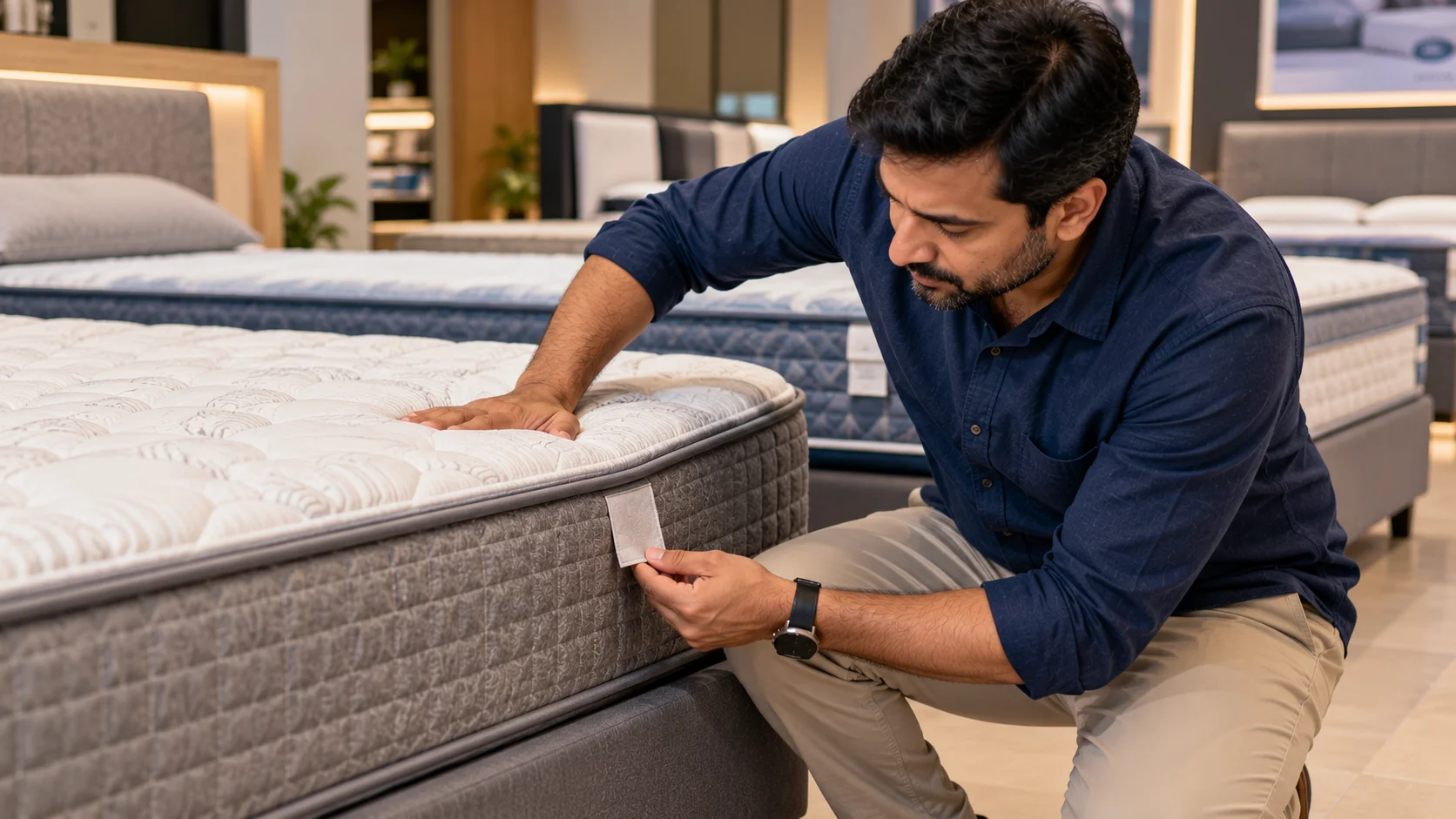
Lie on any orthopedic bed mattress in your normal sleeping position for at least ten minutes in the shop. A quick sit-and-bounce tells you almost nothing.
Does a higher price make an orthopedic bed mattress better?
Not automatically. A premium price can mean better latex, denser foam or a longer warranty, but it can also mean a bigger advertising budget. When you compare an orthopedic bed mattress across brands, line up the same details side by side: core material, thickness, density or firmness grade, cover fabric and warranty terms.
Be careful with “rock-hard” claims. A mattress that feels firm in the showroom may soften within months if the foam density is low. Ask for the density in kg per cubic metre for foam, and ask how much sagging the warranty covers. If a seller cannot answer, that tells you something too.
Couples should also test the edge. A good orthopedic bed mattress should not collapse sharply when one person sits near the side.
Can an orthopedic mattress cure back pain?
No, and be careful of any brand that says so. A suitable mattress can reduce night-time pressure and help you stay comfortable, but pain has many causes: muscle strain, disc problems, posture, weight, long sitting hours. If pain lasts more than a few weeks, see a doctor or physiotherapist.
Position also matters as much as the mattress. Our guide on how adjustable beds help prevent lower back pain explains why slightly raised knees take load off the lumbar spine, something no flat mattress can do.
Will an orthopedic mattress work on an adjustable bed?
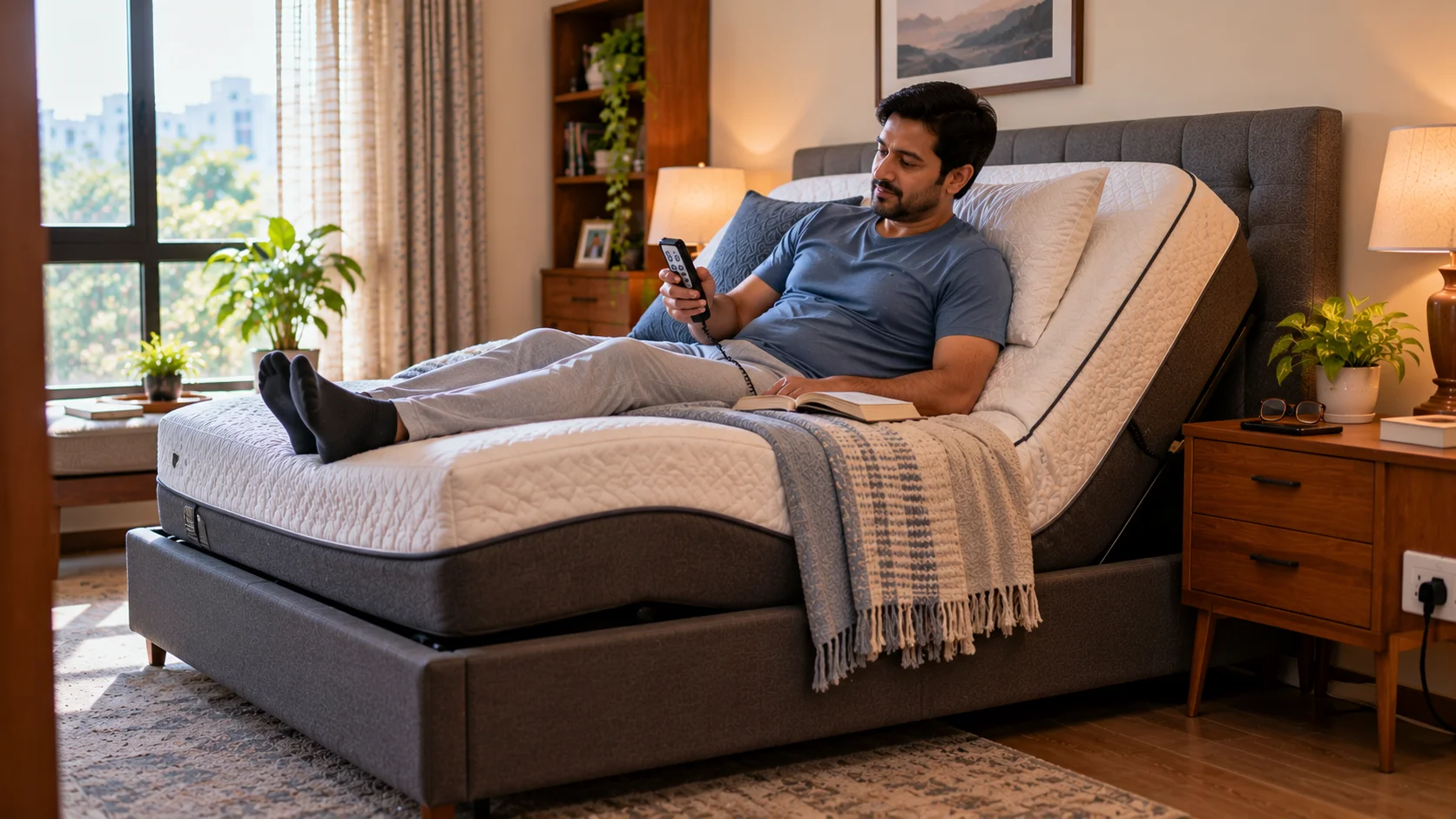
Only if it bends. A thick coir slab or a rigid spring unit will crease, lose shape and wear out at the hinge points. Latex and good foam flex with the frame and spring back.
If you plan to buy an adjustable bed frame later, choose a flexible mattress now. Buying both together also avoids a mismatch, which is why people search for an Adjustable Beds Mattresses Combo Price before they commit. For a wider look at what to check on the bed side, read the ultimate guide to buying an adjustable bed.
Where does a 7-zone latex mattress fit?
Zero G’s natural latex mattress is built in seven comfort zones: head and neck, shoulder, lumbar, pelvic, knee, leg, and foot and ankle. The idea is simple. Your heavy hips should not get the same firmness as your lighter calves.
From the product page, you can choose size, thickness and firmness, and the mattress carries a 15-year warranty. Price depends on size, and the page asks you to contact the team for it. The page does not call the mattress “orthopedic”, so ask about firmness for your weight rather than relying on a label.
Six checks before you buy an orthopedic bed mattress
- Ask what the core is made of and how thick it is.
- Ask for firmness in plain terms, not “extra orthopedic”.
- Check the warranty: what counts as a sag and how much depth is covered.
- Confirm it can bend if you want an adjustable frame.
- Test it for ten minutes in your sleeping position.
- Check the return or exchange window in writing.
Caution: this article is general information, not medical advice. If you have a spine condition or recent surgery, ask your doctor what firmness is safe for you.
Want a mattress matched to your weight and sleeping position? Talk to the team about the 7 zone latex mattress.