An Electric Hospital Bed For Home Use needs three things before it arrives: a path wide enough to carry it in, a flat floor with clear space beside the bed, and a safe power socket within cable reach. Measure the doors, plan the cable route and keep one side free for the caregiver.
What does an electric hospital bed need at home?
A hospital bed for patients at home is bigger than a normal bed because it carries motors, a frame and rails. Most hospital beds for patients are designed for wards, so check the dimensions against your own rooms. Zero G lists its electric hospital bed at 42 inches wide and 78 inches long, with a 350 kg weight capacity. Use those numbers as a starting point when you measure.
The bed has to get in, stand steady, and move freely. Plan each of the three before delivery day.
How do you measure the path and the room?
Walk the route from the entrance to the bedroom with a tape.
- Measure the lift: depth, width and door opening.
- Measure every doorway on the route, including the bedroom door.
- Check corridor turns, because a long bed cannot turn sharply.
- Measure the room length and width, and mark where the bed will stand.
- Keep at least one side clear for a caregiver, and both sides if you can.
- Note any step, threshold or uneven floor at the door.
Zero G’s own recliner FAQ gives the same advice: measure the bedroom and the intended bed area before purchase. Tell the seller your measurements. A good team can say whether the bed can be carried in or needs partial assembly in the room.
What power and wiring does it need?
An electric bed uses a small motor that runs only while you press a button. Zero G’s pages say adjustments use little electricity because the motor does not run continuously. Even so, the wiring needs care.
| Item | What to check |
| Socket | A working three-pin socket near the bed |
| Cable length | Reaches the socket without stretching |
| Cable route | Away from wheels, doors and walking paths |
| Extension cords | Avoid them if possible, or use a heavy-duty one |
| Power cuts | Ask whether the model has any backup, as not all do |
On power cuts, be specific. A powered bed cannot move without electricity, and some models offer backup while others do not. Ask the seller in writing about the model you are considering.
What flooring and layout work best?
Hospital beds roll on castors, so the floor matters.
- Smooth, level tiles or wood suit wheels best.
- Remove loose rugs that can catch castors or cause slips.
- Avoid placing the bed on a slope or uneven patch.
- Keep a clear circle around the bed for turning a wheelchair or walker.
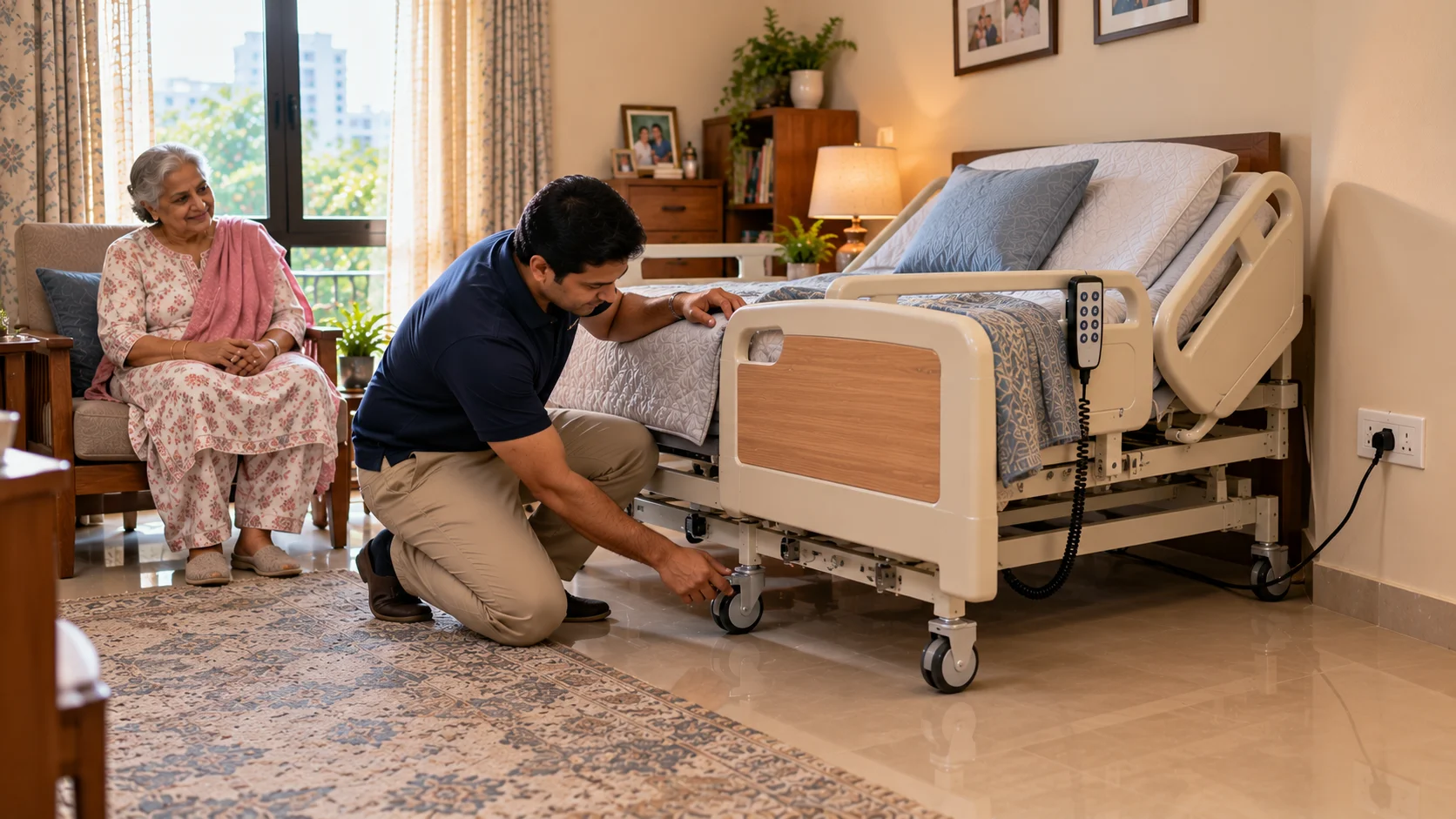
- Lock the wheels once the bed is in position.
Zero G lists lockable medical-grade castor wheels and side safety rails on its electric hospital bed page, so use them: lock the wheels each time you finish moving the bed.
How do the controls fit into daily use?
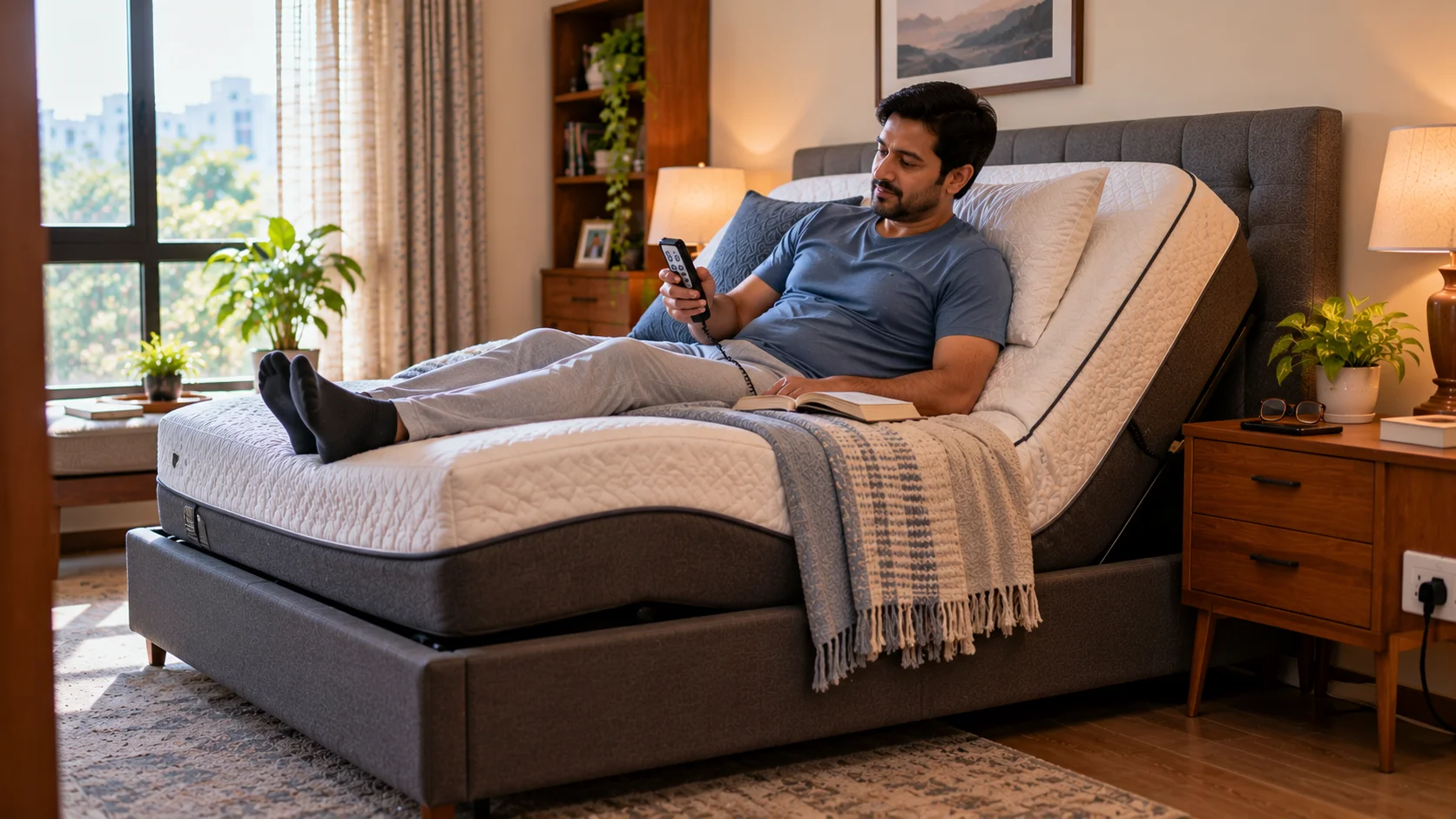
A Hospital Bed With Remote Control lets the patient or caregiver change position by button. Keep the handset where it is reachable, in a holder on the rail or bedside. Zero G lists head elevation of 0 to 90 degrees and feet inclination of 0 to 45 degrees, so you can raise the head for meals and lift the legs for rest.
For a full list of bed types and when each makes sense, read our guide to types of hospital beds.
What safety checks should become habits?
- Lock the castors before any transfer.
- Check the rails latch firmly.
- Make sure nothing is under or beside moving sections.
- Keep cables clear of the wheels.
- Lower the bed before leaving the patient alone.
- Test every function weekly.
Our post on how to ensure patient safety with electric adjustable beds goes deeper on this.
What if the room is small?
Many Indian flats have compact bedrooms. If space is tight:
- Move extra furniture to another room.
- Place the bed along a wall, leaving the open side for the caregiver.
- Choose the narrowest bed that suits the patient’s size and weight.
- Consider converting the existing bed, if the family prefers. Zero G says it can convert certain existing beds depending on their design and size, and our guide on converting a standard bed into an adjustable bed for home care explains the idea.
What does the team do on installation day?
Zero G’s product pages list free home installation and a professional team. Be present, and ask them to place the bed, connect the power, test every function and show you the remote. Ask for a written note of any limits, such as weight capacity and care instructions.
Caution: this article is general guidance. The doctor or physiotherapist should decide the safe positions for the patient’s condition.
For specifications, see the Zero G electric hospital bed.