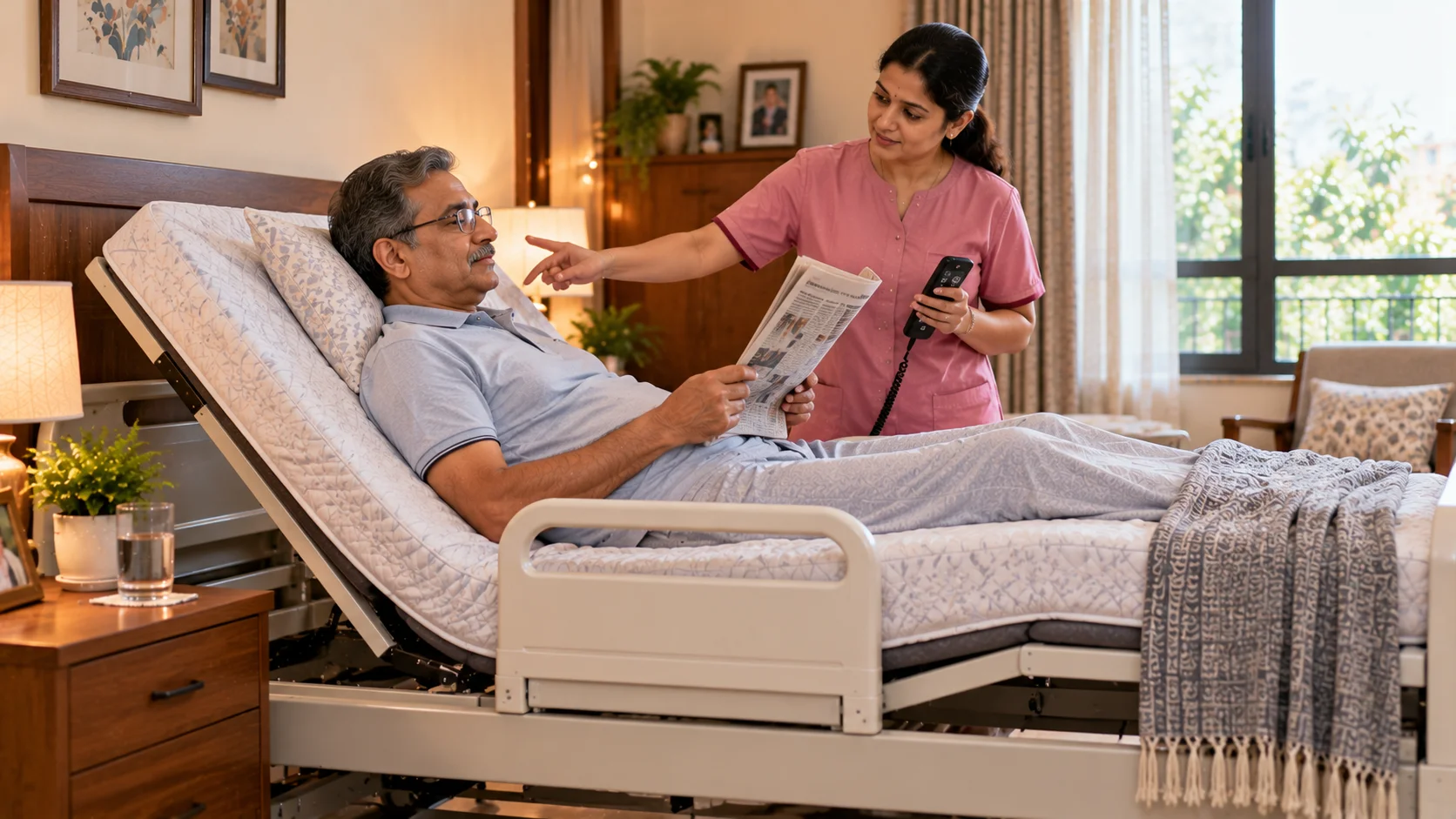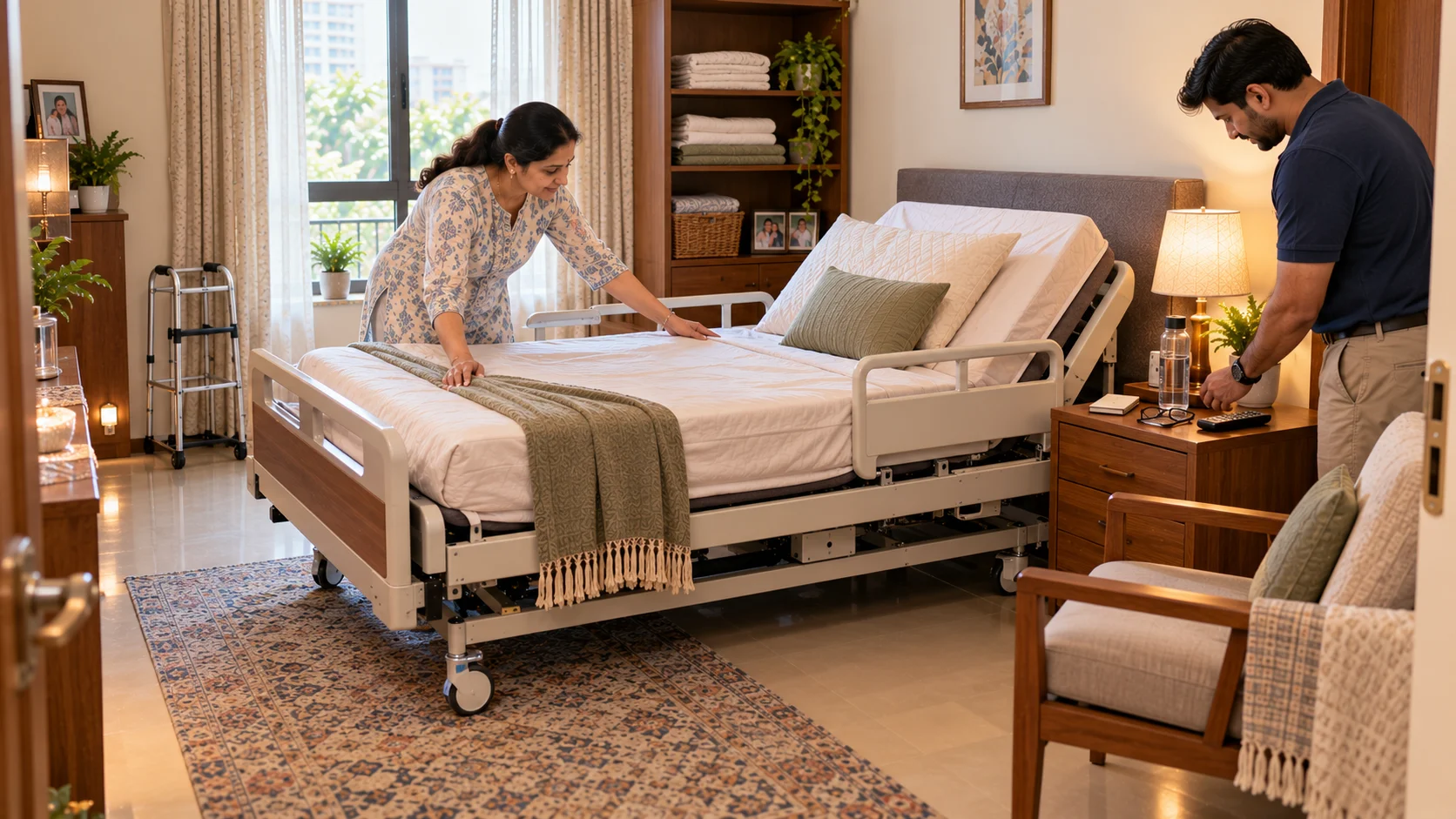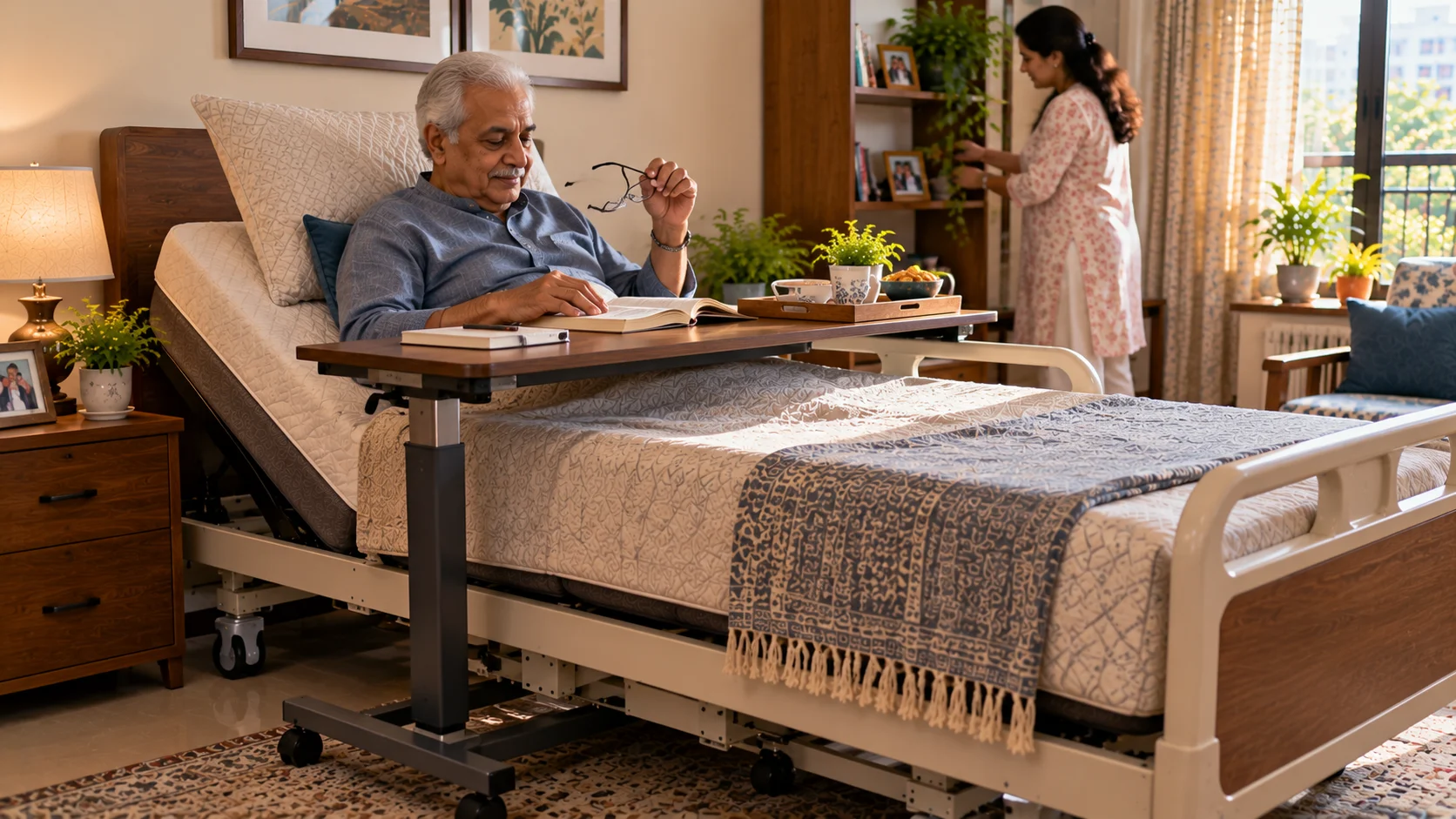
An overbed table can make a home-care setup more convenient. It can provide a surface for meals, reading, a book, or small items the user needs nearby. But when it is used with a hospital bed for patients at home, the table must be compatible with the bed’s height, movement and available space.
This is especially important with an adjustable bed. The mattress platform may rise or incline, changing the distance between the user, the table and nearby furniture. A table that fits comfortably when the bed is flat may become awkward or obstructive after the bed is adjusted.
An overbed table is a separate piece of furniture or accessory, so confirm its availability and specifications with the relevant supplier rather than assuming it is included with the bed. The aim is to choose a setup that supports daily routines without blocking access or creating avoidable hazards. This guide focuses on the details to check before choosing an overbed table and arranging it around a patient bed.
Decide What the Table Needs to Support
Start with the tasks the user will actually do. A table used mainly for reading may need a different size and placement from one used for meals, writing or keeping a few everyday items within reach.
Discuss these questions with the user and caregiver:
- Will the table be used for meals, reading, writing or several activities?
- Does the user need to reach it independently, or will someone position it for them?
- Is the bed adjusted throughout the day, or mostly kept flat?
- Will care tasks require regular access to the side of the bed?
- Does the room have enough space to move the table away when it is not needed?
The user’s needs should guide the table choice. A larger tabletop is not always better if it makes the room harder to navigate or blocks access for a caregiver.
If the bed is used for medical care or recovery, confirm any relevant positioning and feeding instructions with the treating healthcare professional. The furniture setup should support the care plan, not replace it.
Check the Table’s Height and Adjustment Range
The table needs to work with the bed’s height and the position of the mattress. This is more complicated when the head section can rise or when the bed has different resting positions.
Check the table’s minimum and maximum height. Compare these with the bed in its flat position and in the positions the user is likely to use. If the tabletop cannot be positioned comfortably over the mattress, the user may have to lean forward or reach awkwardly.
If the bed or table has moving parts, check whether any section can collide with the other. Do not assume that the table will remain correctly positioned as the bed moves. Follow the table and bed manufacturers’ instructions about suitable use and clearance.
A table should also be stable when loaded with the items it is intended to hold. Ask the supplier about the rated load and locking method if the table has wheels. Avoid using a rolling table as a support for standing, transferring or pulling the body up unless it is specifically designed for that purpose.
Plan the Table Around the Bed’s Movement
An adjustable bed changes shape as the head or leg sections move. A tabletop that is too close to the platform may interfere with movement, press against the mattress or end up at an unsuitable angle.
Before settling on a position, check the following:
- Clearance above the mattress: the table should not obstruct the bed’s intended movement or pinch bedding and other materials.
- Access from the side: caregivers may need to reach the user without the table blocking the working area.
- Movement path: the table should be easy to move away when the user needs to enter or leave the bed or when care tasks require space.
- Wheel locks: if the table rolls, confirm how its wheels lock and whether the table remains stable during normal use.
- Reach: place frequently used items where the user can reach them without twisting or leaning excessively.
Do not leave the table in a position that obstructs the user’s route or the caregiver’s access. If the bed’s configuration changes, reassess the table position instead of assuming the original arrangement will always work.
Keep Food, Drinks and Devices Secure
Meals and drinks are common reasons to use an overbed table, but the arrangement should be practical and stable. Keep hot liquids away from the edge and from control remotes, electrical cables and other equipment. Use a suitable tray or spill-resistant container where appropriate.
If a tablet, phone or reading light is placed on the table, arrange charging cables so they cannot be caught by moving sections or become a trip hazard. Keep liquids away from powered controls and follow the bed manufacturer’s cleaning and electrical instructions.
The table should not be overloaded. Heavy objects can make a movable table difficult to reposition and may affect its stability. Store non-essential items elsewhere so the surface remains clear for the task at hand.
For users who have difficulty gripping, reaching or swallowing, ask the appropriate healthcare professional or occupational therapist for advice about table position and meal arrangements. The table itself does not resolve those needs.
Consider the Whole Room, Not Just the Table
An overbed table is one part of the room layout. Nearby bedside cabinets, chairs, walking aids, doors and electrical outlets also affect whether the bed and table can be used comfortably.
Measure the path the table must travel and where it will be stored when not in use. In a small bedroom, a table may block a door or narrow the route between the bed and bathroom if it is left in the wrong position. The most convenient location during a meal may not be suitable for transfers or cleaning.
If a caregiver regularly assists, ask them to test the layout from the side they normally use. Their access needs may differ from the user’s reach needs. Leave enough room for the activities that happen every day rather than planning only for the table’s parked position.
Questions to Ask Before Buying the Table
Use this checklist to compare options:
| Check | Question |
|---|---|
| Height | Can it be adjusted to work with the bed’s intended positions? |
| Tabletop | Is the usable surface large enough for the tasks without becoming difficult to manoeuvre? |
| Stability | How are the wheels locked, and what is the rated load? |
| Clearance | Can the bed move without contacting the table? |
| Access | Can the user and caregiver reach the necessary areas when the table is in use? |
| Cleaning | Are the surface and moving parts suitable for the household’s cleaning routine? |
| Storage | Where will the table be placed when it is not needed? |
When selecting a hospital bed for patients at home, consider the bed and the daily-use furniture together. A product choice should support the room’s actual routine rather than create an extra obstacle.
An overbed table is most useful when it supports real daily activities without interfering with the adjustable bed or caregiver access. Match its height and stability to the bed, check clearance during movement, and decide where it will be stored between uses.
Review the Zero-G Beds bed-for-patients range while considering the full home-care setup, including the bed, table and route around the room.