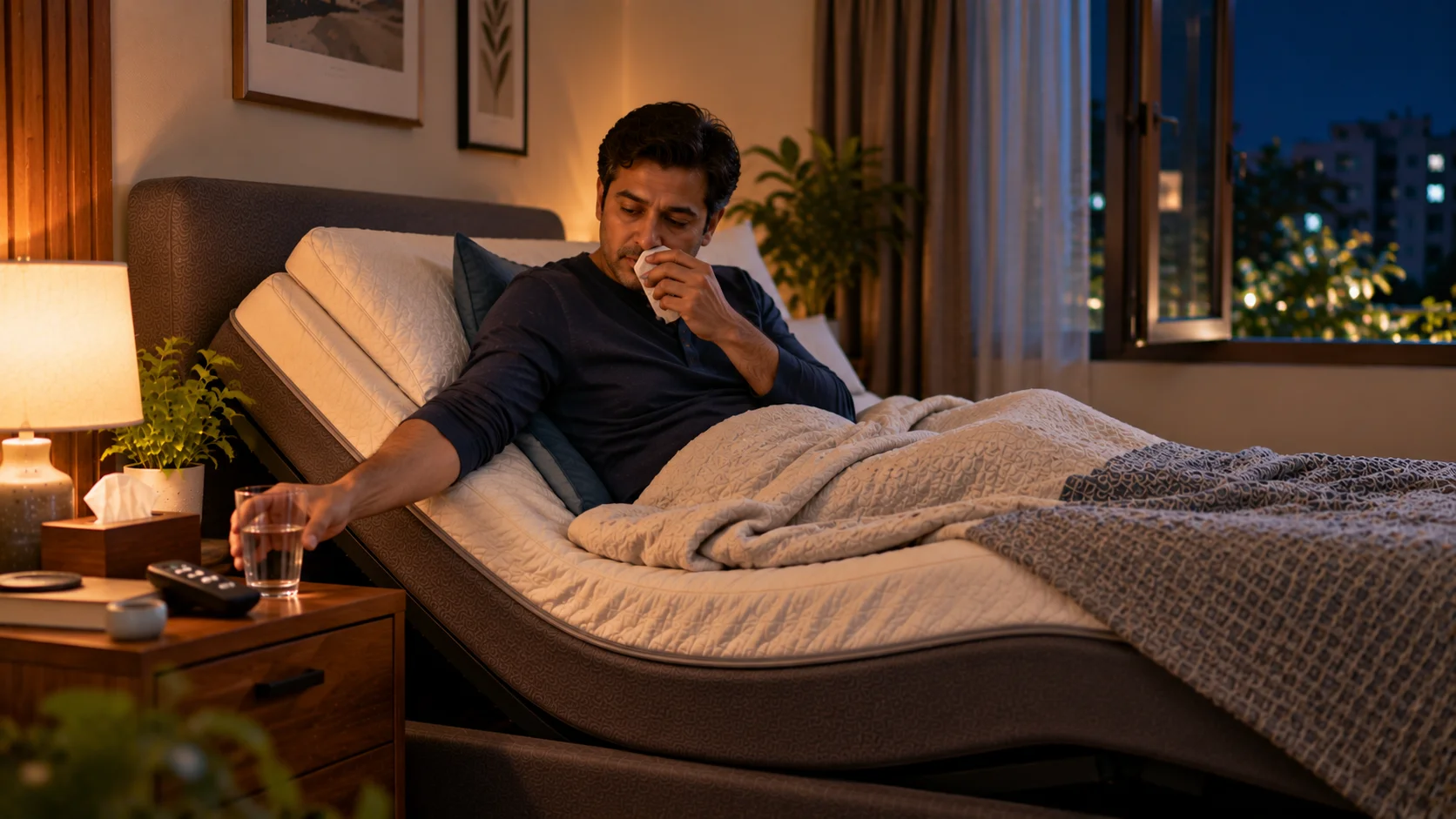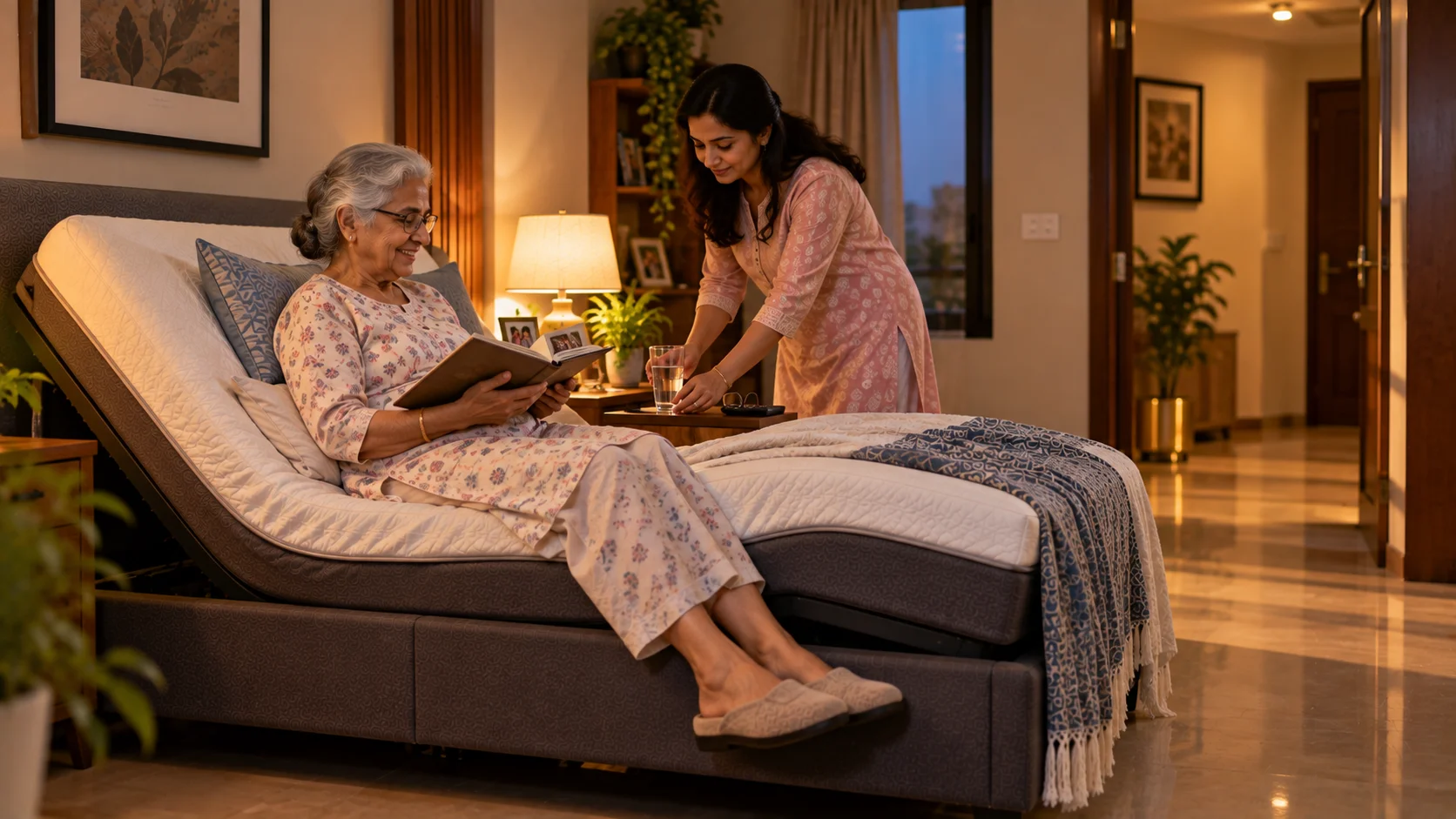
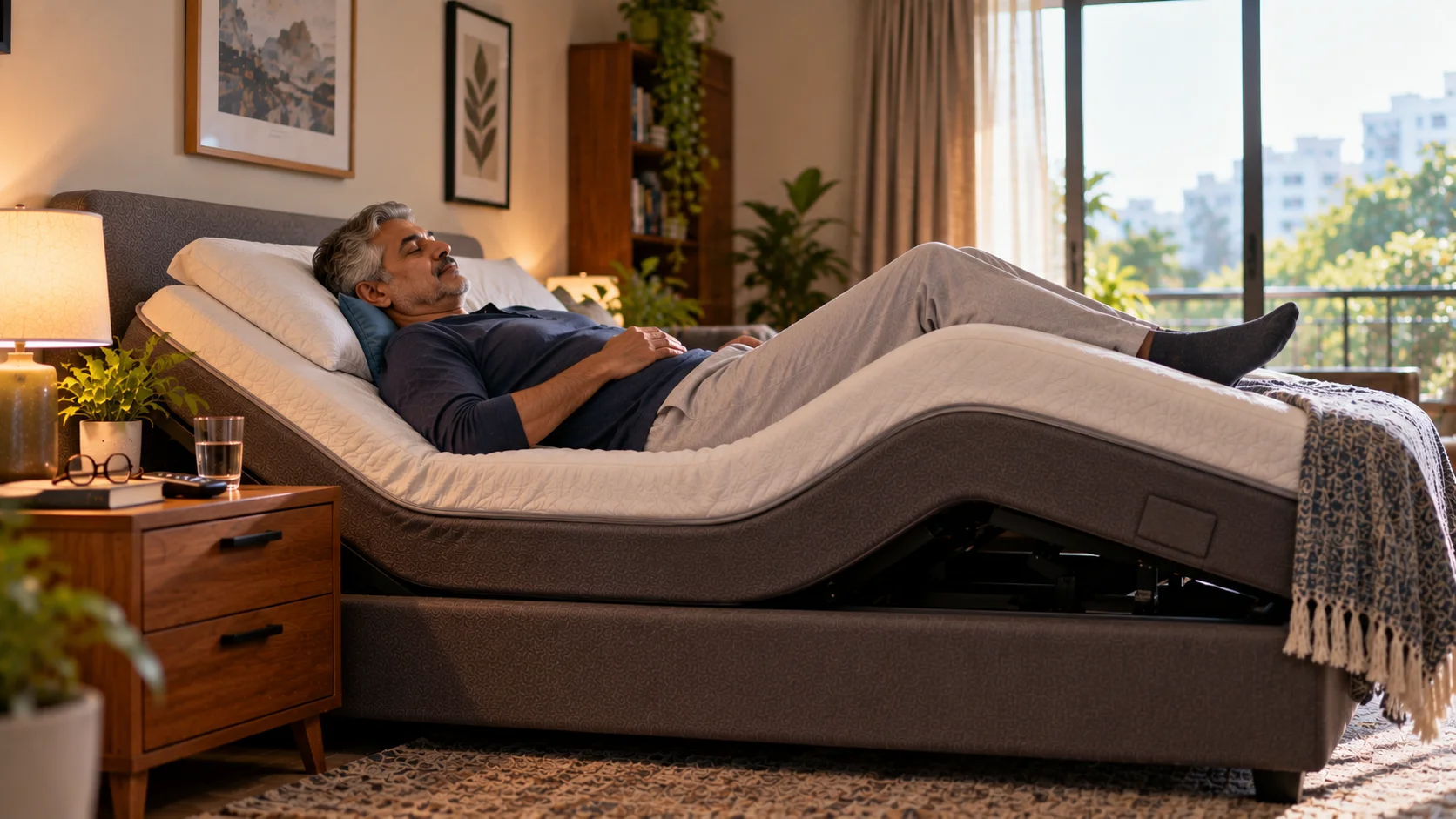
Spinal stenosis narrows the space around the spinal nerves, and lying flat or arching the lower back tends to narrow it further. A gentle knee-and-hip flexed position, like a mild Zero Gravity setting, opens that space slightly and often eases night-time leg pain, numbness and cramping. It manages symptoms, it does not widen the canal, and it should sit alongside your doctor’s or physiotherapist’s plan.
Spinal stenosis is one of the most common reasons people over fifty develop leg pain, heaviness or numbness that seems to appear from nowhere. Many describe the same odd pattern: walking or standing makes it worse, while sitting or leaning forward brings quick relief. That pattern holds the key to how an adjustable bed for spinal stenosis can help, and it explains why the advice differs from ordinary back pain.
What Happens Inside the Spine in Stenosis
The spinal canal and the small openings where nerves exit can narrow with age, usually from thickened ligaments, bone spurs or bulging discs. When the lower back is extended or arched, these structures crowd the nerves a little more. When the lower back is gently flexed, the space widens slightly. This is why shopping-cart posture, leaning on a trolley and sitting all feel better than standing upright for people with lumbar stenosis.
Why Flat Sleeping Can Aggravate Symptoms
Lying flat on the back leaves the lower back in a mildly extended position, especially if the mattress is firm. For someone with stenosis this can mean waking with leg cramps, buttock pain or tingling that eases once they sit up on the edge of the bed. That sit-up relief is the same flexion effect described above, and an adjustable frame can provide it all night instead of only after waking.
The Position That Usually Helps Most
| Setting | What It Does | Why It Suits Stenosis |
| Knees raised, head slightly reclined (mild Zero Gravity) | Flexes hips and lower back gently | Widens the space around lumbar nerves and reduces extension |
| Head raised only, legs flat | Reclines the torso | Often less helpful, the lower back can stay extended |
| Fully flat | Neutral to slightly extended lumbar spine | May aggravate leg pain and night cramps for many people |
| Side-lying with knees drawn up and leg section raised | Curls the spine gently | A comfortable alternative if back-lying still hurts |
Setting It Up Step by Step
- Raise the leg section first, until your knees are comfortably bent and your lower back feels flattened against the mattress rather than arched.
- Add a mild head recline, around 10 to 20 degrees, so the whole spine sits in a relaxed curve.
- Hold it for a full night before judging, since nerve-related symptoms often settle over several nights rather than the first one.
- Adjust in small steps. A little more or less knee elevation can make a noticeable difference, so change one angle at a time.
IMPORTANT NOTE
Stenosis symptoms such as new leg weakness, foot drop, or any change in bladder or bowel control need urgent medical assessment. Positioning support is for comfort in a diagnosed, stable condition and never replaces medical evaluation.
How This Differs From Herniated Disc and Sciatica Advice
Both conditions like gentle flexion, but the reasons differ. With a herniated disc the goal is to reduce pressure on one specific disc, as covered in best adjustable bed positions for sciatica and herniated disc pain relief. With stenosis the goal is to give crowded nerves more room along a longer stretch of the spine, so consistent overnight flexion tends to matter more than a specific angle.
Daytime Habits That Support the Night-Time Setup
- Short, frequent walks with rest breaks, since many people with stenosis tolerate walking better when they can pause and lean forward.
- Recumbent cycling or stationary biking, which keeps the spine flexed and is often better tolerated than walking.
- Core and hip-strengthening work guided by a physiotherapist, which reduces the load the spine carries.
- Avoiding long stretches of standing upright, where possible, especially on hard floors.
Choosing the Right Mattress Alongside the Frame
A very firm mattress can leave the lower back more extended than a medium-firm one. A contouring surface that lets the hips sink slightly while the knees are raised usually helps the flexed posture feel natural. Our guide on best mattress firmness for back pain on an adjustable bed explains how to test this.
Getting In and Out of Bed More Comfortably
Many people with stenosis find the first minutes after waking the hardest, because standing upright immediately re-extends the spine. Lowering the head section gently, rolling to the side and using the frame’s height adjustment, if available, reduces that jolt. A few knee-to-chest stretches before standing also help. This overlaps with the transfer safety points in our guide on how adjustable beds help people with mobility issues.
When to Discuss Other Options With Your Doctor
Most people with mild to moderate stenosis manage well with exercise, activity changes and positioning. If leg symptoms limit walking to short distances, keep worsening, or disturb sleep every night despite a well-set bed, your doctor may discuss injections or surgical options. Bed positioning is a comfort measure and should not delay that conversation when symptoms are progressing.
Spinal stenosis calls for a different instinct than ordinary back pain: instead of trying to straighten and support an arched spine, the aim is to let it curl gently. A mild Zero Gravity setting, a medium-firm mattress and steady daytime movement give many people noticeably calmer nights.
Explore our Adjustable Bed for Back Pain range, or read how can an adjustable bed reduce lower back pain for the wider picture.
Related Reading