
Adjustable Beds for Vertigo and Dizziness (BPPV): Safer Sleep Positions and Slower Transitions
Many people with vertigo, especially BPPV, are triggered by sudden head movements such as lying down, rolling over or sitting up quickly. An adjustable bed helps by making those transitions gradual and controlled, and by keeping the head slightly raised, which some clinicians advise after certain treatments. It does not cure vertigo, and the cause […]
Adjustable Beds for Night-Time Cough, Sinus Congestion and Allergies

Lying flat lets mucus pool at the back of the throat and swells nasal tissue, which is why coughs and blocked noses feel worse at night. Raising the head and upper body about 20 to 30 degrees helps mucus drain, keeps the airway clearer and reduces post-nasal drip irritation. It eases symptoms from colds, sinus […]
Adjustable Beds for Dementia and Alzheimer’s Care at Home: Safety, Calm and Caregiver Relief

For a person with dementia, an adjustable bed helps mainly through safety and predictability: a lower bed height reduces injury from falls, simple controls a caregiver operates reduce confusion, and gradual position changes make eating, dressing and personal care easier. It does not treat memory loss, and features must be chosen carefully because complex remotes […]
Adjustable Beds for Frozen Shoulder and Rotator Cuff Pain at Night

Shoulder pain is usually worse at night because lying flat lets the joint hang unsupported and compresses inflamed tissue when you roll onto it. A moderate head-and-torso recline takes weight off the shoulder, makes it easier to avoid lying on the sore side, and lets you rest the arm on a pillow in a supported […]
Adjustable Beds for Varicose Veins: How Leg Elevation Eases Heaviness and Aching

Raising the legs to or slightly above heart level lets gravity help blood drain out of the leg veins, which often eases the heaviness, aching and end-of-day swelling that come with varicose veins. An adjustable bed can hold that position comfortably through the night. It relieves symptoms but does not remove or repair damaged veins, […]
Adjustable Beds for Parkinson’s Disease: A Positioning and Safety Guide

Parkinson’s disease often makes turning over in bed, sitting up and standing from lying difficult, and can cause dizziness on standing. An adjustable bed helps mainly by making these transitions gradual and lower-effort: a raised head section to sit up without straining, a height-adjustable base for safer transfers, and slow, smooth motor movement. It supports […]
Adjustable Beds for Spinal Stenosis: Why a Slightly Flexed Position Often Helps
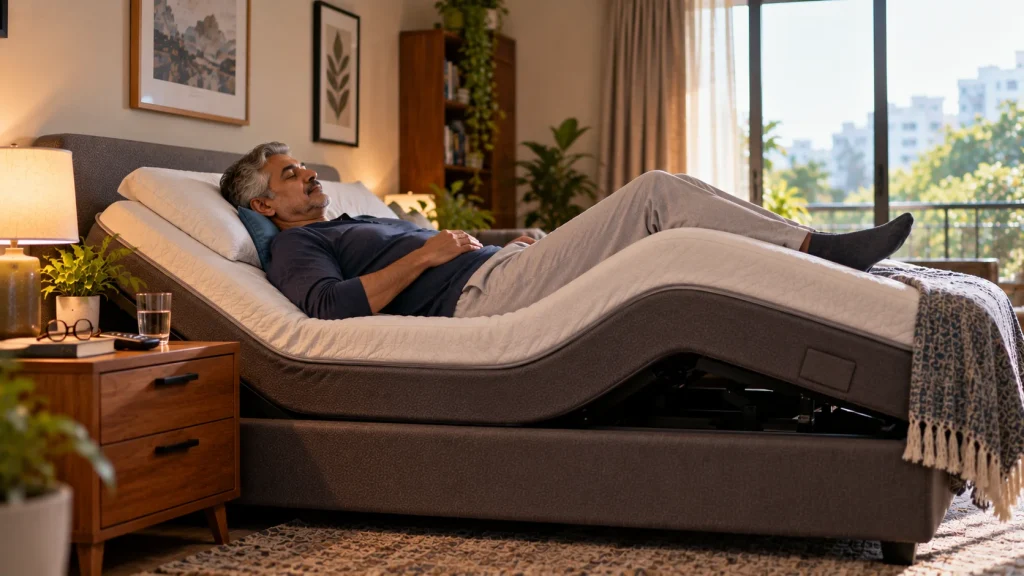
Spinal stenosis narrows the space around the spinal nerves, and lying flat or arching the lower back tends to narrow it further. A gentle knee-and-hip flexed position, like a mild Zero Gravity setting, opens that space slightly and often eases night-time leg pain, numbness and cramping. It manages symptoms, it does not widen the canal, […]