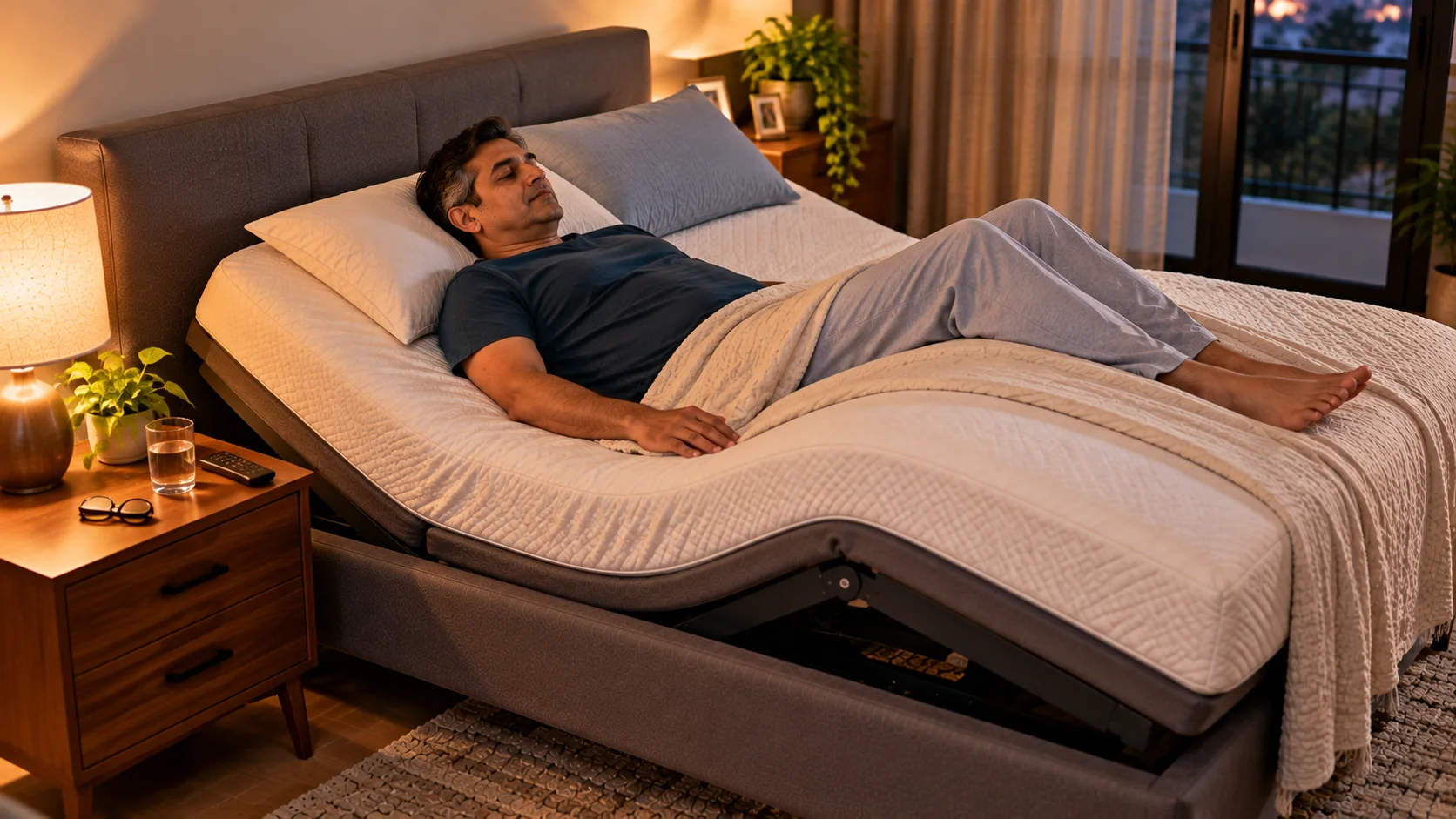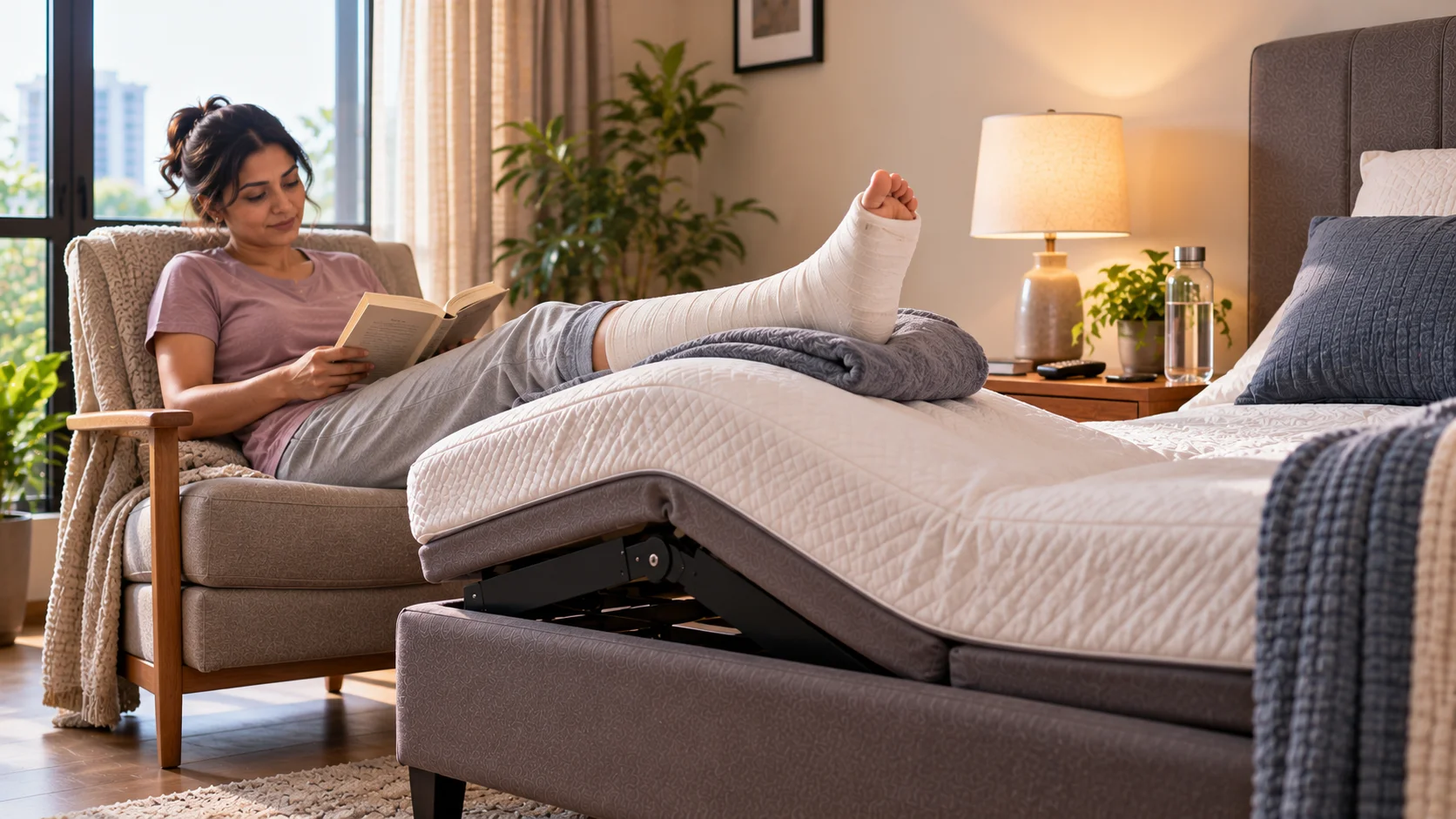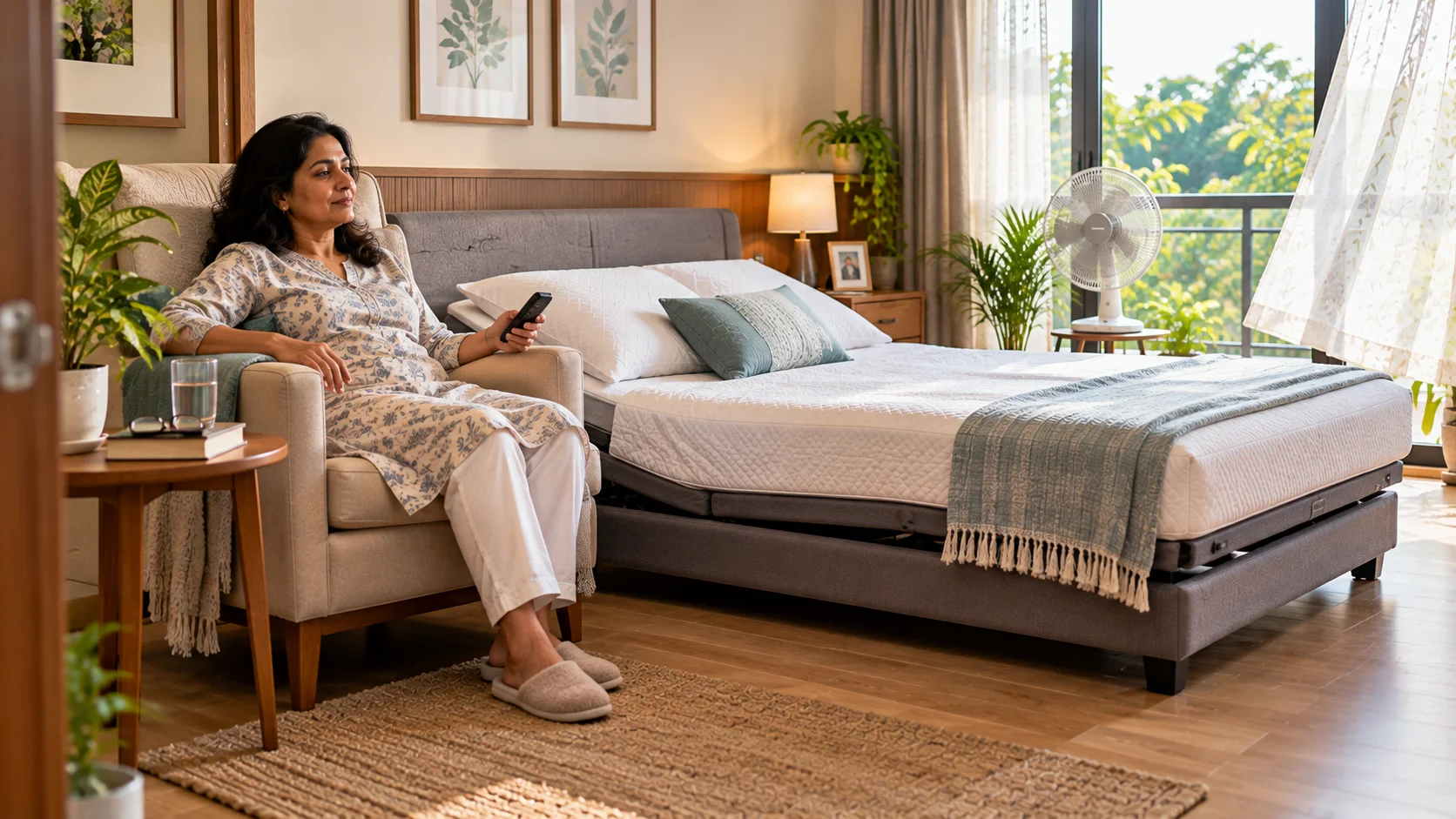
Multiple sclerosis affects people very differently, but three bed-related problems come up again and again: fatigue that makes transfers exhausting, muscle stiffness or spasms, and symptoms that flare with heat. An adjustable bed helps with the first through height adjustment and motorised positioning, and with the second by allowing frequent position changes. The third needs a cool room and breathable bedding. Follow your neurologist’s and physiotherapist’s advice.
Multiple sclerosis (MS) is a condition where the immune system damages the protective covering of nerves, and its effects range from mild tingling to major mobility problems. Whatever the type or stage, the bedroom is where fatigue, stiffness and balance difficulties all converge. This guide explains how an adjustable bed can support life with MS, and where the advice differs from other conditions.
The Three Bed Problems That Come Up Most
| Symptom | Why It Affects the Bed | How an Adjustable Bed Helps |
| Fatigue | Getting in, out and repositioning uses precious energy | Motorised head and leg control saves effort; height adjustment shortens transfers |
| Spasticity and stiffness | Muscles tighten, especially at night or after lying still | Easy position changes avoid long stretches in one posture |
| Weakness and balance problems | Higher falls risk during transfers | A lower bed and stable edge make standing safer |
| Heat sensitivity | Warm rooms and heavy bedding can worsen symptoms | Pair with breathable materials and a cooler room |
| Bladder urgency | Frequent night-time trips | Easy, quick exits and a clear route to the bathroom |
MS care is individual and should be guided by your neurologist, MS nurse and physiotherapist. A sudden worsening of symptoms, new weakness, vision loss or loss of bladder control needs prompt medical advice. This article describes general comfort and safety support.
Saving Energy: Fatigue Is the Big One
MS fatigue is not ordinary tiredness; it can arrive suddenly and flatten a person for hours. Anything that cuts the effort of daily tasks leaves more energy for the rest of the day. A remote that sits the torso up, a frame that lowers for transfers and presets that recall favourite positions at one press all save effort. Keep the remote where it can be reached from either side, and avoid beds with complicated controls.
A Different Approach to Stiffness and Spasms
With MS, position variety matters more than any single angle. Staying in one posture for a long time, especially with hips and knees bent, can encourage stiffness and shortening of muscles over time. For that reason, many neuro physiotherapists advise changing position regularly, including periods lying flatter, and sometimes lying on the front or side, rather than keeping the knees raised all night. Treat the adjustable bed as a tool for variety, and follow your physiotherapist’s plan on stretching and posture.
Setting Up the Bed Step by Step
- Choose a frame that lowers enough for you to stand easily from the edge, and raises for caregiver help if needed.
- Save two or three presets, such as one for sitting up, one for rest and one flat, so you can switch with one press.
- Keep movements slow and smooth, since sudden motion can trigger spasms in some people.
- Use pillows to support the limbs, but vary the arrangement as advised by your physiotherapist.
- Keep the remote within reach on the side you use most, and keep a backup by the bed.
Staying Cool: Heat and MS Symptoms
A small rise in body temperature can temporarily worsen MS symptoms such as blurred vision, weakness or fatigue, a phenomenon sometimes called Uhthoff’s phenomenon. Overheating in bed is a common trigger. Keep the bedroom cool, use light, breathable bedding and consider a mattress material that sleeps cooler. The cooling tips in adjustable beds and menopause apply well, and Natural Latex Mattress generally sleeps cooler than dense foam.
Skin Care and Pressure Relief
If mobility is limited, long hours in bed raise the risk of pressure sores, particularly over the hips, tailbone and heels. Regular repositioning, a pressure-relieving mattress and daily skin checks are essential. Our guide on preventing and managing bed sores explains the repositioning framework in detail.
Safety and Falls
- Lower the bed so your feet are flat on the floor when you sit on the edge.
- Light the route to the bathroom and clear clutter from the floor.
- Use grab rails or a stable bedside support if recommended by your occupational therapist.
- Keep a phone or call device within reach at night.
- Review the setup after any relapse, since needs can change quickly.
The broader safety points in how to ensure patient safety with electric adjustable beds apply here, and an occupational therapist can fine-tune bed height and layout for your situation.
Choosing Features That Suit MS
- Height adjustability with a low minimum, so standing is safer and less tiring.
- A simple remote with large buttons, because tremor or numb fingers can make small controls hard.
- Slow, quiet motor movement, which is less likely to provoke spasms.
- Memory presets, so favourite positions are one press away.
- A mattress that spreads pressure and sleeps cool, such as latex or a well-ventilated foam.
Involving Your Care Team and Planning for Change
MS can change over time, so choose equipment with some flexibility. A frame with a wide height range and enough weight capacity can serve you through different stages, and an occupational therapist can visit to check bed height, transfer technique and room layout. Revisit the setup after any relapse or change in mobility, because what felt right last year may need adjusting. Open conversations with family about energy, independence and night-time routines also help everyone share the load.
For MS, the best adjustable bed is the one that saves energy, makes transfers safe and offers easy position variety. Add a cool room, breathable bedding and a care-team plan for stiffness and skin, and the bedroom becomes a place that supports rather than drains you.
Explore our Bed for Patients range or Electric Hospital Bed options.
Related Reading: