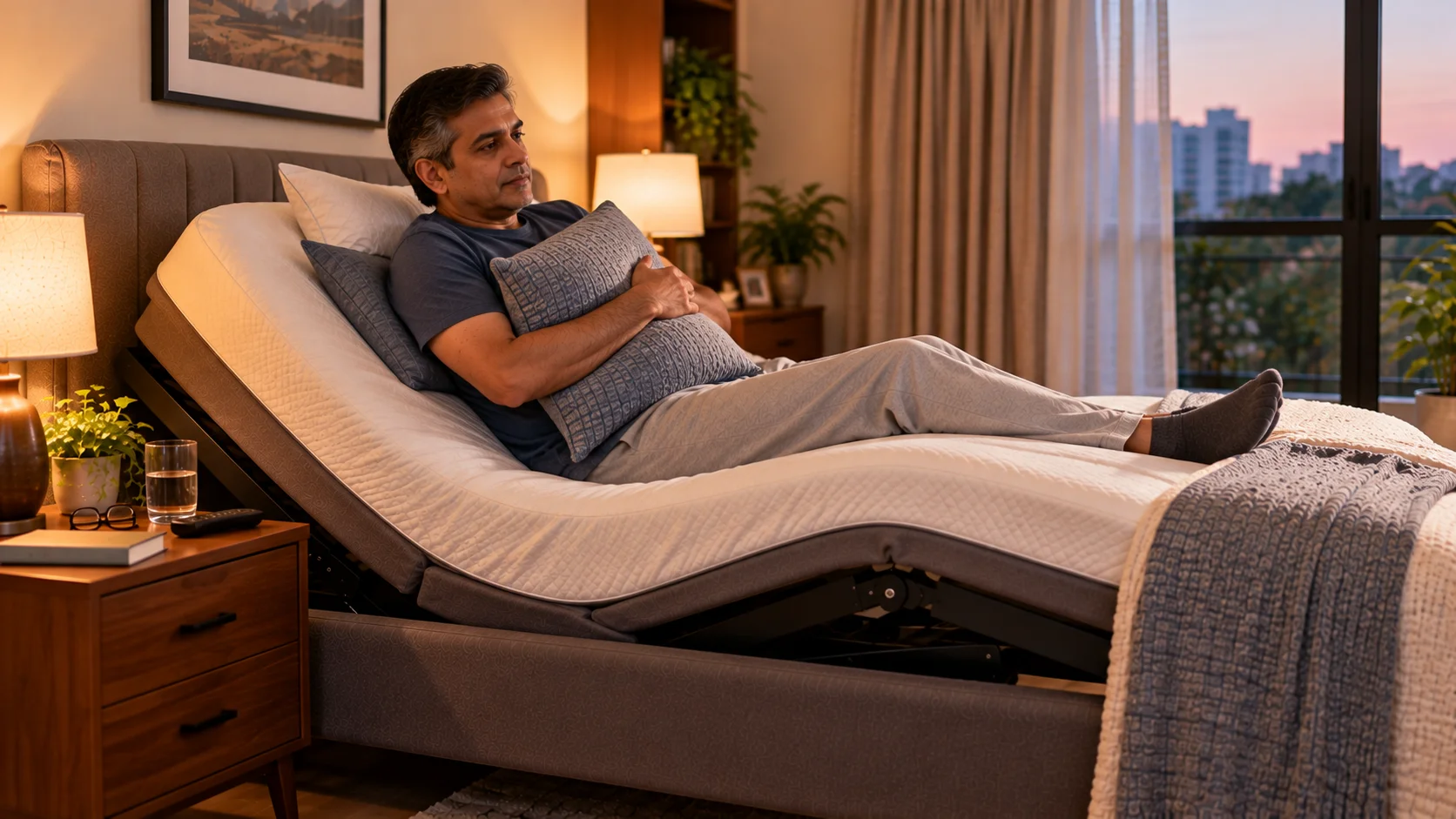
After a leg fracture, cast or ankle sprain, keeping the limb above heart level reduces swelling and throbbing, especially in the first days. An adjustable bed does this all night without a tower of pillows: raise the leg section until the foot sits above the heart, support the calf rather than the heel, and keep the cast clear of the mattress edge. Check toes regularly for colour and feeling.
A cast, a boot or a swollen ankle makes nights miserable. The leg throbs when it hangs down, pillows slide away, and every turn risks knocking the injury. Elevation is one of the simplest ways to reduce swelling and pain, but doing it with pillows rarely lasts the night. Here is how an adjustable bed helps with a leg cast, fracture or sprain, and the safety checks that matter.
Why Elevation Matters After a Leg Injury
Injury and surgery cause fluid to collect around the damaged tissue. When the leg hangs below the heart, gravity pushes more fluid into the foot and ankle, increasing pressure, throbbing and delaying healing. Raising the leg above heart level lets that fluid drain back. This is the same principle explained in how adjustable beds improve blood circulation and reduce swelling, applied to an injury.
Setting It Up Step by Step
- Raise the leg section until the injured foot sits slightly above the level of your heart, usually with the lower leg gently sloped.
- Support the calf, not the heel. Place a small pillow under the calf so the heel floats free.
- Keep a slight bend at the knee unless your doctor has asked for a straight leg, since a locked knee becomes uncomfortable overnight.
- Keep the head section mildly raised, around 10 to 15 degrees, for comfort.
- Align the cast or boot so the toes point upward and the cast does not rest against the metal frame or mattress edge.
| Problem | Cause | Fix |
| Throbbing at night | Foot hanging below heart level | Raise the leg section above heart height |
| Heel pain or redness | Heel resting on a hard surface under the cast | Float the heel with a calf pillow |
| Cast keeps slipping off pillows | Pillows shift as you move | Use the frame’s incline instead of stacked pillows |
| Hard to get out of bed | Low bed and one working leg | Lower the bed height; keep crutches within reach |
| Swelling worse in the morning | Not enough elevation overnight | Increase elevation slightly and keep it consistent |
Severe pain that is worsening and not relieved by elevation, a cast that feels too tight, toes that are cold, pale, blue or numb, a foul smell from the cast, or calf pain with swelling and warmth need urgent medical attention, as these can signal compartment syndrome, circulation problems or a blood clot. Always follow your doctor’s instructions on weight bearing and cast care.
Protecting the Heel and Skin
A heel resting on a firm surface for hours can develop a pressure sore, especially under a cast where you cannot see the skin. Floating the heel by supporting the calf is a simple precaution. Our guide on preventing and managing bed sores explains why pressure points matter, and the same thinking applies to a cast heel.
Keeping the Cast Dry and Clean
- Keep bedding clear of drinks and spills near the cast.
- Avoid putting anything inside the cast to scratch an itch, since it can injure the skin.
- Use a waterproof cover for showering, as advised by your care team.
- Check the edges of the cast for rough spots that rub the skin overnight.
- Report a damp, smelly or damaged cast
Getting In and Out of Bed on Crutches
Falls are a real risk during recovery, especially at night. A bed that can be lowered brings the surface closer to a comfortable standing height, so you can rise on the good leg without a big push. Keep crutches or a walker within arm’s reach, use a night light and clear the path to the bathroom. The practical safety points in how adjustable beds help people with mobility issues apply directly, and hip or knee surgery patients should also see our hip and knee replacement recovery guide.
A Simple Nightly Checklist
- Check your toes for warmth, colour and feeling before bed and when you wake.
- Confirm the leg is above heart level and the heel is floating.
- Make sure the cast edges are not rubbing the skin or catching on the sheets.
- Place crutches and a night light within reach.
- Keep pain relief and water on the bedside table, as advised by your doctor.
Sprains, Strains and Soft Tissue Injuries
The same elevation principle helps a sprained ankle or a torn ligament even when there is no cast. In the first days, keeping the foot above the heart, resting it and using the measures advised by your doctor can reduce swelling. As the pain settles, gentle movement is usually encouraged rather than prolonged rest, so use the bed to recover well overnight and follow your physiotherapist’s plan for returning to walking.
Leg injuries heal better when swelling is controlled and the skin is protected. An adjustable bed holds the limb above heart level, frees the heel and shortens the effort of getting out of bed, which is useful when you are on crutches. Combine it with regular checks of the toes and follow your care team’s advice on weight bearing.
Explore our Leg Rest Beds range or Bed for Patients collection.
Related Reading: