
Sleeping With Broken Ribs or Rib Pain: How an Adjustable Bed Helps
Rib pain is worst when you breathe deeply, cough, twist or lie flat. A semi-upright position, around 30 to 45 degrees, reduces the stretch on the chest wall and makes getting in and out of bed far easier, because the motor does the lifting. Sleep on your back or the uninjured side, splint with a […]
How to Sleep With a Back Spasm: Adjustable Bed Positions for the First Few Days

A sudden back spasm settles fastest when the lower back is unloaded and the muscles are allowed to relax. On an adjustable bed, that means raising the knee section until your hips and knees are bent to roughly 90 degrees, keeping the head only slightly raised, and getting out of bed by rolling to your […]
Adjustable Beds After Hernia or Abdominal Surgery: Easier, Safer Recovery
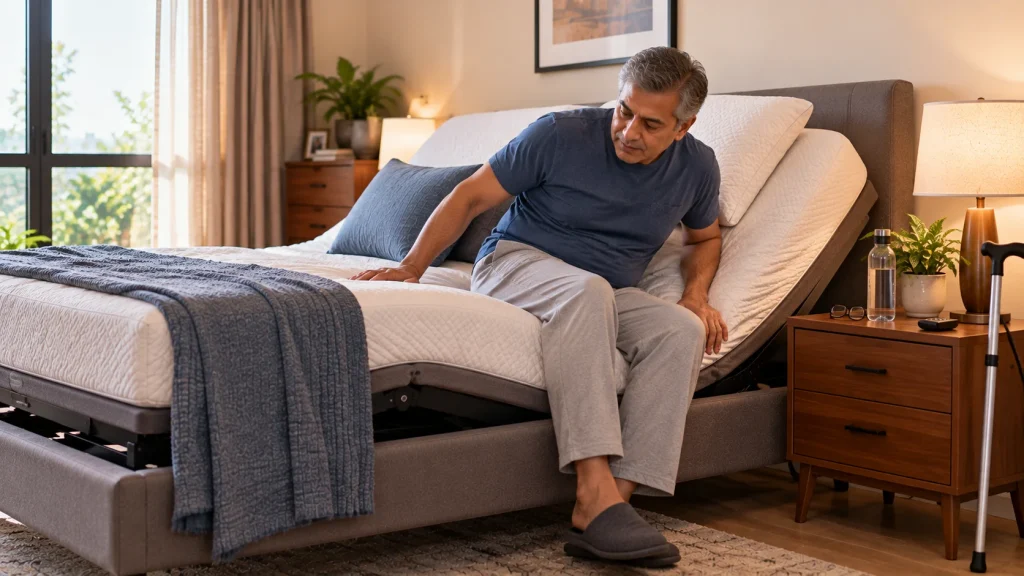
After abdominal surgery, the hardest movement is getting up from lying flat, because it makes the stomach muscles pull on the incision. An adjustable bed removes most of that effort: a gentle semi-reclined position keeps the abdominal wall relaxed, and the motor does the sitting up for you. Always follow your surgeon’s own restrictions on […]
Adjustable Beds for Kyphosis (Rounded Upper Back): A Comfortable Setup
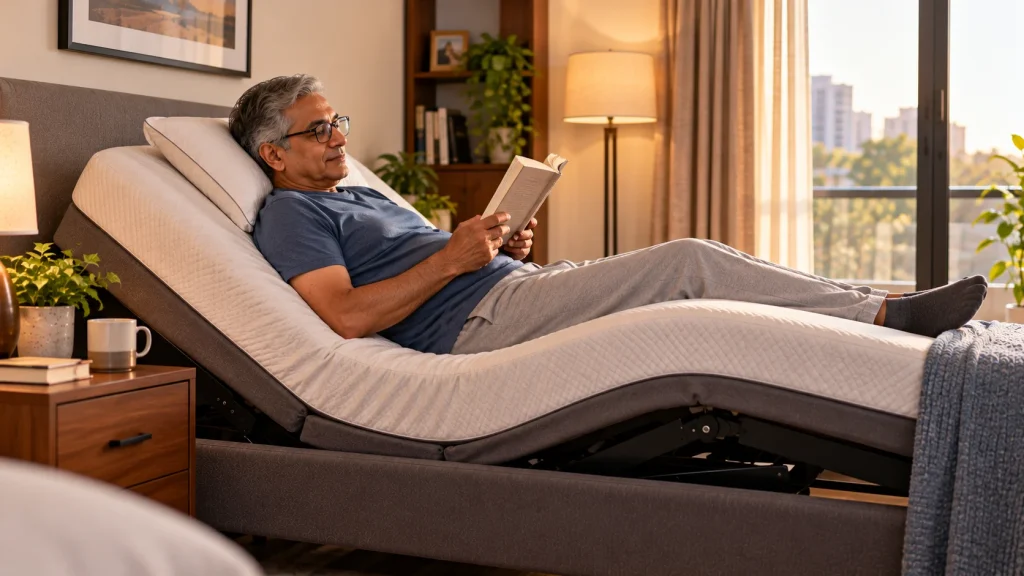
A rounded upper back means a flat mattress pushes your head backwards or forces a stack of pillows under it. Either way the neck pays for it. An adjustable bed solves this by raising the head and torso section so the bed matches the curve of your spine, which lets the neck rest in a […]
Adjustable Beds for Hip Pain and Hip Bursitis: Sleeping Without the Ache

ateral hip pain, the sore, tender spot on the outside of the hip, is worst when you lie on it. An adjustable bed helps by making back-lying comfortable and by letting you take a semi-reclined three-quarter position that moves weight off the hip. Add a pillow between the knees and a cushioning layer, and avoid […]