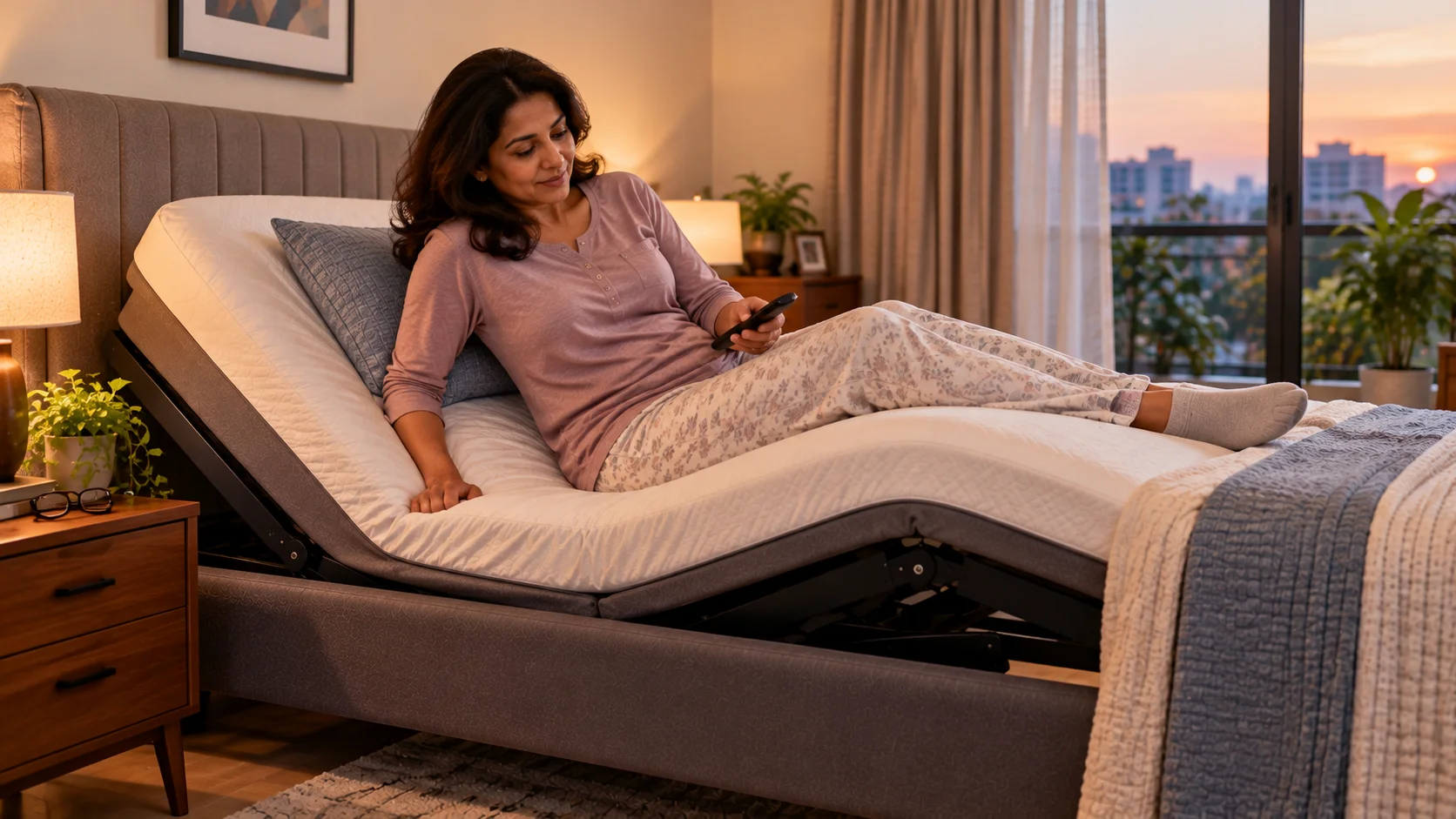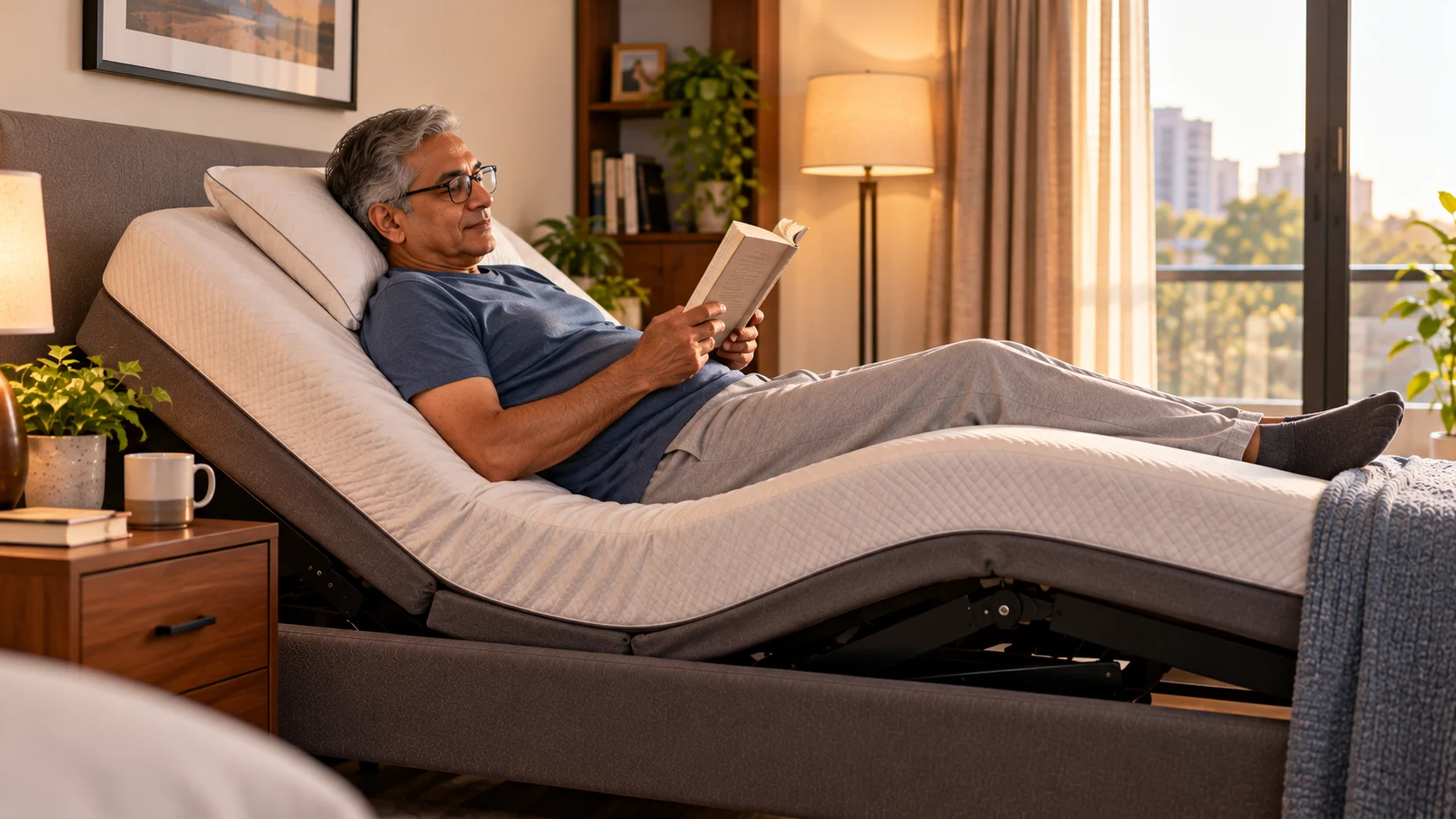
A rounded upper back means a flat mattress pushes your head backwards or forces a stack of pillows under it. Either way the neck pays for it. An adjustable bed solves this by raising the head and torso section so the bed matches the curve of your spine, which lets the neck rest in a neutral position with far less pillow.
Many older adults, and some younger people with long-standing postural problems, develop an exaggerated forward curve in the upper back called kyphosis. It can follow osteoporotic compression fractures, a condition called Scheuermann’s disease in adolescents, or years of slumped posture. Lying flat on a normal bed then becomes awkward: the head tips back, the neck strains, and breathing can feel tight. Here is how an adjustable bed can help with kyphosis, and how to set it up properly.
The Problem With Lying Flat
A person with a straight upper spine lies flat and the head rests naturally on a thin pillow. When the upper back is rounded, the shoulders and head sit forward of the mattress. Lie flat without support and the head drops back into neck extension. Add pillows to lift it and you end up with a stack that pushes the chin forward and puts the neck in a different strain. Neither is comfortable, and both lead to stiff mornings and disturbed sleep.
How an Adjustable Bed Fixes the Mismatch
| Challenge | Flat Bed Result | Adjustable Bed Solution |
| Head tipped back on a flat bed | Neck extension and strain | Raise the torso so the upper back is supported at its natural angle |
| Tall stack of pillows | Chin pushed to chest; unstable stack | A stable incline replaces most of the pillow height |
| Tight, shallow breathing | Chest compressed when flat | Upright support lets the ribcage expand more easily |
| Difficulty getting up | Hard to sit up from flat | A raised head section brings you partway upright by motor |
Setting It Up Step by Step
- Raise the head and torso section gradually, from 20 degrees up to about 35, until your head rests comfortably without tilting back.
- Check your chin. It should sit level, pointing neither at the ceiling nor tucked down to the chest. If it tips up, raise the angle slightly.
- Reduce the pillow. Use a slim pillow or a rolled towel under the neck only, since the incline is now doing most of the work.
- Add a small knee lift, 10 to 15 degrees, to stop you sliding down the incline and to relax the lower back.
- Allow a week to adjust. The new position will feel different at first, and small tweaks to angle and pillow are normal.
A sudden increase in the curve, new severe back pain, or loss of height can signal a spinal fracture and needs medical assessment. Kyphosis cannot be corrected by a bed, and any treatment, including bracing, exercise or osteoporosis care, should be guided by a doctor.
Kyphosis and Bone Health
In older adults, kyphosis often links to weakened bones and small vertebral fractures. If that applies to you, gentleness matters when moving: get up slowly, avoid twisting, and lower the bed for easier standing. Our guide to adjustable beds and osteoporosis covers safe transfers in more detail.
Breathing and Comfort
A rounded upper back can compress the chest and make deep breaths feel tight, especially lying flat. A comfortable incline lets the ribcage expand and reduces that squeezed feeling. If you also have lung disease or night-time breathlessness, the principles in our COPD and breathing difficulties guide apply, and your doctor should guide the right angle.
Exercises and Daytime Habits That Help
- Gentle back extension and shoulder blade exercises, taught by a physiotherapist, to strengthen the muscles that hold the upper back upright.
- Regular position changes, since long sitting can deepen a slouch.
- Chair and screen height adjustments that keep the head from drifting forward.
- Deep breathing exercises that open the chest and keep the ribcage mobile.
- Bone health measures, such as calcium, vitamin D and weight-bearing activity, as advised by your doctor.
For related upper-spine setups, see adjustable beds for upper back and shoulder blade pain and neck pain and cervical spondylosis angles.
Choosing a Mattress for a Rounded Upper Back
A mattress that contours slightly under the shoulders helps, because it lets the upper back sink in a little rather than perching on top. Very firm surfaces can feel like they push the shoulders forward, while very soft ones let the hips sag. A medium surface with a responsive top layer, such as the latex described in best mattress firmness for back pain on an adjustable bed, supports both ends. Test it at your intended incline rather than lying flat in a showroom, since the fit changes completely once the frame is raised.
Caring for the Caregiver and the Person Using the Bed
If a family member is the one with kyphosis, involve them in setting the angle rather than deciding for them. Ask them to say when the head feels comfortably supported and the chin sits level, and save that angle as a preset so it can be recalled with one press. Small details like a lightweight pillow, a bed height that makes standing easy and a remote they can operate independently preserve dignity and independence, which matter as much as the raw comfort of the setup.
Kyphosis changes how a person needs to lie, and a flat bed simply does not fit that shape. An adjustable bed lets you match the incline to your own curve, cut the pillow stack and rest the neck neutrally. It will not correct the curve, but it can give you comfortable, easier-breathing nights.
Explore our Back Rest Beds range, or Bed for Patients for height-adjustable options.
Related Reading: