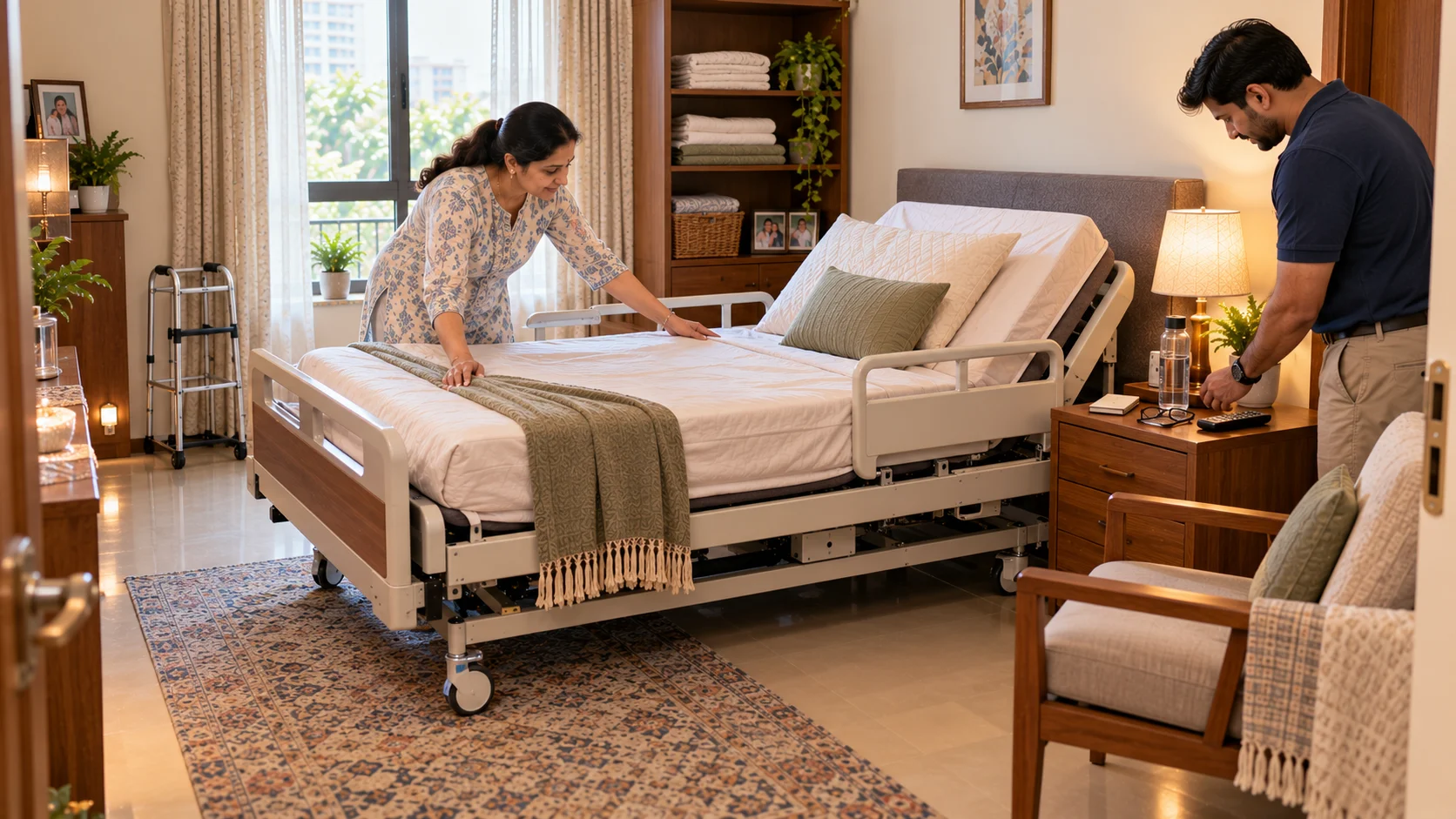
A storage bed can make a bedroom more practical, particularly when there is limited cupboard space. But if a family member later needs adjustable positioning, the fixed storage base can become an important compatibility question. Before replacing the entire bed, it is worth finding out whether the existing frame can be converted and what may need to change.
Zero-G Beds offers a conversion process for certain existing beds, subject to assessment of the bed’s design and dimensions. A storage bed should not be assumed suitable or unsuitable just because it has drawers. The construction beneath the mattress, the available clearance and the mechanism required for the intended use all need to be checked.
This guide explains the main storage-bed designs, the details to collect, and the questions to resolve before planning an adjustable bed for a patient or home-care user.
Why Storage Beds Need a Separate Compatibility Check
Many storage beds are designed as a single fixed unit. Drawers, side panels, lift-up platforms or a low enclosed base may occupy the space where an adjustable mechanism would normally sit. The frame may also use a support structure that cannot be changed without affecting the storage system.
An adjustable system needs room for its moving sections and the components that drive them. If the current base has very little clearance, or if drawers occupy the required space, the mechanism may not fit or may be prevented from moving as intended.
The important point is that mattress size does not establish whether a storage bed can be converted. Two beds with the same mattress dimensions may have very different internal structures.
Identify Which Type of Storage Bed You Have
Before contacting a supplier, identify the basic construction. You do not need to take the bed apart; a description and photographs are a useful starting point.
Drawer storage under the bed
Some beds have drawers that slide out from the sides or foot end. The drawer boxes, runners and side rails may occupy the space underneath the mattress. The conversion assessment needs to consider whether a mechanism can fit without blocking the drawers or creating interference during movement.
Lift-up storage base
A lift-up bed usually raises the mattress platform to reveal a storage compartment. The lifting hinges, gas struts and platform structure may be integral to the frame. Adding another moving system without checking the design could create conflicting movement or loading conditions.
Enclosed platform or box base
Some beds have a solid base that reaches close to the floor. That can limit under-bed clearance and make it harder to accommodate a separate adjustable mechanism. The outer appearance may conceal the frame structure, so photographs from accessible angles can be useful.
Built-in bed or wall-to-wall unit
A bed may be installed inside a fixed alcove, joined to cabinetry or built as part of a bedroom unit. In that case, both the internal frame and the relationship with nearby furniture need to be assessed. A system may fit within the mattress dimensions but still lack clearance to move freely.
What Information Helps Assess a Storage Bed?
Collect the following details before arranging the next step:
- Mattress length, width and thickness.
- External bed-frame length and width.
- Bed height and, where visible, the clearance beneath the frame.
- Storage type: drawers, lift-up platform, enclosed base or built-in unit.
- Photos of the bed from the side, foot end and top.
- Photos of the accessible underside, taken without lifting heavy parts.
- Details of headboards, footboards, side panels and attached furniture.
- The main positioning functions the intended user needs.
If the user is receiving home care, explain whether the bed is for sleeping, daytime resting or frequent assisted positioning. Where there are specific medical positioning or transfer requirements, bring the relevant professional advice. The product assessment determines equipment compatibility, not the correct medical care plan.
Can the Storage Still Be Used After Conversion?
Do not assume that all storage will remain accessible. The answer depends on the layout and whether the existing storage components occupy the same space needed by the adjustable mechanism.
For example, drawers may need clearance to slide out, while a lift-up platform may rely on hinges or struts that conflict with the proposed arrangement. An enclosed base may not have enough free space beneath the mattress support. A fixed side panel might also limit access to installation points.
Ask the team to explain which components can remain, which may need to be removed or altered, and whether any part of the storage function will be lost. Any proposed modification should be confirmed by the supplier. Do not cut, drill or remove structural parts yourself to make room for a mechanism.
A useful assessment should be clear about the limits as well as the possibilities. If retaining storage is essential, make that a requirement at the beginning rather than assuming it can be resolved after installation planning.
When a Different Bed Configuration May Be More Practical
If the existing storage structure cannot accommodate the adjustable system, another configuration may be more suitable. That does not automatically mean the most expensive option is necessary. The decision should consider the bed’s condition, the required adjustment functions, room dimensions and whether the current frame has sentimental or practical value.
Compare the options with these questions:
| Consideration | Why it matters |
|---|---|
| Condition of the existing frame | A damaged or unstable base may not be worth retaining |
| Storage dependency | Check whether losing or changing drawer access would affect the household |
| Required movement | The selected system needs to provide the functions the user actually needs |
| Mattress compatibility | The current mattress requires a separate assessment |
| Room and access constraints | A replacement frame must still fit through the home and within the room |
| Installation scope | Understand what will be retained, changed or supplied |
For the product options, review the adjustable bed for a patient range and ask about conversion suitability for your exact frame. You can also review the existing-bed conversion process.
Questions to Ask Before You Decide
Ask for clear answers to the following before approving a conversion:
- Is the existing storage bed structurally suitable for the proposed system?
- Will the mechanism interfere with drawers, hinges, lift-up panels or side supports?
- Will any furniture or frame component need to be removed or modified?
- Can the existing mattress be retained, subject to compatibility checks?
- Which movement functions will be available in the proposed configuration?
- What work is included in installation, and what should be prepared beforehand?
- Can the compatibility decision and final configuration be confirmed in writing?
These questions help avoid a common mistake: treating conversion as a simple add-on before checking how the whole bed is constructed.
A storage bed may be convenient, but drawers and built-in platforms can affect whether an adjustable system can be installed. The best starting point is to document the frame construction, measurements and storage features, then ask for a specific compatibility assessment.
Explore the Zero-G Beds adjustable bed frame range and the existing-bed conversion process before deciding whether to retain or replace your current bed.