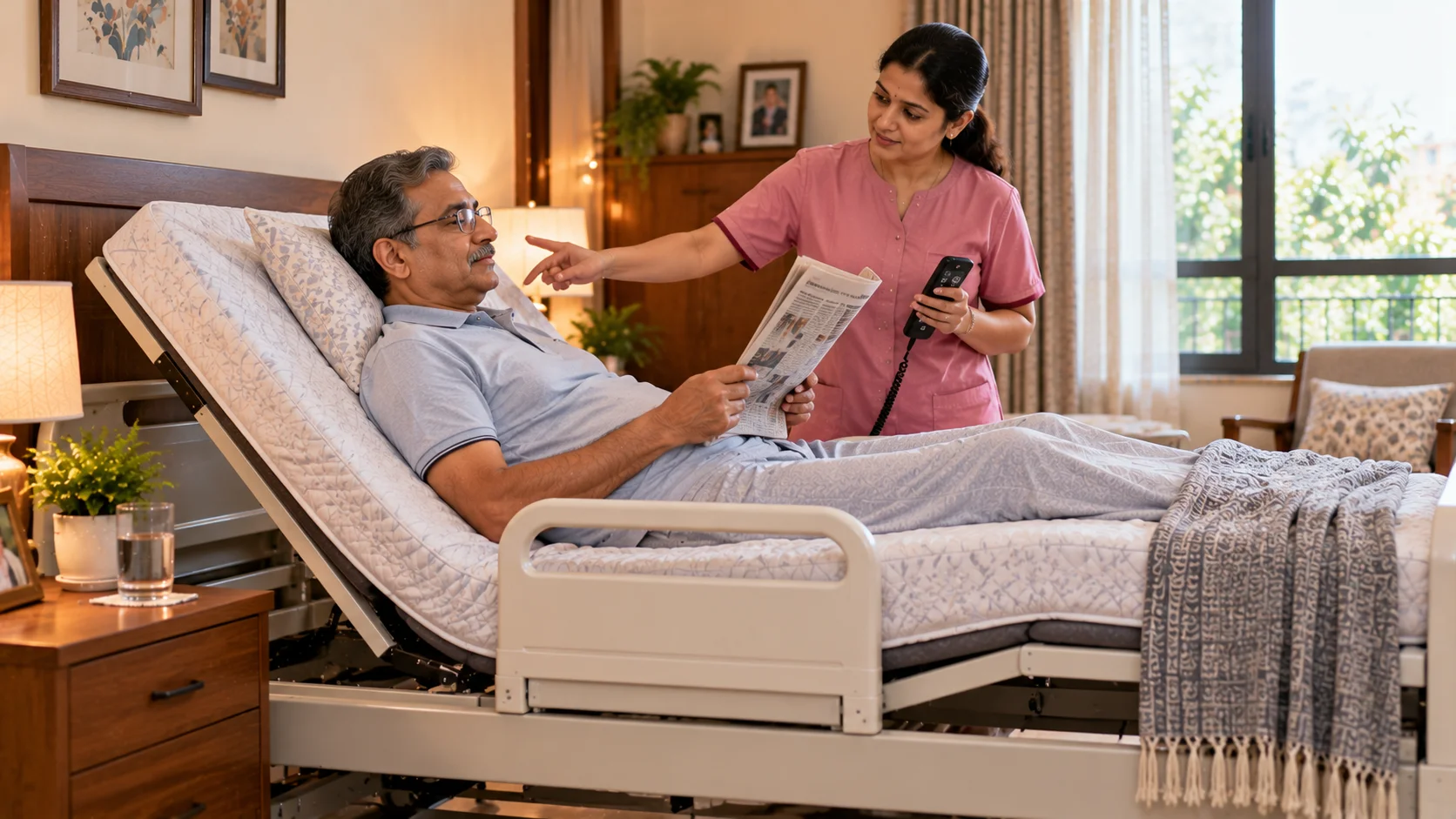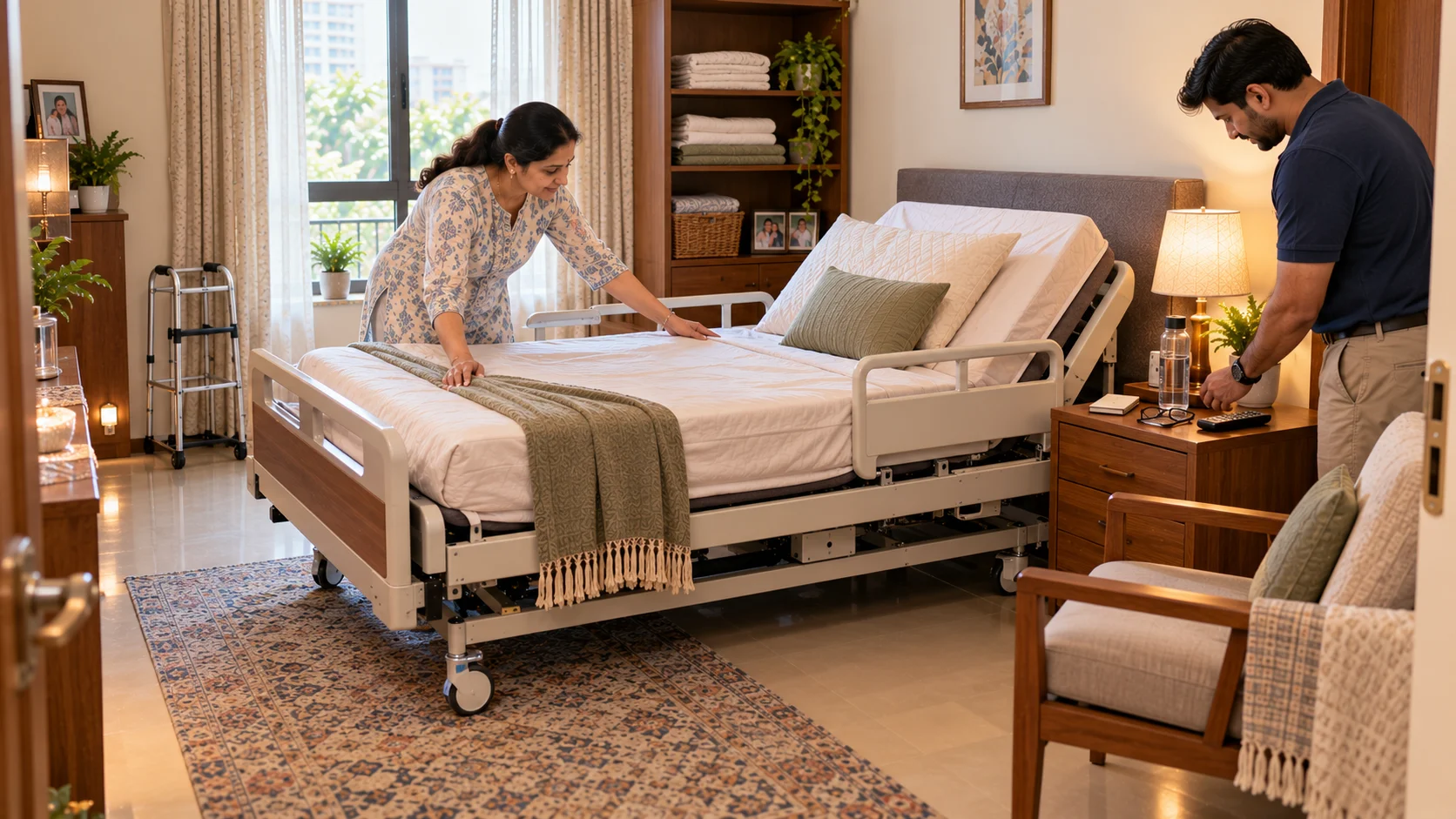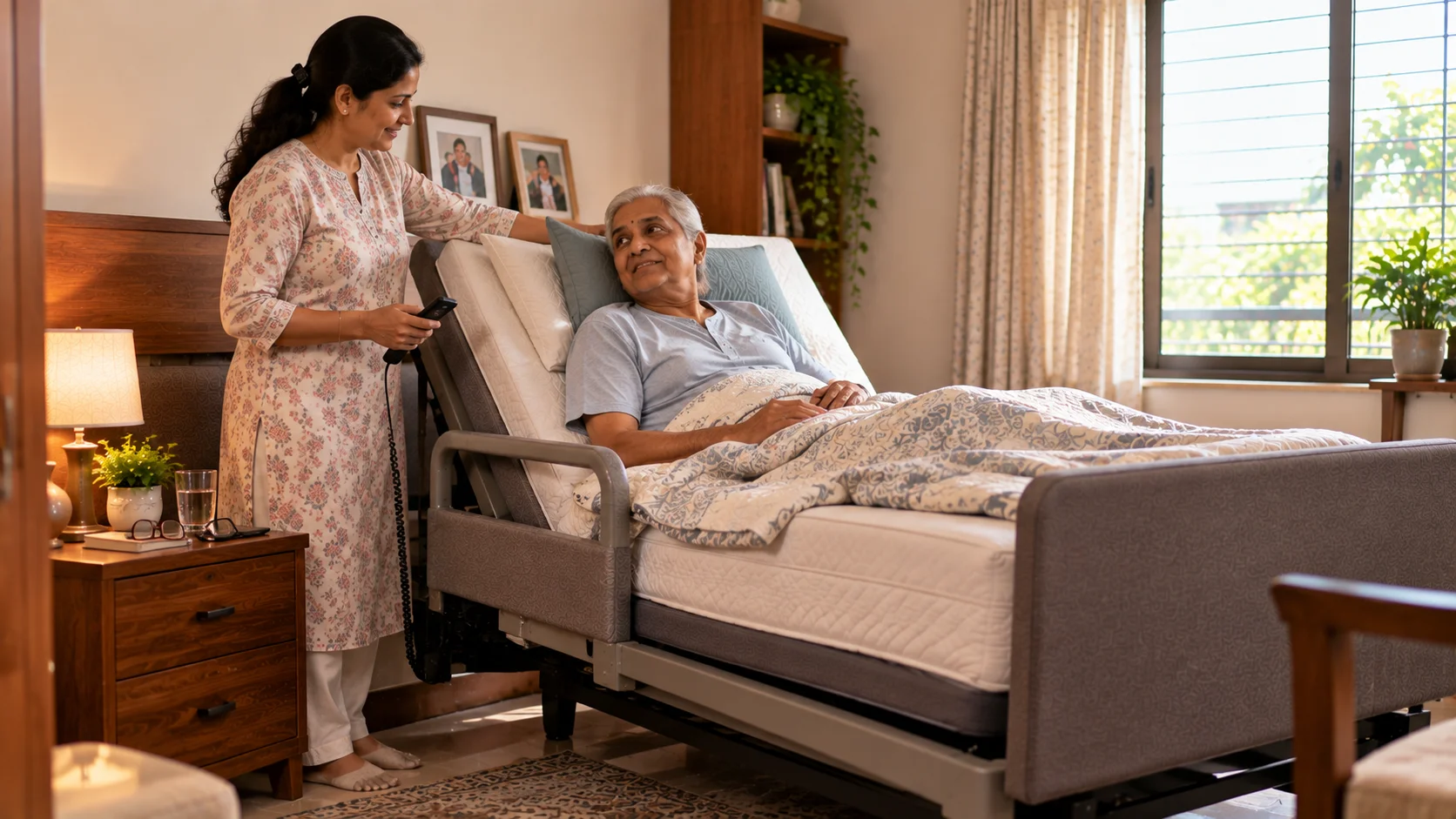
Daily care tasks such as pulling someone up in bed, turning them, feeding, dressing and changing linen involve repeated lifting and bending, a common source of back strain for family caregivers. An electric bed raises the head by motor, changes position at the press of a button and, where height adjustment is available, brings the patient to a comfortable working height. It reduces effort but does not replace proper handling technique or equipment for people who are heavily dependent.
When we talk about home care, the focus is almost always on the patient. Yet the person doing the lifting, often a spouse or an adult child in their fifties or sixties with a back of their own to look after, carries a quiet physical load every day. Understanding how electric beds for caregivers work starts with where that load comes from.
Where Caregiver Strain Comes From
| Care Task | Strain Without a Powered Bed | How an Electric Bed Helps |
| Helping the patient sit up for meals or medicines | Lifting or pulling under the arms | The head section raises the upper body by motor |
| Turning and repositioning | Dragging or rolling a person lying flat | A slight raise of the head or knees makes rolling easier, and small adjustments can be made often |
| Changing linen, washing and dressing in bed | Bending over a low bed for long periods | Height adjustment, where available, brings the patient up to working level |
| Transfers to a chair or commode | Lifting from a low or flat surface | The bed can be set near the patient’s seated height with the head raised |
| Night-time adjustments | Getting up repeatedly to help | The remote lets the patient or caregiver adjust from where they are |
Working Height and Posture Matter
Care tasks are far kinder to the back when the patient is at around waist or hip height and the caregiver can keep a straight back, bend at the knees and stay close to the work. For transfers, the bed should come down so the patient’s feet rest flat on the floor. A bed with height adjustment makes both possible, while a fixed-height bed forces the caregiver to adapt. When comparing models, the guide on choosing the right hospital bed for home care lists the features worth looking for.
Letting the Patient Do More for Themselves
One of the less obvious benefits is independence. A patient who can hold the remote can raise the head to read or eat, shift position when uncomfortable and sit up before standing, which means fewer calls for help and less lifting overall. This also supports dignity and morale. The same idea runs through our article on how adjustable beds help people with mobility issues.
Interrupted Nights and Caregiver Burnout
Sleep loss builds up silently in caregivers. When a patient can adjust their own position, or the caregiver can do it with one press instead of a full lift, the number of disturbances falls. Combining this with a regular repositioning schedule for bed-bound patients, as described in our guide on adjustable beds and bed sores, keeps the patient’s skin safe without wearing the caregiver out.
What an Electric Bed Cannot Do
A powered bed reduces effort but does not make unsafe handling safe. For a patient who cannot bear any weight, transfers may need a hoist, a transfer sling or a sliding sheet, and these should be taught by a physiotherapist, nurse or occupational therapist. Ask for a handling demonstration, ideally in your own bedroom, and make sure more than one person in the household knows the routine.
IMPORTANT NOTE
Persistent back pain, numbness or weakness in a caregiver needs a medical review, and care duties should be shared wherever possible rather than carried alone. This article describes general comfort and safety measures and does not replace professional training in patient handling.
Features Worth Prioritising for Caregivers
- Independent head and leg motors, so each section can be set separately. Our explainer on electric bed motors covers what the different setups do.
- Height adjustment where possible, to bring the patient to a safe working level and a safe transfer level.
- A simple, large-button remote that is easy to use at night and with tired hands.
- Quiet operation, so adjustments do not wake the patient or the household.
- Stable, solid construction at every angle, with space and support for side rails if needed.
- Reliable local service, since a bed that is out of action for weeks is a heavy burden on a caregiver.
These points overlap with the benefits covered in our article on why electric hospital beds suit elderly patients, and the safety checks in how to ensure patient safety with electric adjustable beds apply equally to caregivers.
Good home care protects two people: the patient and the person caring for them. An electric bed will not do the caring, but it can take much of the lifting, pulling and bending out of the day, which keeps caregivers well enough to keep going.
Explore our Electric Hospital Bed collection or the Bed for Patients range.
Related Reading
- How to Ensure Patient Safety with Electric Adjustable Beds
- Adjustable Beds for Stroke Recovery at Home: Caregiver’s Guide