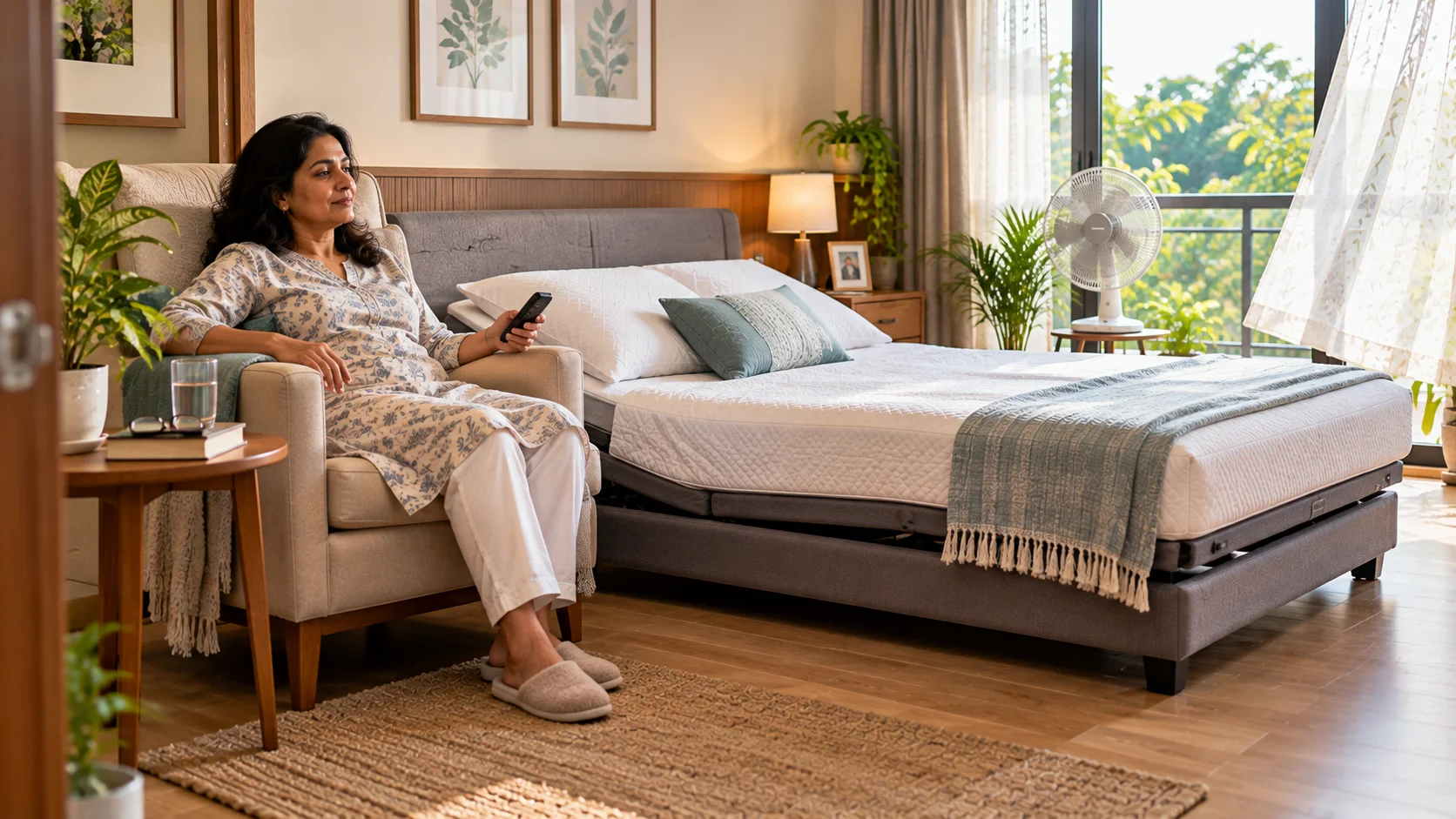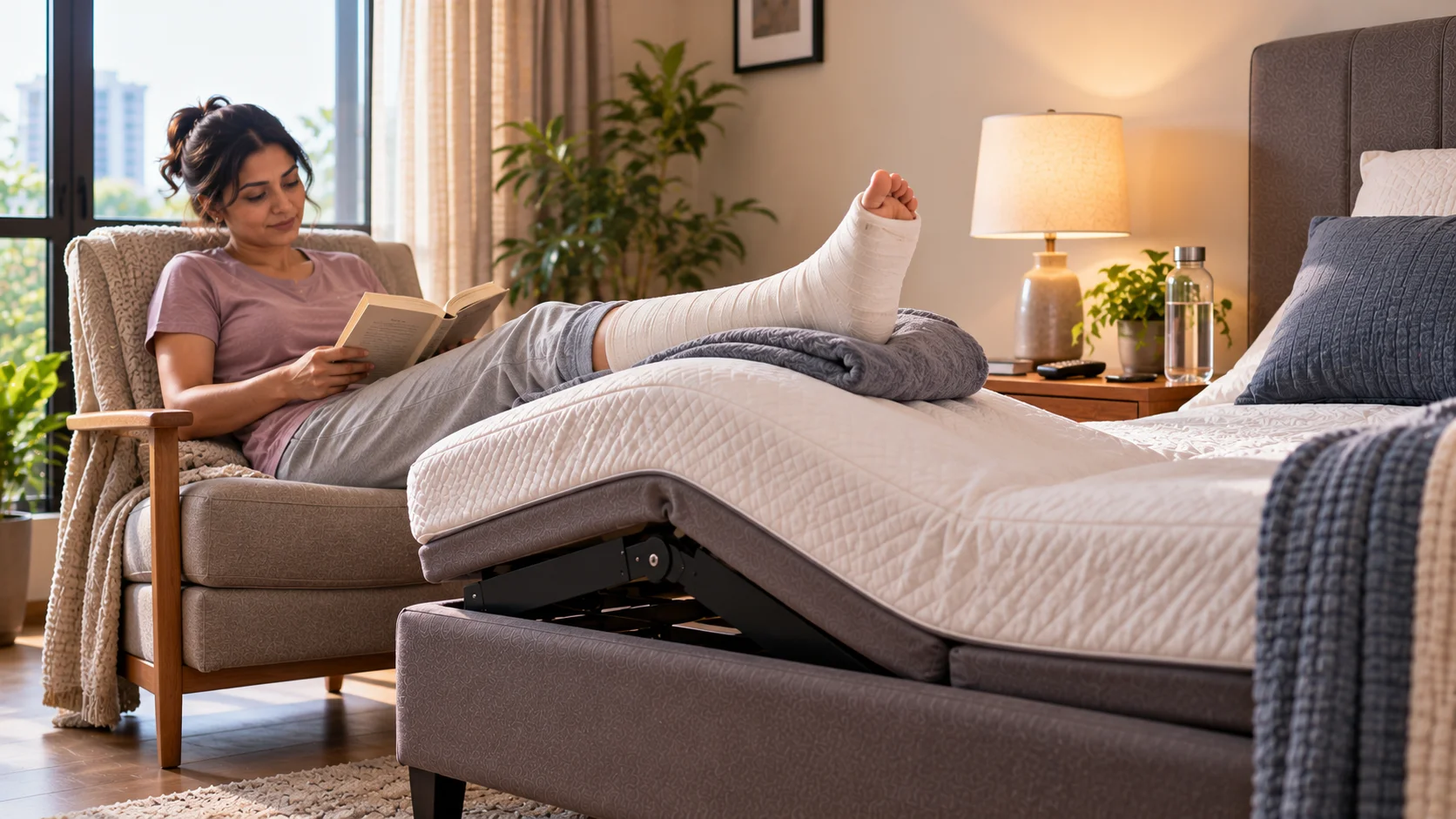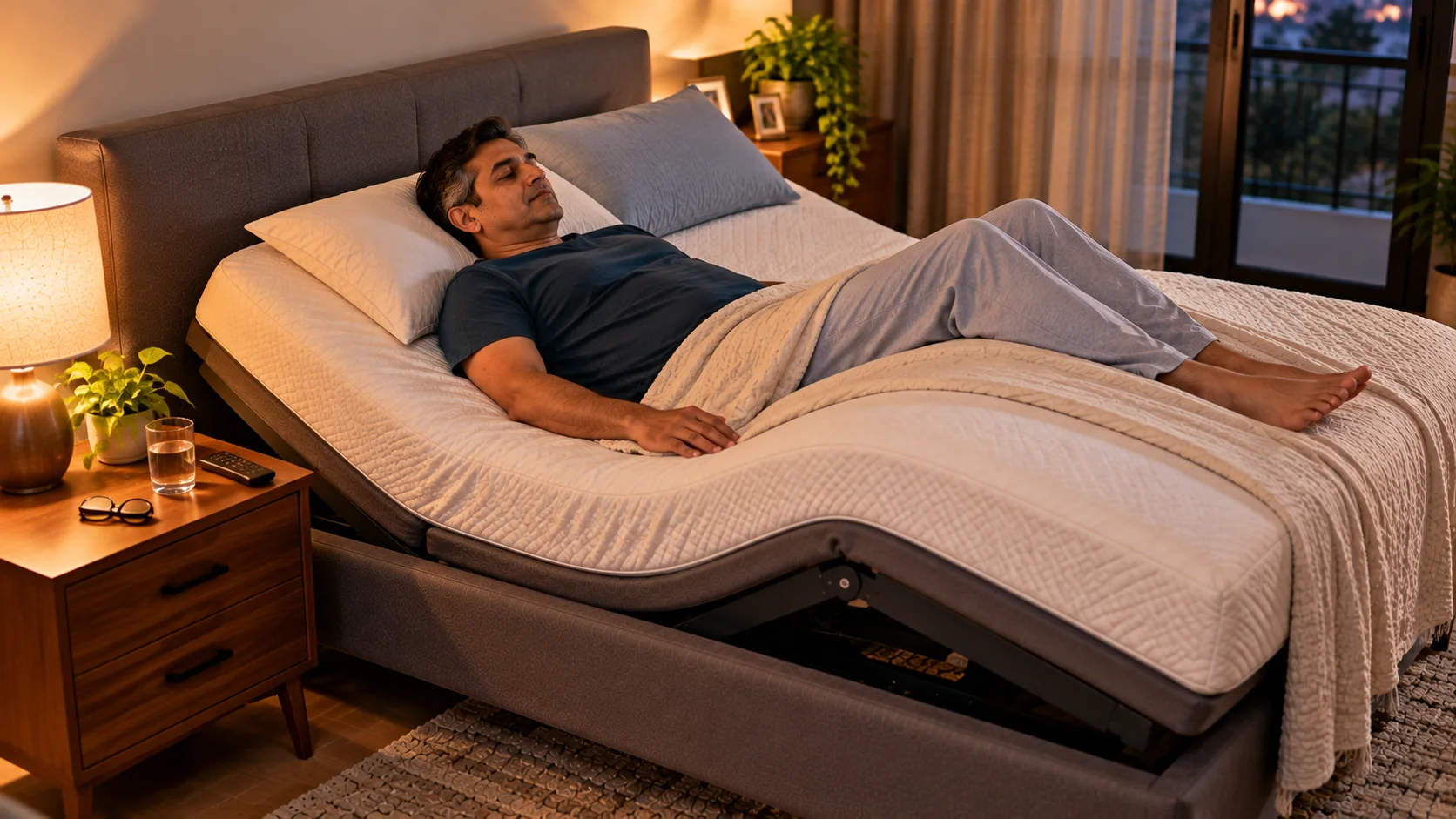
Piriformis syndrome is a deep ache in the buttock, sometimes shooting down the back of the leg, caused by a tight muscle pressing on the sciatic nerve. It is usually worse sitting and lying on the affected side. An adjustable bed helps by keeping the hips level and relaxed: a mild knee lift, a pillow between the knees for side sleepers, and no crossing the legs.
A deep, nagging pain in one buttock that gets worse when you sit, drive or lie on that side is a hallmark of piriformis syndrome. The piriformis is a small muscle deep in the buttock, and the sciatic nerve runs close to it, sometimes through it. When the muscle tightens or spasms, it can irritate the nerve and mimic sciatica. This guide explains how an adjustable bed can ease piriformis syndrome, and how it differs from nerve pain from the spine.
How Piriformis Pain Differs From Spinal Sciatica
| Feature | Piriformis Syndrome | Sciatica From the Spine |
| Main location | Deep in the buttock, sometimes spreading down the thigh | Lower back, buttock and often below the knee |
| Sitting | Usually makes it worse | Variable; may ease or worsen |
| Back pain | Often absent or mild | Frequently present |
| Trigger | Muscle tightness, overuse, long sitting | Disc or nerve root irritation |
| Sleep position | Lying on the sore side hurts | Depends on the cause |
Pain with numbness in the groin or saddle area, loss of bladder or bowel control, progressive leg weakness, fever, or pain after a significant fall needs urgent medical attention. Buttock and leg pain has several possible causes, so a proper diagnosis from a doctor or physiotherapist is important.
Why Night-Time Makes It Worse
Lying on the affected side compresses the muscle against the bone and the nerve beneath it. Pulling the top leg forward across the body, or crossing the legs, stretches and tightens the piriformis. Lying flat with the legs straight can also leave the hips twisted slightly outward. All of these can keep the muscle tense through the night.
Setting Up the Bed Step by Step
- Raise the knee section 15 to 20 degrees so the hips and knees are gently bent and the buttock muscles relax.
- Keep the head section low, around 10 to 15 degrees, which avoids over-flexing the hips.
- If you sleep on your side, choose the pain-free side and place a firm pillow between the knees and ankles to stop the top leg falling forward.
- Keep the legs uncrossed and the hips level. A small rolled towel under the lower hip can square things up.
- Avoid lying on the sore side, or add a cushioning layer if you cannot avoid it.
Positions to Avoid
- Lying on the painful side, which compresses the muscle directly.
- Crossing one leg over the other, which tightens the piriformis.
- Pulling the top knee far across the body, a common side-sleeping habit.
- Sleeping on the stomach, which twists the pelvis.
- Steep Zero Gravity angles, which may over-flex the hips and tighten the muscle in some people.
Daytime Habits That Make a Big Difference
Piriformis pain is driven as much by daytime habits as by sleep. Long stretches of sitting, especially on hard seats or with a wallet in the back pocket, press on the muscle. Stand and walk every 30 to 45 minutes, sit with the knees level with the hips and avoid crossing your legs. A physiotherapist can teach targeted stretches and hip strengthening, which usually does more for lasting relief than any single position.
How This Fits With Other Hip and Back Problems
Piriformis pain overlaps with several other conditions. If the pain sits lower and one-sided near the dimple above the buttock, read our guide on adjustable beds for SI joint pain. If pain on the outer hip dominates, see adjustable beds for hip pain and bursitis. And if pain clearly travels below the knee with tingling, the positions in best adjustable bed positions for sciatica and herniated disc pain relief apply.
Side Sleeping Done Properly
Most people prefer a side position, and with the right pillow it works. Use a firm, thick pillow between the knees and ankles so the top leg stays level with the hip, and add a pillow in front of the chest for the top arm. The wider principles in adjustable beds for side sleepers with back pain apply, and a mild recline can make it easier to hold the position without rolling forward.
Gentle Stretches Worth Asking Your Physiotherapist About
A physiotherapist may suggest a supine figure-four stretch, a gentle knee-to-opposite-shoulder stretch, or glute and hip strengthening exercises once pain allows. Stretches should be gentle and pain-free, since forcing a tight, irritated muscle can make it worse. Doing a short, gentle routine before bed often helps the muscle relax and pairs well with a supportive sleep setup, but have the technique checked first so you stretch the right structure.
Driving, Sitting and Work Adjustments
- Take a break every 30 to 45 minutes when driving or at a desk.
- Remove a wallet or phone from the back pocket before sitting.
- Use a cushion with a slight cutout if hard seats aggravate the pain.
- Keep your hips level with or slightly above your knees when seated.
- Avoid sitting on the edge of a hard bed for long periods.
Piriformis syndrome responds to relaxing the hips and avoiding compression of the buttock muscle. A gentle knee lift, a pillow between the knees and a level pelvis give the muscle a chance to settle at night, while daytime movement, stretching and strengthening address the cause. Get a proper diagnosis if pain travels down the leg or does not improve.
Explore our Adjustable Bed for Back Pain range or Leg Rest Beds collection.
Related Reading:
- Best Adjustable Bed Positions for Sciatica and Herniated Disc Pain Relief
- Adjustable Beds for SI Joint Pain: Best Sleeping Positions and Setup
Adjustable Beds for Hip Pain and Hip Bursitis: Sleeping Without the Ache