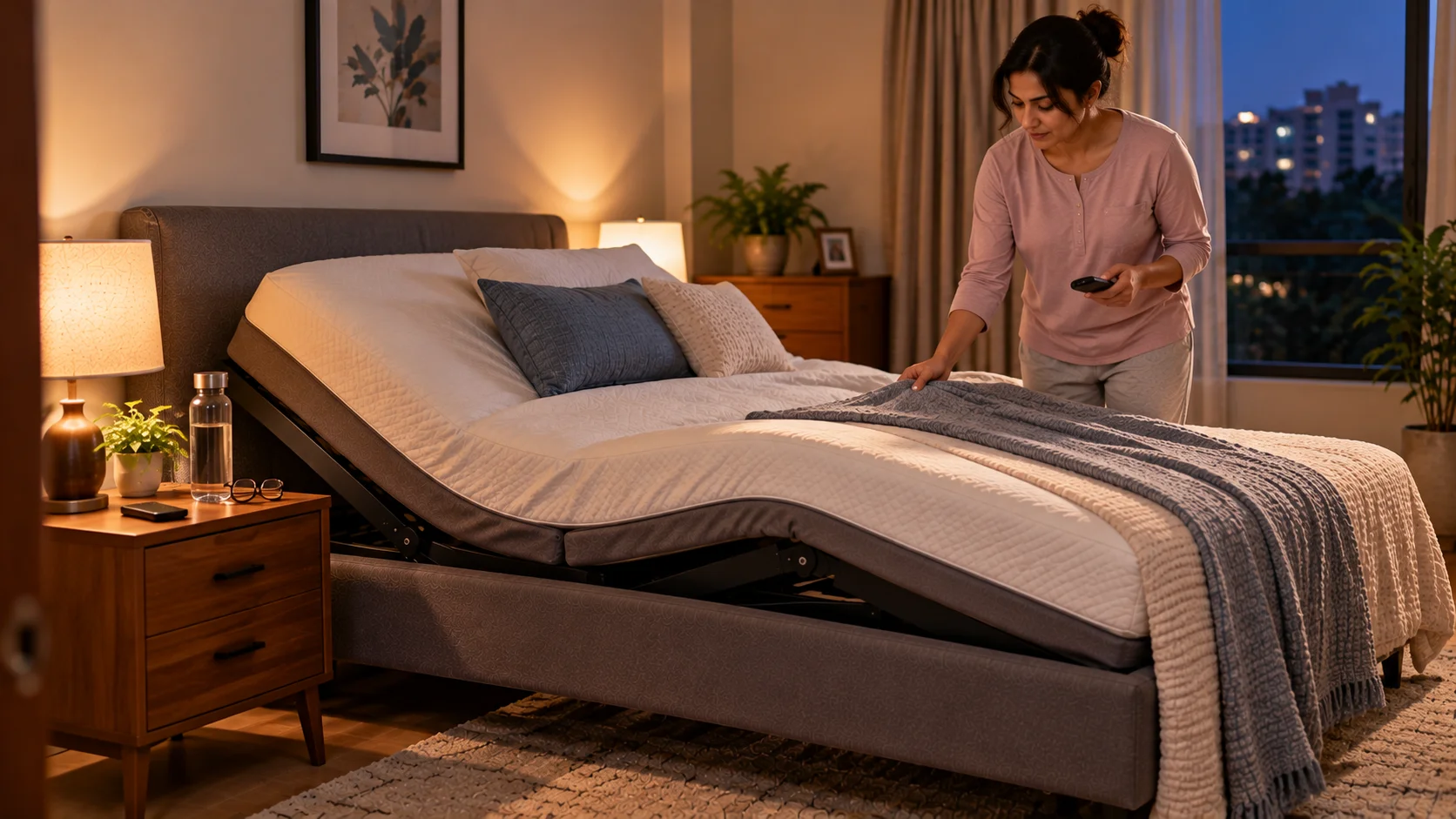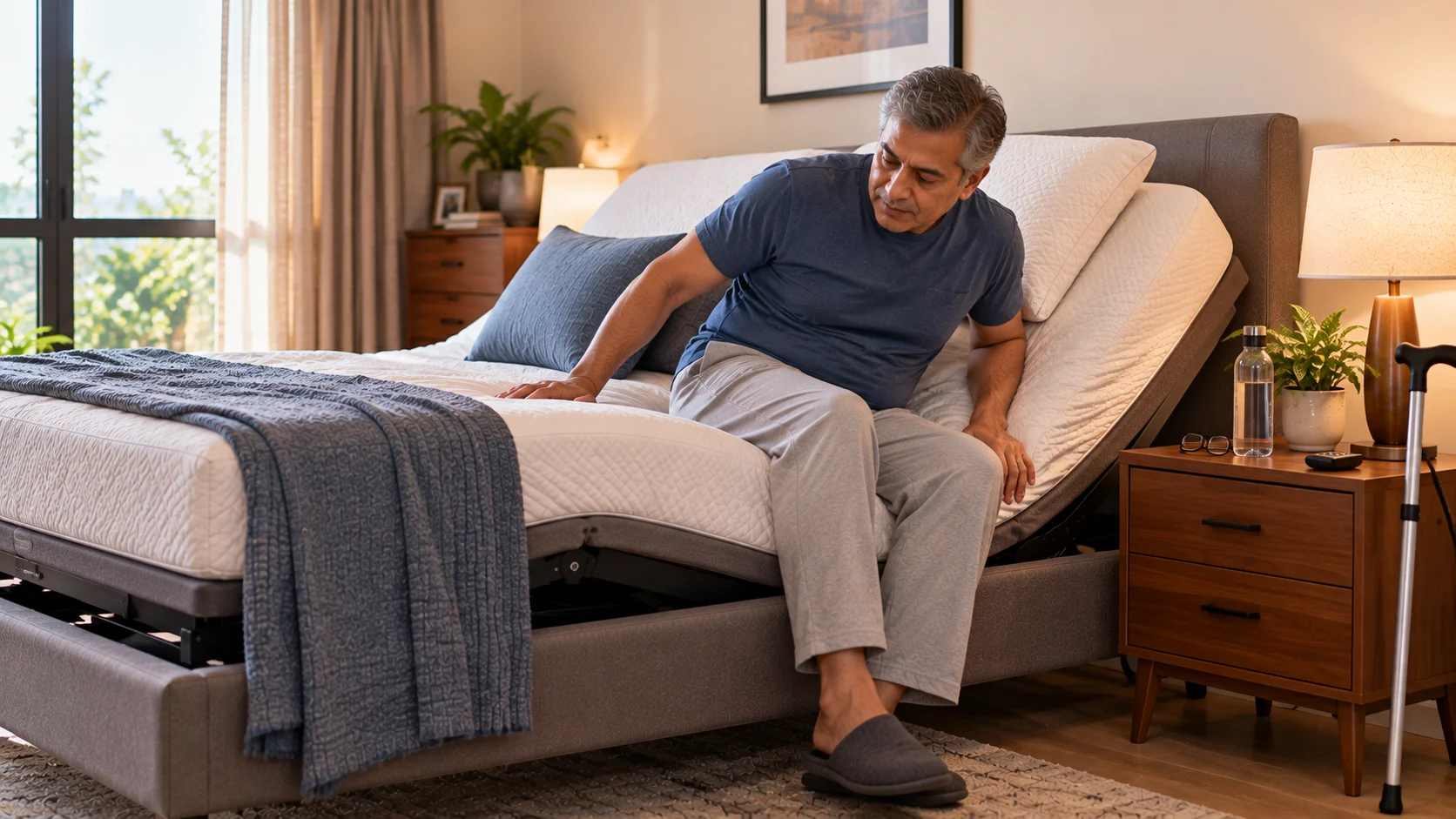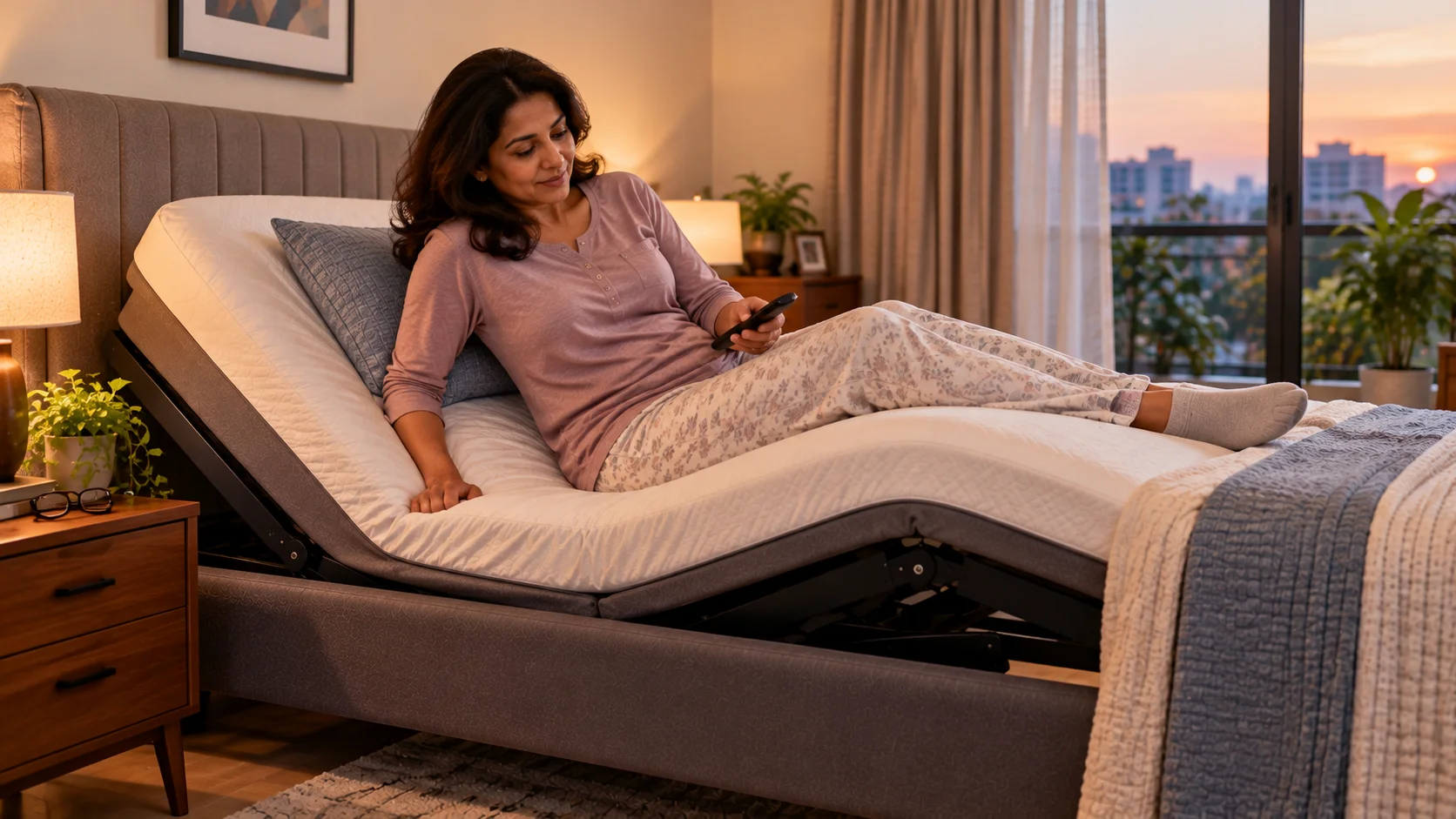
ateral hip pain, the sore, tender spot on the outside of the hip, is worst when you lie on it. An adjustable bed helps by making back-lying comfortable and by letting you take a semi-reclined three-quarter position that moves weight off the hip. Add a pillow between the knees and a cushioning layer, and avoid crossing the legs.
If rolling onto one side wakes you with a deep ache on the outside of the hip, you are in good company. Hip bursitis and gluteal tendon problems, together called greater trochanteric pain syndrome, are among the most common reasons for broken sleep in people over forty, and they are especially common in women. Side sleeping, the position most people prefer, is exactly the one that aggravates it. This guide covers how an adjustable bed can help with hip pain and bursitis.
Why Night-Time Is the Worst Time
The bursa and tendons on the outside of the hip sit directly over the bony point of the thigh bone. Lying on that side presses the tissue against the bone for hours, and the top leg dropping across the body stretches and compresses the same area. During the day you shift constantly. At night you stay put, so irritation builds. Sleeping flat on the back is better but often feels unstable if you are used to your side.
Position Options and What They Do
| Position | Pressure on the Painful Hip | How the Adjustable Bed Helps |
| Back, knees gently raised | None | Knee lift makes back-lying comfortable and stable |
| Other side, pillow between knees | None directly; keeps the top leg from dropping | Mild recline makes it easier to hold the position |
| Three-quarter (semi-side) lean | Reduced, weight shared with the back | A raised head and a wedge hold the lean without effort |
| On the painful side | High | Avoid when possible; add a thick cushioning layer if you must |
| Legs crossed | Compresses and stretches the outer hip | Avoid, use a pillow between the knees instead |
Setting Up the Bed Step by Step
- Start on your back with the knee section raised 15 to 20 degrees and the head 10 to 15 degrees, so you can lie comfortably without leaning on the sore hip.
- Try the three-quarter lean if you need to be on your side: raise the head slightly, tuck a wedge or firm pillow behind your back, and rest on the pain-free side with the sore hip rolled partly upward.
- Place a firm pillow between your knees and ankles so the top leg stays level and does not pull the hip across your body.
- Add a pressure-spreading layer. A memory foam or latex topper lets the hip sink in a little, which lowers peak pressure if you do end up on that side.
- Review after a week. Hip pain responds slowly, so give each change a fair trial.
Hip pain after a fall, with inability to bear weight, groin pain, fever, or pain at night that is relentless and unrelated to position should be assessed by a doctor. After hip surgery, always follow your surgeon’s positioning instructions.
Why Mattress Cushioning Matters More Than Firmness Here
For side sleepers with hip pain, a mattress that is too firm concentrates pressure on the bony point, while one that is too soft lets the hips sag and twist the spine. The aim is a medium surface with a contouring top layer. The balance is the same one described in best mattress firmness for back pain on an adjustable bed, and the contouring comfort of Natural Latex Mattress suits adjustable frames well.
Daytime Habits That Calm the Hip
- Avoid standing with your weight on one hip or letting the hip push out sideways.
- Don’t cross your legs when sitting, as it repeatedly compresses the outer hip.
- Use a hip-friendly seat height, so the knees stay level with or below the hips.
- Strengthen the gluteal muscles with a physiotherapist’s programme, since weak hip abductors are a common driver of this condition.
- Avoid aggressive stretches across the body, which can compress the irritated tendon.
How This Differs From Hip Replacement Recovery
Hip bursitis is a soft-tissue irritation, while recovery from a replaced joint has strict movement rules. If you have had hip surgery, follow the guidance in our hip and knee replacement recovery guide and your surgeon’s instructions rather than the general advice here.
A Note on Women, Menopause and Hip Pain
Greater trochanteric pain is notably more common in women, particularly around and after menopause, when changes in tendon health and body composition make the outer hip tendons more vulnerable. If this describes you, the cooling and comfort points in adjustable beds and menopause may be useful too, since poor sleep and hip pain tend to feed each other. Treating the pain properly often improves sleep, which in turn makes the pain feel more manageable the next day.
What to Expect From Treatment
Most hip bursitis and gluteal tendinopathy improves with a combination of load management, gradual strengthening and sometimes a corticosteroid injection when pain is severe. Recovery typically takes weeks to a few months rather than days. Think of the bed as protecting the hip while it settles: it will not strengthen the tendons, but good night-time positioning stops you re-irritating the area every night, which makes the daytime exercises more effective and the whole process faster.
Hip pain at night is largely a pressure and positioning problem. An adjustable bed lets you swap the painful side for a comfortable back position or a supported three-quarter lean, and a pillow plus a cushioning layer finishes the job. Combined with strengthening, it can turn broken nights back into whole ones.
Explore our Adjustable Bed for Arthritis range or Adjustable Bed for Back Pain collection.
Related Reading: