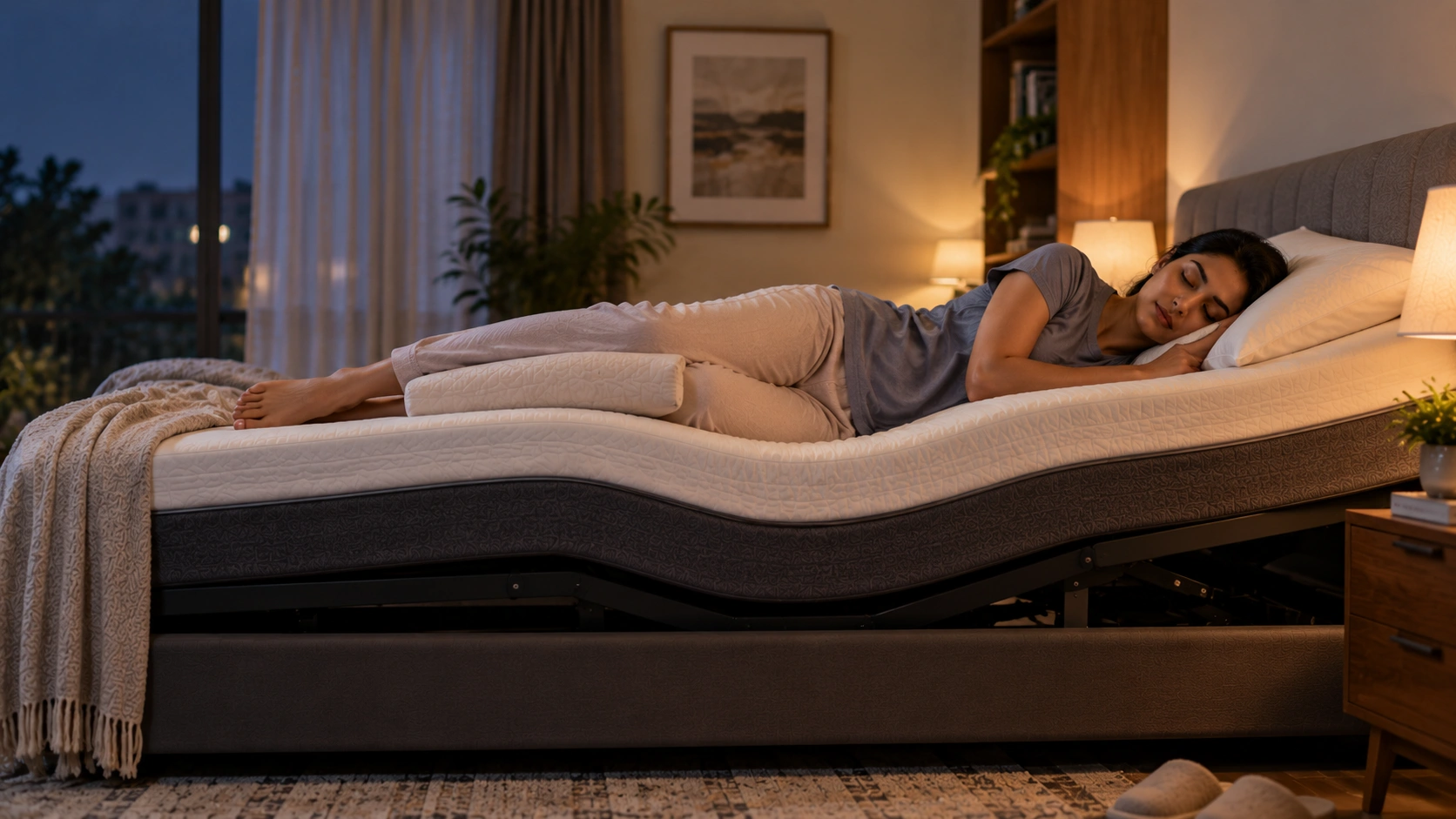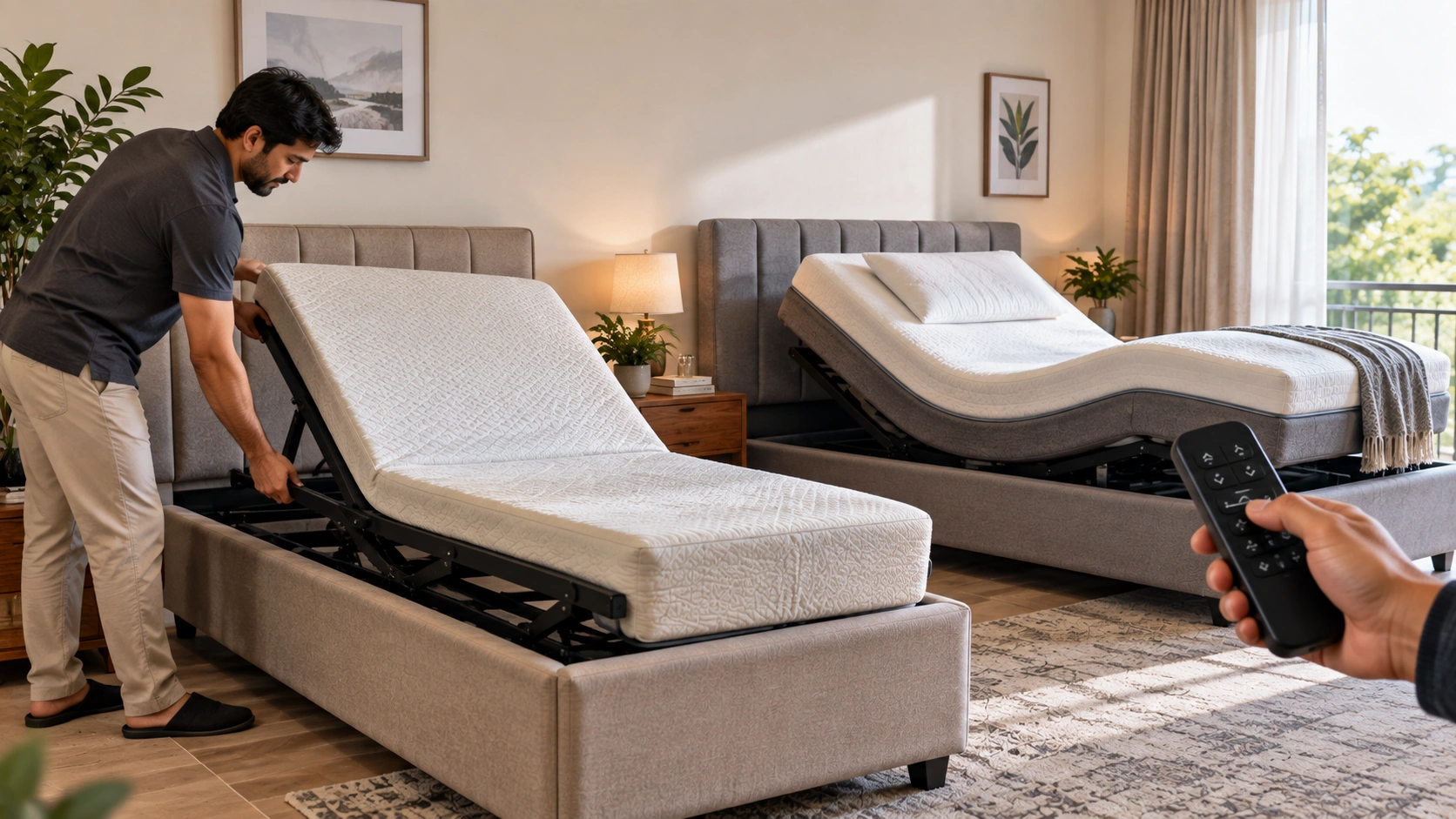

Adjustable beds don’t directly control your sleep cycles, but they can meaningfully improve deep sleep quality indirectly by reducing the physical discomfort, pain, and repositioning that interrupt sleep throughout the night. Fewer disruptions generally mean more uninterrupted time in deeper, more restorative sleep stages, which is where an adjustable bed’s real influence on sleep quality comes from.
Sleep quality is about more than just total hours in bed it’s about how much of that time is spent in deeper, more restorative sleep stages versus lighter sleep interrupted by discomfort, pain, or the need to shift position repeatedly. This raises a genuinely interesting question people search for often: do adjustable beds help improve sleep cycles and deep sleep quality, or is that more marketing claim than mechanism?
Understanding Sleep Cycles and Deep Sleep, Briefly
A typical night’s sleep moves through several cycles of light sleep, deep sleep, and REM sleep, each serving different restorative functions deep sleep in particular is associated with physical recovery, immune function, and how rested you feel the next day. Frequent awakenings or shifts between sleep stages, even brief ones you don’t consciously remember, can reduce the total time spent in these deeper, more valuable stages, which is exactly where physical comfort during the night becomes relevant.
How an Adjustable Bed Indirectly Supports Better Sleep Cycles
| Mechanism | How It Affects Sleep | Result |
| Reduced back and joint pressure | Fewer position-shifting movements to relieve discomfort | Fewer micro-awakenings, more continuous sleep |
| Improved breathing (reduced snoring/reflux) | Less airway obstruction and throat irritation | Less disrupted breathing pattern during sleep |
| Better circulation, less swelling | Reduced discomfort from fluid buildup in the legs | Fewer wake-ups from leg discomfort or cramping |
| Stable, consistent positioning all night | No gradual loss of support as pillows compress | More consistent comfort through the full sleep cycle |
The Real Mechanism: Fewer Interruptions, Not Direct Control
It’s worth being precise here: an adjustable bed doesn’t directly influence your brain’s sleep architecture or actively induce deep sleep the way, for example, certain sleep-tracking technologies attempt to nudge sleep stages. What it does is remove several common physical causes of interruption back pain, poor circulation, snoring, acid reflux each of which independently disrupts the natural progression through sleep cycles when left unaddressed. Removing these disruptions doesn’t guarantee perfect sleep, but it does remove several of the most common physical barriers standing between you and a full night of undisturbed, naturally cycling sleep.
Which Symptoms Have the Strongest Link to Sleep Quality
Based on what we consistently hear from customers, a few specific issues tend to have the most noticeable impact on self-reported sleep quality once addressed through positioning. Back pain that causes repeated repositioning through the night is one of the most commonly cited disruptors, and our guide on how to set up your adjustable bed for maximum lower back pain relief addresses this directly. Snoring and breathing-related disruption is another major factor, covered in our article on how adjustable beds will help you stop snoring. Leg swelling and circulation discomfort round out the most commonly reported issues, addressed through the leg elevation principles covered throughout this site.
Realistic Expectations: What Changes and What Doesn’t
An adjustable bed is genuinely more likely to help if your sleep is currently disrupted by identifiable physical discomfort pain, breathing issues, or circulation-related restlessness. It’s less likely to meaningfully change sleep quality if your sleep disruption stems from other causes entirely, such as stress, anxiety, screen exposure before bed, or an irregular sleep schedule, none of which a bed’s positioning can directly address. Being honest about which category your sleep issues fall into helps set realistic expectations for how much difference the bed itself is likely to make.
Building a Complete Sleep-Quality Routine
For the best results, positioning changes work well alongside other established sleep hygiene practices: a consistent sleep and wake schedule, limiting screens and caffeine before bed, and keeping the bedroom cool and dark. An adjustable bed addresses the physical comfort side of sleep quality particularly well, but it’s most effective as one part of a broader approach rather than a single fix expected to override every other factor influencing how well you sleep.
How to Tell If Your Sleep Disruption Is Physical or Not
Since an adjustable bed’s benefit depends heavily on whether your sleep disruption has a physical cause, it helps to pay attention to the pattern of your own awakenings for a week or two before assuming a positioning change will solve the problem. If you consistently wake with soreness, notice yourself frequently shifting position, or wake specifically after periods of lying flat, these are strong signals pointing toward a physical, position-related cause that an adjustable bed is well suited to address. If instead you find yourself lying awake with racing thoughts, waking at the same time each night for no clear physical reason, or feeling unrested despite no memory of physical discomfort, these patterns point more toward stress, circadian rhythm, or other non-physical factors that a positioning change alone is unlikely to resolve.
What a Reasonable Trial Period Looks Like
Give any new adjustable bed setup at least two to three weeks before drawing firm conclusions about its effect on your sleep quality, since both the physical adjustment to a new position and any genuine reduction in underlying discomfort take some time to fully develop. Tracking a simple nightly note how many times you recall waking, and whether you woke with any specific discomfort during this trial period can help you objectively assess whether the change is making a measurable difference, rather than relying on a vaguer overall impression that’s harder to evaluate accurately.
Adjustable beds support better sleep cycles and deep sleep quality primarily by removing physical sources of disruption, not by directly controlling sleep architecture. For people whose sleep is genuinely affected by pain, circulation, or breathing issues, this indirect effect can be significant often the difference between a fragmented night and consistently uninterrupted rest.
Explore our Adjustable Bed for Sleeping Disorder range or Zero Gravity Electric Beds collection to find the right setup.
Related Reading: